Artwork
The Card Sharp on the Boulevard
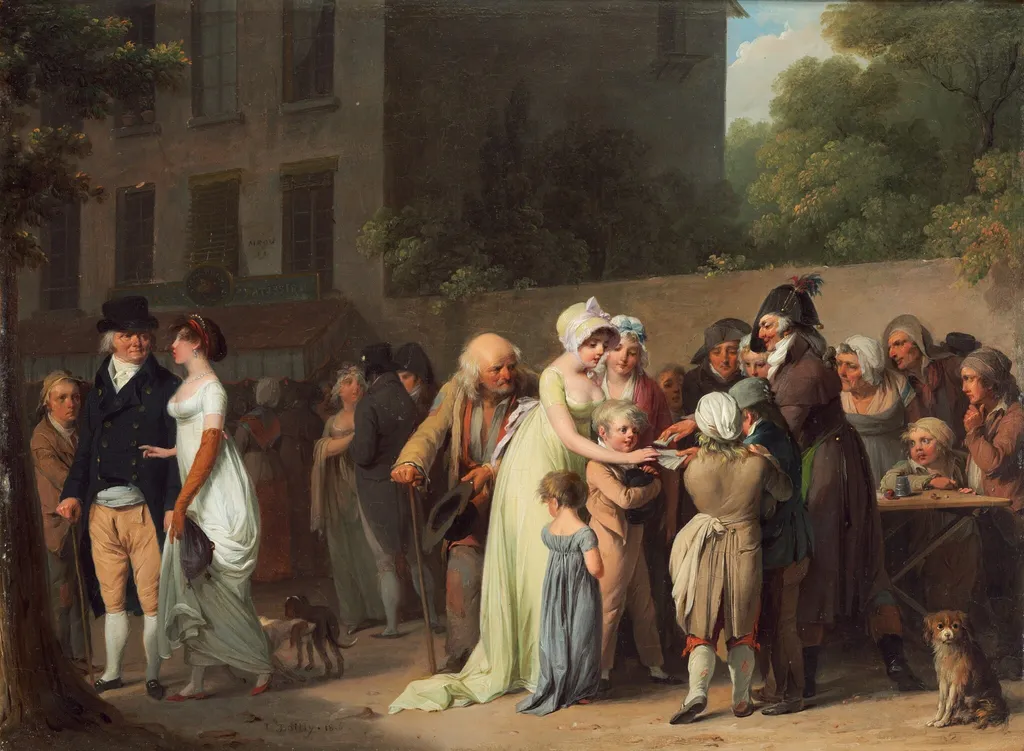
The Card Sharp on the Boulevard is an oil painting by the Romanticist artist Louis-Léopold Boilly. It dates from 1806 and is held in the collection of the National Gallery of Art.
- Inscription
- Inscribed:lower left: L.Boilly.1806.
About this work
Overview
The Card Sharp on the Boulevard is an oil on wood panel painting by the French artist Louis-Léopold Boilly, dated 1806 and measuring 24 by 33 centimeters.
The Card Sharp on the Boulevard is an oil on wood panel painting by the French artist Louis-Léopold Boilly, dated 1806 and measuring 24 by 33 centimeters. The work is held in the collection of the National Gallery of Art in Washington, D.C., where it entered in 2000 as accession number 2000.5.1. It represents a pivotal moment in Boilly's career, being among his first depictions of everyday Parisian street life, and exemplifies the democratic, populist turn in French genre painting during the Napoleonic era. The painting was exhibited at the Salon of 1808 and again at the Salon of 1814, and it remains significant for its detailed observation of urban social dynamics and its embedded self-portrait of the artist.
Subject & Meaning
The painting depicts a scene on the boulevard du Temple in Napoleonic-era Paris, presenting multiple episodes of street life within a single composition. At right, a cardsharp or conjurer offers cards to a group of young women and children, while a trestle table nearby displays the paraphernalia of other tricks: cups, balls, and dice. The artist himself appears as a glum, skeptical figure in a bicorne hat at the center of the spectator group. To the left background, a crowd enters a café and patisserie, while in the left foreground a young woman engages in prostitution. This layering of licit and illicit pleasures creates a complex social panorama. The children reaching toward the central female figure, the observing military figure with a feathered hat, the well-dressed couple passing by, and the small dog in the lower right all contribute to a narrative about urban spectatorship, deception, and the varied strata of Parisian society. The work functions as both entertainment and subtle social commentary, with Boilly's own skeptical presence suggesting an authorial distance from the trickery on display.
Technique & Style
Boilly executed the painting in oil on wood panel, a support that allowed for the smooth, finished brushwork and meticulous detail characteristic of his technique. The palette consists of muted earth tones, greens, and whites, with brighter illumination focused on the central figures against the darker building behind. The artist paid careful attention to fabrics and faces, rendering costumes and expressions with precision. The composition is structured to guide the viewer's eye across multiple narrative episodes while maintaining coherence. The signature and date, L. Boilly. 1806, appear in the lower left corner. The panel bears the coat of arms and inventory number 23 of the Duchesse de Berry on its reverse. Contemporary critics and Salon visitors particularly appreciated Boilly's very fine technique and his ability to capture details of costume, custom, and character, which he skillfully worked into a coherent narrative whole.
History & Provenance
The painting was first owned by Marie-Caroline-Ferdinande-Louise de Naples, Duchesse de Berry (1798-1870), whose coat of arms remain on the reverse of the panel. It was sold from her collection in Paris on 28 January 1848 as Le diseur de bonne aventure. Subsequent owners included Forestier, from whose estate it sold at Hôtel Drouot in December 1871; the Duc de Persigny at Château de Charamande, who sold it in March 1876 as Une scène de boulevard; and a purchaser named Gillet. It appeared at Hôtel Drouot again in December 1943 as Scenes des boulevards, at Sotheby's Monaco in February 1986 as Scène de Boulevard, and at Christie's New York on 27 January 2000. The National Gallery of Art acquired it on 11 February 2000 through Agnew's Inc., London. The work was exhibited at the Salon of 1808 in Paris as number 55, paired with its pendant Young Savoyards Showing Their Marmot. It appeared again at the Salon of 1814, hastily organized following the Bourbon Restoration. More recent exhibitions include Art for the Nation: Collecting for a New Century at the National Gallery of Art (2000-2001), The Age of Watteau, Chardin, and Fragonard tour (2003-2004), and the Boilly retrospective at the Palais des Beaux-Arts de Lille (2011-2012).
Legacy
The Card Sharp on the Boulevard has maintained its reputation as a delightful slice of Parisian life from the early years of the Empire, remaining engaging to contemporary audiences. Its acquisition by the National Gallery of Art in 2000, facilitated by Agnew's Inc. and noted in the New York Times, secured its place in a major public collection. The painting's influence lies less in direct stylistic imitation than in its exemplification of a populist, socially observant mode of genre painting that bridges the eighteenth-century tradition of Watteau and the emerging realist tendencies of the nineteenth century. As a pendant to Young Savoyards Showing Their Marmot, it forms part of a programmatic exploration of Parisian street entertainments. The embedded self-portrait adds a layer of authorial reflexivity that has attracted scholarly interest. The work continues to serve as a primary document for understanding the visual culture of Napoleonic Paris, the sociology of its boulevards, and the transformation of French genre painting in the decades following the Revolution.
Own this work as a print
Artist & collection


- Entrance to the Jardin Turc
 Fair
Fair Actors Before a Performance
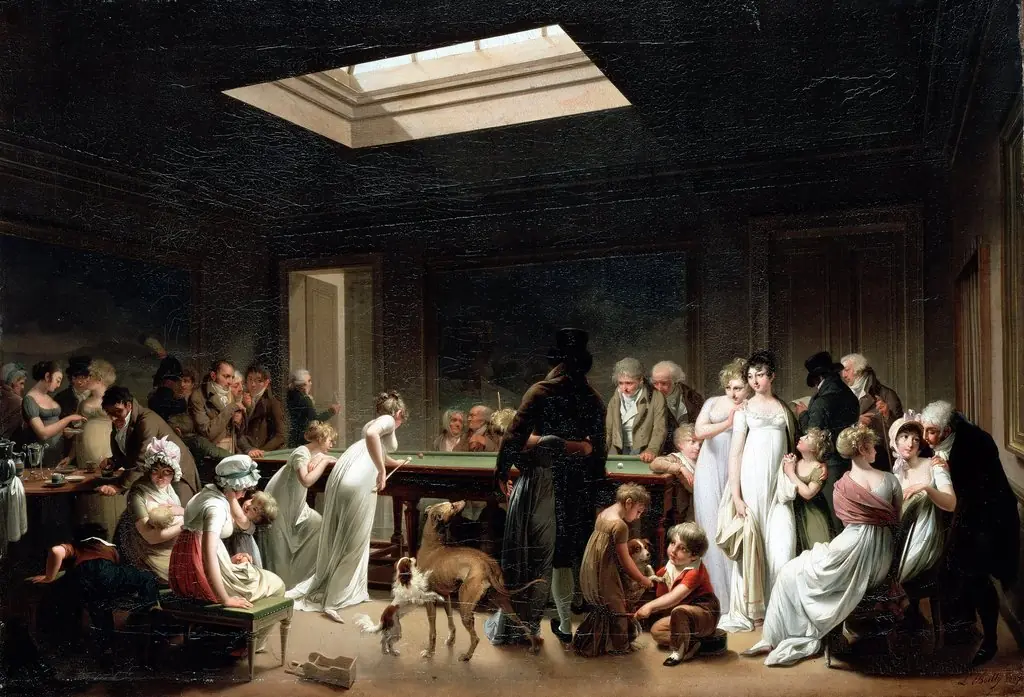 Game of Billiards
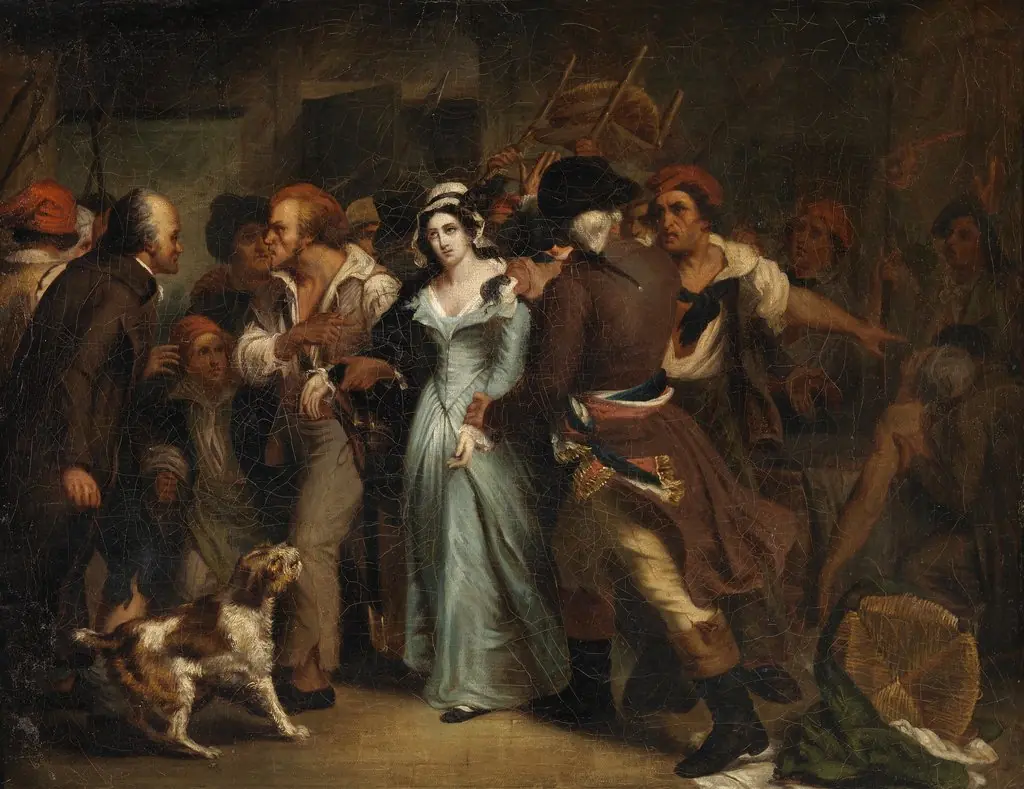 The Arrest of Charlotte Corday
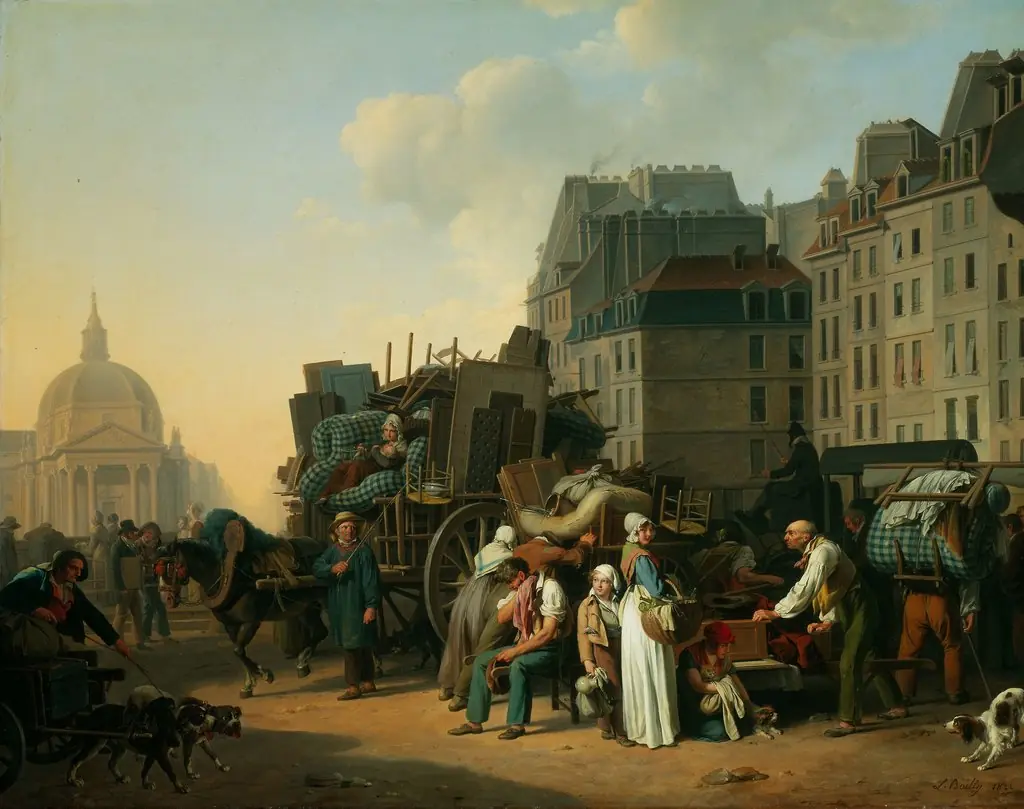 The Movings
 The Movings
 Afternoon Tea
 Motiv fra Ludvig Holbergs "Jeppe på Bjerget", III akt, 3. scene
 The family of André-François, Count Miot de Melito, (1762-1841) consul of France to Florence
 The Poultryman
 In front of the church