Artwork
Untitled
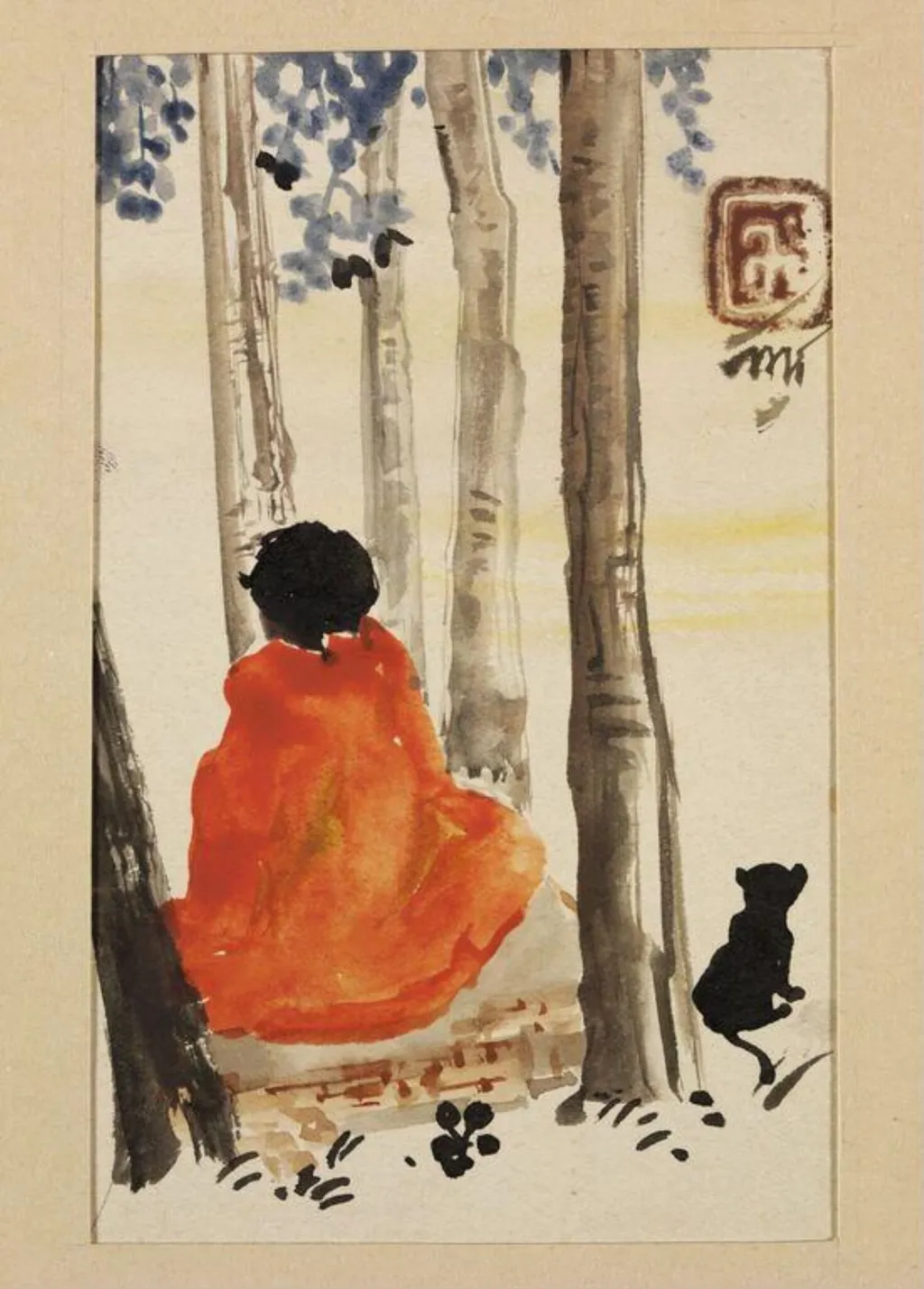
Untitled is a paint painting by the Bengal School artist Nandalal Bose. It dates from 1930 and is held in the collection of the Victoria and Albert Museum.
About this work
Overview
The work exemplifies his shift toward minimalism and emotional resonance over detailed realism.
This watercolour by Nandalal Bose, dated to the late 1920s or early 1930s, reflects his engagement with a distinctly Indian visual language during a period of cultural redefinition. Moving away from colonial academic norms, Bose drew inspiration from indigenous traditions and East Asian aesthetics, particularly after his 1924 journey to China and Japan with Rabindranath Tagore. The work exemplifies his shift toward minimalism and emotional resonance over detailed realism.
Subject & Meaning
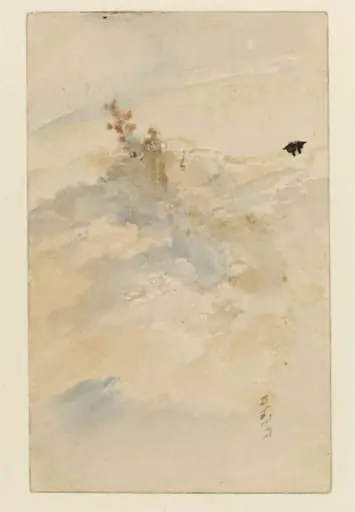
The painting depicts a solitary figure in a red robe seated on a low brick platform, facing away from the viewer, with a small black dog resting beside him. The scene evokes contemplation and stillness, suggesting a moment of quiet introspection drawn from Indian literary or spiritual traditions. The absence of narrative detail invites interpretation, framing the figure not as a specific character but as a symbol of inner calm and detachment.
Technique & Style
Bose employed broad, fluid brushstrokes and translucent washes to create a sense of atmospheric depth. The palette, dominated by warm reds and earthy browns, enhances the meditative tone. The composition is deliberately sparse, with soft background gradients mimicking mist, reducing environmental detail to essentials. This approach aligns with Zen-inspired abstraction, prioritizing mood over literal representation.
History & Provenance
Created after Bose’s 1924 trip to East Asia, the work reflects the influence of Chinese ink painting techniques he encountered during that journey. It belongs to a phase in his career when he was actively synthesizing regional and transnational visual idioms. While its exact provenance is not documented here, it aligns with works from his tenure at Santiniketan, where he cultivated a new pedagogy rooted in Indian artistic heritage.
Context
In the early 20th century, Indian artists sought to reclaim cultural identity by rejecting Western academic models. Bose, alongside Abanindranath Tagore and others in the Bengal School, turned to ancient epics, folk narratives, and Asian artistic traditions for inspiration. This painting is part of that broader movement, reimagining Indian subjects through a personal, poetic lens that emphasized spirituality and simplicity.
Legacy
Bose’s approach in this work helped redefine modern Indian art by demonstrating how traditional themes could be rendered with contemporary sensitivity. His fusion of indigenous motifs with East Asian aesthetics influenced generations of artists at Santiniketan and beyond. The painting stands as a quiet testament to a generation that sought artistic autonomy through cultural memory rather than imitation.
Artist & collection
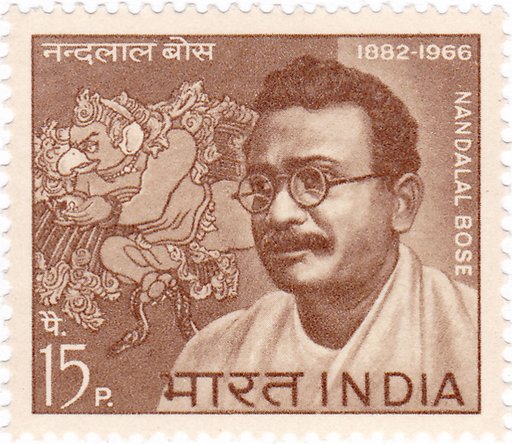
Artist
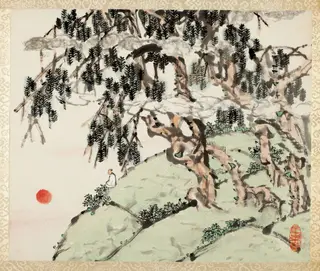
Nandalal Bose was one of the pioneers of modern Indian art and a key figure of Contextual Modernism.