Artwork
Lear and Cordelia
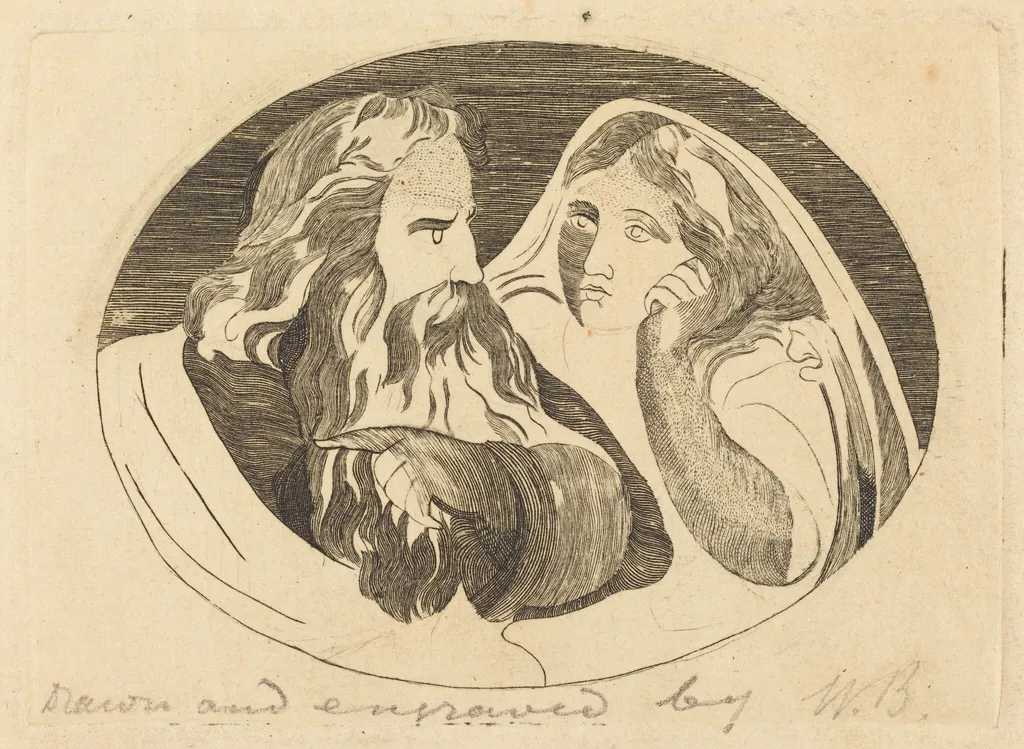
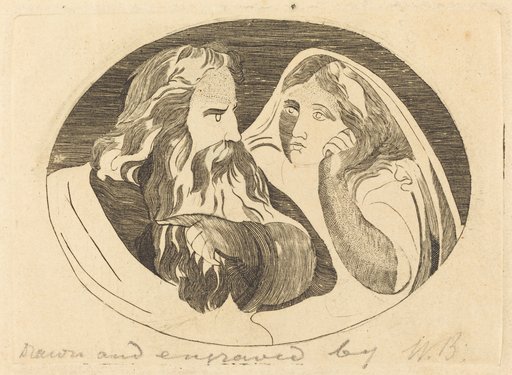
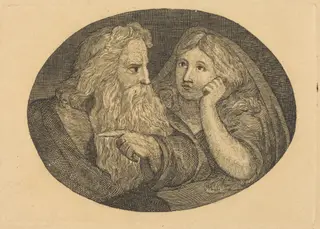
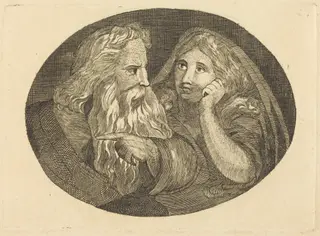
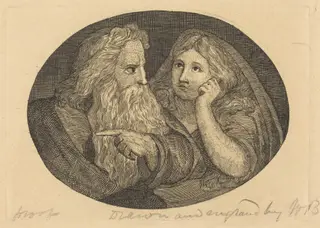
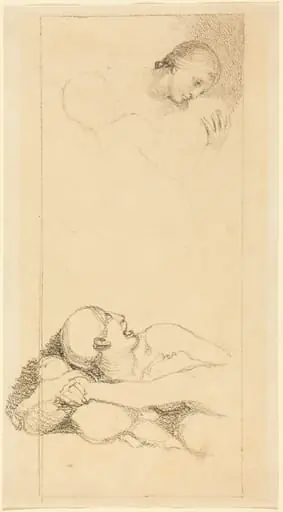
Lear and Cordelia is an ink print by the Romanticist artist Butts, Jr., Thomas. It dates from 1807 and is held in the collection of the National Gallery of Art. Created around 1807 by Thomas Butts Jr.
About this work
Overview
Created around 1807 by Thomas Butts Jr., this engraving depicts a moment from Shakespeare’s King Lear, focusing on the emotional reunion between the deposed king and his loyal daughter Cordelia. Rendered in fine black lines on a textured ground, the composition is contained within a circular frame, emphasizing intimacy and psychological tension between the two figures.
Subject & Meaning
The scene captures Lear, aged and broken, reaching toward Cordelia, whose gesture of touching her cheek suggests sorrow or reassurance. Their proximity within the frame underscores their emotional bond amid political ruin. The image distills a moment of human vulnerability from Shakespeare’s tragedy, stripping away spectacle to highlight quiet, personal grief.
Technique & Style
Butts employed meticulous line work typical of early 19th-century engraving, using varied stroke density to suggest texture and form. The beard and hair are rendered with intricate, flowing lines, while the faces remain relatively unadorned, directing focus to expression rather than detail. The background’s stippled texture enhances depth without distracting from the central figures.
History & Provenance
The print was produced during Butts’s collaboration with William Blake, who influenced his interest in literary and spiritual themes. Though not widely published, it circulated among Romantic-era collectors and artists drawn to Shakespearean subjects. Its survival suggests it was valued as a personal or studio piece rather than a commercial print.
Context
In the early 1800s, engravings of literary scenes were popular among educated audiences seeking visual interpretations of canonical texts. Butts’s work aligns with a broader Romantic movement that favored emotional depth and introspection over classical idealism, reflecting a cultural shift toward psychological realism in art.
Legacy
Though not widely reproduced, the engraving remains a quiet example of how Romantic artists translated literary drama into intimate visual forms. It reflects Butts’s role in a network of illustrators who reimagined Shakespeare for private contemplation, influencing later generations interested in narrative printmaking.
Own this work as a print
Artist & collection