Artwork
Head of Saint John the Baptist
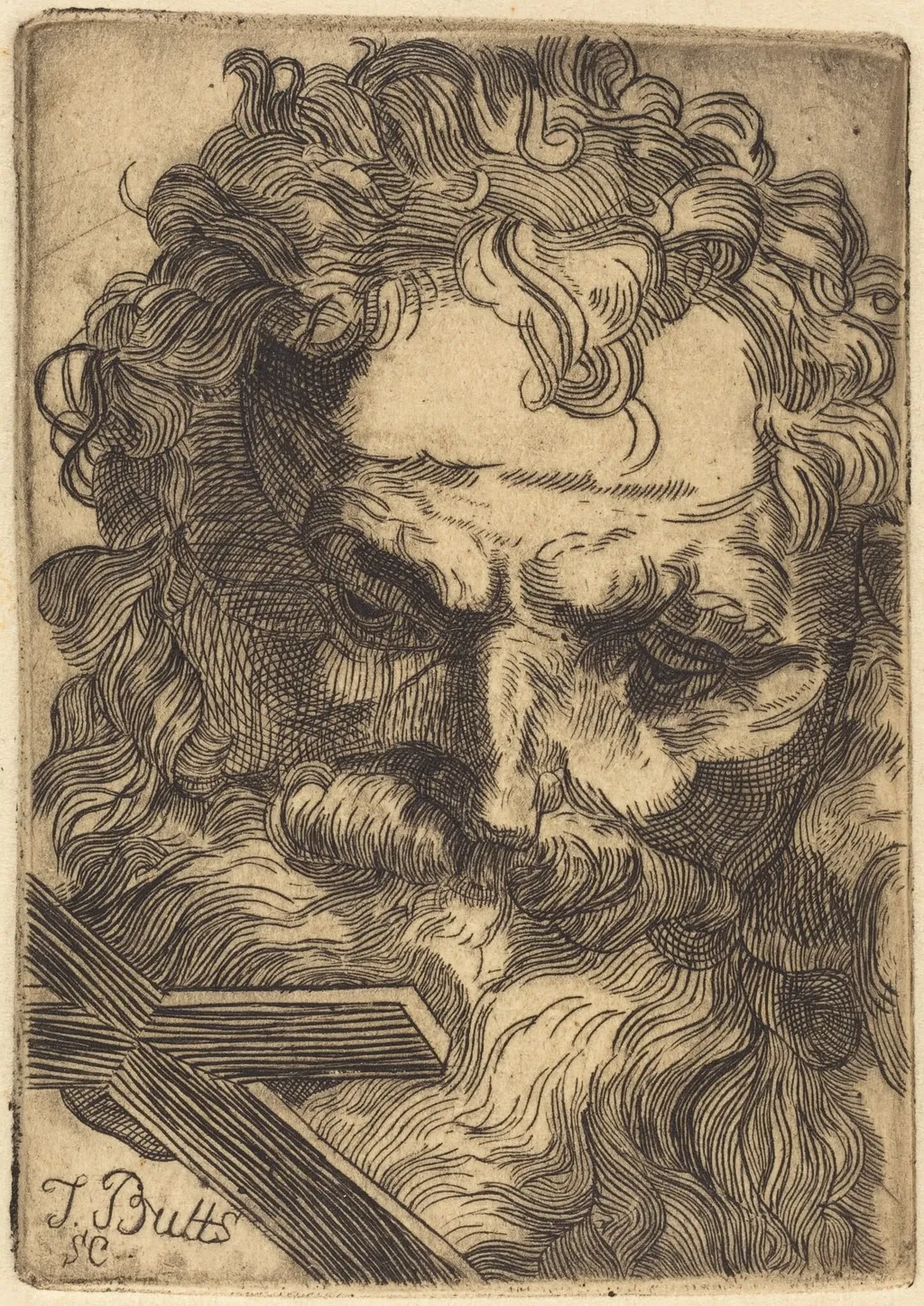
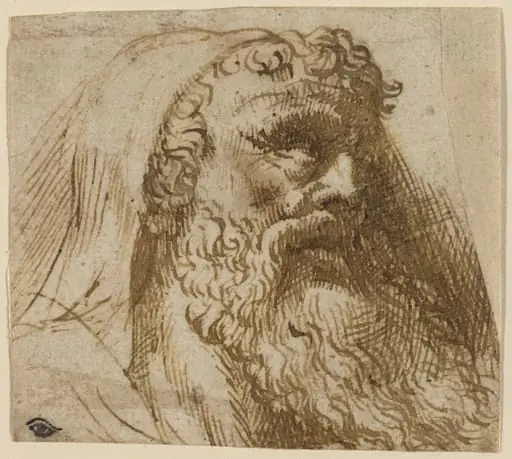
Head of Saint John the Baptist is an ink print by the Baroque artist Butts, Jr., Thomas. It dates from 1797 and is held in the collection of the National Gallery of Art.
About this work
Overview
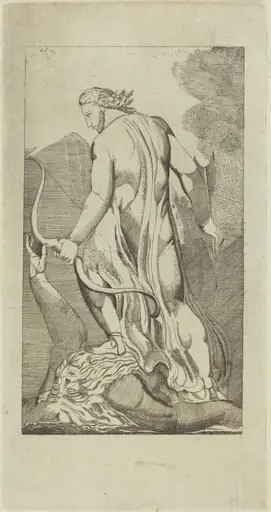
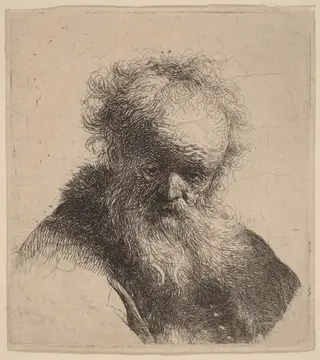
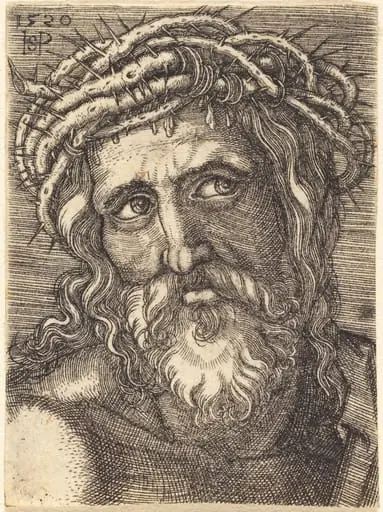
The work is a black‑and‑white etching depicting the head of Saint John the Baptist. Rendered in 1797, the image shows a bearded male figure gazing downward, his hair and beard formed by flowing, wave‑like lines, while stark shadows define the eyes and nose.
Subject & Meaning
The portrait focuses on the biblical figure of John the Baptist, emphasizing his ascetic appearance through the stark contrast of light and dark. The downward gaze and simplified facial features convey a contemplative, solemn mood associated with the saint’s prophetic role.
Technique & Style
Executed by incising ink into a metal plate, the artist employed traditional etching methods, allowing fine lines and deep shadows to emerge in the print. The swirling strokes that compose the hair and beard illustrate a delicate handling of line, while the heavy shading creates a dramatic chiaroscuro effect.
History & Provenance
The print is a restrike impression taken from the verso of a cancelled plate originally used by William Blake for his work "A Prophecy" (catalogued as 1943.3.1848.b). Thomas Butts Jr. re‑used the plate in 1797, producing this distinct image of Saint John.
Context
Created at the close of the 18th century, the piece reflects the period’s interest in religious subjects and the reuse of existing plates to generate new works. The practice of restriking plates was common among printmakers seeking to maximize the utility of costly copper matrices.
Own this work as a print
Artist & collection