Artwork
Prize Bull
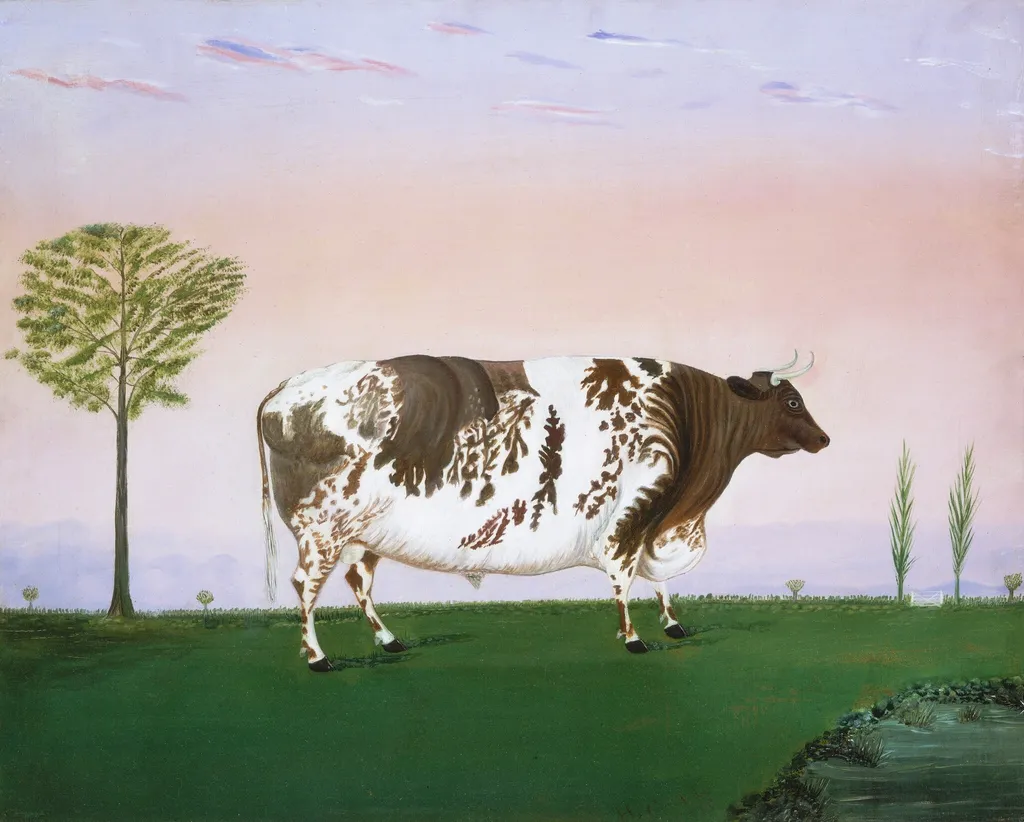
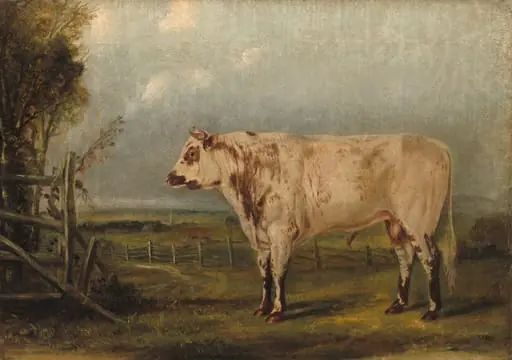
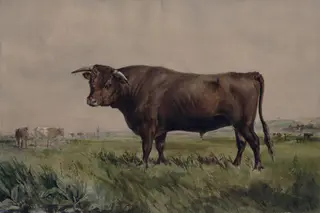
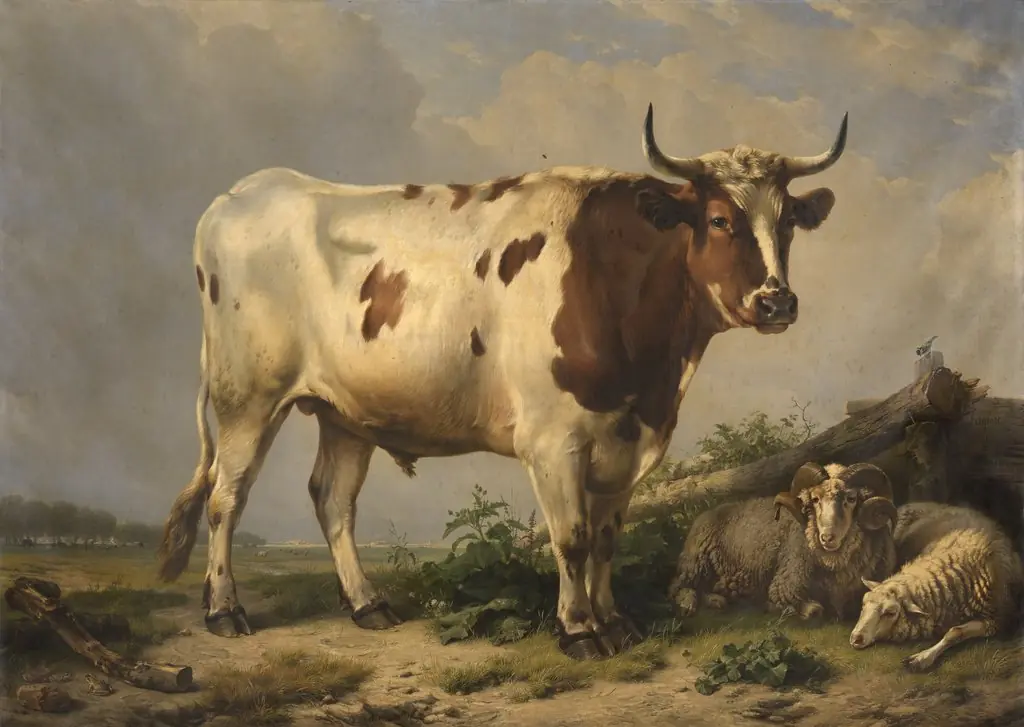
Prize Bull is an oil painting by the Impressionist artist H. Call. It dates from 1876 and is held in the collection of the National Gallery of Art.
- Inscription
- Inscribed:lower right center: H. CALL / 1876
About this work
Technique & Style
Prize Bull is an oil painting on canvas executed by H. Call in 1876. The work measures 50.7 × 63 cm. As an oil on canvas, the painting belongs to the traditional Western easel-painting tradition, a medium and support combination that allows for layered pigment application and detailed rendering. The straightforward descriptive title and the period of production suggest a likely realist approach typical of 19th-century American animal painting, though specific stylistic or handling details are not recorded in the available sources.
History & Provenance
Prior to this acquisition, the work was sold to the Garbisches in 1961 by John Bihler and Henry Coger of Ashley Falls, Massachusetts.
The painting Prize Bull was created by H. Call in 1876. Its early history places the work in Massachusetts, where it was held by John Bihler and Henry Coger in Ashley Falls. In 1961, Bihler and Coger sold the canvas to Edgar William and Bernice Chrysler Garbisch.
The National Gallery of Art in Washington, D.C., acquired the work by bequest from the Garbisch collection in 1980.
Prize Bull is held in the collection of the National Gallery of Art in Washington, D.C. The painting entered the museum's holdings in 1980 through the bequest of Edgar William and Bernice Chrysler Garbisch. Prior to this acquisition, the work was sold to the Garbisches in 1961 by John Bihler and Henry Coger of Ashley Falls, Massachusetts. Earlier provenance records indicate the piece originated in Massachusetts.
No specific exhibition history or inventory accession numbers are provided in the available sources.
Overview
Prize Bull is an oil on canvas work executed in 1876 by the artist H. Call. The composition presents a solitary bovine set against an open landscape, rendered with a modest palette of earth tones and a muted sky. The painting measures a modest size typical of 19th‑century genre scenes and is catalogued under the title that references the animal’s status as a prize specimen.
Subject & Meaning
The central figure is a brown‑and‑white cow, positioned facing left within a grassy field. Its coat displays irregular patches of darker brown and white, suggesting a prized animal distinguished by its markings. A solitary tree rises behind the animal, while a narrow stream traces the lower edge of the canvas, framing the scene with natural elements that emphasize the animal’s isolation and the pastoral setting.
Own this work as a print
Artist & collection