Artwork
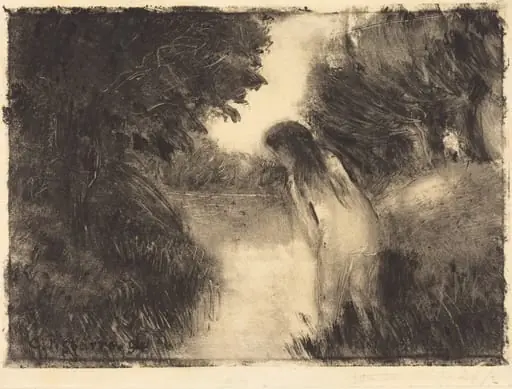
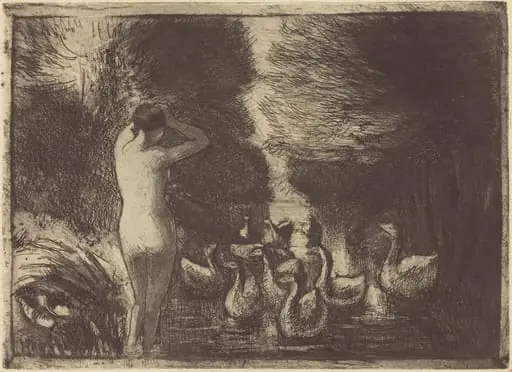
Bather and Geese
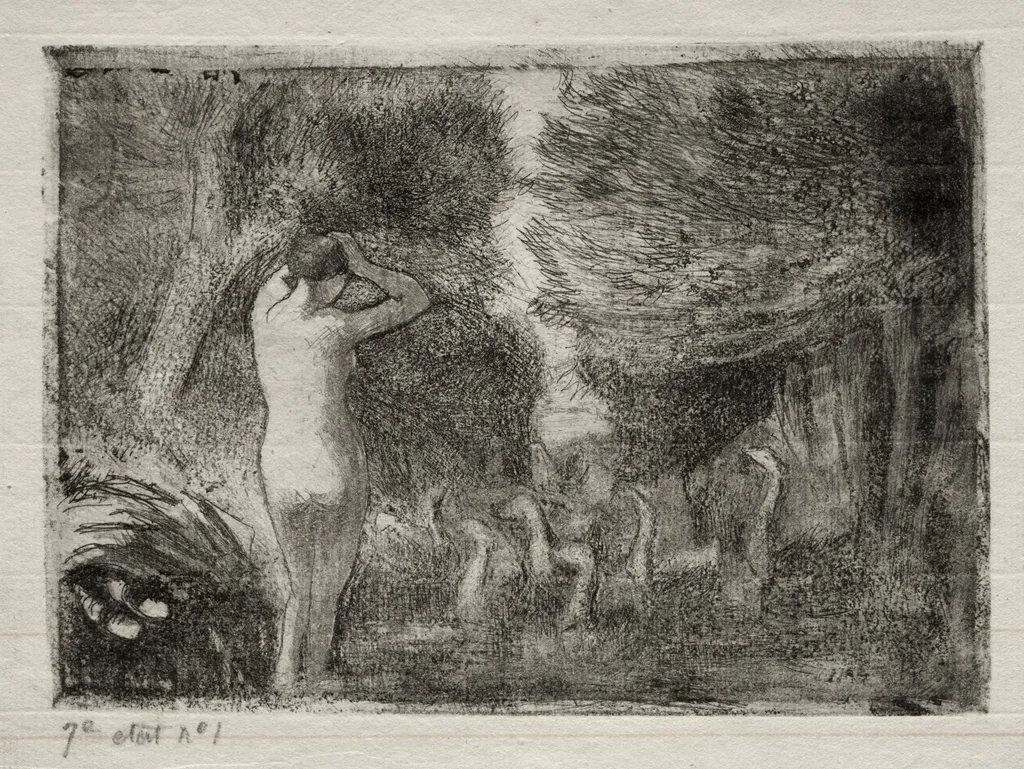
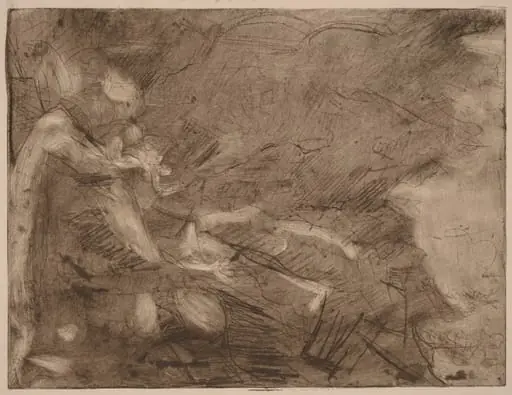
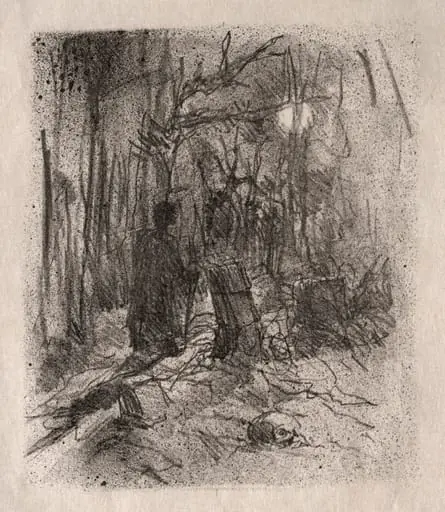
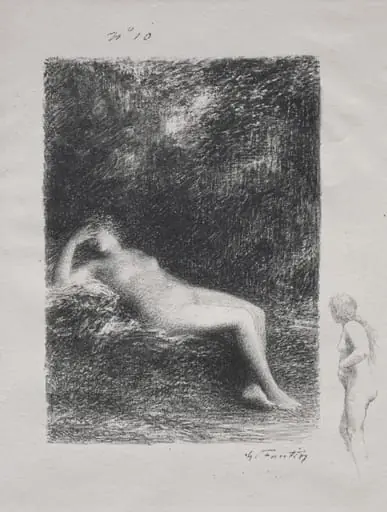
Bather and Geese is a print by the Impressionist artist Camille Pissarro. It dates from 1895 and is held in the collection of the Cleveland Museum of Art.
- Accession no.
- 1979.122
- Credit line
- Gift of individual members of The Print Club of Cleveland for the sixtieth anniversary
About this work
Overview
Though best known for his landscape paintings, Pissarro returned periodically to the human form, often integrating it into rural scenes.
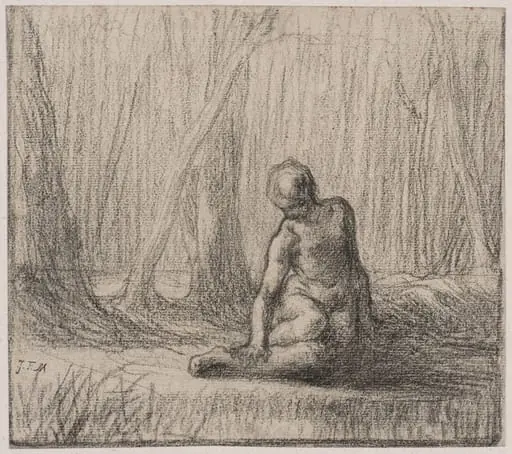
Created in 1895, Bather and Geese is a pencil and ink drawing by Camille Pissarro, reflecting his late-period interest in figure studies within natural landscapes. Though best known for his landscape paintings, Pissarro returned periodically to the human form, often integrating it into rural scenes. This work belongs to a series of intimate sketches made during his time in the countryside, where he explored the relationship between people and their environment with minimal, expressive marks.
Subject & Meaning
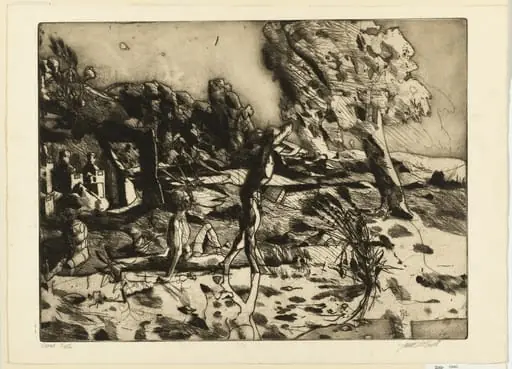
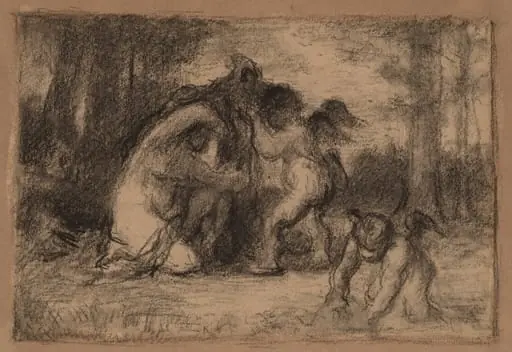
The drawing portrays a nude woman bending near water, her raised arm suggesting modesty or an attempt to shield herself from view. Around her, a group of geese drifts on the surface, their forms rendered with swift, dark strokes. The scene evokes quiet solitude rather than narrative drama, emphasizing the unposed, everyday presence of the figure within nature.
The geese, both wild and domesticated, may subtly reference rural life and the cyclical rhythms of the natural world.
Technique & Style
Pissarro employed loose, fluid lines and contrasting tonal areas to suggest form and movement without detail. The woman and geese are defined by darker, concentrated strokes, while the surrounding foliage and water are hinted at with lighter, sketchy marks. This economy of line reflects his Neo-Impressionist training, where observation and rapid notation replaced polished finish. The work’s spontaneity aligns with the sketchbook tradition, prioritizing immediacy over finish.
History & Provenance
The drawing was made during Pissarro’s later years, when he lived in rural France and increasingly turned to intimate, small-scale works. It likely originated from his sketchbooks, which he used to record observations during walks and stays in villages like Éragny. The piece remained in his family after his death in 1903 and was later acquired by public collections, where it is now preserved as part of his graphic oeuvre rather than his more widely exhibited paintings.
Context
In the 1890s, Pissarro was deeply engaged with Neo-Impressionist theory, yet he continued to value direct observation over rigid technique. While contemporaries like Seurat pursued systematic pointillism, Pissarro returned to fluid drawing as a means of capturing transient moments. Bather and Geese reflects this balance, its informal style contrasts with the polished canvases of academic art, aligning instead with the Impressionist emphasis on lived experience and natural light.
Legacy
Though less celebrated than his paintings, Pissarro’s drawings like this one reveal his commitment to seeing without embellishment. They influenced later generations of artists who valued sketching as a form of honest documentation. The work stands as a quiet testament to his belief that art could arise from the ordinary, and that the human figure, even in solitude, belonged to the landscape, not apart from it.
Own this work as a print
Artist & collection