Artwork
Wooded Landscape at L'Hermitage, Pontoise
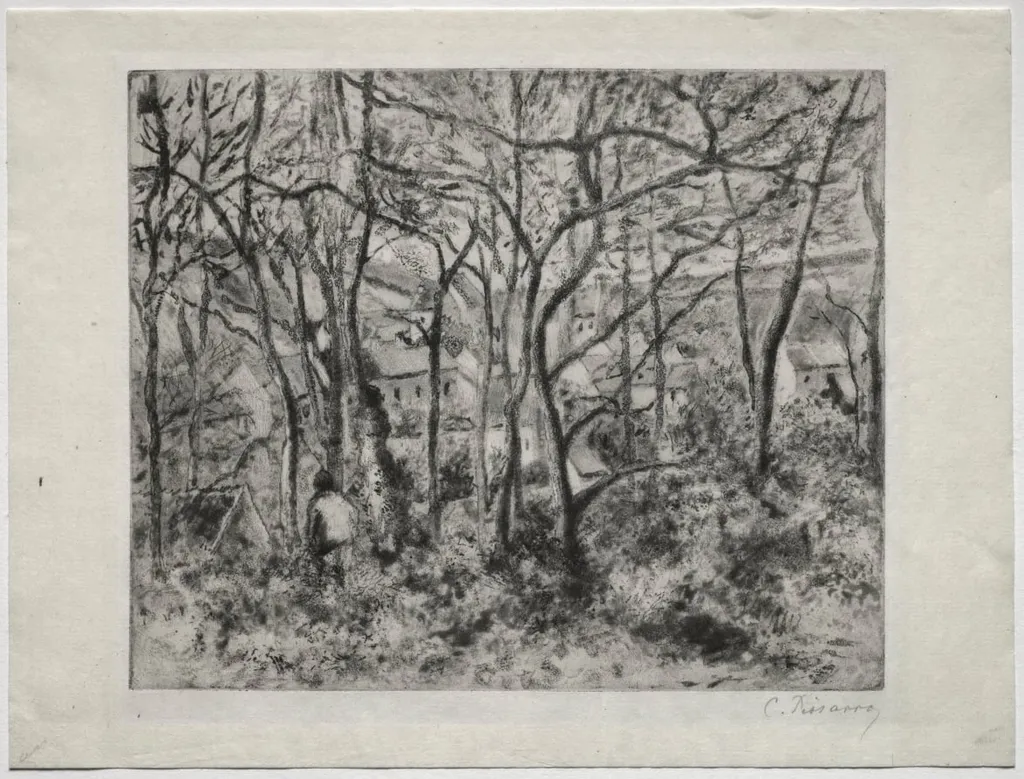
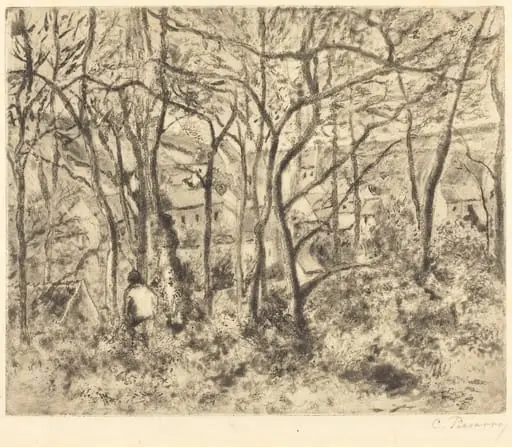
Wooded Landscape at L'Hermitage, Pontoise is a print by the Impressionist artist Camille Pissarro. It dates from 1879 and is held in the collection of the Cleveland Museum of Art.
- Accession no.
- 2004.105
- Credit line
- Gift of The Print Club of Cleveland
About this work
Overview
Pissarro’s choice of medium reflects his broader interest in printmaking as a means to explore optical effects outside of oil paint.
This etching by Camille Pissarro captures a quiet woodland path near Pontoise, where he resided during the 1870s. Unlike his painted landscapes, this work was created through intaglio printmaking, using aquatint and softground techniques to simulate the subtle gradations of light and shadow. Pissarro’s choice of medium reflects his broader interest in printmaking as a means to explore optical effects outside of oil paint.
Subject & Meaning
The scene presents an unassuming forest trail, framed by tall, closely spaced trees whose canopy filters daylight into dappled patches on the ground. There is no human presence, and the composition emphasizes quietude and natural rhythm. The subject reflects Pissarro’s commitment to ordinary, unidealized landscapes, aligning with the Impressionist focus on transient atmospheric conditions rather than narrative or grandeur.
Technique & Style
Pissarro combined aquatint, which produces a granular tonal texture, with softground etching to generate fluid, irregular lines resembling pencil sketches. These methods allowed him to mimic the flickering quality of sunlight through leaves without relying on brushstrokes. The resulting print has a delicate, atmospheric quality, distinct from his painted works yet equally attentive to light’s ephemeral behavior.
History & Provenance
Created around 1879–1880, this print emerged during a period when Pissarro was actively collaborating with Edgar Degas on experimental printmaking. Both artists sought to expand the expressive potential of etching beyond traditional uses. This work was likely produced in small editions, circulated among artists and collectors interested in the emerging possibilities of graphic art within the Impressionist circle.
Context
During the late 1870s, many Impressionists turned to printmaking as a way to challenge academic conventions and reach new audiences. Pissarro, in particular, viewed etching as a parallel discipline to painting, one that demanded different technical solutions to achieve similar perceptual effects. His work in this medium contributed to a broader redefinition of printmaking as a legitimate vehicle for modern artistic inquiry.
Legacy
Pissarro’s etchings, including this one, influenced later generations of printmakers who sought to merge painterly concerns with graphic processes. His use of aquatint and softground demonstrated how traditional techniques could be adapted to capture modern visual experiences. Though less widely known than his paintings, these prints remain significant for their innovation in translating light and atmosphere into ink on paper.
Artist & collection


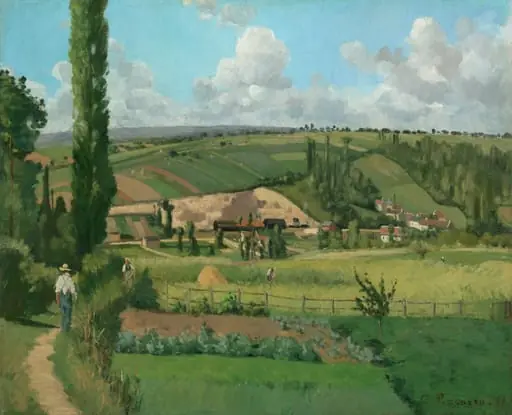
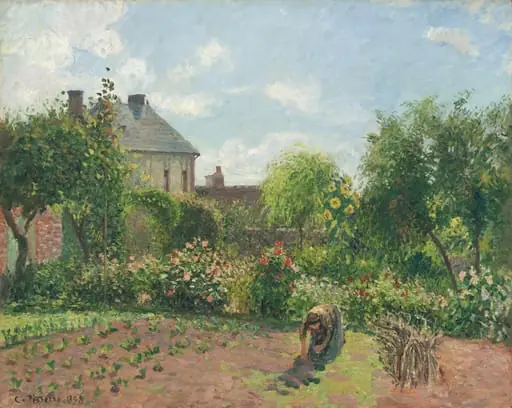
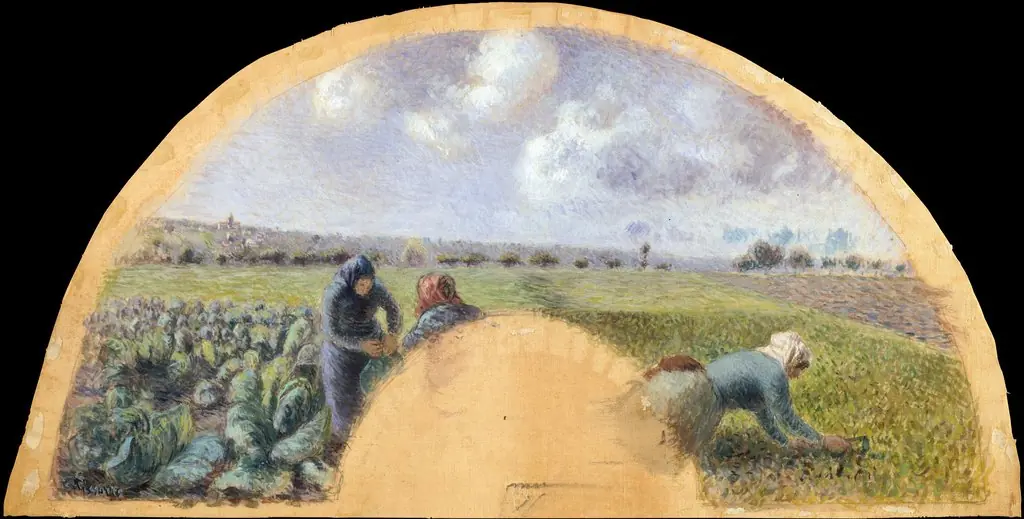
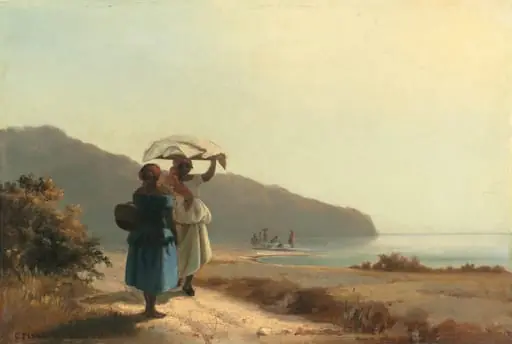
- Wooded Landscape at L'Hermitage, Pontoise (Paysage sous bois, a L'Hermitage, Pontoise)
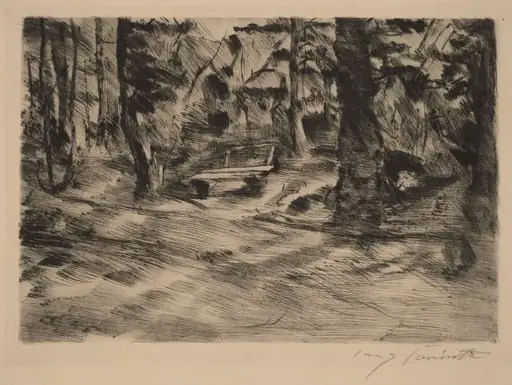 Bank im Walde II (Bench in the Woods II)
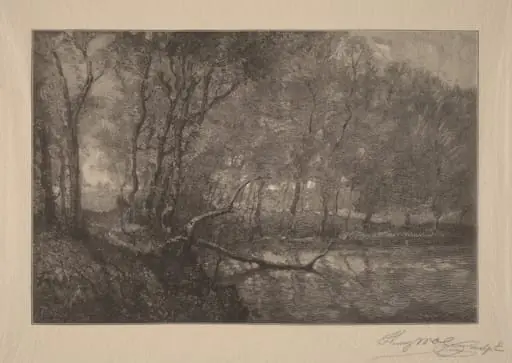 The Mill Pond
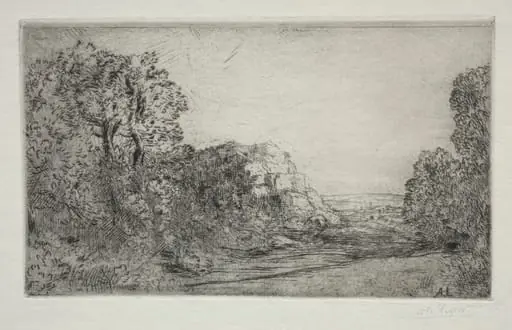 Landscape: Sunrise
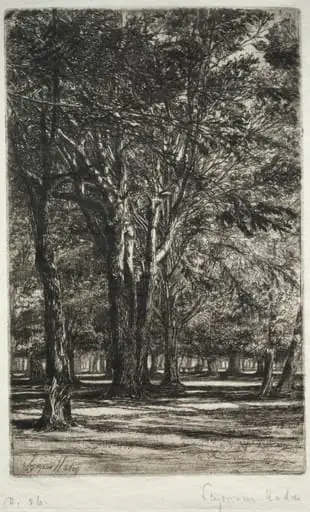 Kensington Gardens (The Larger Plate)
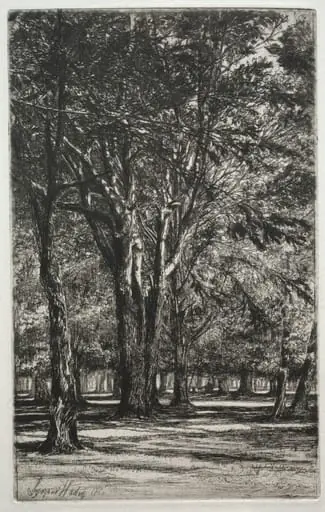 Kensington Gardens (The Large Plate)
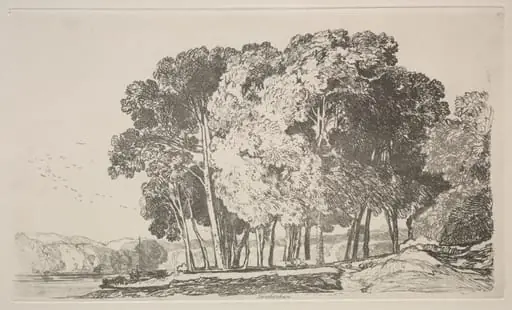 Liber Studiorum: Twickenham
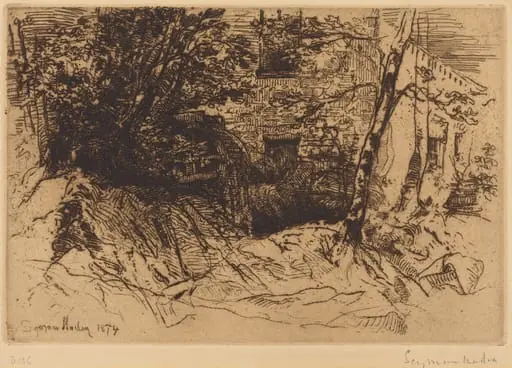 The Mill-Wheel
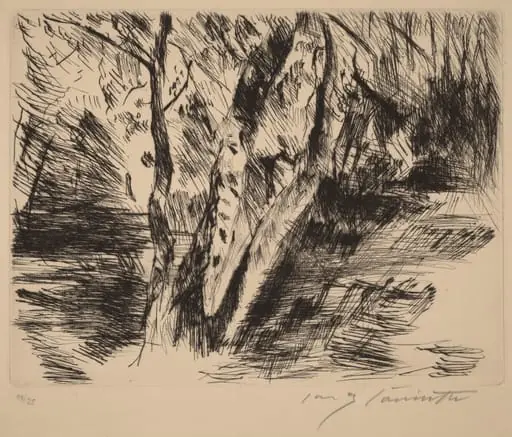 Birkenstämme im Tiergarten (Birch Trees in the Tiergarten)
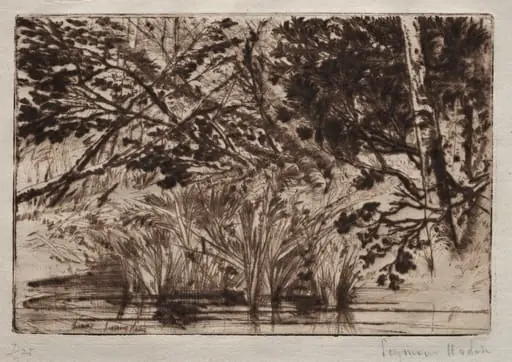 The Mouth of a Brook (Second Plate)
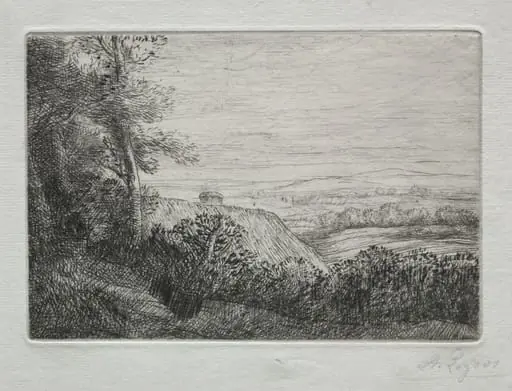 Les dernière Rayons de Soleil
![Forest on Lago Maggiore [Foresta sul Lago Maggiore], by Giberto Borromeo](https://artifactworldgallery.com/img/giberto-borromeo--forest-on-lago-maggiore-foresta-sul-lago-maggiore--6d25270befdb299f-w320.webp) Forest on Lago Maggiore [Foresta sul Lago Maggiore]
Forest on Lago Maggiore [Foresta sul Lago Maggiore]