Artwork
Woman and Child at the Well
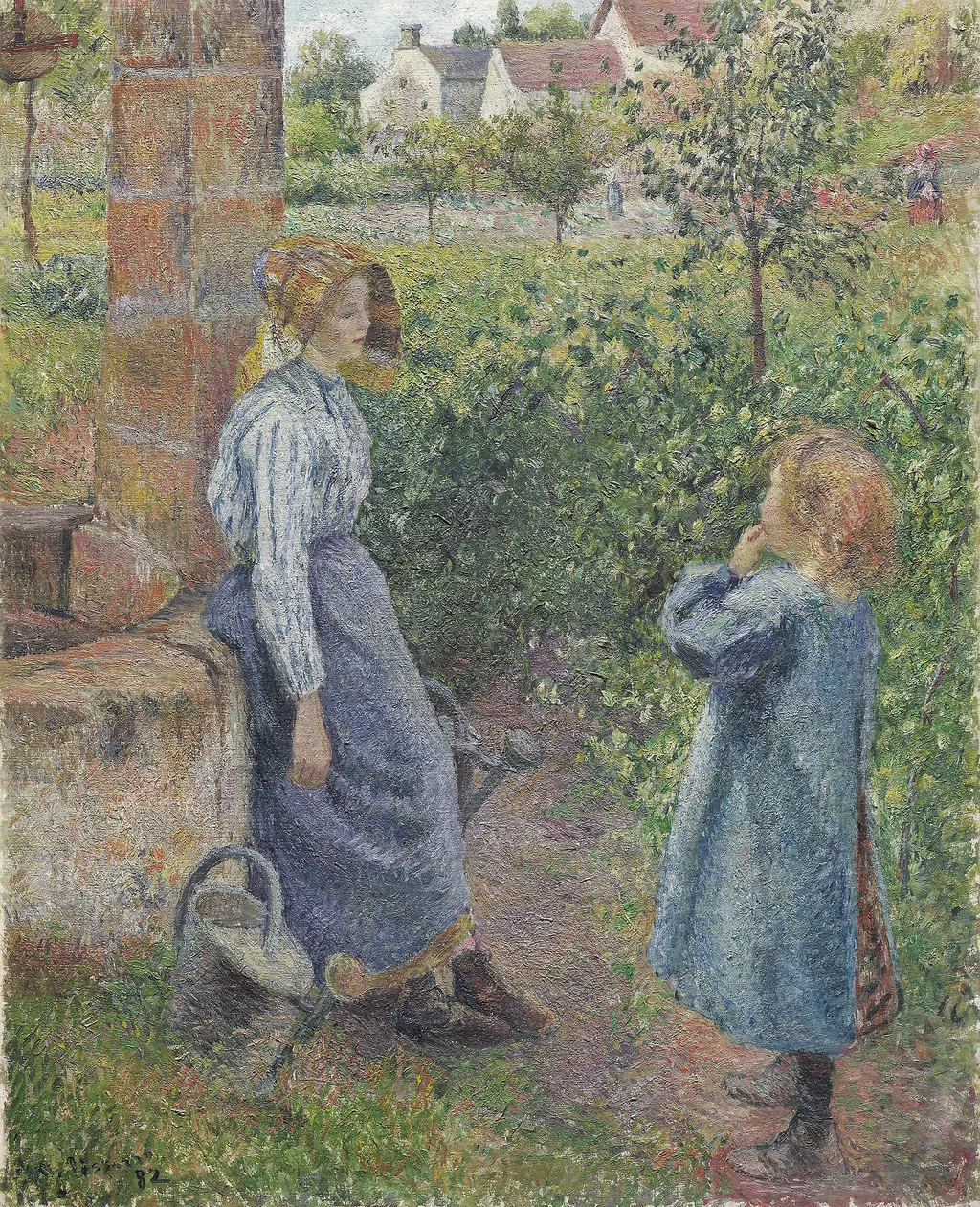
Woman and Child at the Well is an oil painting by the Impressionist artist Camille Pissarro. It dates from 1892 and is held in the collection of the Art Institute of Chicago.
About this work
Subject & Meaning
The painting shows a woman holding a child beside an outdoor stone well, a motif that evokes themes of daily labor and maternal care in 19th-century rural life.
The painting shows a woman holding a child beside an outdoor stone well, a motif that evokes themes of daily labor and maternal care in 19th-century rural life. Pissarro’s careful rendering of the well’s structure and the figures’ interaction underscores a quiet narrative of domestic routine and nurturing. The work’s symbolism has been interpreted as a subtle commentary on the cycles of life and the interdependence between parent and child, reflecting the artist’s broader interest in ordinary scenes imbued with social resonance.
Technique & Style
Woman and Child at the Well is an oil painting executed on canvas, a standard support for Camille Pissarro's easel work. The composition measures 81.5 by 66.4 cm in a vertical format. Pissarro's handling of the oil medium is consistent with his Impressionist practice of the early 1880s, applying paint in loose, broken strokes that capture the play of natural light across the figures and the rural well setting.
No condition reports or detailed technical analyses are documented in the available sources.
History & Provenance
Woman and Child at the Well is an oil painting on canvas by Camille Pissarro, dated 1882. The work is held in the collection of the Art Institute of Chicago, where it is currently located.
The sources do not provide details on the commission, prior ownership, acquisition history, or chain of custody leading to the painting's presence at the Art Institute of Chicago. No intermediate owners, dealers, or donors are documented in the available information, and the circumstances of the work's creation beyond its 1882 date are not specified.
The painting is held by the Art Institute of Chicago, where it is inventoried as 1882.140.
It was included in the exhibition Impressionist and Post-Impressionist Paintings, Art Institute of Chicago, 1934. The work has also been shown in the 1951 exhibition Pissarro: Loan Exhibition, Arts Club of Chicago, and in 1973 as part of Pissarro in the Art Institute of Chicago, Art Institute of Chicago.
Legacy
The painting has influenced subsequent artists interested in domestic scenes and rural life, particularly through its nuanced handling of light and intimate composition. Art historians cite its compositional balance as a reference point in studies of late 19th-century French genre painting, though direct documentary evidence of its impact on specific later works remains limited in accessible records.
The work is held in the collection of the Art Institute of Chicago, where it is part of the permanent holdings displayed in the European paintings galleries.
Overview
Created in 1892, this oil painting by Camille Pissarro portrays a woman and a child walking together beside a well. The work belongs to the collection of the Art Institute of Chicago and exemplifies the artist’s mature period, when he was integrating Impressionist sensibilities with emerging Neo‑Impressionist ideas.
Context
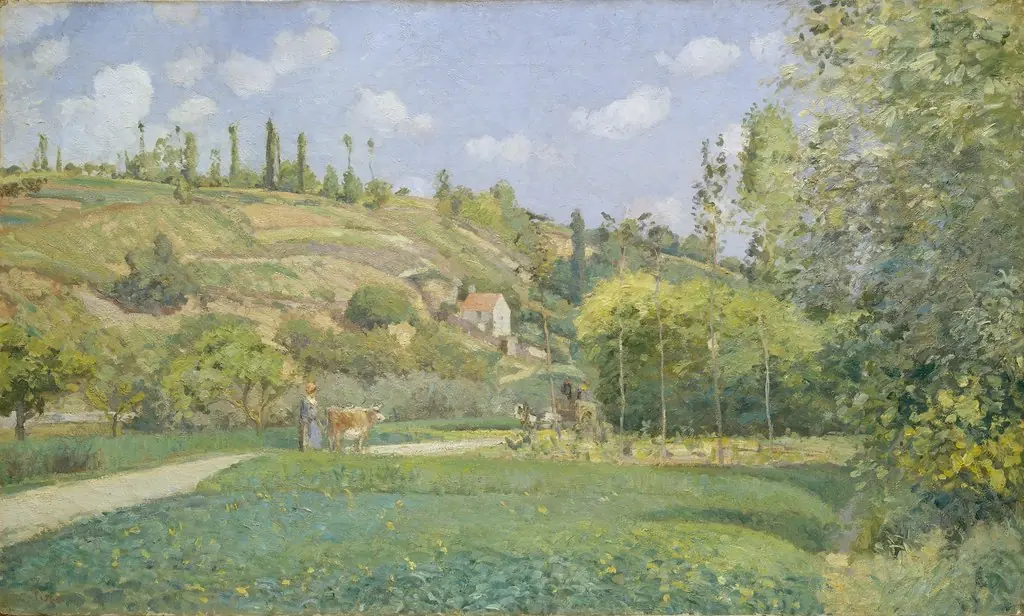
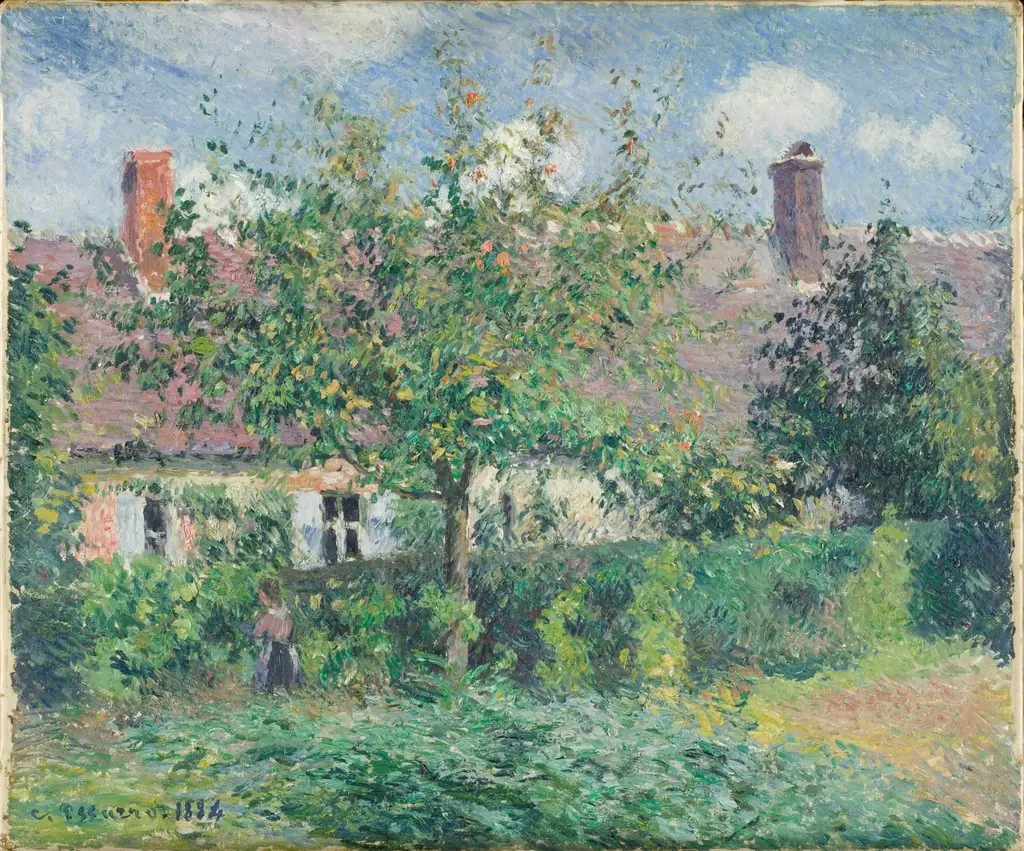
The work belongs to a period when Pissarro was exploring the interplay between natural light and rural labor, often depicting everyday scenes in the French countryside. Its composition, with houses glimpsed through the greenery, situates the figures within a broader landscape that balances domesticity and the open field.
Own this work as a print
Artist & collection