Artwork
Landscape with a Quay and Ships on a Lake
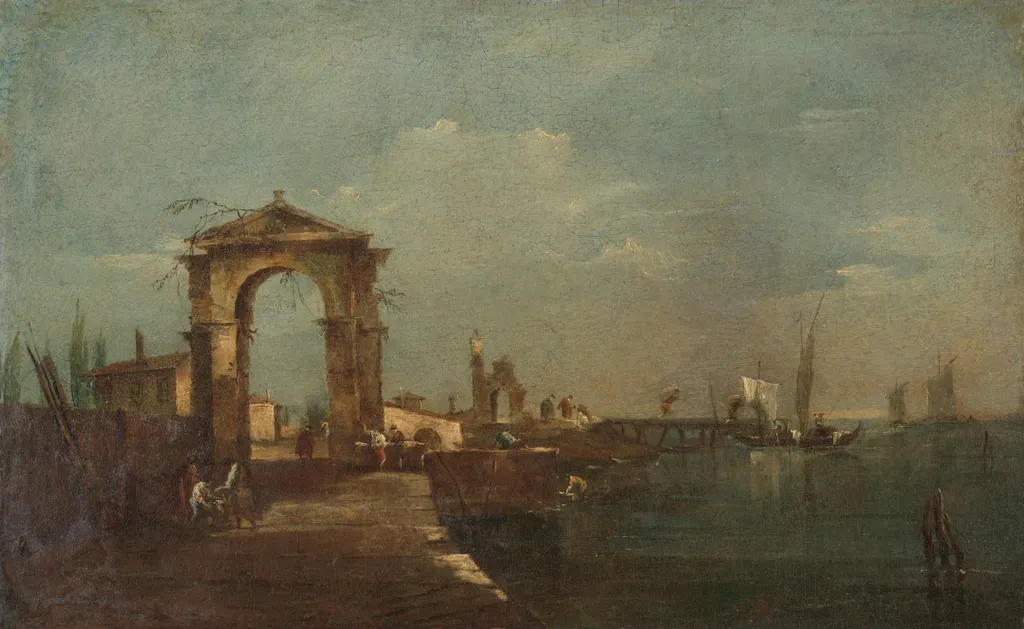
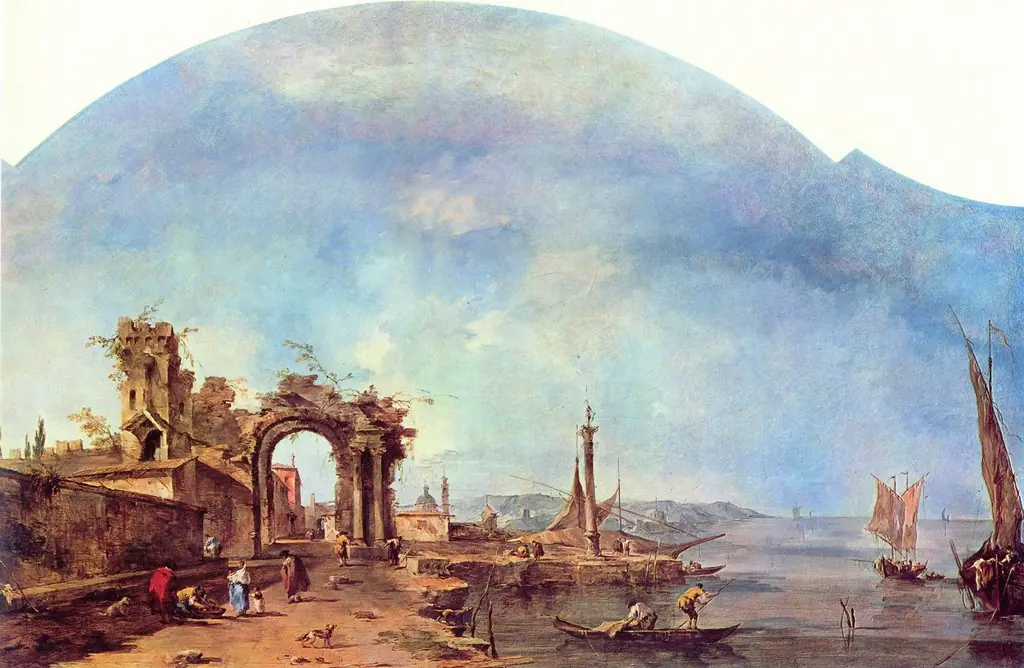
Landscape with a Quay and Ships on a Lake is an unspecified painting by the Rococo painting artist Francesco Guardi. It dates from 1770 and is held in the collection of the Rijksmuseum. The work depicts a tranquil lake scene framed by two weathered stone arches that flank a modest quay.
About this work
Technique & Style
Francesco Guardi’s Landscape with a Quay and Ships on a Lake is an oil painting on canvas, typical of his mature veduta works produced between 1760 and 1780.
Francesco Guardi’s Landscape with a Quay and Ships on a Lake is an oil painting on canvas, typical of his mature veduta works produced between 1760 and 1780. The artist employed a technique known as pittura di tocco, characterized by small dots and spirited, loose brushstrokes that prioritize atmospheric effect over precise architectural definition. This handling creates a vibrant, almost impressionistic quality where buildings appear to merge with the murky lagoon and clouded skies, contrasting with the linear clarity of his predecessor Canaletto.
Guardi’s approach often features dramatic light and shadow effects, with a rich, colorful palette that suggests the dissipation of the Venetian Republic. The composition reflects his tendency to blend existing topography with freely imagined elements, resulting in a scene that feels both immediate and evocative of a fading era.
History & Provenance
The painting Landscape with a Quay and Ships on a Lake, attributed to Francesco Guardi, is held in the collection of the Alte Pinakothek in Munich, where it is listed under inventory number 1932 (acquisition year 1932). It was included in the museum's exhibition "Francesco Guardi: Vedute e Capricci" in 2012, a major retrospective of the Venetian artist's mature works. The work was also featured in the 2012 Venice Museum Correr exhibition "Francesco Guardi.
A cura di Alberto Craievich e Filippo Pedrocco," one of the most comprehensive modern showings of his paintings.
Context
Francesco Guardi’s vedute, including works such as Landscape with a Quay and Ships on a Lake (1760–1780), emerged after the death of his brother Gian Antonio in 1760, shifting his practice from collaborative religious painting toward autonomous capricci and city views. By the 1760s his style had diverged from Canaletto’s linear precision toward a looser, calligraphic touch, pittura di tocco, marked by animated brushwork and atmospheric haze that would later draw comparison with French Impressionism. Guardi’s Venetian scenes often dissolve architectural solidity into murky lagoon light, aligning his work with the waning Republic’s elegiac mood rather than Canaletto’s polished vedute.
Scholars emphasize Guardi’s role as a transitional figure between the classical Venetian tradition and modern painterly sensibility. His capricci freely recombine motifs from Marco Ricci and Luca Carlevarijs, while his documented ceremonial cycles, such as the Doge’s Feasts, record civic rituals in a dissolving palette that prefigure Romantic sensibilities. Despite contemporary Venetian indifference, his works gained favor abroad, securing his posthumous reputation as a precursor to nineteenth-century plein-air painting.
Overview
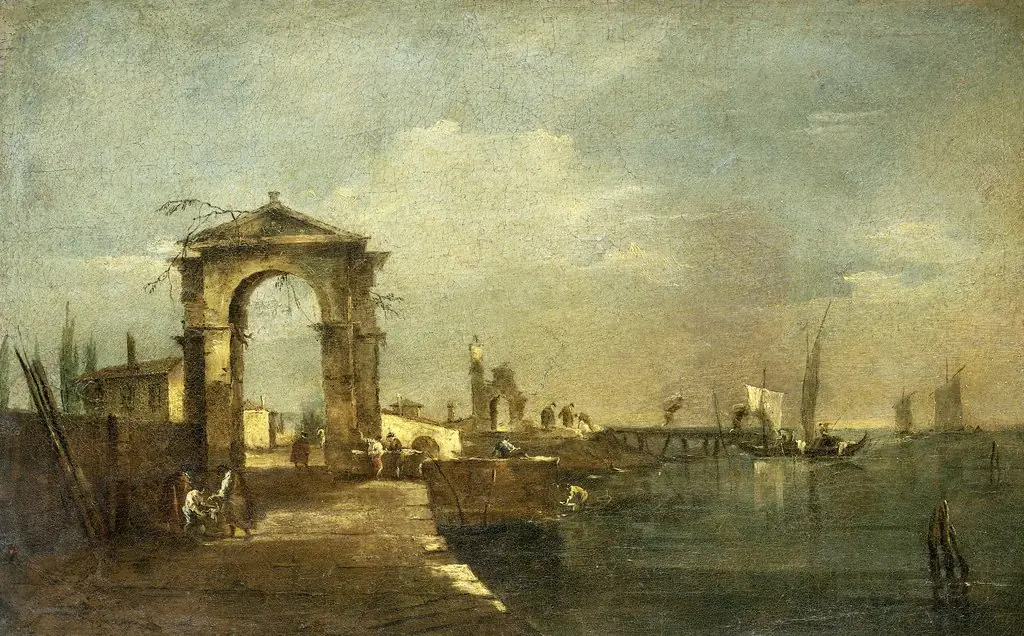
The work depicts a tranquil lake scene framed by two weathered stone arches that flank a modest quay. A small boat rests against the dock while several sail‑filled vessels drift on the water’s surface in the distance. Sparse figures appear near the gates, suggesting a quiet, everyday moment rather than a narrative event.
Subject & Meaning
The composition centers on a peaceful waterfront, emphasizing the interplay of architecture and water. The ruined arches imply a historic site, perhaps a former gateway now integrated into a serene landscape. The presence of ordinary people and modest vessels conveys a sense of routine activity, inviting contemplation of the passage of time and the endurance of place.
Legacy
While not widely cited in major art historical surveys, the piece exemplifies the period’s shift toward intimate, atmospheric landscape painting. Its balanced composition and restrained color scheme continue to inform studies of how 18th‑century artists rendered light and mood in depictions of ordinary life.
Artist & collection

Artist
Francesco Lazzaro Guardi (Italian pronunciation:; 5 October 1712 – 1 January 1793) was an Italian painter, nobleman, and a member of the Venetian School.

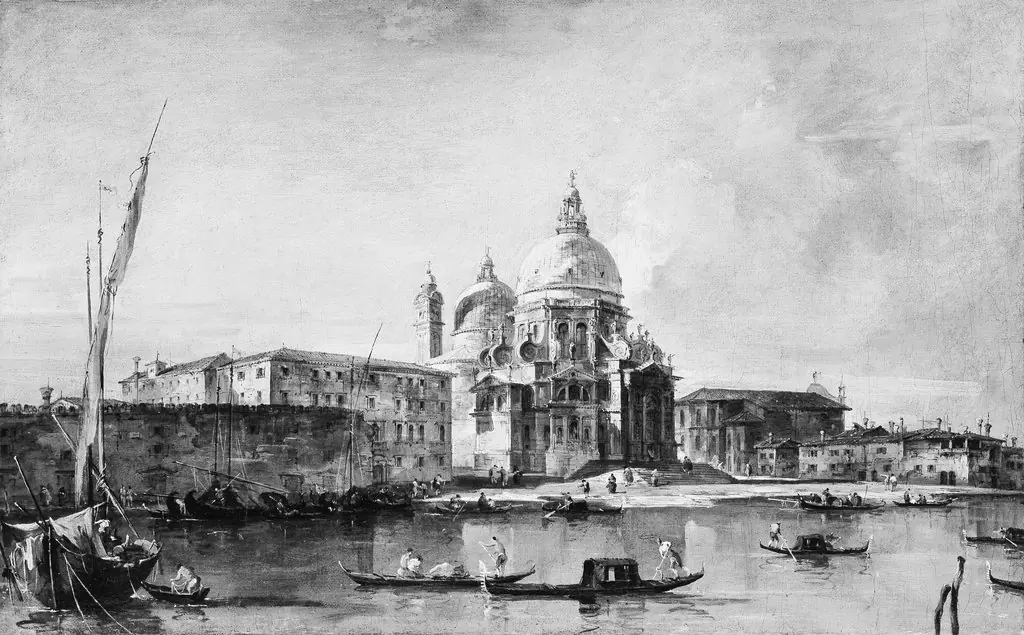

- Landscape with a Quay and Ships on a Lake
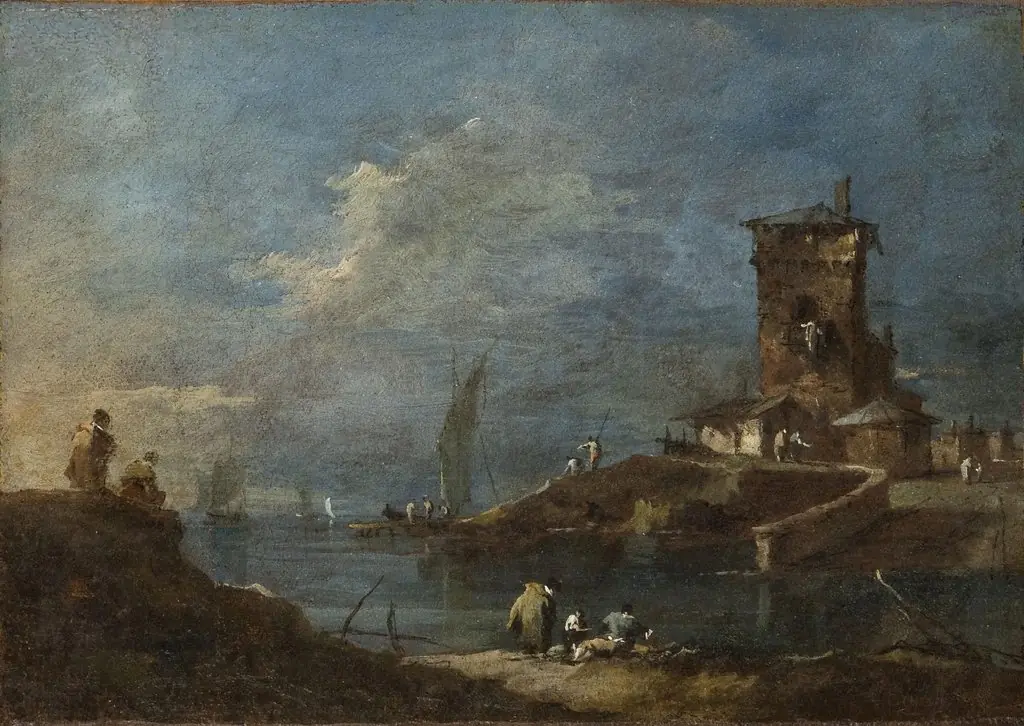 Seaport with a Castle
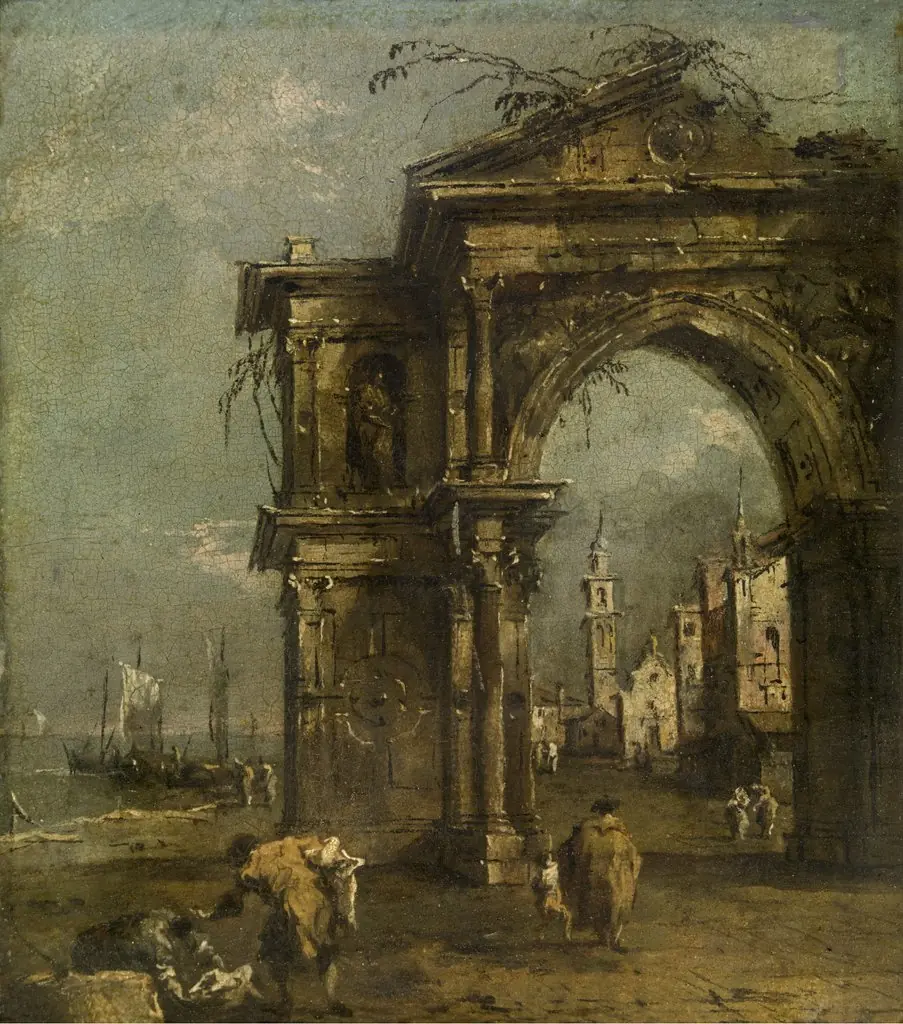 Triumphal Arch in Venice
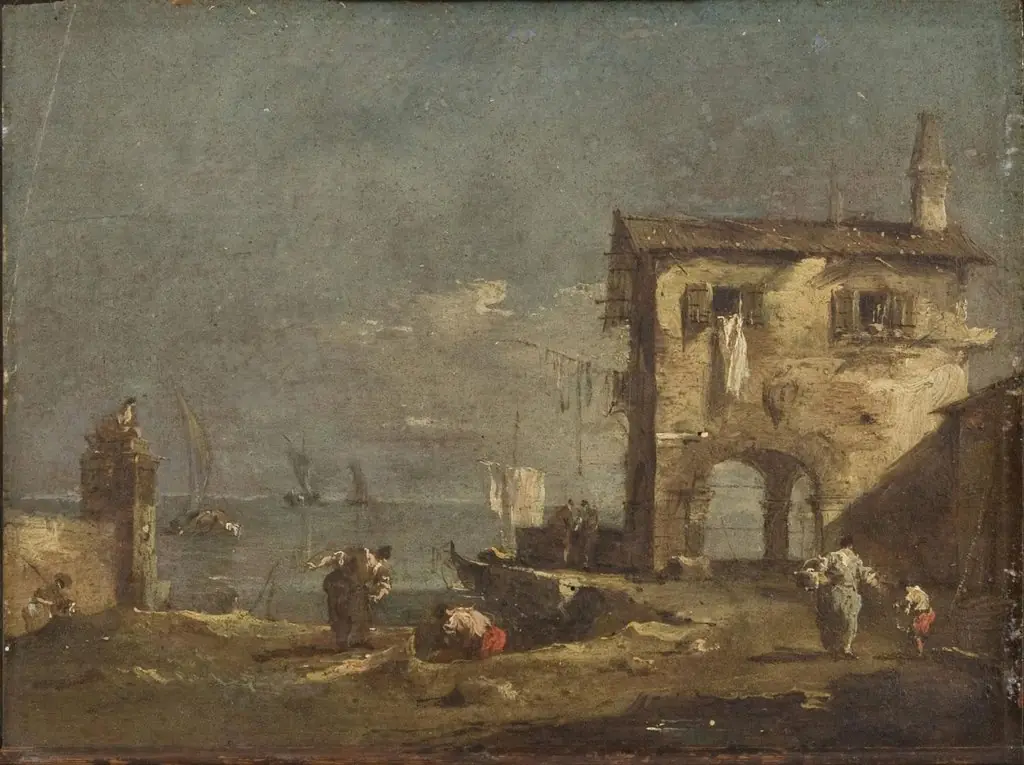 Venetian View
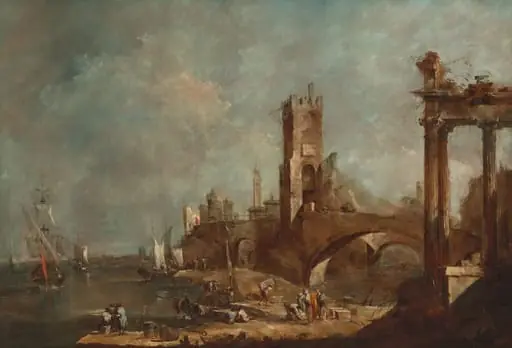 Capriccio of a Harbor
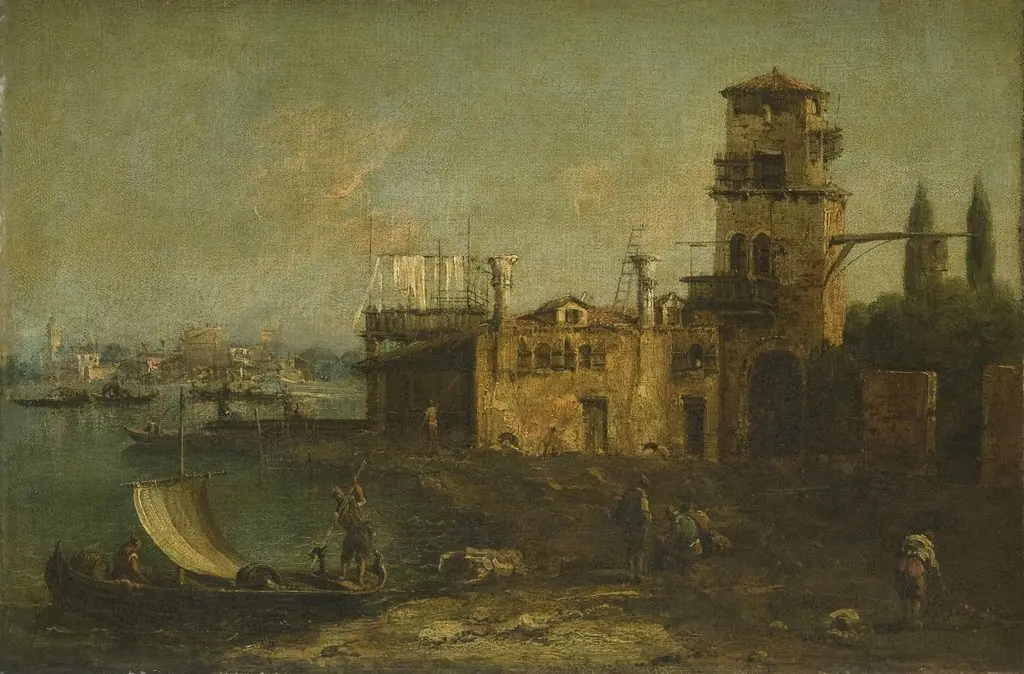 Villa by the Sea
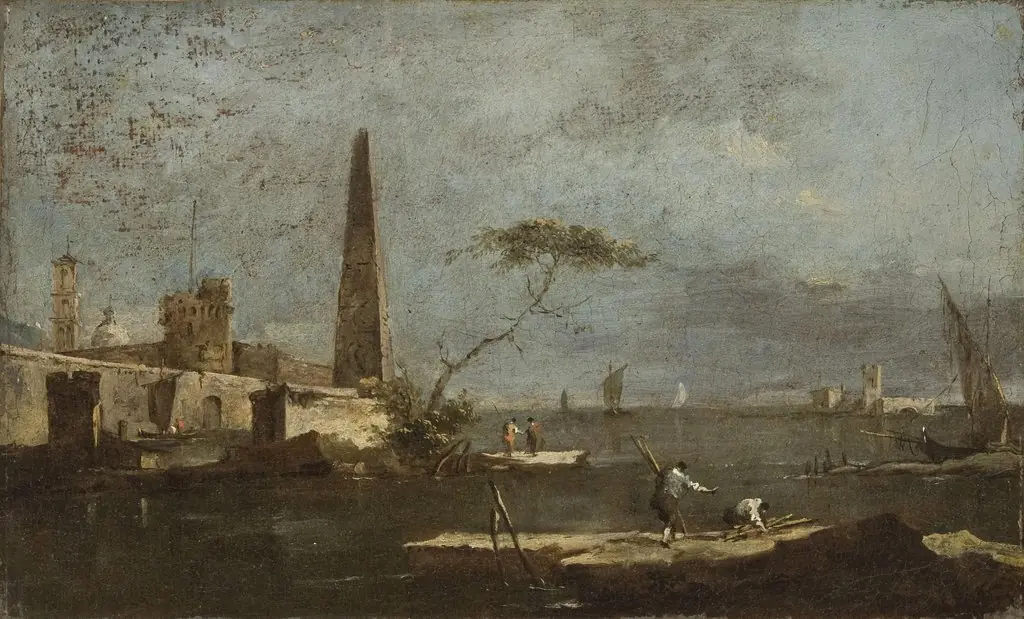 Capriccio with an Obelisk on a Lagoon
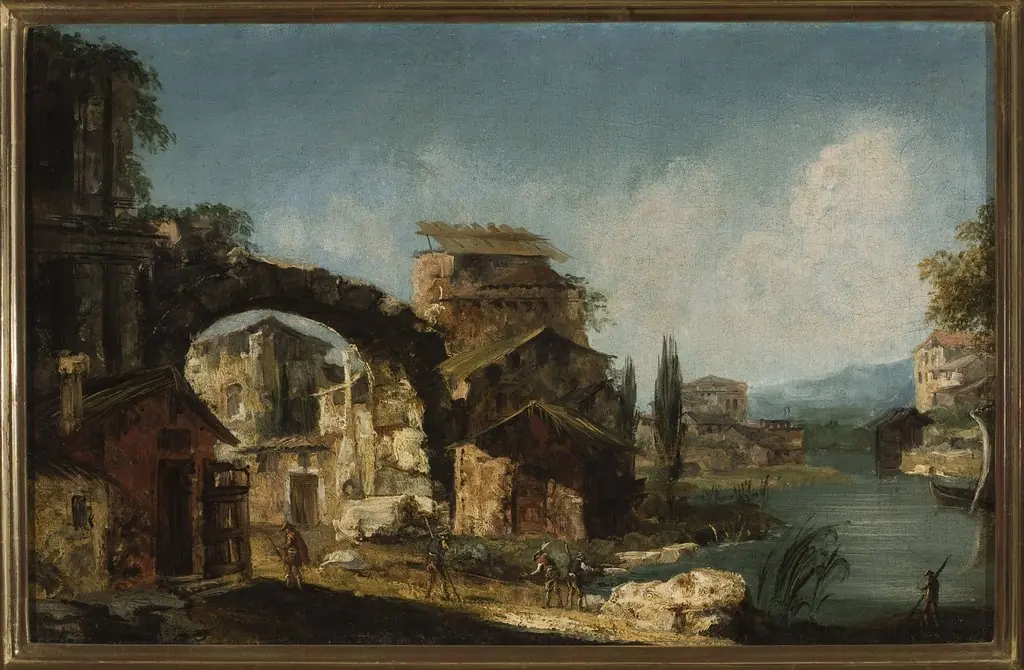 Landscape with ruins
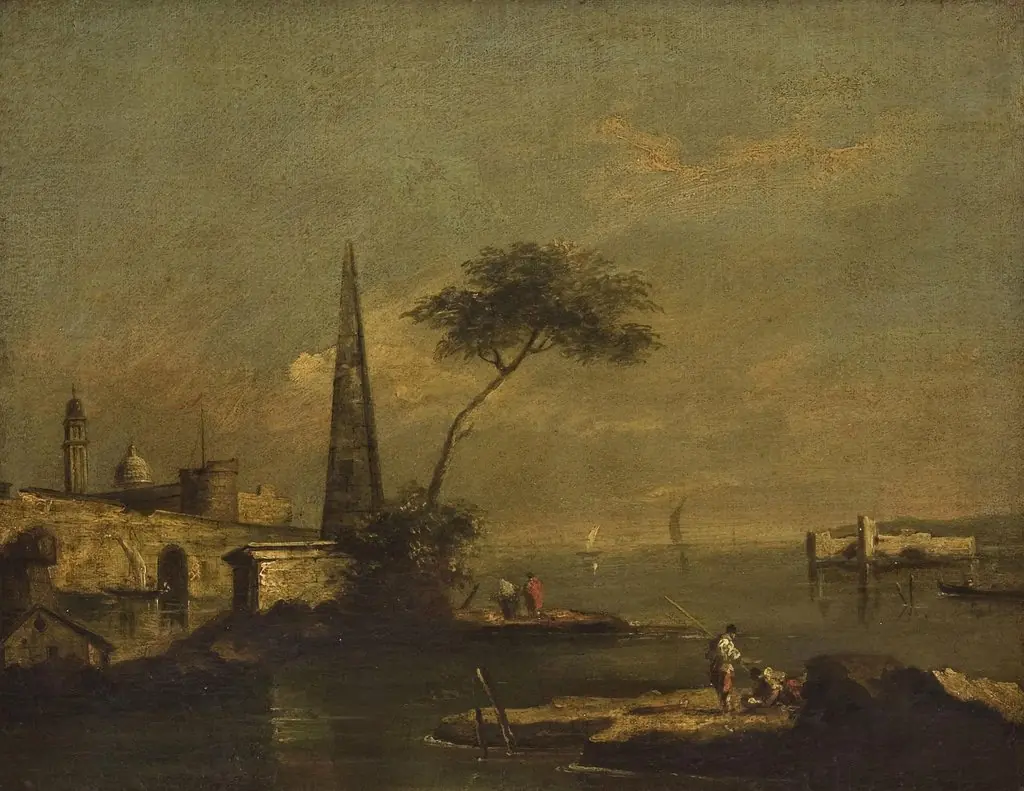 Capriccio with an Obelisk on a Lagoon
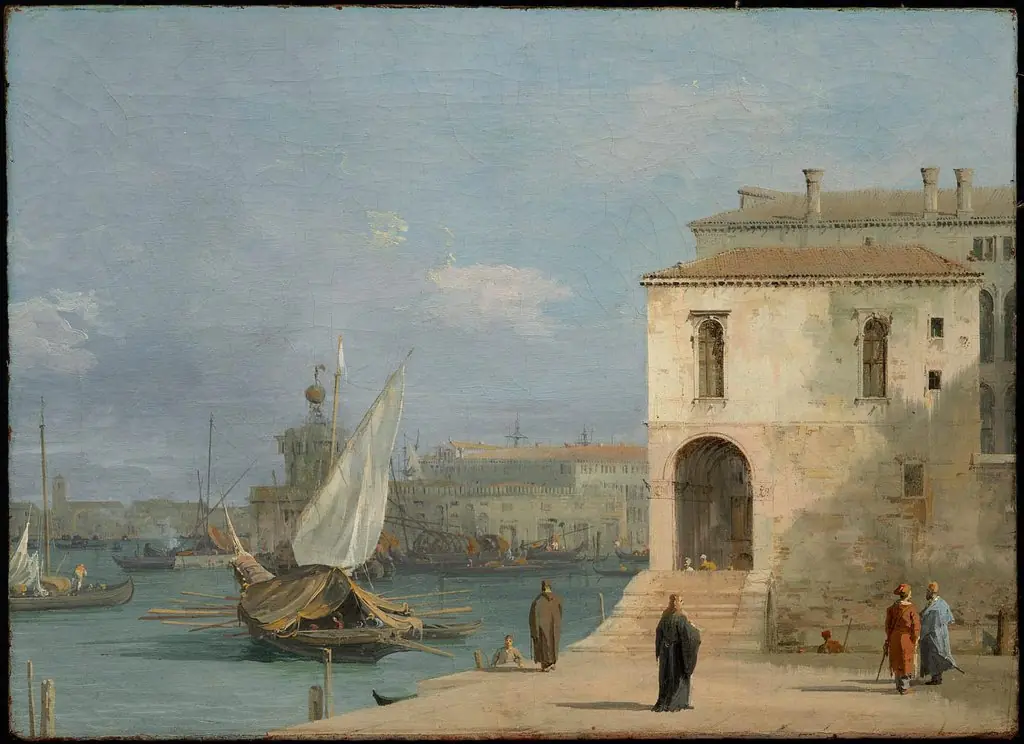 Fonteghetto della Farina, Venice
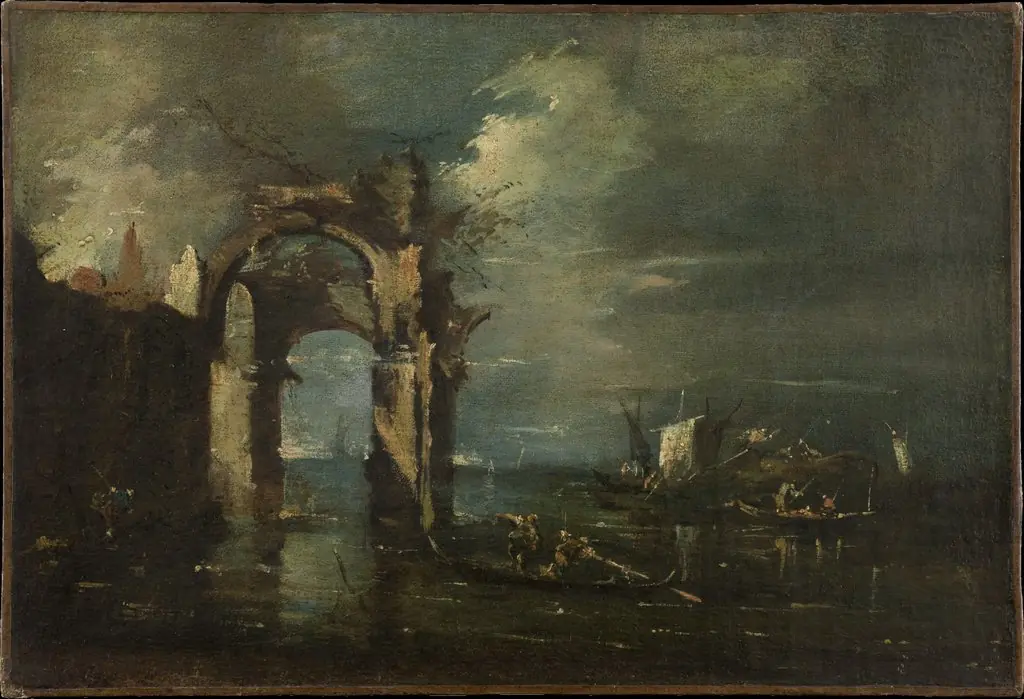 Lagoon Landscape
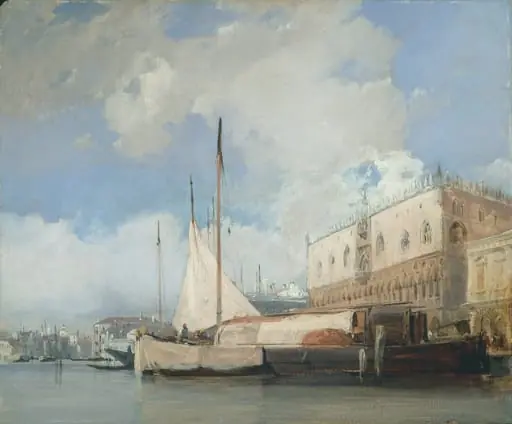 The Doge's Palace, Venice