Artwork
Interior Court of the Doge's Palace, Venice
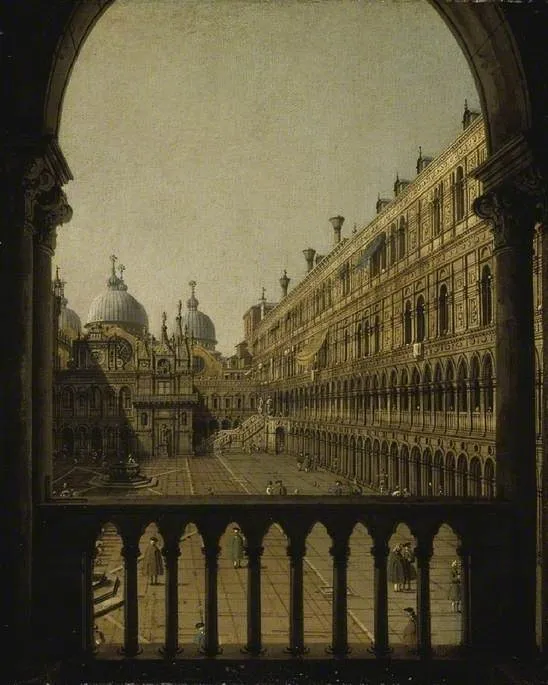
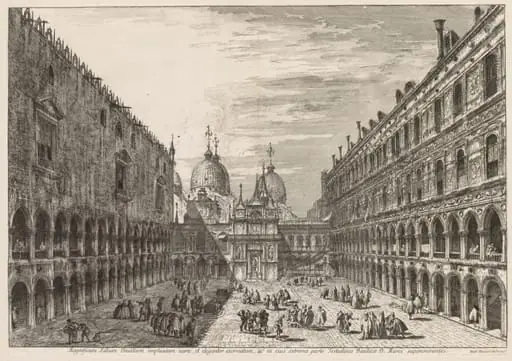
Interior Court of the Doge's Palace, Venice is an oil painting by the Rococo painting artist Canaletto. It dates from 1756 and is held in the collection of the Fitzwilliam Museum. Painted in 1756, this oil on canvas depicts the inner courtyard of the Doge’s Palace in Venice.
About this work
Overview
The work is one of many cityscapes by Giovanni Antonio Canal, known as Canaletto, who specialized in precise architectural views of his native city.
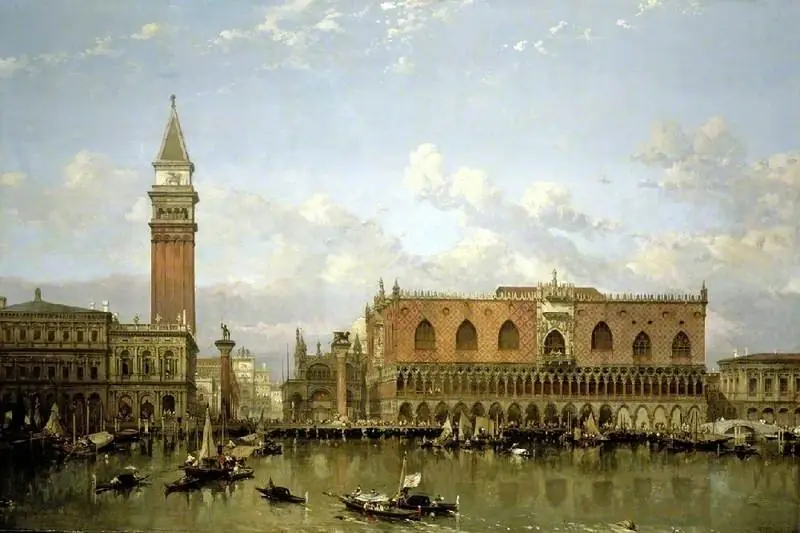
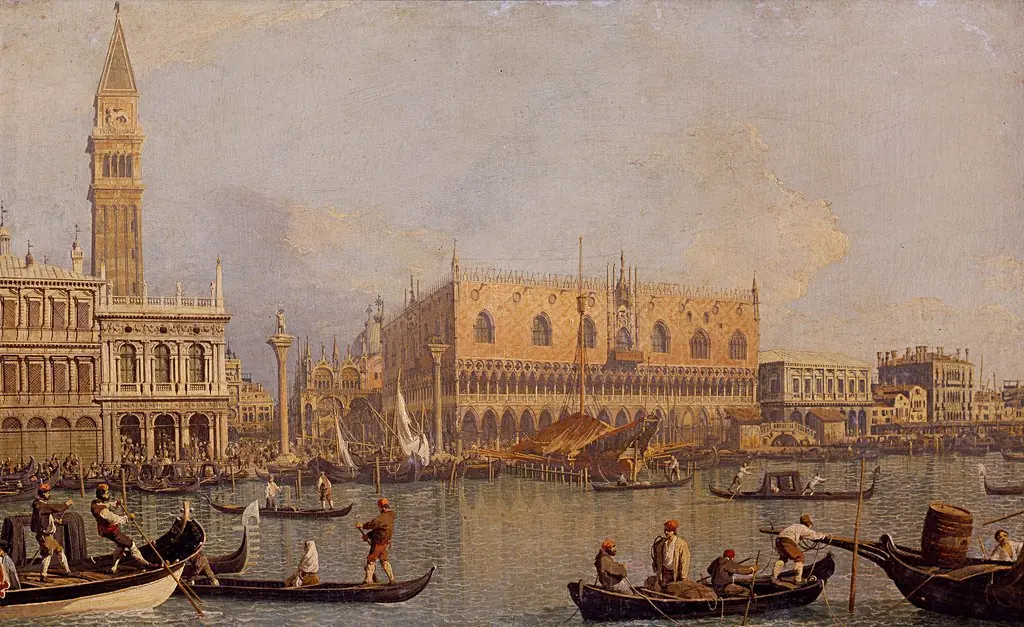
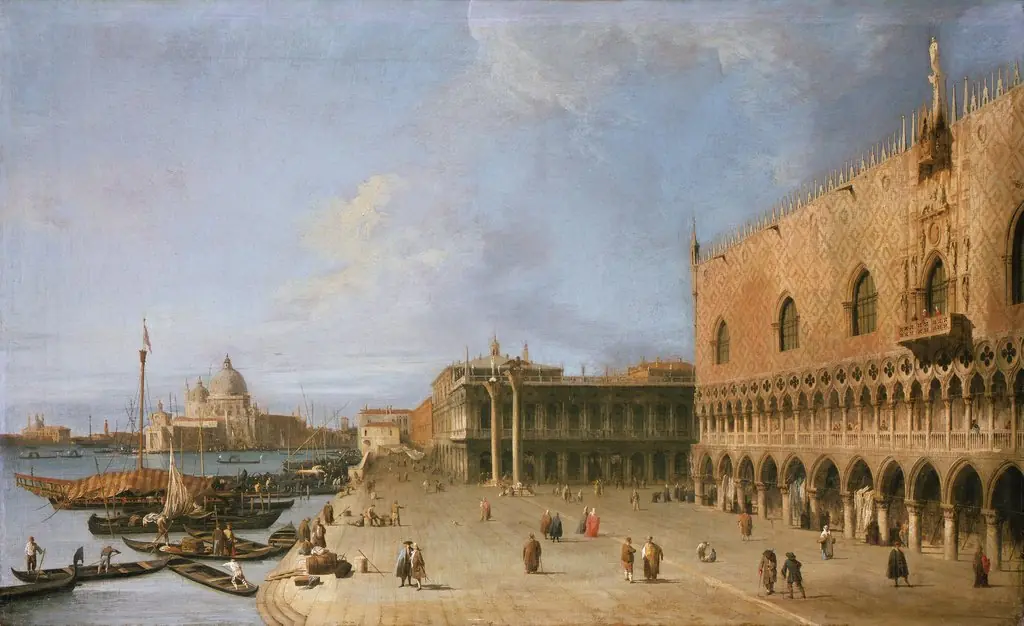
Painted in 1756, this oil on canvas depicts the inner courtyard of the Doge’s Palace in Venice. The work is one of many cityscapes by Giovanni Antonio Canal, known as Canaletto, who specialized in precise architectural views of his native city. Rendered with careful attention to spatial depth and light, the painting reflects the Venetian tradition of vedute, or topographical scenes, favored by collectors and travelers of the period.
Subject & Meaning
The scene captures the quiet activity within the palace’s central courtyard, framed by its arcaded walkways and monumental arches. Figures move subtly through the space, emphasizing scale and daily life rather than ceremony. The domed structure in the background suggests the adjacent Basilica di San Marco, anchoring the view in Venice’s civic and religious heart. The composition conveys order and permanence, aligning with the palace’s role as a symbol of Venetian authority.
Technique & Style
Canaletto employed fine brushwork to render the stonework, columns, and pavement with tactile accuracy. Light falls sharply from above, casting defined shadows that enhance the three-dimensionality of the architecture. Colors are restrained, earthy browns, grays, and beiges, creating a subdued harmony.
The perspective is mathematically precise, typical of his method, which combined optical observation with compositional discipline to achieve realism without theatricality.
History & Provenance
The painting entered the Fitzwilliam Museum’s collection in the 19th century, likely acquired during a period of heightened European interest in Venetian views. It was painted during Canaletto’s mature phase, after his successful years in England, when he returned to Venice and resumed documenting its architecture. Its survival in good condition reflects its early recognition as a representative work of Venetian topographical art.
Context
In mid-18th century Venice, vedute paintings served both as souvenirs for Grand Tour travelers and as records of the city’s architectural grandeur. Canaletto’s works stood apart for their fidelity to observed detail, contrasting with more imaginative or romanticized depictions. This painting reflects a cultural moment when Venice’s political power was waning, yet its visual identity remained a subject of enduring fascination.
Legacy
Canaletto’s approach influenced later topographical painters and contributed to the development of urban landscape as a serious genre. His precise rendering of architecture set a standard for accuracy in city views, and his works remain key references for historians studying Venetian urban design. This painting continues to be studied for its technical discipline and its quiet documentation of a city’s enduring structure.
Artist & collection
Artist
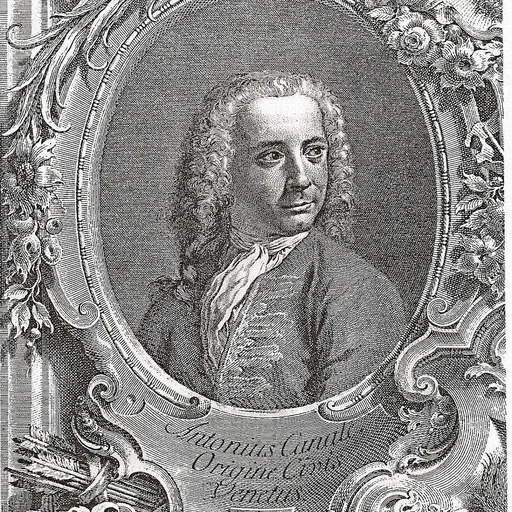
Giovanni Antonio Canal (18 October 1697 – 19 April 1768), commonly known as Canaletto (Italian: ), was an Italian painter from the Republic of Venice, considered an important member of the 18th-century Venetian school.