Artwork
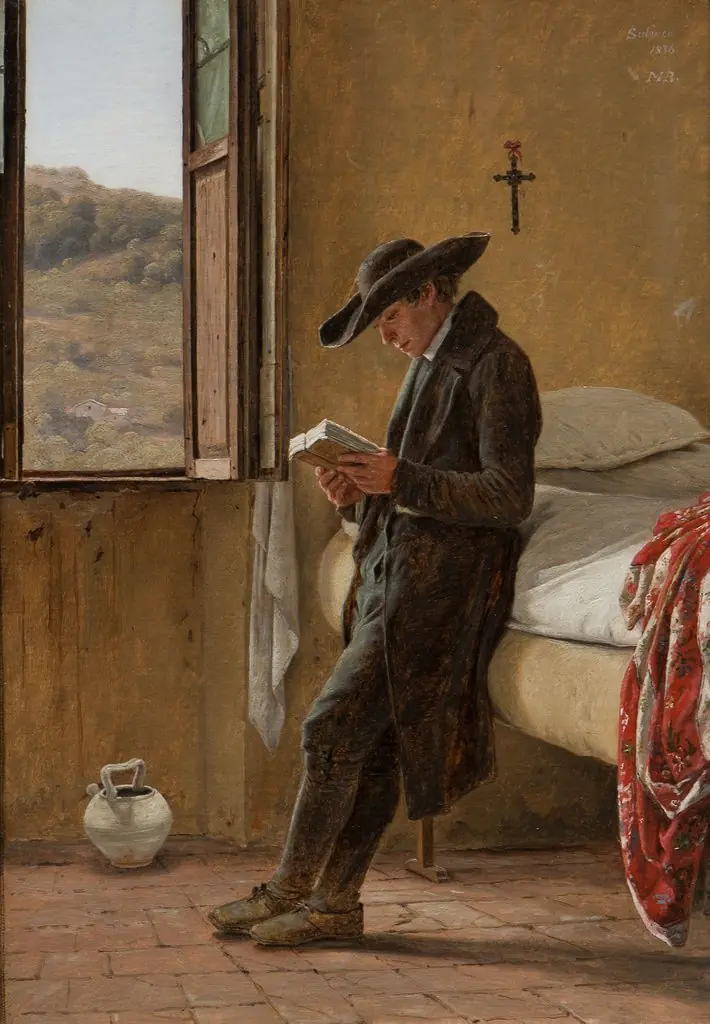
A Fisherman from Sorrento, Italy
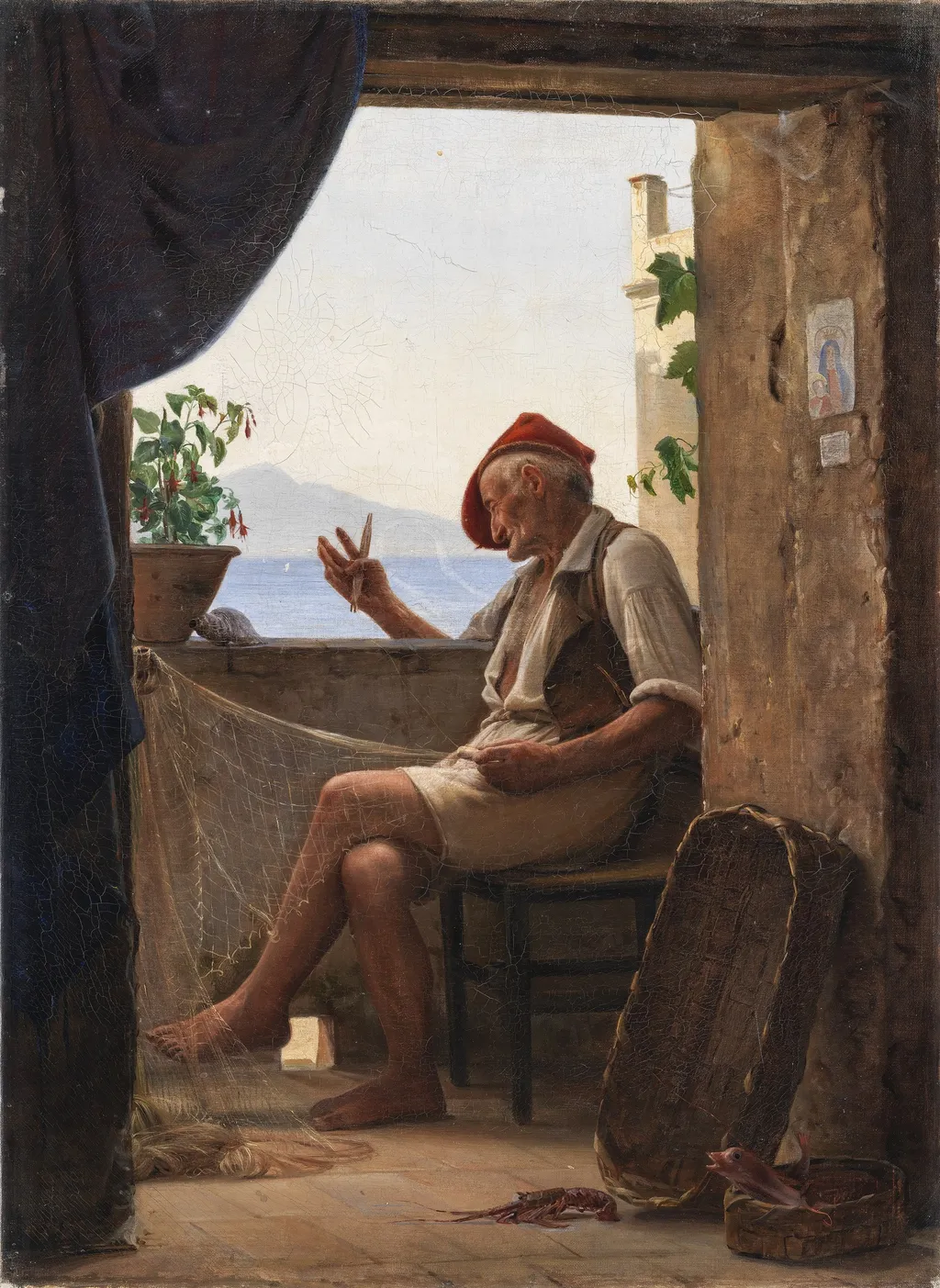
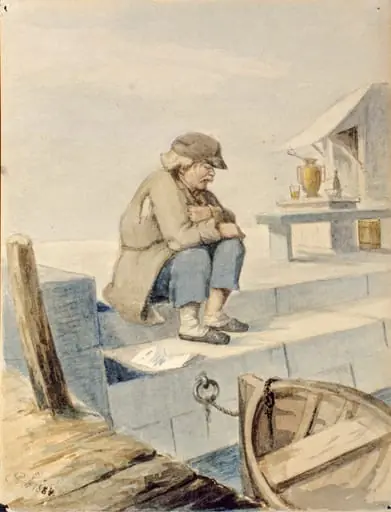
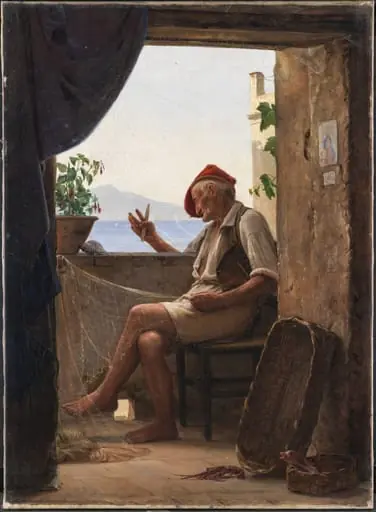
A Fisherman from Sorrento, Italy is an oil painting by the Realist artist Carl Bloch. It dates from 1860 and is held in the collection of the Statens Museum for Kunst.
About this work
Overview
Executed with careful attention to light and texture, the painting reflects Bloch’s early interest in genre scenes before he turned to religious subjects.
Painted in 1860 by Danish artist Carl Bloch, this oil work depicts a solitary fisherman in Sorrento, Italy. The scene captures a quiet moment of pause, set against a luminous coastal backdrop. Executed with careful attention to light and texture, the painting reflects Bloch’s early interest in genre scenes before he turned to religious subjects. It resides today in the collection of Statens Museum for Kunst in Copenhagen.
Subject & Meaning
The figure, a local fisherman, sits indoors near a window, gazing outward with quiet contemplation. His red hat and white shirt suggest regional dress, while the scissors and fishing net imply his trade. The stillness of the moment, combined with the expansive sea beyond, evokes a sense of solitude and the rhythm of coastal labor. No narrative is forced; instead, the painting honors the dignity of everyday life.
Technique & Style
Bloch employs oil paint to render subtle shifts in light and shadow, using chiaroscuro to model the figure and objects with volume. Warm golden tones dominate the interior, contrasting with the cooler blues of the sea and distant mountains. The brushwork is precise yet unobtrusive, emphasizing texture, fabric, wood, and foliage, without overt theatricality. The composition directs attention to the man’s gaze, anchoring the scene in quiet observation.
History & Provenance
Created during Bloch’s time in Italy, the painting was likely made as part of his study of southern European life. It entered the collection of Statens Museum for Kunst in Denmark shortly after its completion, possibly through direct acquisition or donation. Its presence in the museum’s holdings reflects early Danish interest in Nordic artists engaging with Mediterranean subjects during the 19th century.
Context
In the 1860s, Scandinavian artists increasingly traveled to Italy, drawn by its light and classical heritage. Bloch, like many of his peers, sought inspiration beyond northern Europe. This work aligns with a broader trend of genre painting that valued authenticity over idealization.
Unlike grand historical scenes, it focuses on the ordinary, reflecting a shift toward realism in European art at the time.
Legacy
Though less known than Bloch’s later biblical works, this painting remains a significant early example of his observational skill. It illustrates his ability to convey atmosphere and character with restraint. The piece continues to be studied for its technical precision and its quiet representation of labor and place, offering insight into the artist’s development before his religious commissions.
Own this work as a print
Artist & collection