Artwork
Wanderer in the Storm
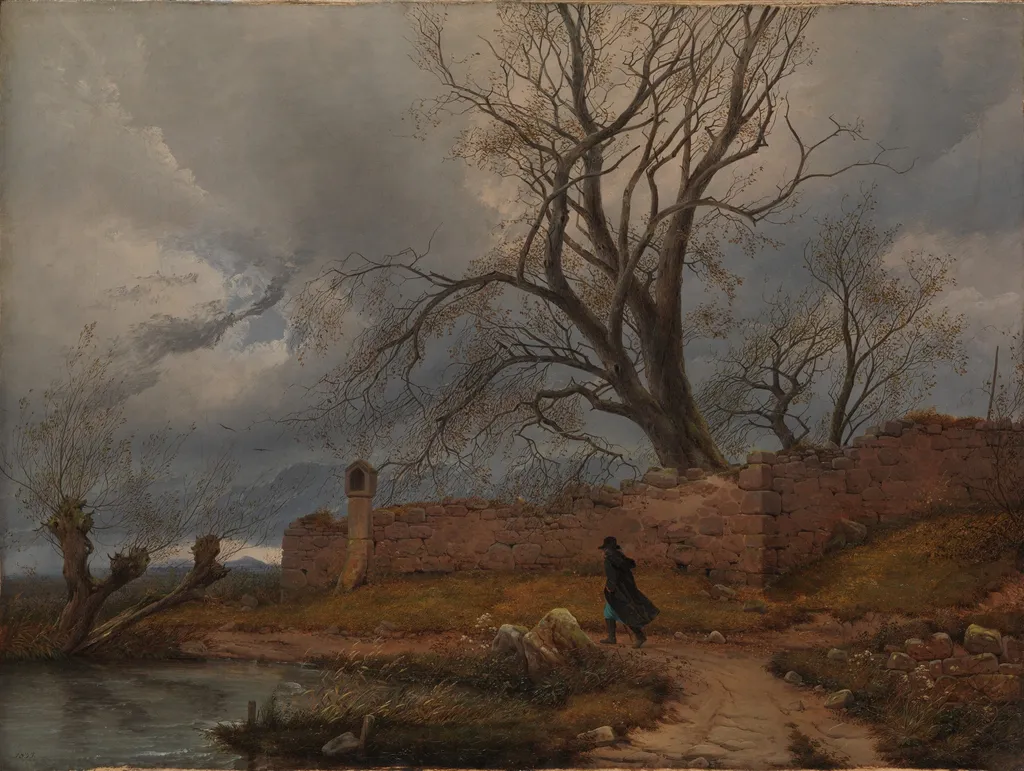
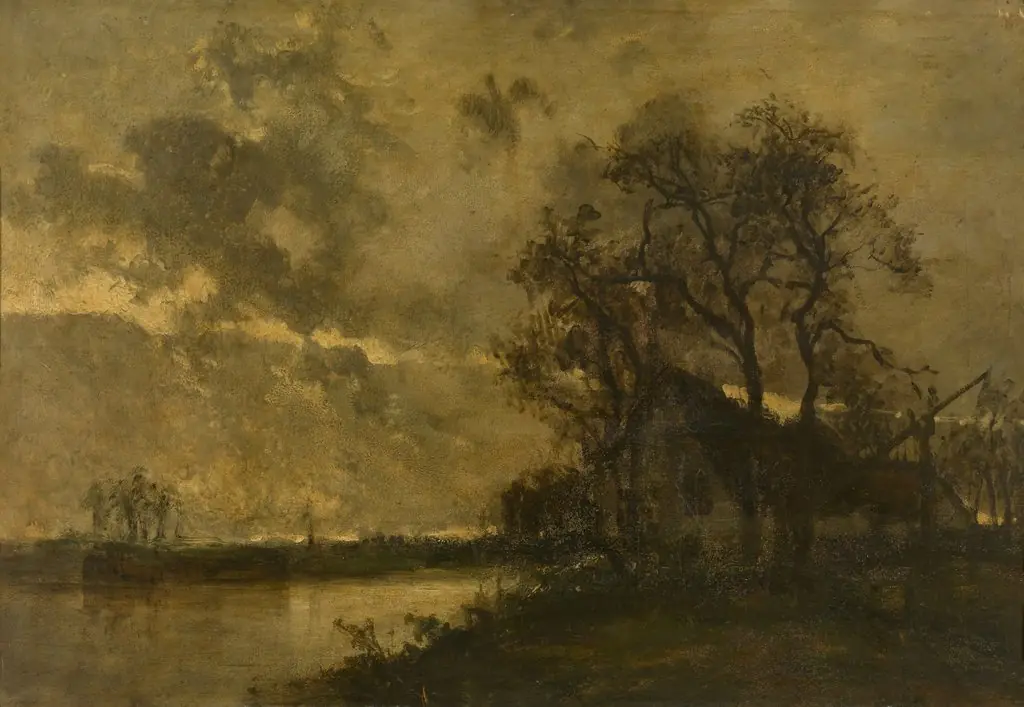
Wanderer in the Storm is an oil painting by the German Romanticist artist Carl Julius von Leypold. It dates from 1835 and is held in the collection of the Metropolitan Museum of Art.
About this work
Subject & Meaning
Its iconography, man, tree, and storm, conveys a narrative of struggle and resilience, embodying the period’s fascination with nature’s sublime intensity.
Wanderer in the Storm portrays a solitary male figure battling a tempestuous landscape, with a gnarled tree anchoring the composition. The raging sky and wind‑swept tree symbolize natural forces confronting humanity, reflecting Romantic era concerns about human vulnerability amid elemental power. Executed in oil on canvas in 1835 by Carl Julius von Leypold, the work measures 42.5 × 56.5 cm and belongs to the Metropolitan Museum of Art collection.
Its iconography, man, tree, and storm, conveys a narrative of struggle and resilience, embodying the period’s fascination with nature’s sublime intensity.
Technique & Style
Created in 1835 by Carl Julius von Leypold, Wanderer in the Storm is an oil painting executed on canvas. The work measures 42.5 by 56.5 units. Stylistically, the composition depicts a solitary male figure situated within a turbulent storm environment, accompanied by arboreal elements.
The application of oil paint on a woven support allows for the rendering of these atmospheric and figurative details, characteristic of the artist's approach during this period. The piece is currently held in the collection of the Metropolitan Museum of Art.
History & Provenance
Wanderer in the Storm was created in 1835 by the German painter Carl Julius von Leypold, who executed the work in oil on canvas. The painting’s earliest documented ownership is not recorded in the available sources, but it is presently held by the Metropolitan Museum of Art in New York, where it is catalogued as part of the museum’s collection. No information regarding a specific commission or subsequent private owners appears in the cited references.
Wanderer in the Storm is housed in the collection of the Metropolitan Museum of Art in New York. The work is listed in the museum’s catalogue under the artist Carl Julius von Leypold, dated 1835, and recorded as an oil on canvas measuring 42.5 cm by 56.5 cm. No explicit accession or inventory number is provided in the documented references. The painting has been part of the museum’s permanent display since its acquisition, though specific exhibition catalogues mentioning this piece are not detailed in the available sources.
Overview
Carl Julius von Leypold's 1835 oil painting, Wanderer in the Storm, exemplifies the German Romantic movement. This landscape features a lone individual confronting a dramatic natural scene, characterized by an imposing tree and an approaching tempest. The artwork is part of the collection at The Metropolitan Museum of Art, representing a key moment in 19th-century German art.
Context
Created by Carl Julius von Leypold, a German painter of the 19th century, Wanderer in the Storm is firmly situated within the German Romanticism movement. This artistic current frequently explored themes of nature's grandeur, human solitude, and emotional introspection. Leypold's depiction of a lone figure amidst a powerful, untamed landscape resonates with the movement's emphasis on subjective experience and the sublime.
Own this work as a print
Artist & collection
Artist
Carl Julius von Leypold (1806–1874) was a German Romantic landscape painter known for his painting, "Wanderer in the Storm".

- Landscape with the ruins of Castle Brederode in Santpoort
 Landscape with a Thunderstorm Brewing
 Oak Trees by a Pond
 Landscape with a Thunderstorm Brewing
 Pool
Pool Cottages and Frozen River
 Bridge with a Sluice
 Landscape with Dune and Small Waterfall
 Landscape
 Souvenir of Terracina
 Die Fraueninsel im Chiemsee
 Paisaje de Portland