Artwork
The Flight into Egypt
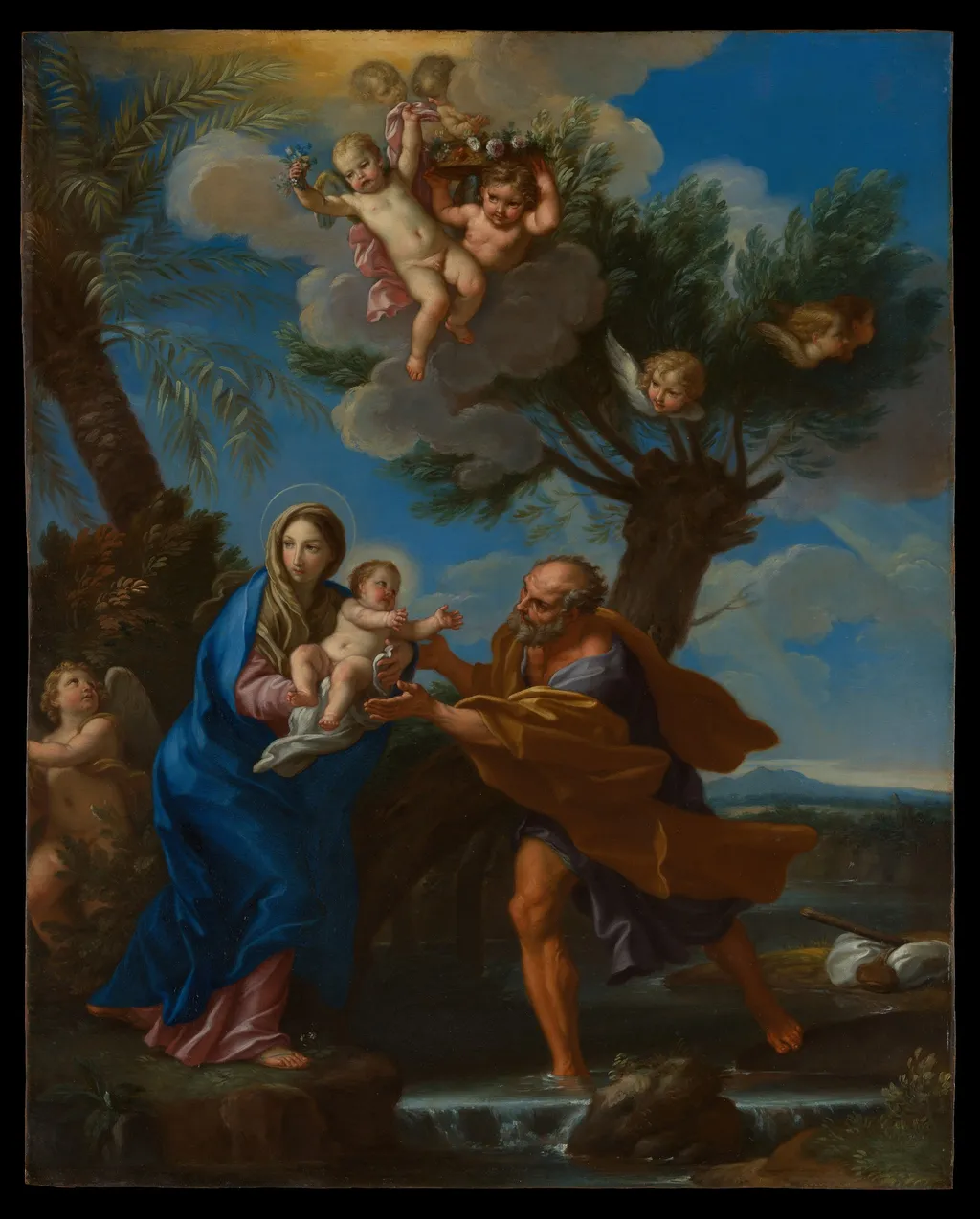
The Flight into Egypt is an oil painting by the Early Baroque Italian artist Carlo Maratta. It dates from 1664 and is held in the collection of the Metropolitan Museum of Art.
About this work
Subject & Meaning
As a depiction of this specific gospel event, the work serves as a visual representation of divine protection and the humility of the Incarnation.
Carlo Maratta's 1664 oil painting on copper illustrates the biblical narrative of the Flight into Egypt, a central theme in religious art. The composition features the Holy Family, Mary, Joseph, and the Christ Child, accompanied by an angel, capturing the moment of their journey to escape persecution. As a depiction of this specific gospel event, the work serves as a visual representation of divine protection and the humility of the Incarnation.
The inclusion of the angel underscores the supernatural guidance provided to the family during their exile. By rendering these figures on a durable copper support, Maratta emphasizes the enduring significance of this sacred story, focusing on the intimate yet momentous nature of the family's flight.
Technique & Style
The Flight into Egypt is an oil painting created in 1664 on a copper support, as indicated by its classification as a painting on copper and the recorded material of oil paint. The work belongs to the religious genre and depicts an angel, the Virgin Mary, the infant Jesus, and Saint Joseph, reflecting a traditional devotional narrative. Executed in the Baroque period, the composition demonstrates the refined brushwork and luminous coloration characteristic of Carlo Maratta’s style, while the metallic support allowed a smooth, durable surface suitable for small devotional images. No detailed condition or handling information is provided in the available documentation.
History & Provenance
Carlo Maratta executed The Flight into Egypt in 1664. The artist created this religious composition using oil paint applied to a copper support. The work depicts the biblical narrative of Mary, Joseph, the Christ Child, and an angel.
Currently, the painting is held in the collection of the Metropolitan Museum of Art, where it is cataloged under the accession number 2020.263.8. While the specific original commissioner and the detailed ownership chain prior to its museum acquisition are not detailed in the available records, the work's inception date and material composition are firmly established as mid-seventeenth century.
The painting The Flight into Egypt by Carlo Maratta, executed in 1664 on copper, is part of the Metropolitan Museum of Art's collection, accession number 2020.263.8. It is housed in the museum's European Paintings department and is typically displayed in the gallery dedicated to 17th‑century Italian art. The work entered the museum's holdings in 2020 and has not been listed in publicly available exhibition records within the provided sources, suggesting that its display history is limited to internal collection rotations rather than separate exhibitions.
Overview
Carlo Maratta's The Flight into Egypt, executed in 1664 on a copper support, depicts the Holy Family during their biblical journey to escape King Herod's massacre. The composition centers on the Virgin Mary, clad in a blue mantle, holding the Christ Child, while Saint Joseph kneels beside them in a gesture of reverence and protection. Above the figures, three putti float amidst clouds, one holding a wreath and another fruit, symbolizing divine favor and the promise of redemption.
The background features a serene landscape with trees and a soft, atmospheric sky, characteristic of Maratta's classical approach to religious narrative. This work exemplifies the artist's mature style, blending High Renaissance clarity with Baroque dynamism. Painted during a period when Maratta was a leading figure in Roman art, the piece reflects his commitment to idealized forms and balanced composition.
The use of copper as a medium allowed for fine detail and luminous color, enhancing the ethereal quality of the scene. The painting remains a significant example of 17th-century Italian religious art, showcasing Maratta's ability to convey spiritual depth through precise draftsmanship and harmonious design.
Own this work as a print
Artist & collection
Artist
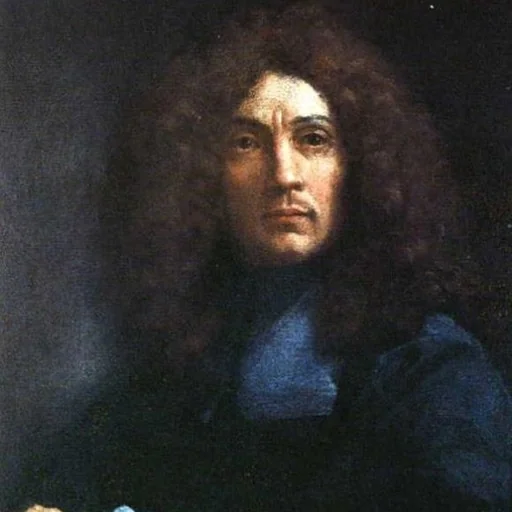
Carlo Maratta or Maratti (18 May 1625 – 15 December 1713) was an Italian Baroque painter and draughtsman, active principally in Rome where he was the leading painter in the second half of the 17th century.

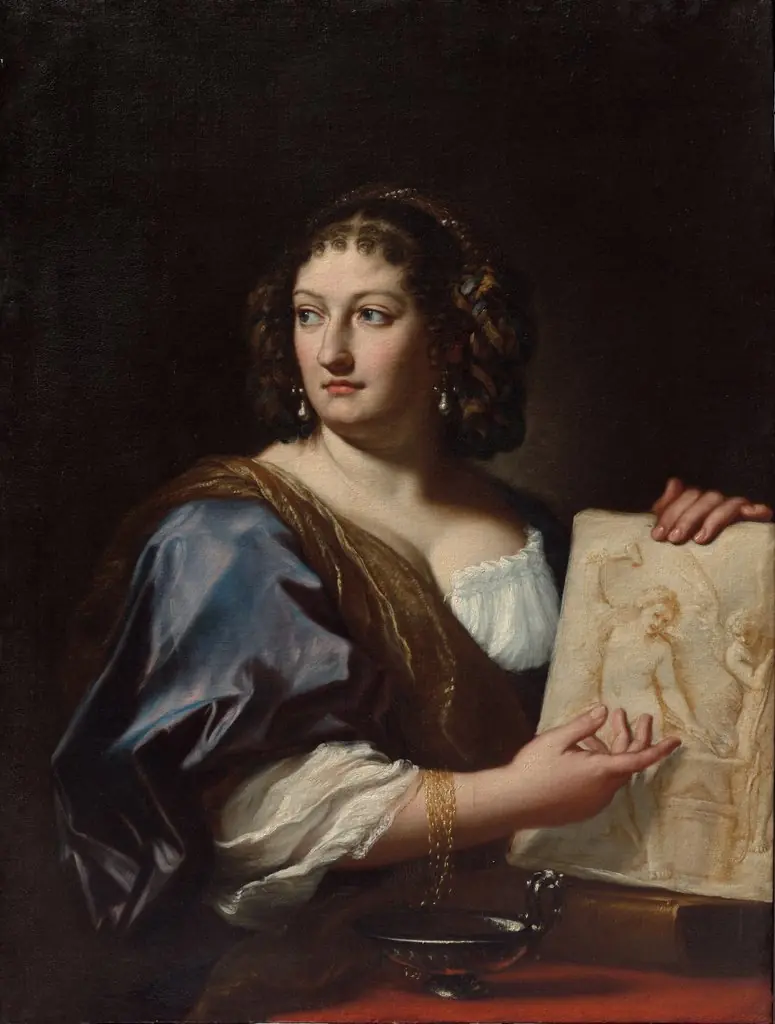
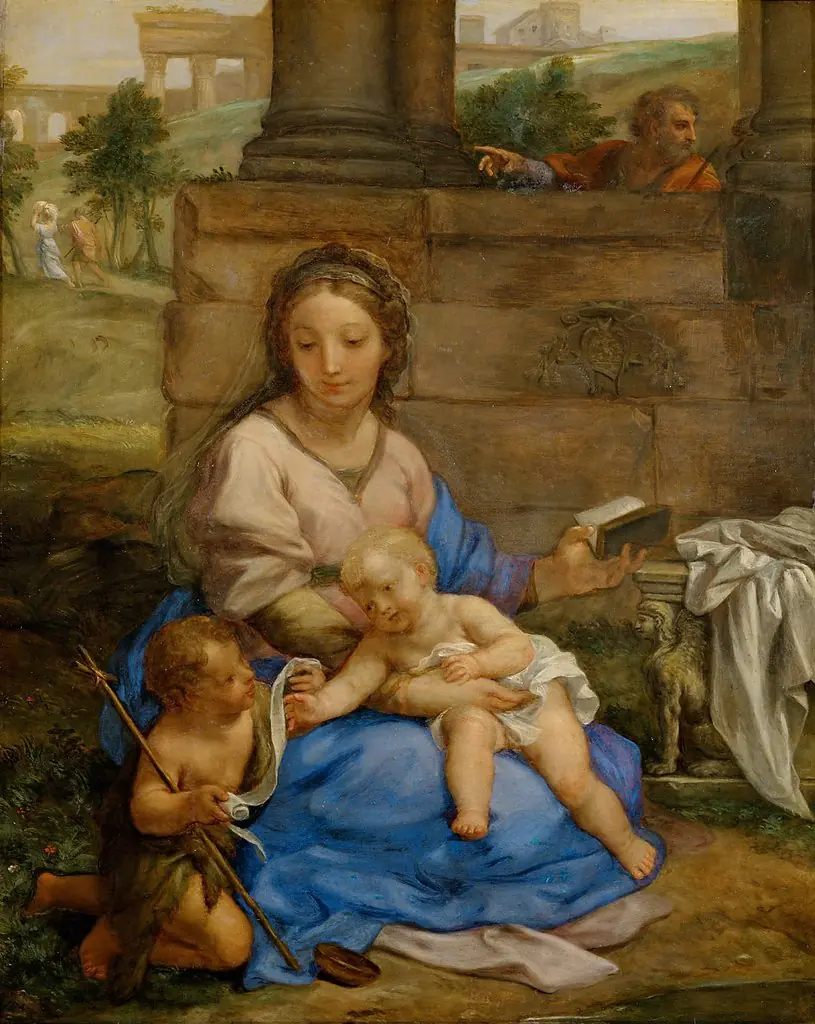
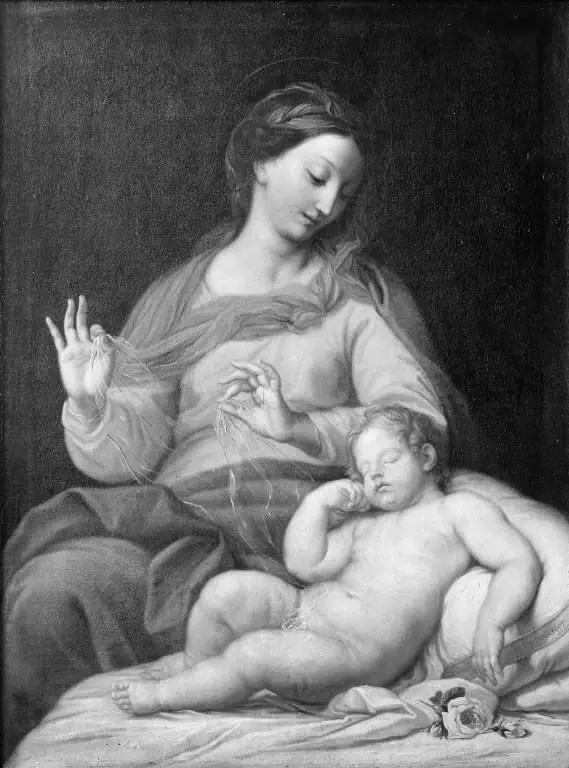
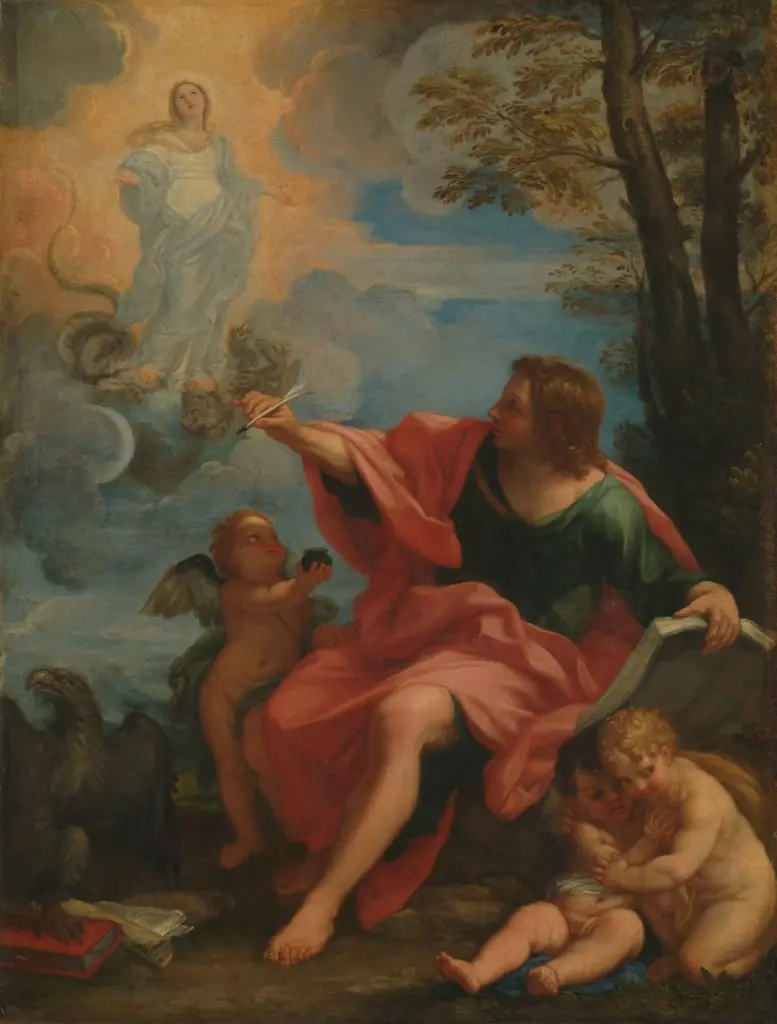
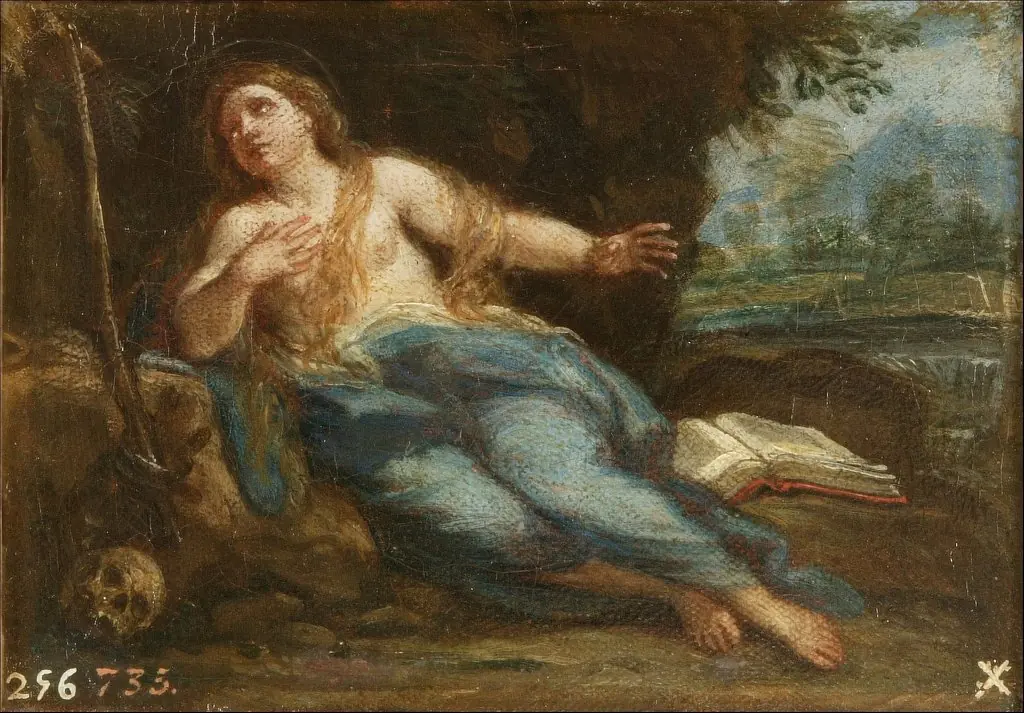
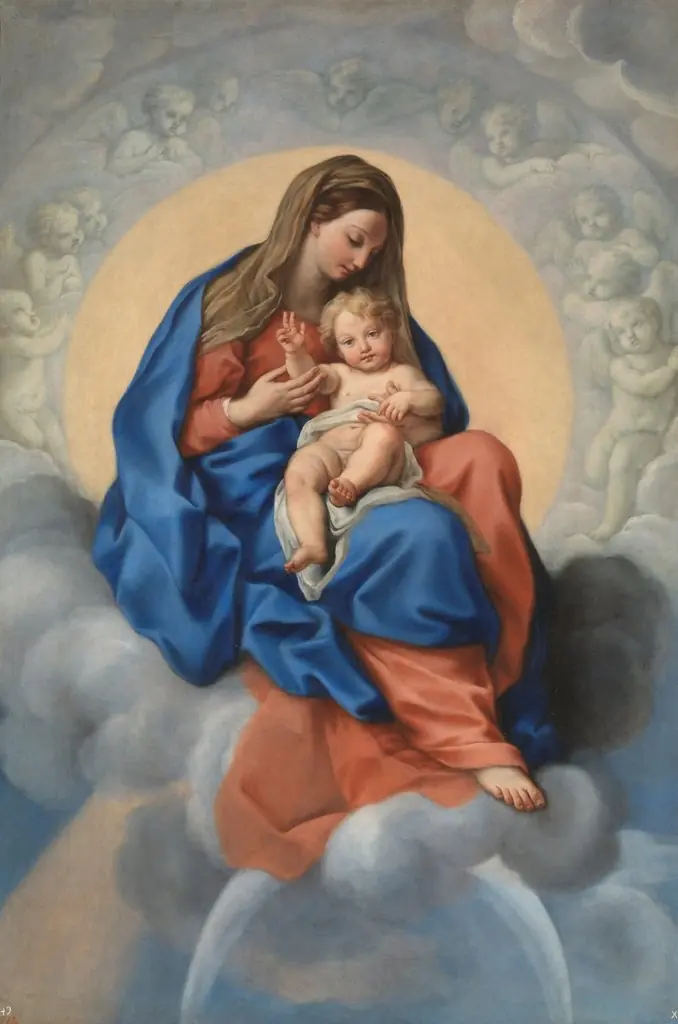
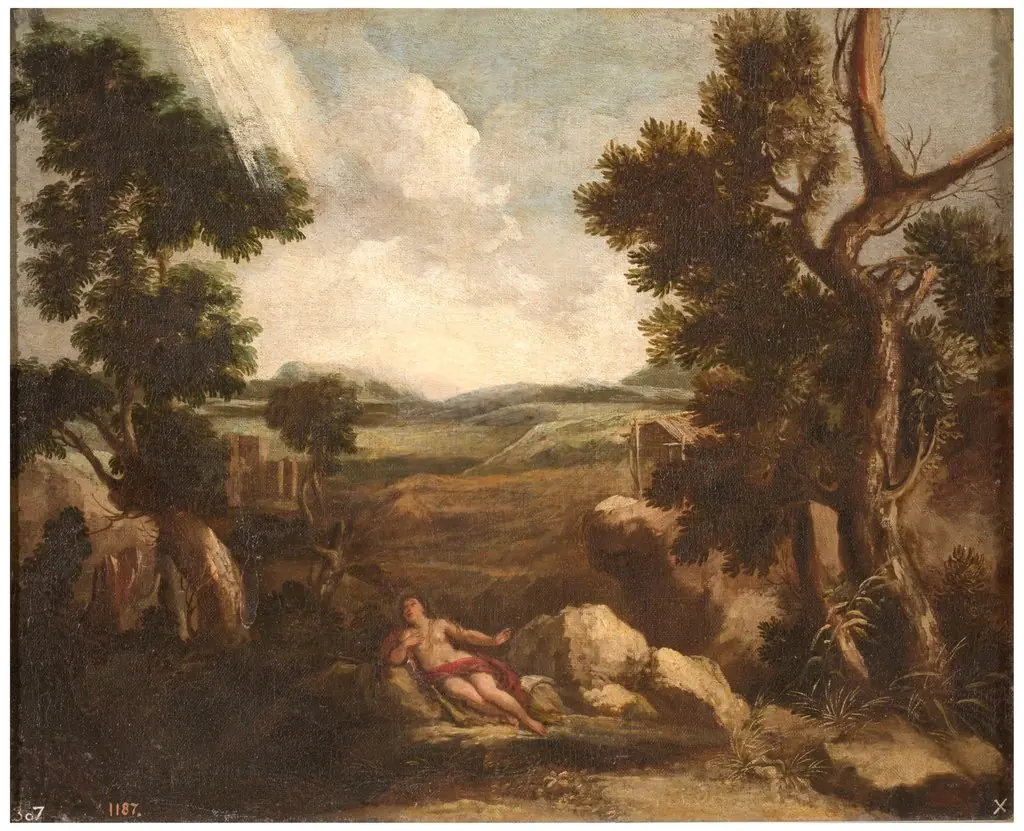
- The Flight into Egypt
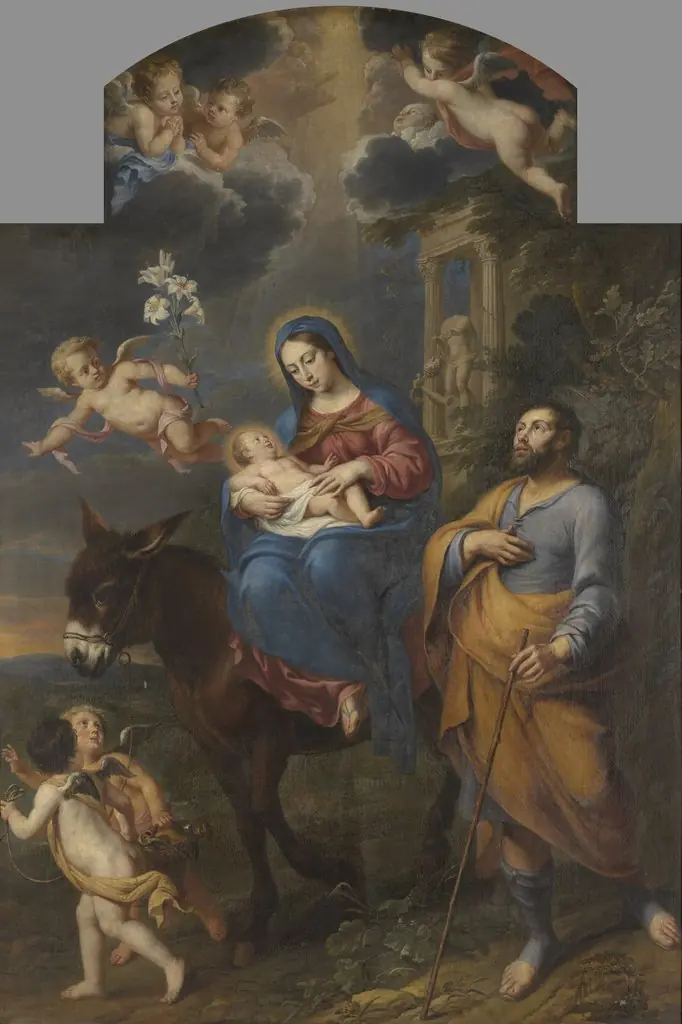 The Flight into Egypt
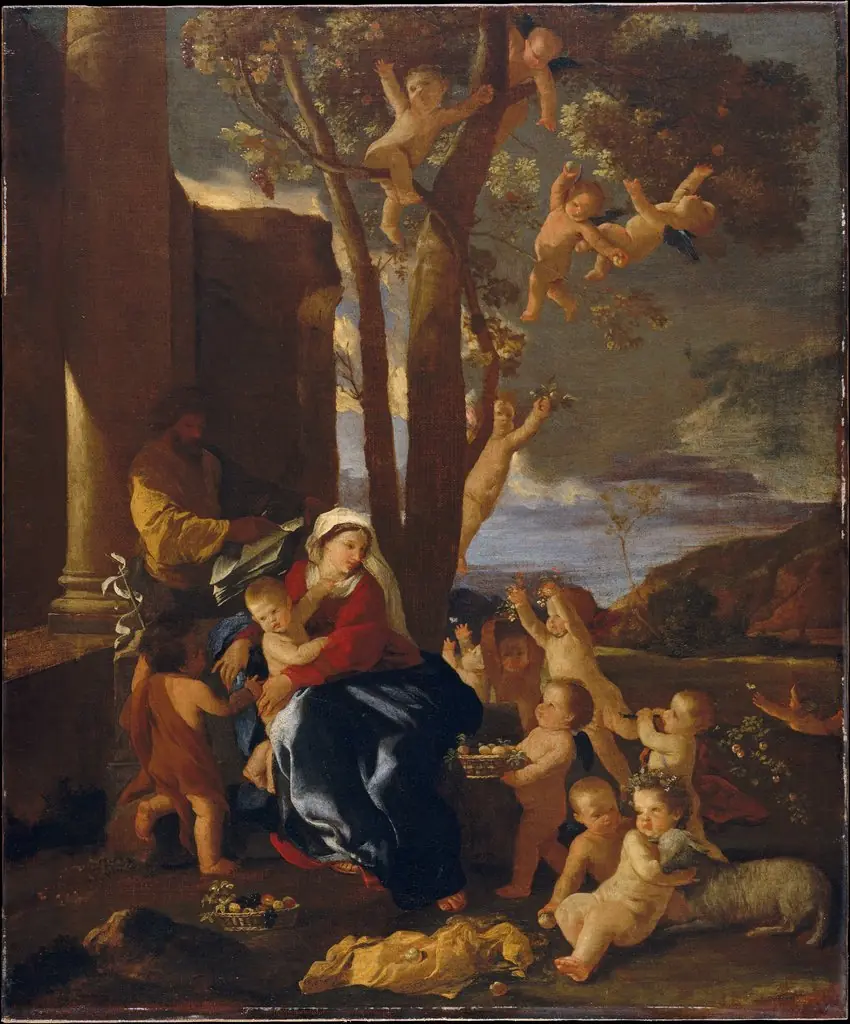 The Rest on the Flight into Egypt
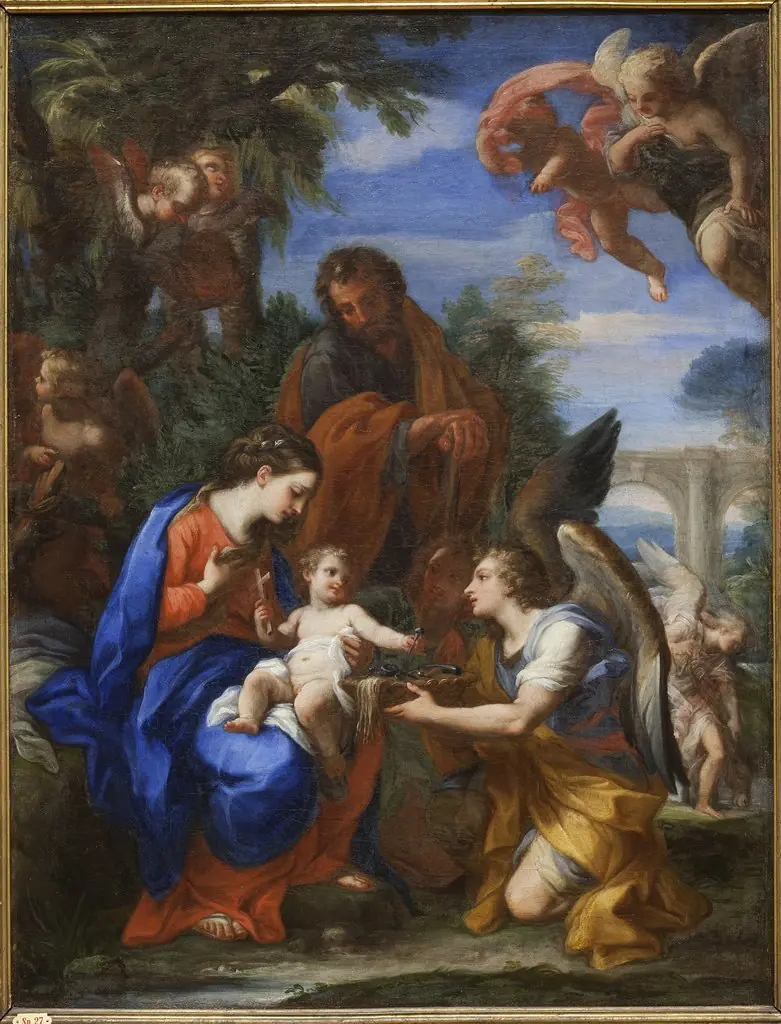 The Rest on The Flight into Egypt
 The Rest on The Flight into Egypt
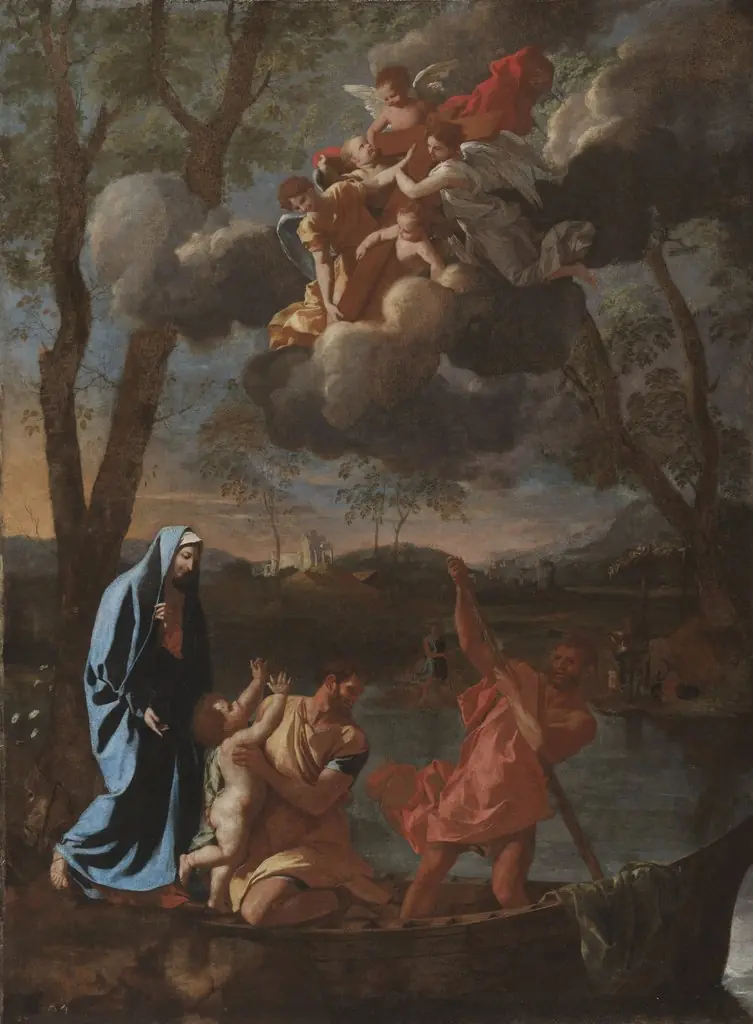 The Return of the Holy Family to Nazareth
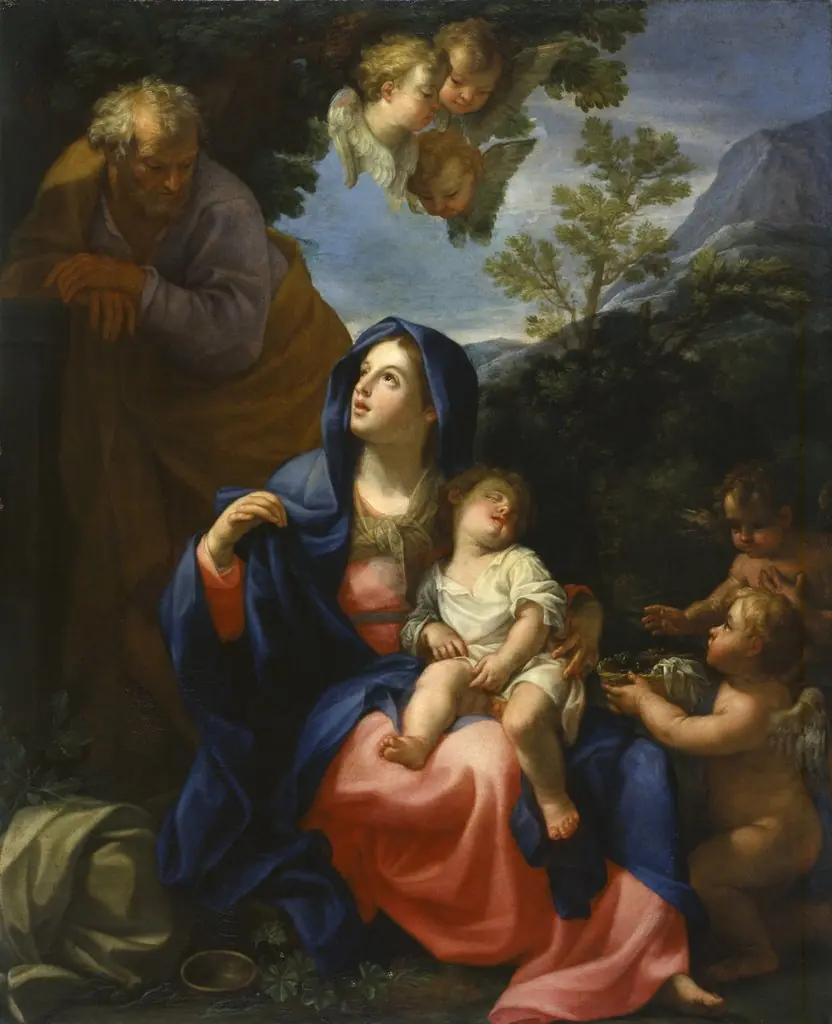 The Rest on The Flight into Egypt
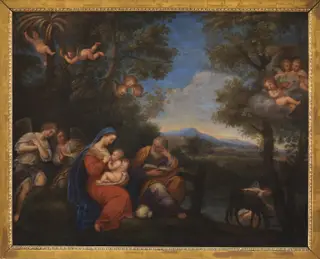 The Rest on the Flight into Egypt
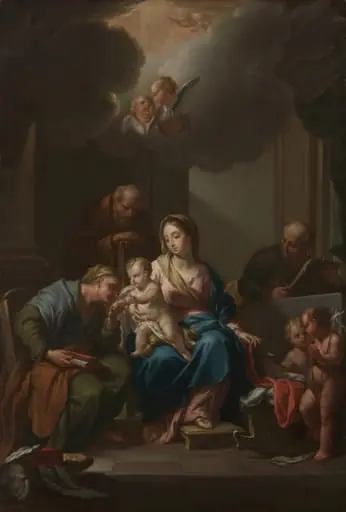 Presentation Sketch for "The Holy Family with Saints Anne, Joachim, and John the Baptist" (for Santa Maria in Via Lata, Roma)
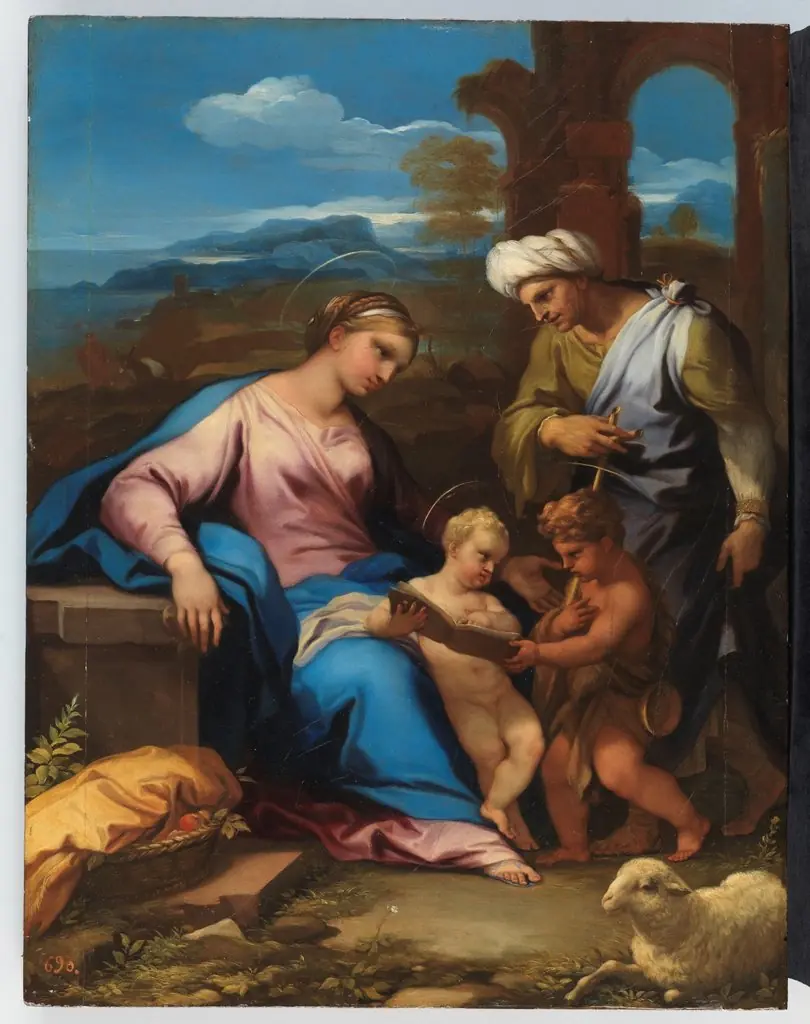 La Sagrada Familia con santa Isabel y san Juanito
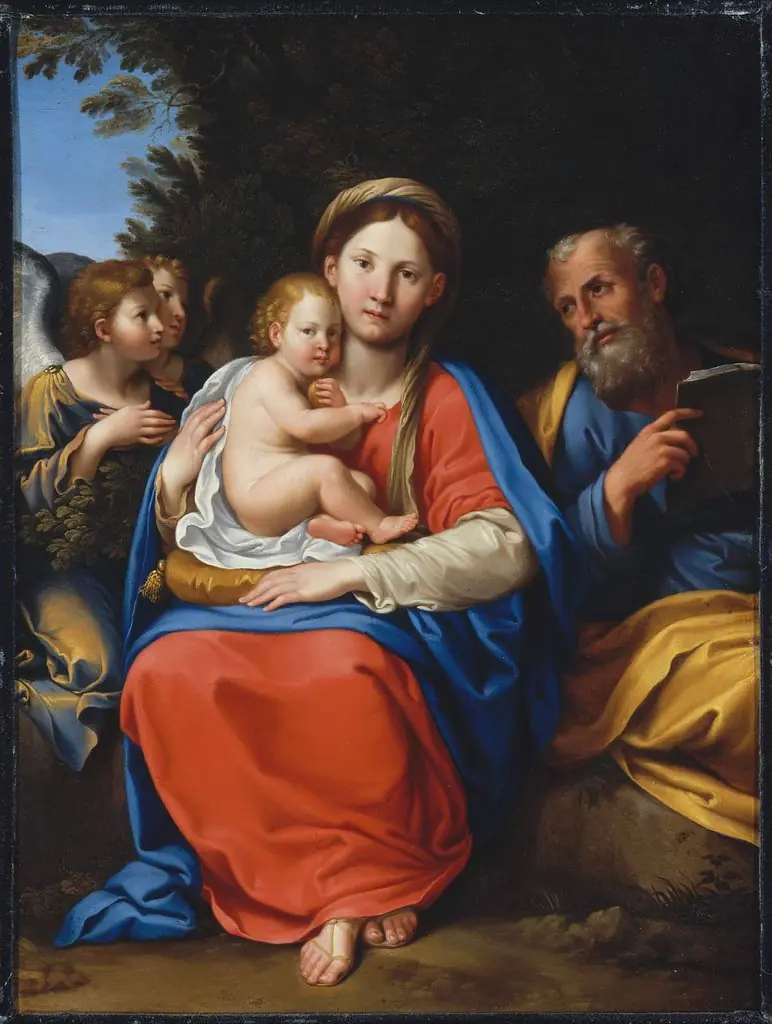 Holy Family with Angels
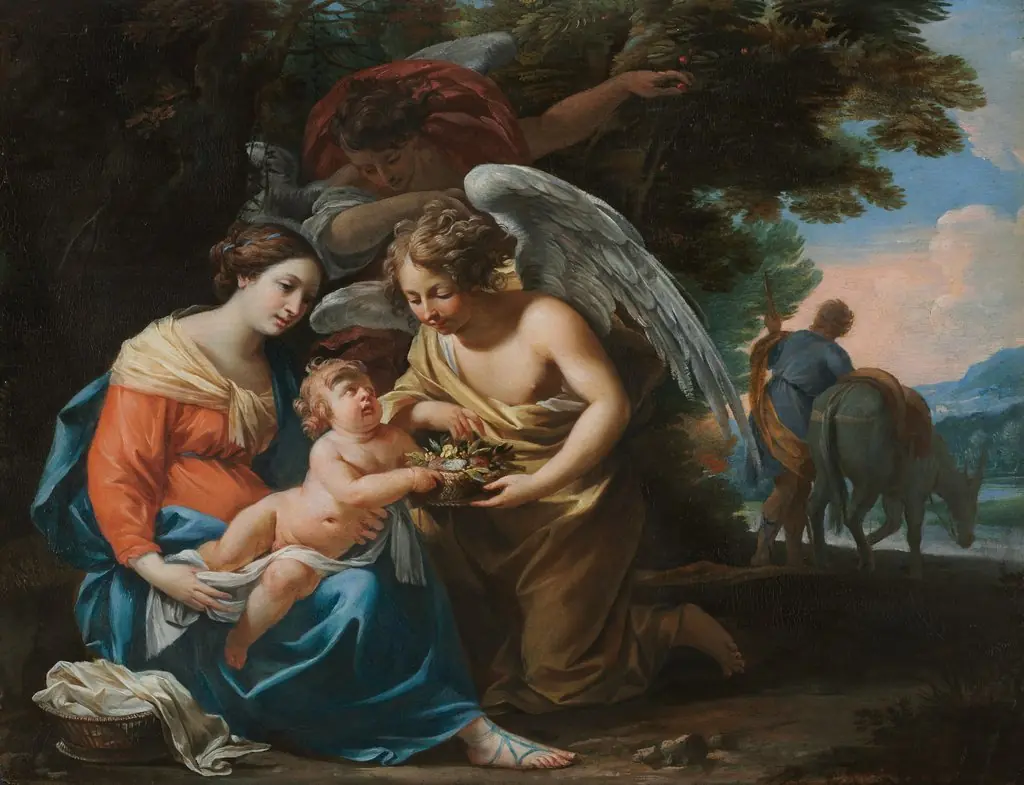 Rest on the Flight into Egypt