Artwork
Penitent Magdalen
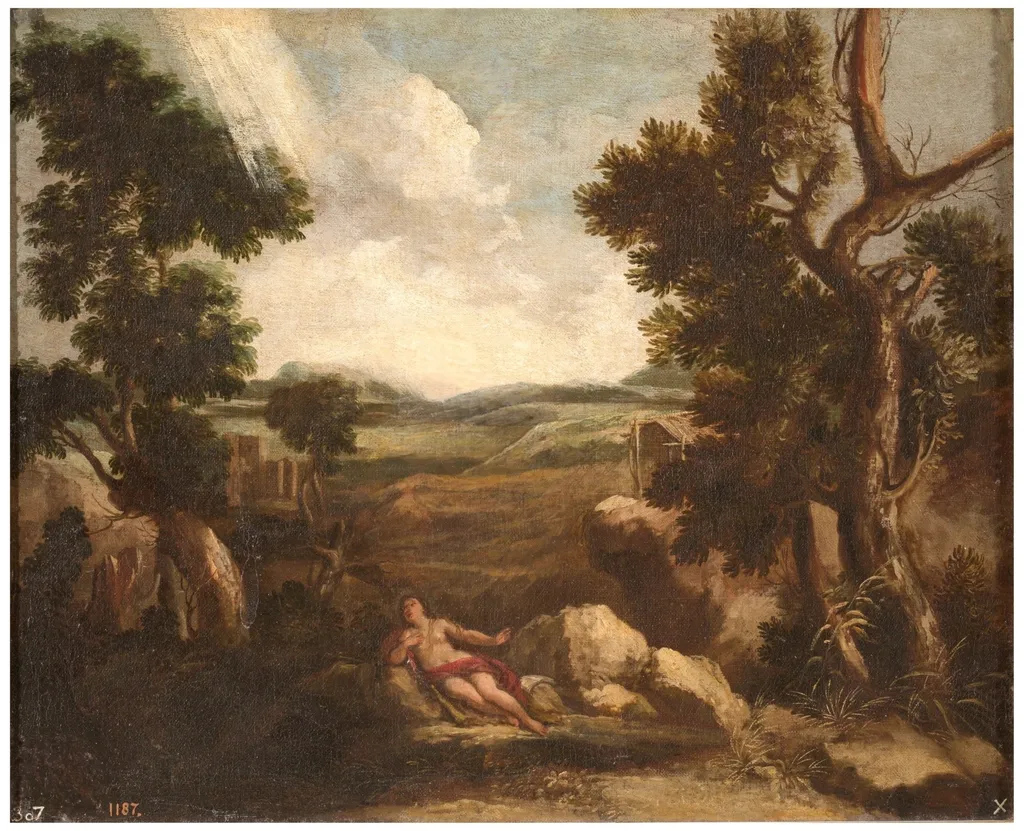
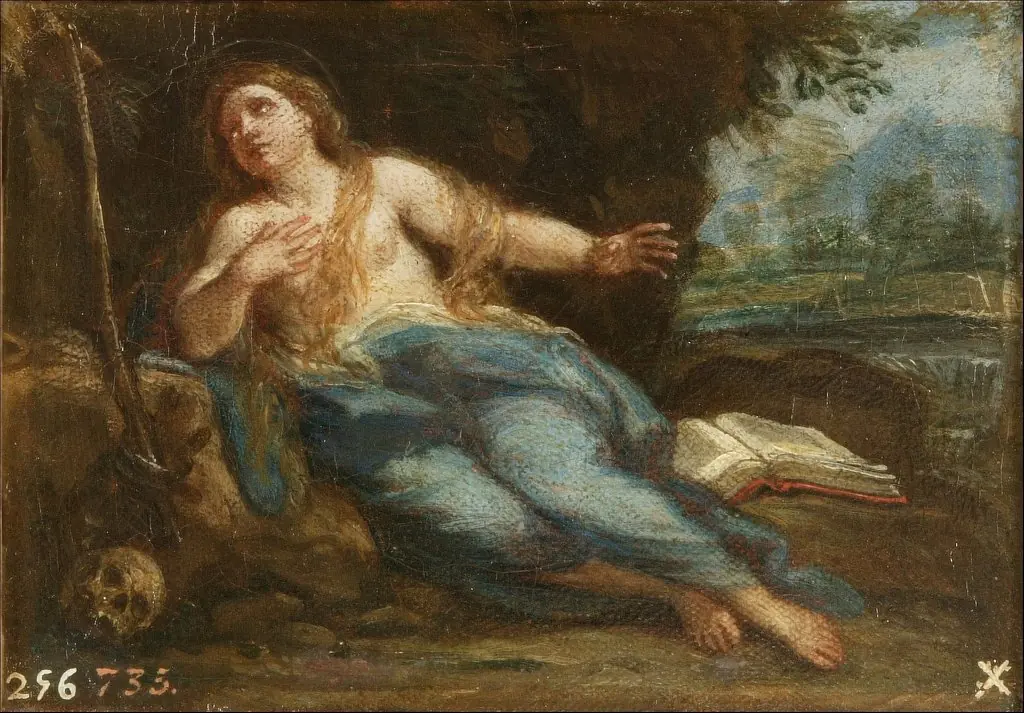
Penitent Magdalen is an oil painting by the Rococo painting artist Carlo Maratta. It is held in the collection of the Museo del Prado. The canvas presents a solitary female figure seated on a craggy ledge, enveloped by a sparse woodland and a distant horizon.
About this work
Subject & Meaning
The work is classified as religious art and centers on Mary Magdalene as its main subject, presenting her in the iconographic role of the penitent saint.
The painting depicts the Penitent Magdalene, a traditional subject in Christian art in which Mary Magdalene is shown in a state of penitence and contemplation, withdrawing from worldly life to mourn her sins. The work is classified as religious art and centers on Mary Magdalene as its main subject, presenting her in the iconographic role of the penitent saint.
This devotional theme emphasizes spiritual reflection, repentance, and the renunciation of material vanity, themes long associated with the Magdalene figure in Counter-Reformation and later European painting. The small scale of the canvas, measuring 61 by 75 centimeters, is consistent with the intimate format typically favored for private devotional images of the penitent Magdalene.
Technique & Style
Carlo Maratta’s Penitent Magdalen is executed in oil paint on canvas. The support measures 61 by 75 centimeters, providing a modest yet intimate format for the devotional subject.
Stylistically, the work aligns with late Baroque conventions, characterized by a restrained emotionalism and refined chiaroscuro. Maratta’s handling is precise, with smooth, almost imperceptible brushwork that emphasizes volumetric modeling and delicate transitions between light and shadow. The composition prioritizes clarity and balance, reflecting the artist’s academic training and his role in shaping late 17th-century Roman classicism.
History & Provenance
The Penitent Magdalen is dated to 1800 and attributed to Carlo Maratta, with Gaspard Dughet named as a collaborating creator in the work’s Wikidata entry.
The painting entered the collection of the Museo del Prado, where it remains located. Provenance records indicate prior ownership by three Spanish monarchs: Philip V, Charles III, and Ferdinand VII, suggesting the work passed through royal Spanish collections before entering the museum’s holdings.
The painting is housed in the Museo del Prado in Madrid. Its inventory number is P00968. It has been part of exhibitions at the Prado including the 1995 retrospective of Maratta and a 2005 display of Spanish Baroque works.
The work entered the royal collection through the inheritance of Philip V of Spain and has remained in the museum since its accession.
Context
The painting titled Penitent Magdalen was created by Carlo Maratta in 1800 as an oil on canvas work classified within the religious genre. It depicts Mary Magdalene in a moment of penitence and was originally owned by Spanish monarchs Ferdinand VII, Charles III, and Philip V before entering the collection of the Museo del Prado, where it remains on display. The artwork is part of a broader religious art tradition explored through scholarship on Maratta's contributions to 18th-century European painting, situating it within his artistic practice and the evolving representation of Magdalene in devotional imagery.
Overview
The canvas presents a solitary female figure seated on a craggy ledge, enveloped by a sparse woodland and a distant horizon. She wears a vivid red garment, her right arm extended outward while her left hand rests over her chest. The composition is bathed in a gentle, hazy light, and a modest structure with scattered trees appears behind her beneath a sky streaked with soft clouds.
Own this work as a print
Artist & collection
Artist
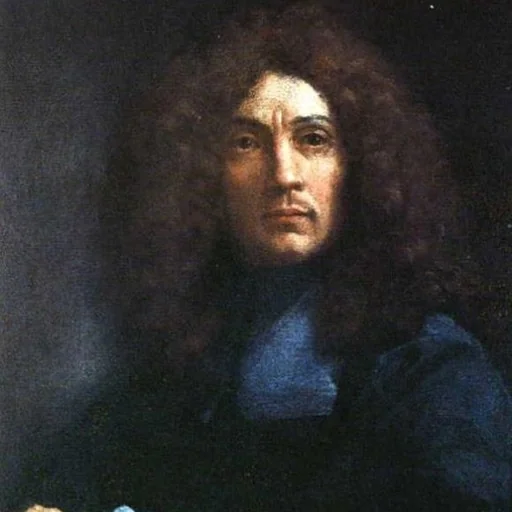
Carlo Maratta or Maratti (18 May 1625 – 15 December 1713) was an Italian Baroque painter and draughtsman, active principally in Rome where he was the leading painter in the second half of the 17th century.

- Paisaje con pastor
 Landskap med Maria Magdalena
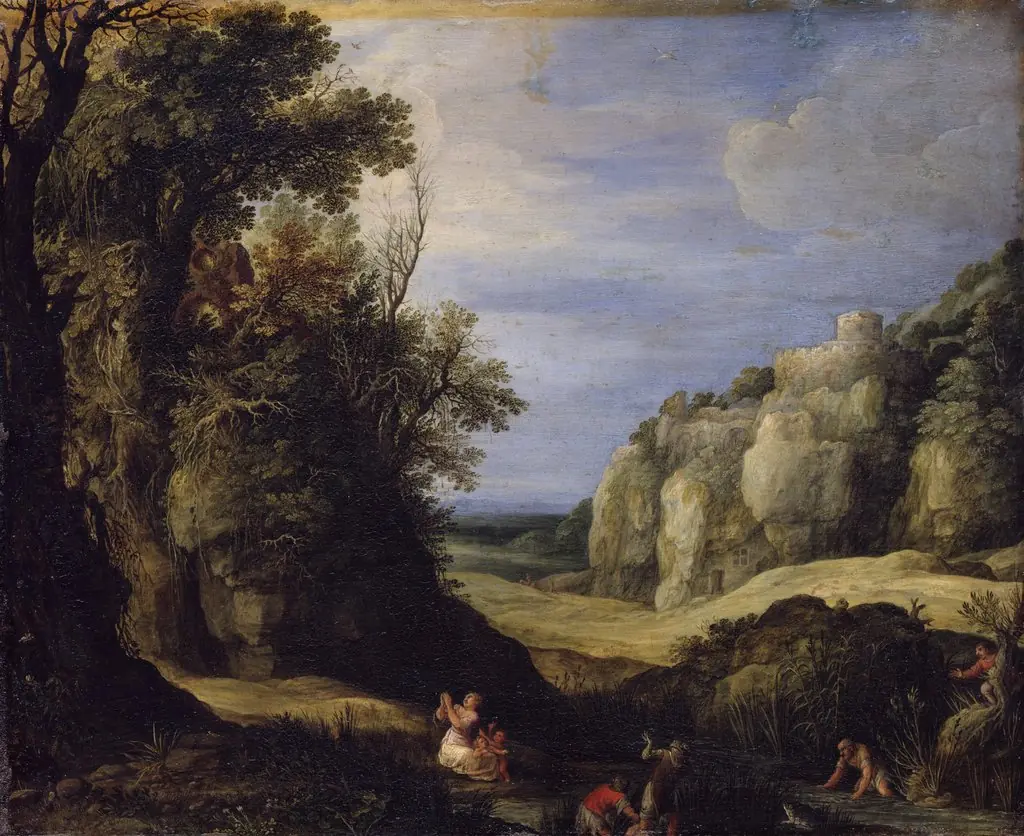 Landscape with Latona and the Lycian Peasants
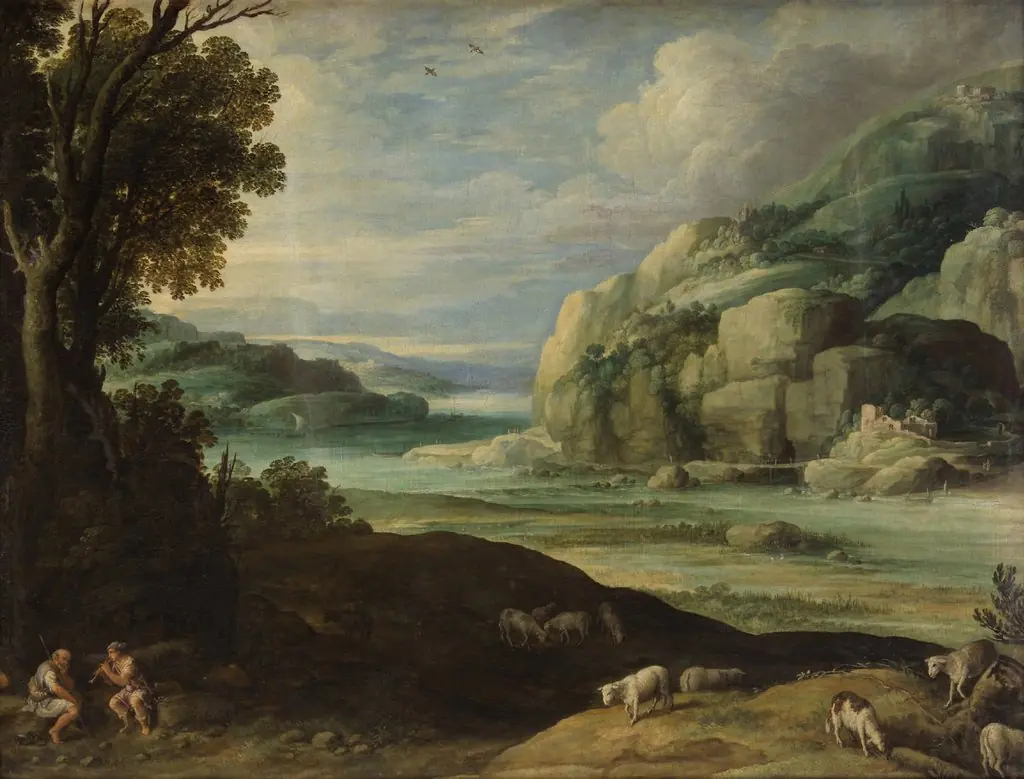 Landschaft mit Merkur und Argus
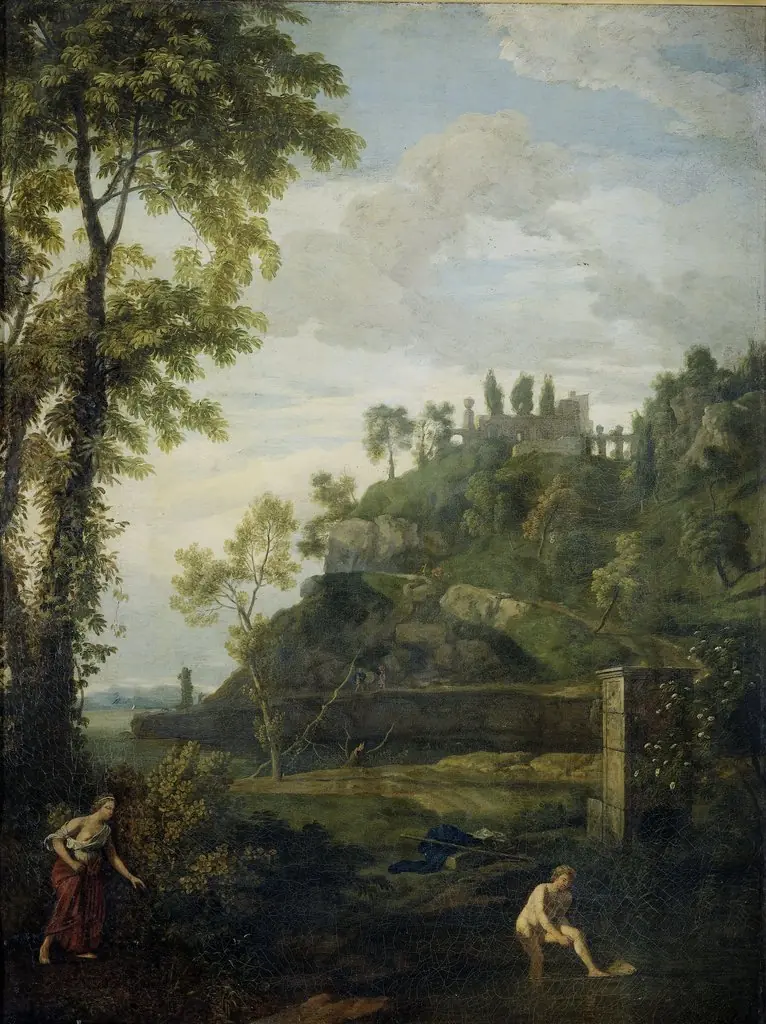 Arcadian landscape with Salmacis and Hermaphroditus
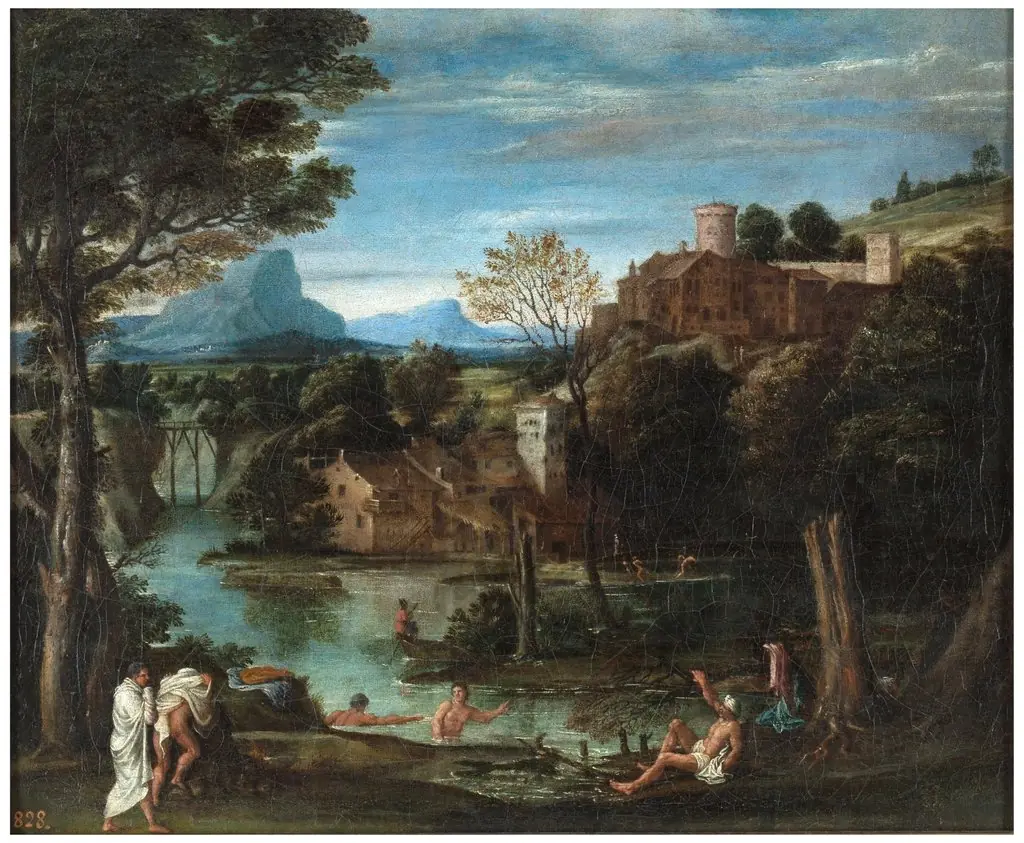 Landscape with river and bathers
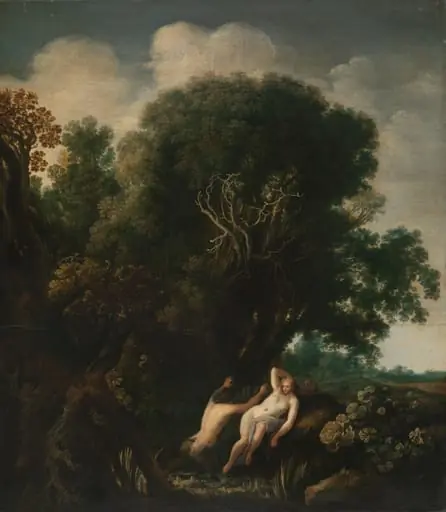 A Bathing Nymph Taken by Surprise by a Satyr
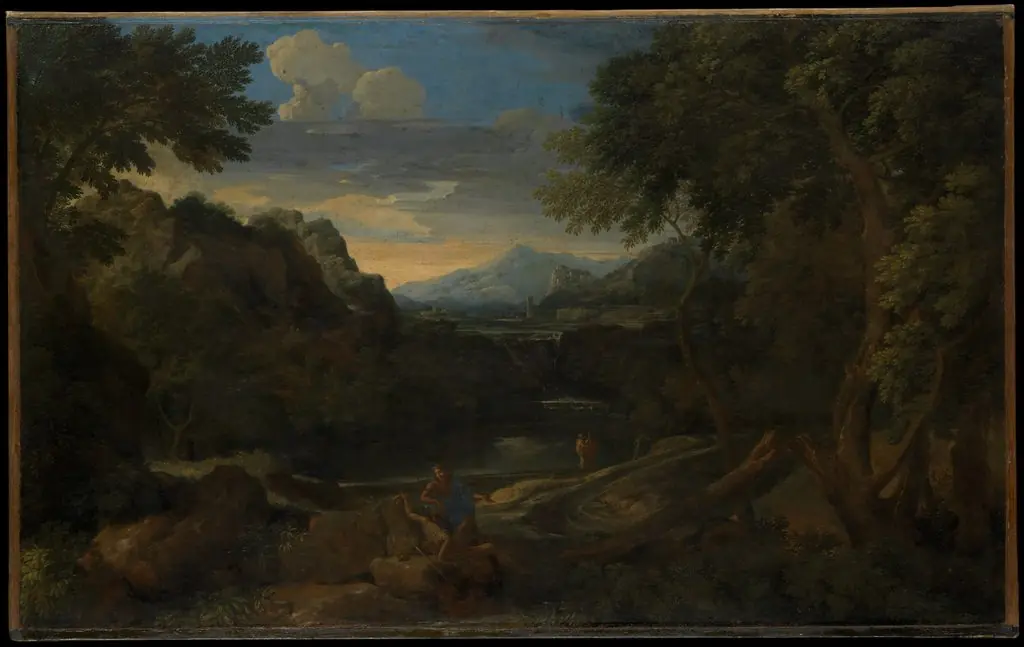 Imaginary Landscape
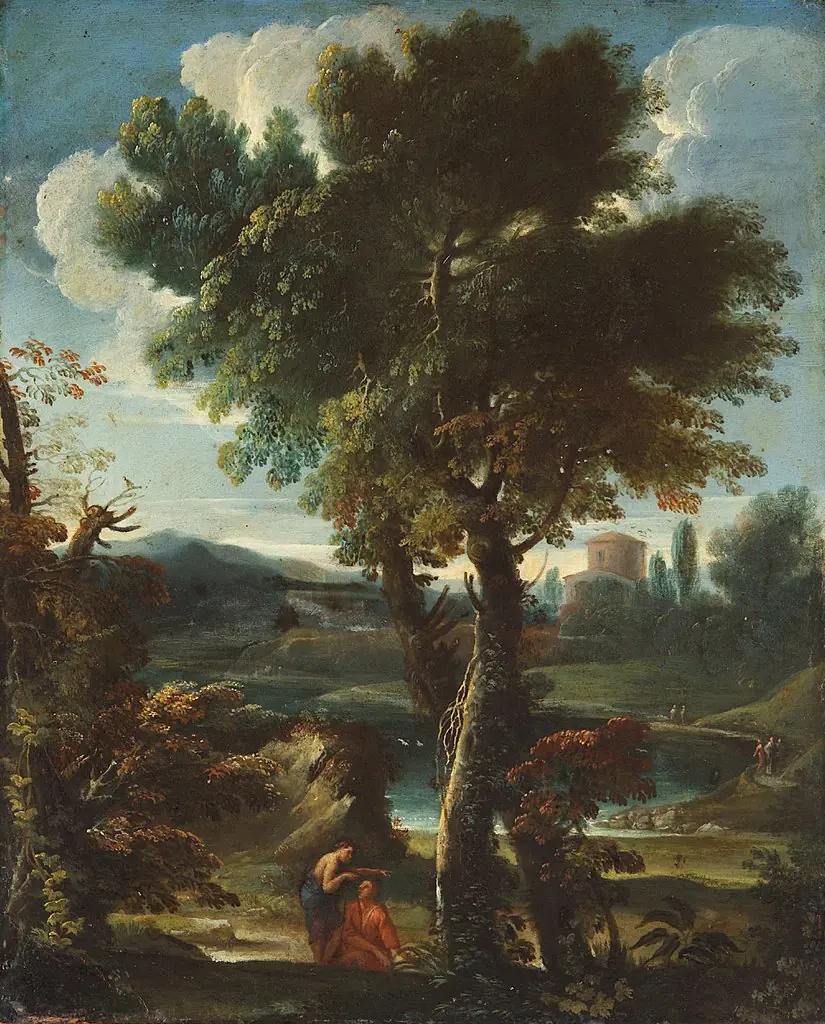 Landschaft mit Hirten
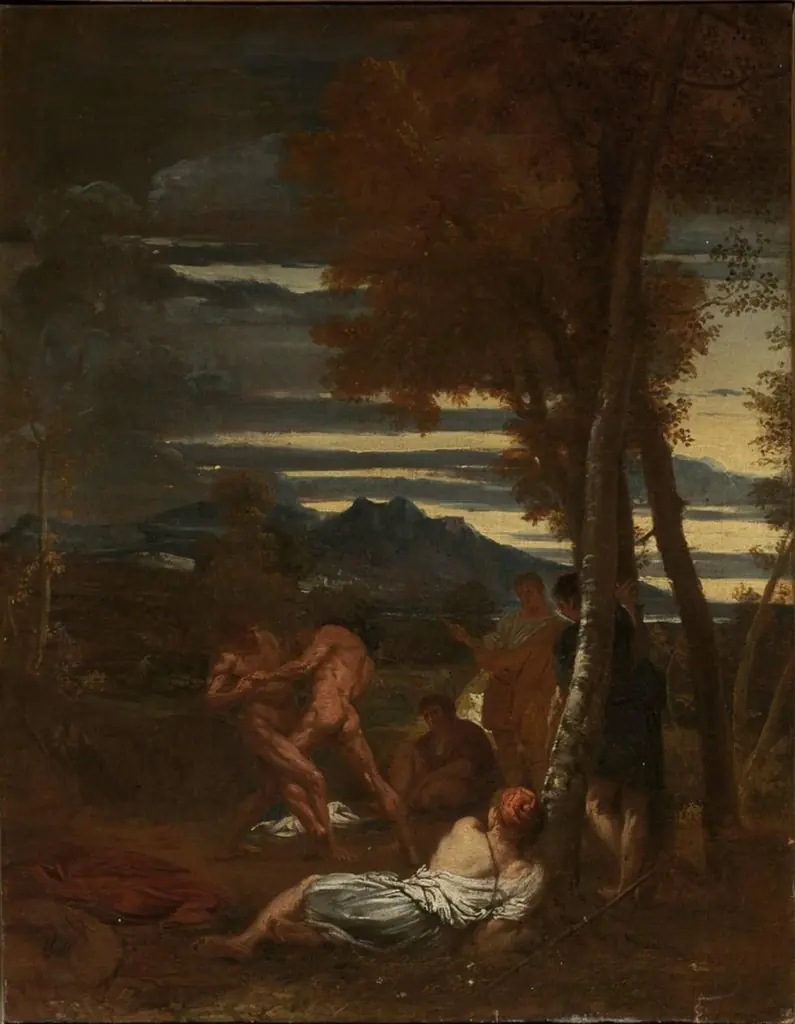 Wrestlers in a Landscape
 Mountain Landscape (Horseman on a Mountain Path)
 Landscape