Artwork
Saint John the Evangelist on Patmos
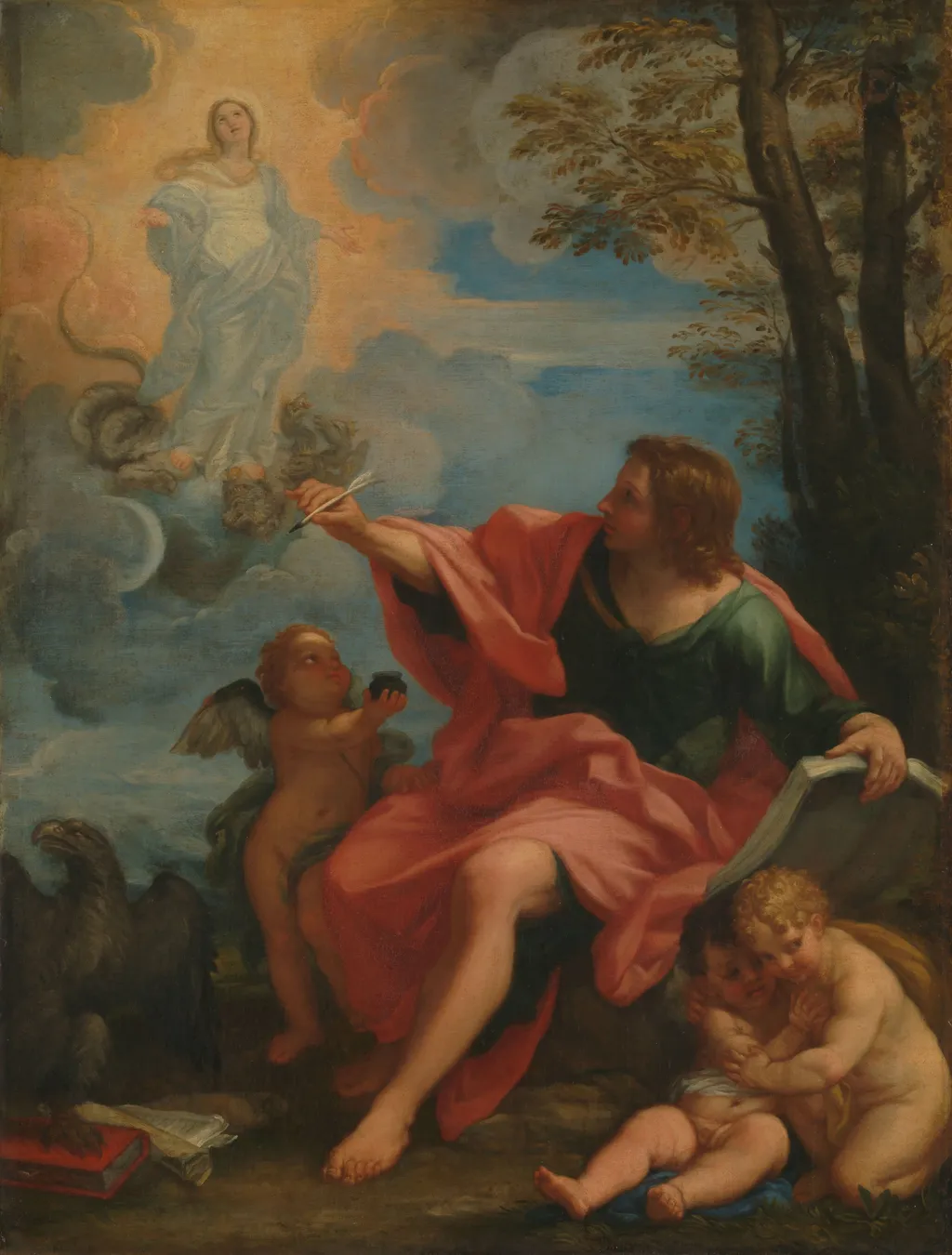
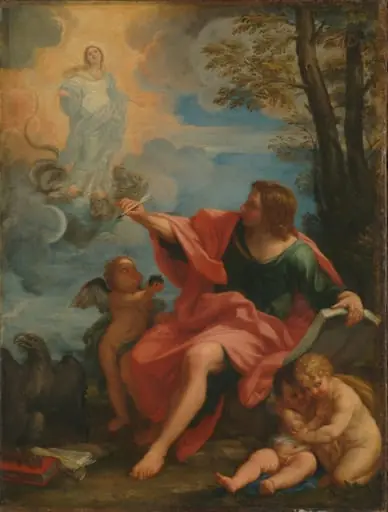
Saint John the Evangelist on Patmos is an oil painting by the High Baroque Italian artist Carlo Maratta. It dates from 1700 and is held in the collection of the Rijksmuseum.
About this work
Subject & Meaning
According to the Book of Revelation, John experienced visions of the apocalypse while in exile on Patmos, a rocky island in the Aegean Sea.
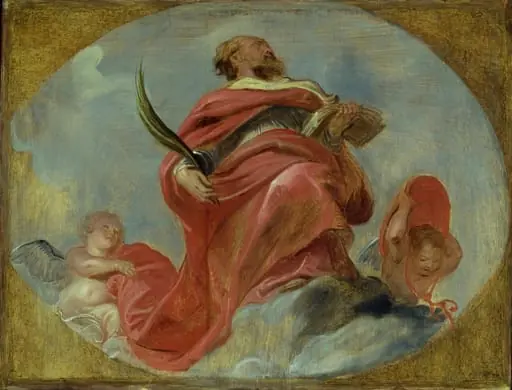
The painting depicts Saint John the Evangelist on the island of Patmos, a subject rooted in Christian tradition. According to the Book of Revelation, John experienced visions of the apocalypse while in exile on Patmos, a rocky island in the Aegean Sea. In the work, John is shown seated in a contemplative pose, often with an eagle perched nearby, which serves as his traditional attribute and symbolizes his elevated spiritual vision.
The composition emphasizes the saint’s isolation and divine inspiration, aligning with the narrative of revelation. The island setting and atmospheric backdrop reinforce the solitude and otherworldly nature of his revelatory experience.
Technique & Style
Carlo Maratta executed Saint John the Evangelist on Patmos in 1700 as an oil painting on canvas. The work measures 109 cm in height and 83 cm in width, adhering to the formal conventions of religious art. The composition depicts the main subject, Saint John, situated on the island of Patmos.
As a religious genre piece, the painting relies on the medium of oil paint to render its figures and setting on the textile support.
History & Provenance
Carlo Maratta painted Saint John the Evangelist on Patmos in 1700, working in oil on canvas. The painting was at one point owned by Jacobus Salomon Hendrik van de Poll before entering the collection of the Rijksmuseum, where it is now held.
Overview
Created in 1700 by the Roman painter Carlo Maratta, this oil on canvas presents the apostle John on the island of Patmos. The composition places the saint in a luminous sky, accompanied by celestial figures, and exemplifies the High Baroque aesthetic that dominated Italian art at the turn of the eighteenth century. The work is part of the Rijksmuseum’s collection.
Context
Maratta’s career spanned the late seventeenth and early eighteenth centuries, a period when the Roman Baroque was transitioning toward a more restrained classicism. His works often combined dramatic narrative with balanced composition, a synthesis evident in this depiction of John’s prophetic moment on Patmos.
Own this work as a print
Artist & collection
Artist
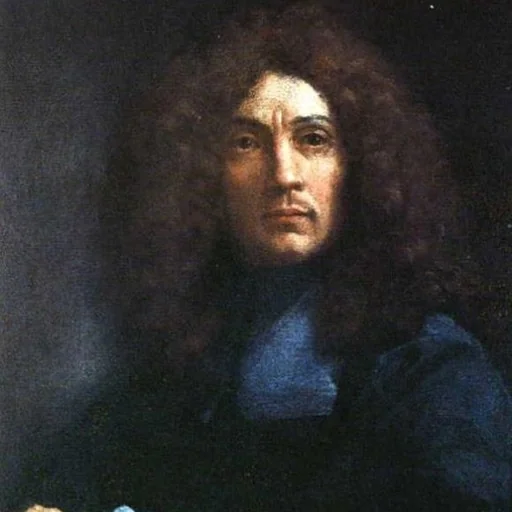
Carlo Maratta or Maratti (18 May 1625 – 15 December 1713) was an Italian Baroque painter and draughtsman, active principally in Rome where he was the leading painter in the second half of the 17th century.

 Saint John the Evangelist on Patmos
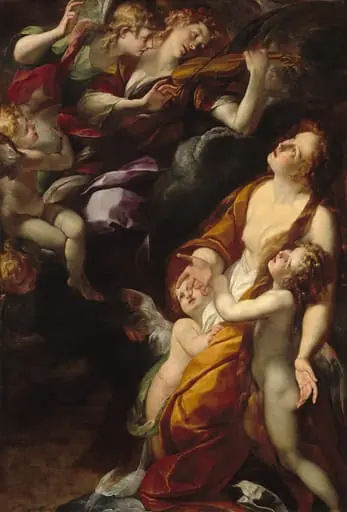 The Ecstasy of the Magdalen
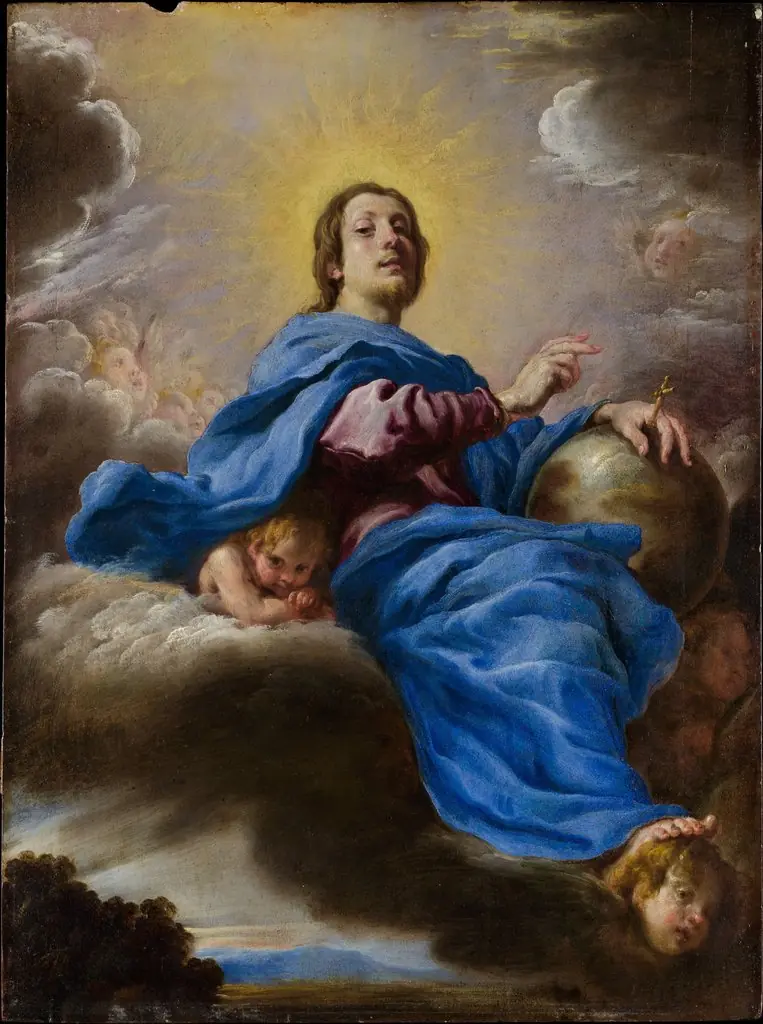 Salvator Mundi
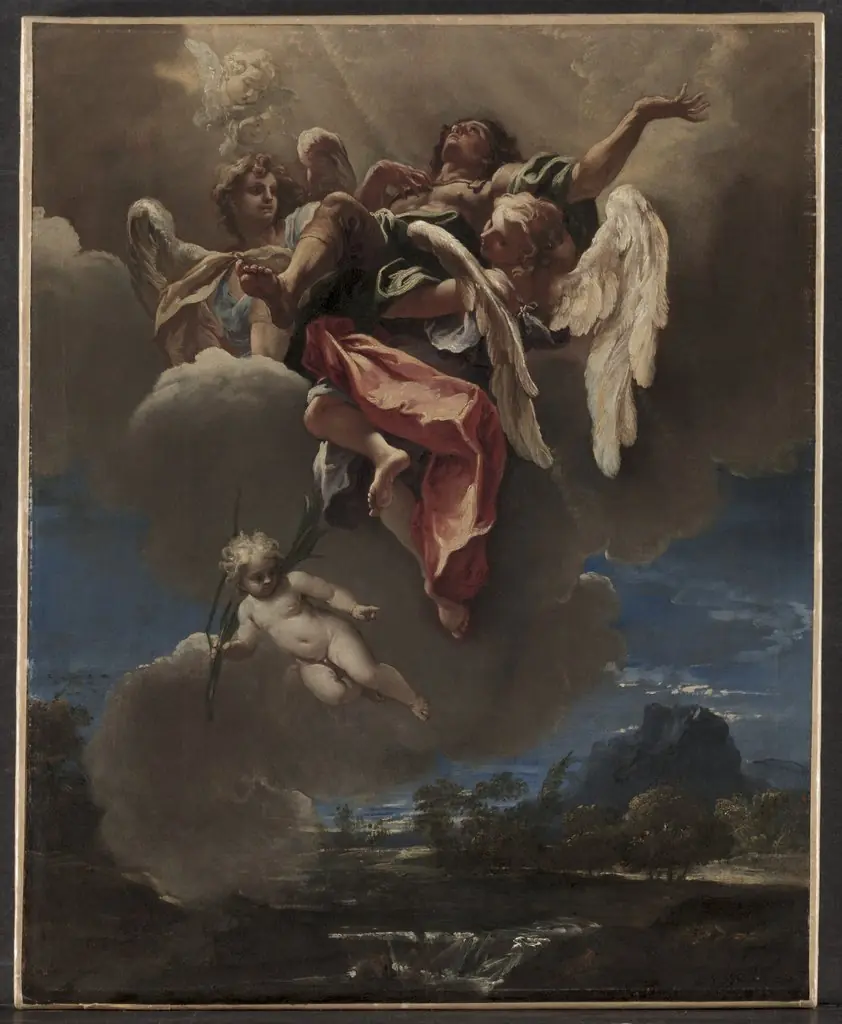 Study for "An Apotheosis of a Saint" (for San Bernardino dei Morti, Milan)
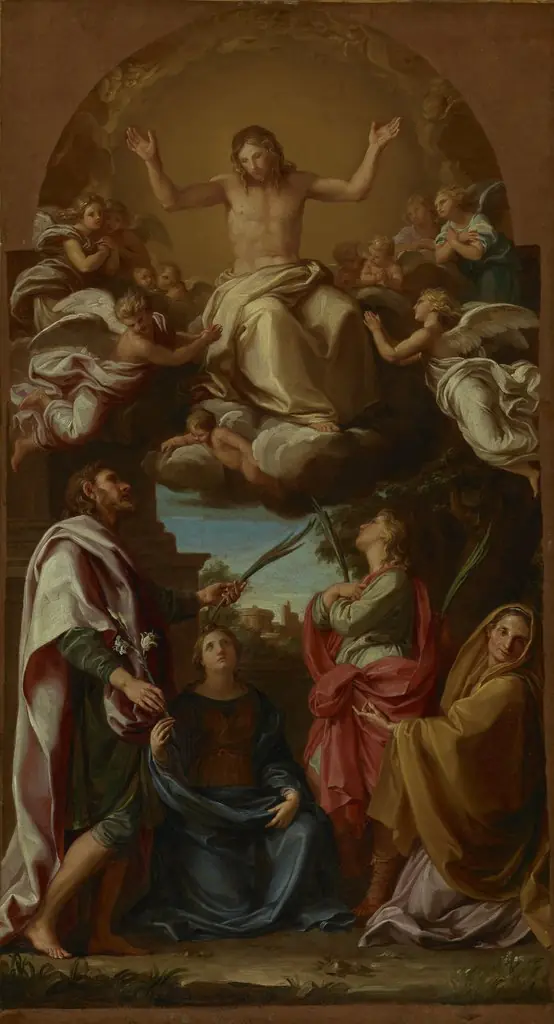 Christ in Glory with Saints Celsus, Julian, Marcionilla and Basilissa
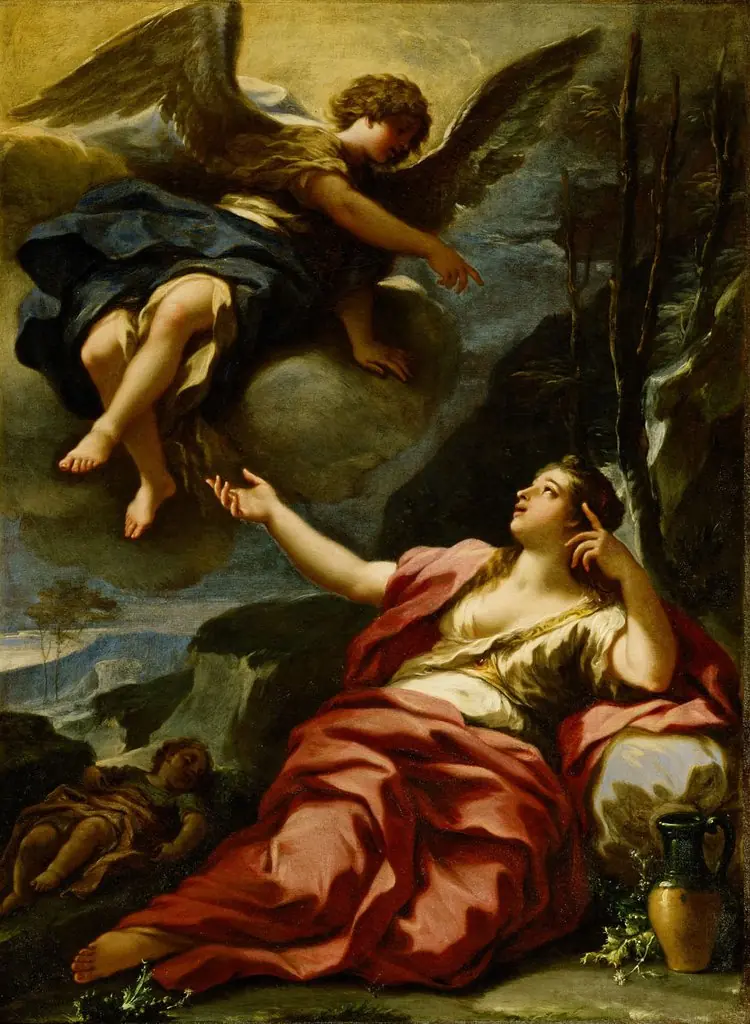 The angel appears to Hagar in the desert
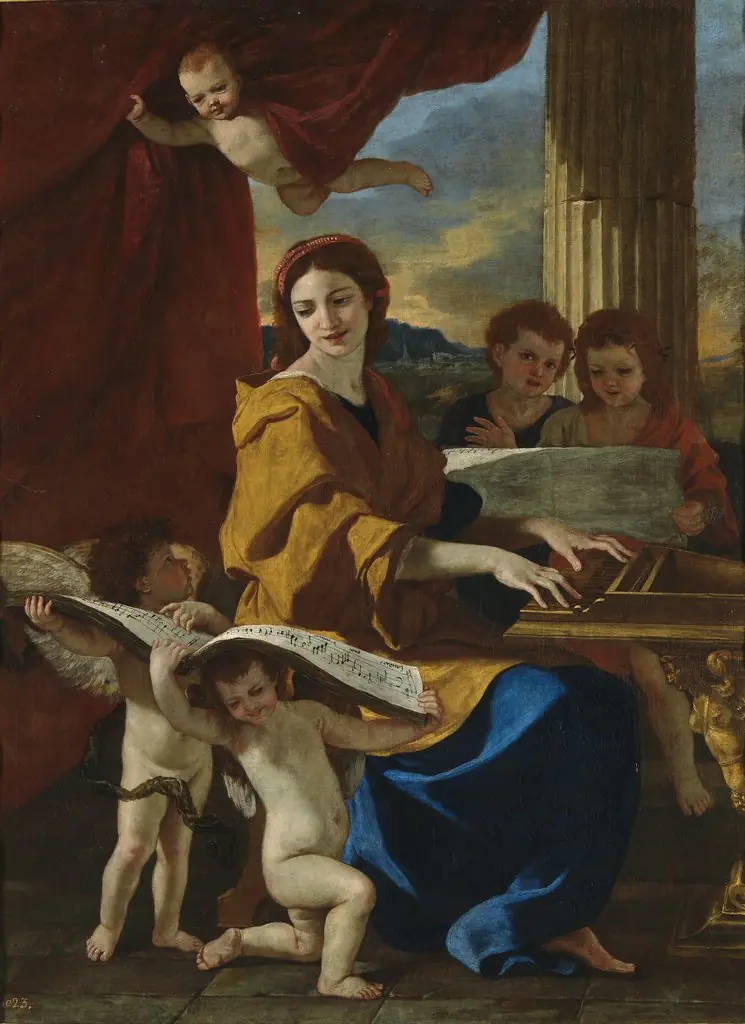 Saint Cecilia
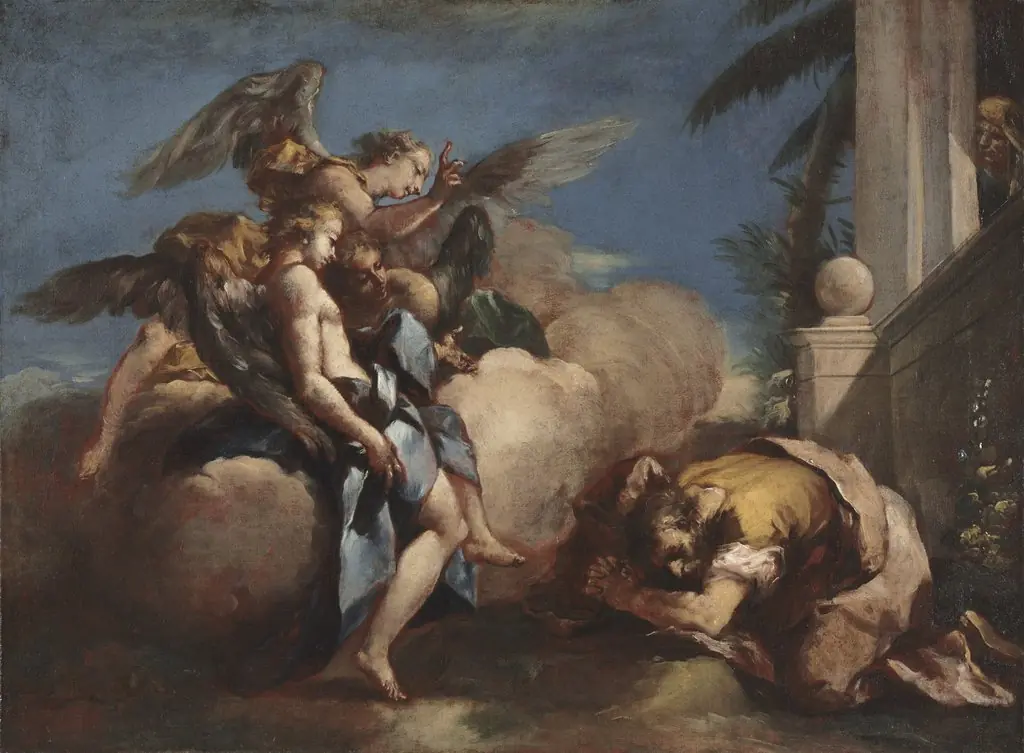 The Angels Appearing to Abraham
 Mary Magdalene Comforted by an Angel
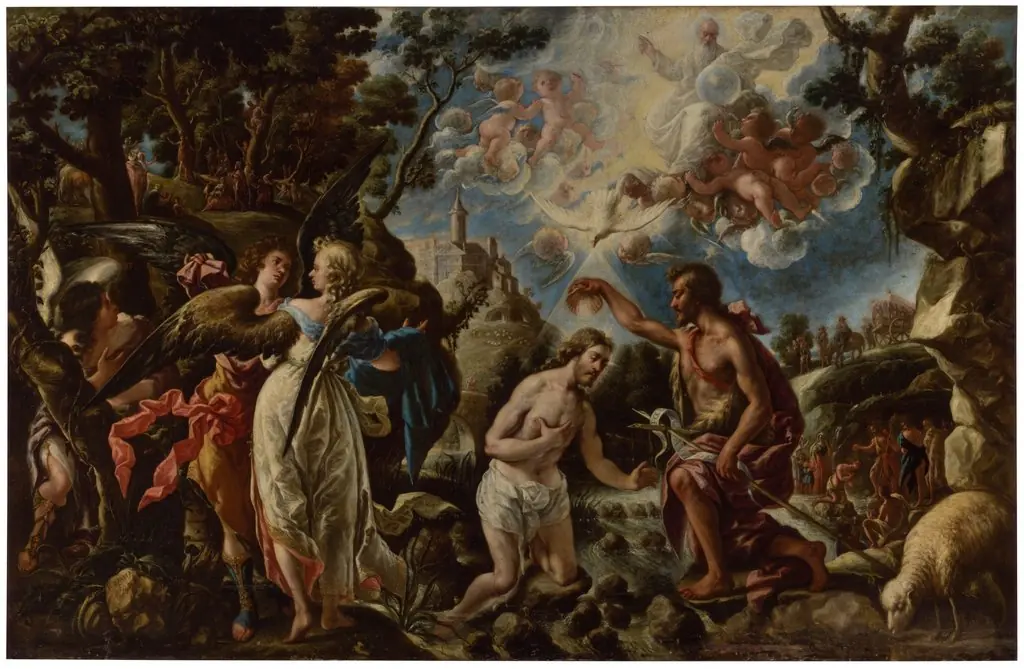 El Bautismo de Cristo
 St. Albert of Louvain
- Saint John the Evangelist in Patmos