Artwork
Portrait of Anna Maria Hoeufft (1646-1715), wife of Jan Boudaen Courten
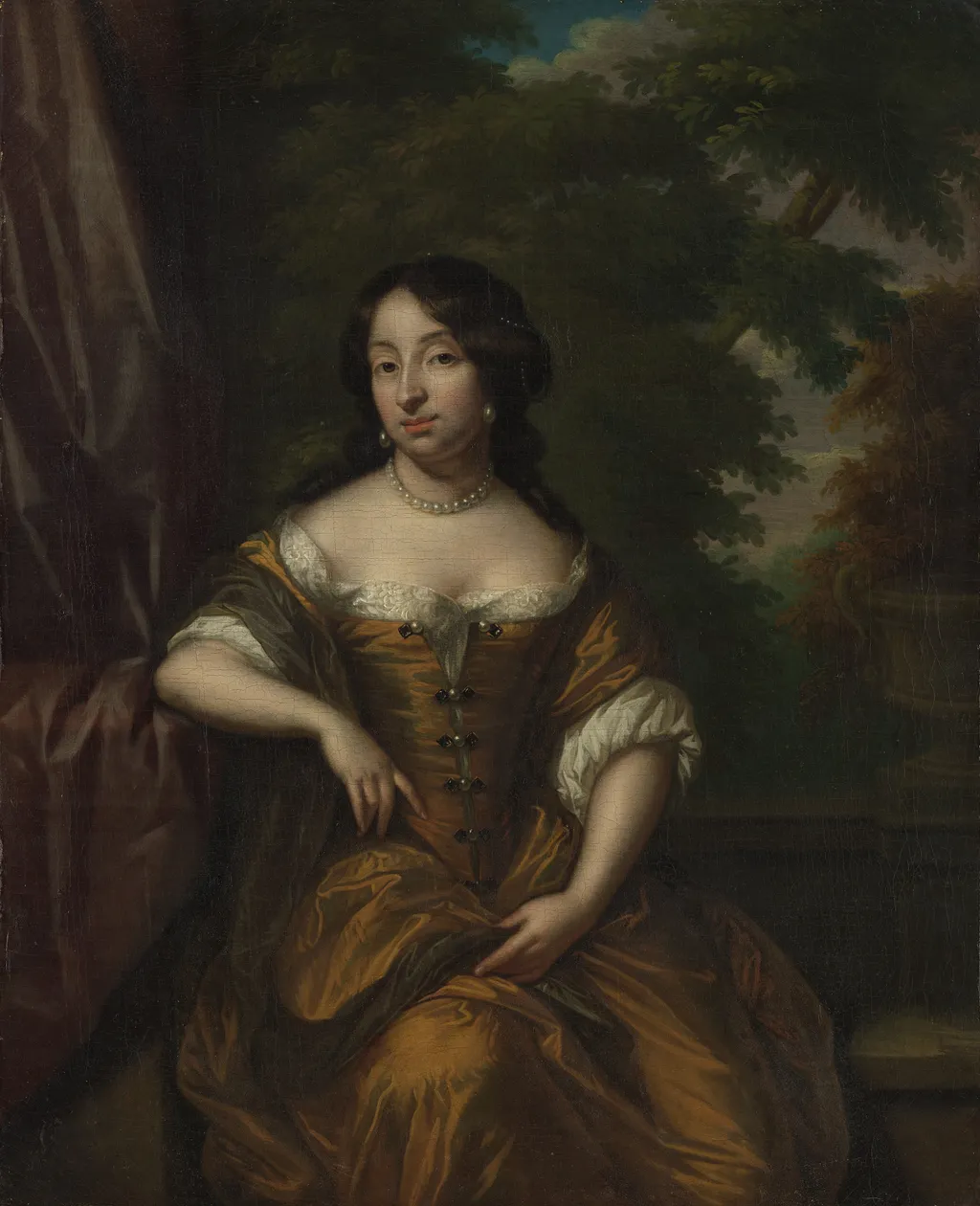
Portrait of Anna Maria Hoeufft (1646-1715), wife of Jan Boudaen Courten is an oil painting by the Rococo painting artist Caspar Netscher. It is held in the collection of the Rijksmuseum.
About this work
Technique & Style
Executed in 1721 by Caspar Netscher, this portrait is an oil painting on canvas. The work measures 49 cm in height and 40 cm in width. As a formal portrait, it depicts Anna Maria Hoeufft, adhering to the genre conventions of the period through its medium and support choices.
History & Provenance
A documented earlier owner is Jacob de Witte van Citters, who is listed in the provenance record as a former proprietor of the painting.
The portrait was created by Caspar Netscher in 1721, as recorded in the painting's cataloguing data. It depicts Anna Maria Hoeufft (1646–1715), the wife of Jan Boudaen Courten, and is executed in oil paint on canvas. The work is held in the collection of the Rijksmuseum, which is identified as the Nederlandsch Museum voor Geschiedenis en Kunst, with its location listed as the Rijksmuseum.
A documented earlier owner is Jacob de Witte van Citters, who is listed in the provenance record as a former proprietor of the painting. Beyond this ownership link, the available sources do not provide further details on the circumstances of the commission, the chain of custody between Jacob de Witte van Citters and the Rijksmuseum, or any intermediate possessors.
Overview
Caspar Netscher’s oil portrait, dated 1721, depicts Anna Maria Hoeufft, who lived from 1646 to 1715 and was married to Jan Boudaen Courten. The work is part of the Rijksmuseum’s collection. Rendered in a modest size, the painting presents a seated woman against a darkened backdrop that opens onto a garden scene under a clear sky.
Subject & Meaning
Anna Maria is shown with a composed demeanor, one hand resting lightly on her chest. Her attire, a dark brown dress trimmed with a white lace collar and accented by pearls, signals her social standing. The calm expression and restrained pose convey the virtues of modesty and dignity expected of women of her class in the early eighteenth century.
Context
Netscher, active in the Dutch Republic, was known for his refined genre scenes and portraits that combined elegance with a restrained realism. This work reflects the period’s taste for intimate, domestic portraiture, where the sitter’s personal virtues were emphasized through careful composition and controlled lighting.
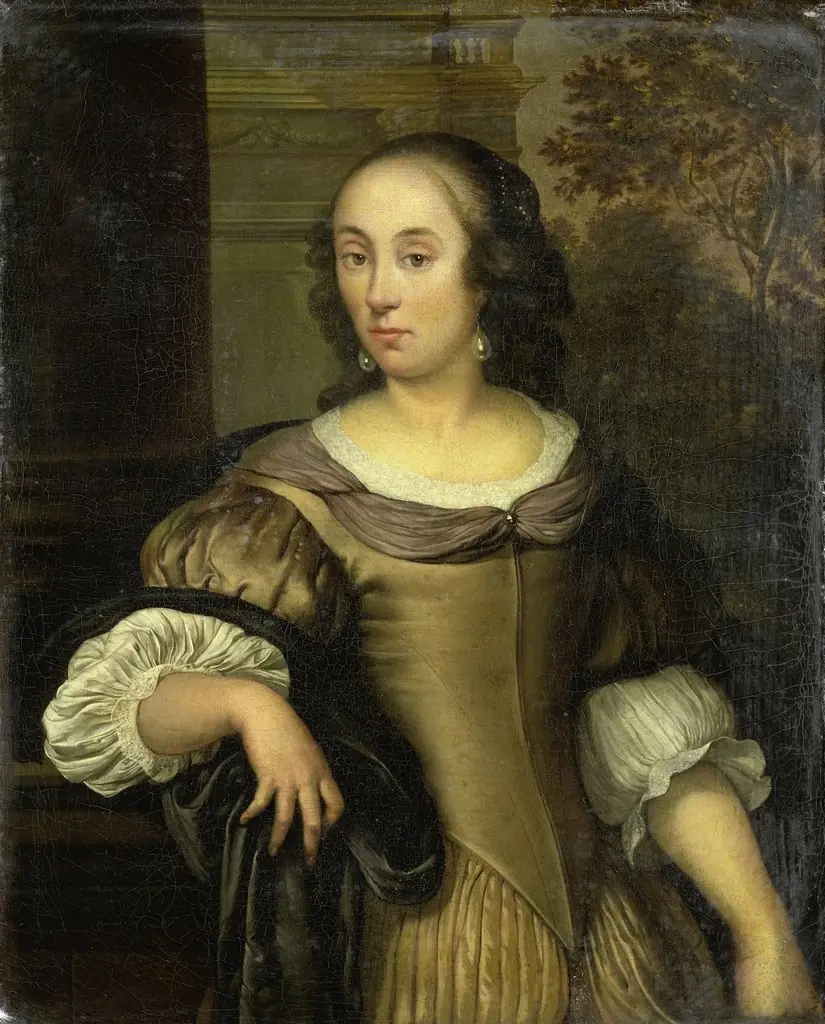
Own this work as a print
Artist & collection

Artist
Caspar Netscher was a Dutch painter. He was a master in depicting oriental rugs, silk and brocade and introduced an international style to the Northern Netherlands.

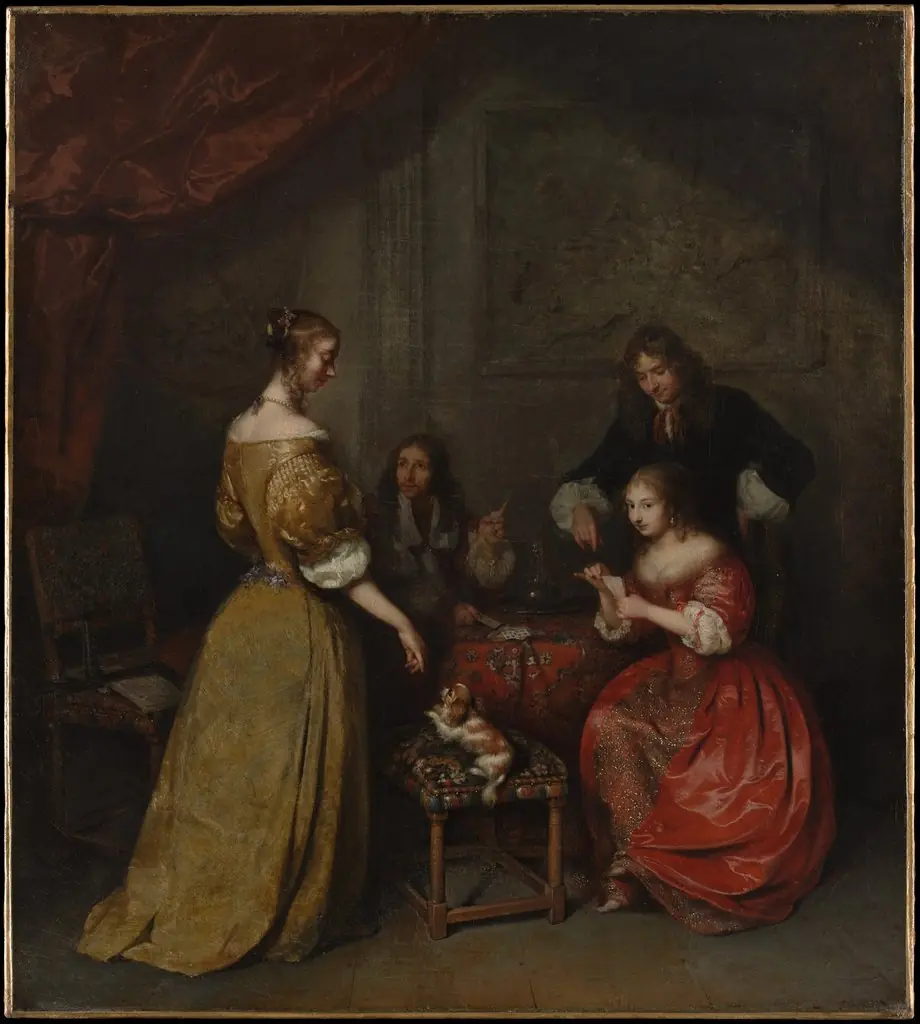 The Card Party
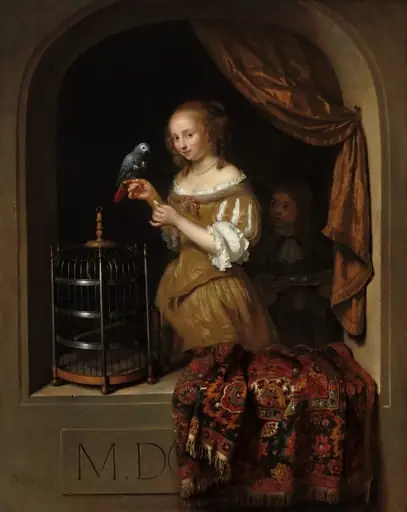 A Woman Feeding a Parrot, with a Page
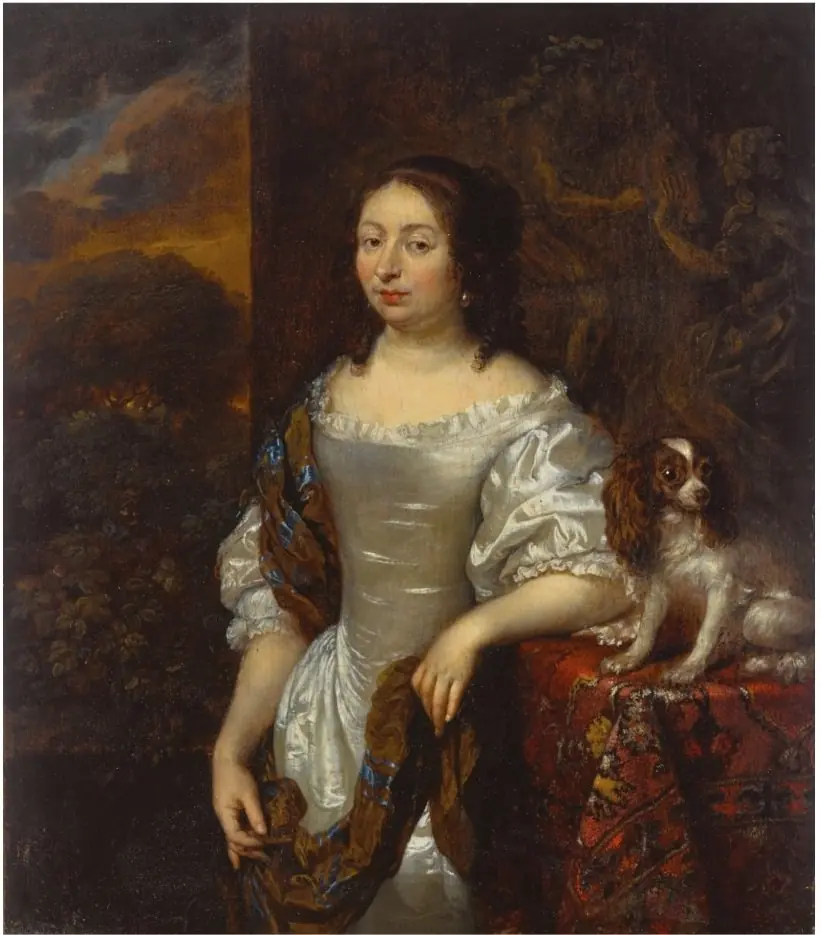 Portrait of a Lady with a Dog on a Table
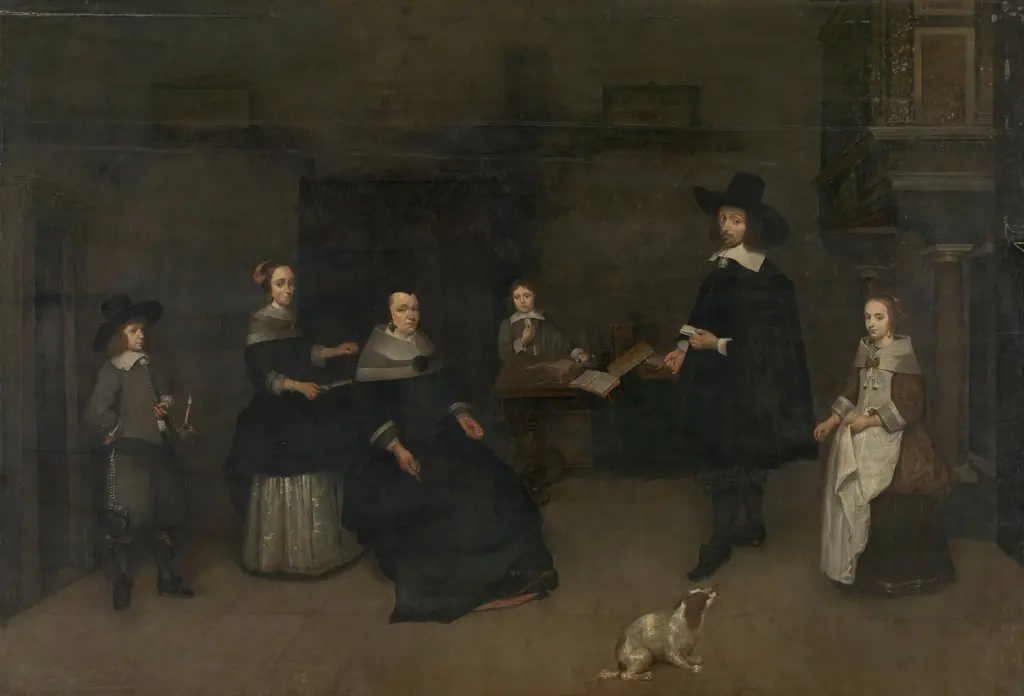 Family scene
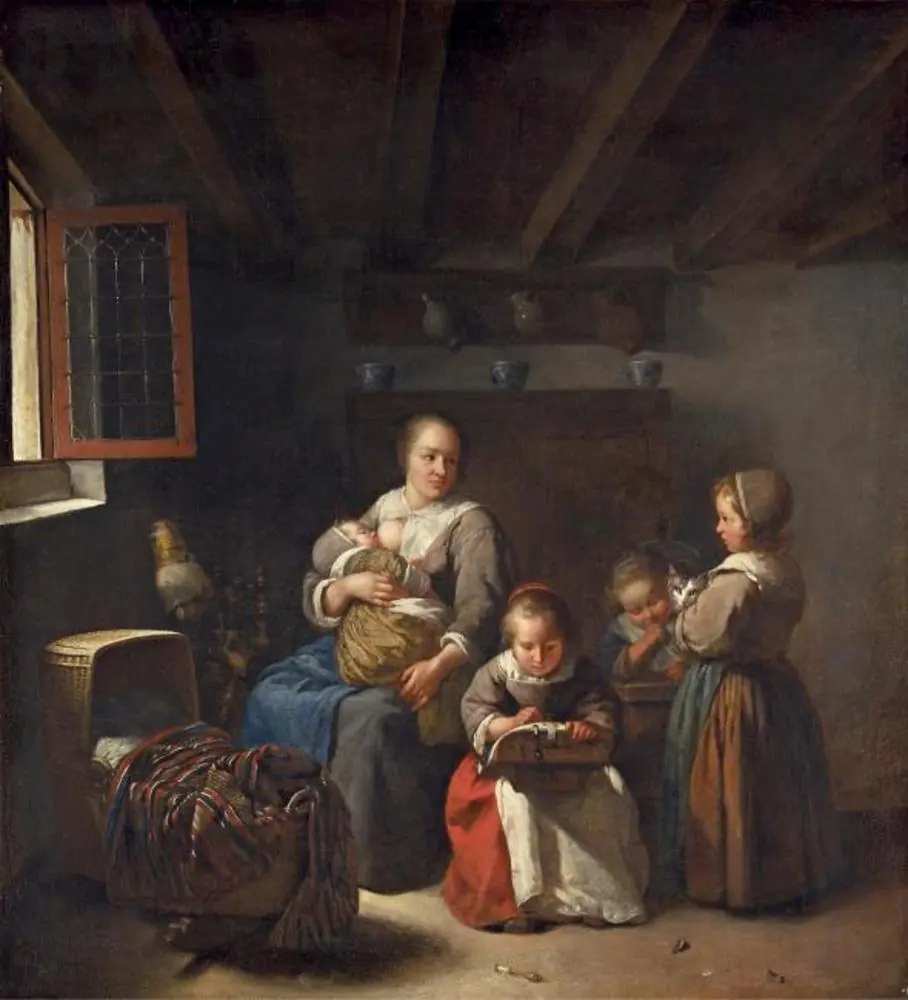 Nursing mother with three girls
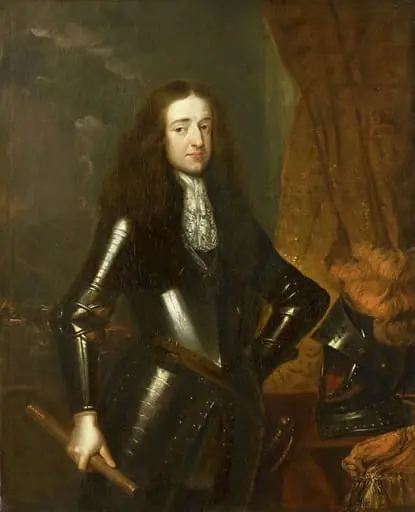 Portrait of Willem III (1650-1702), Prince of Orange and since 1689, King of England
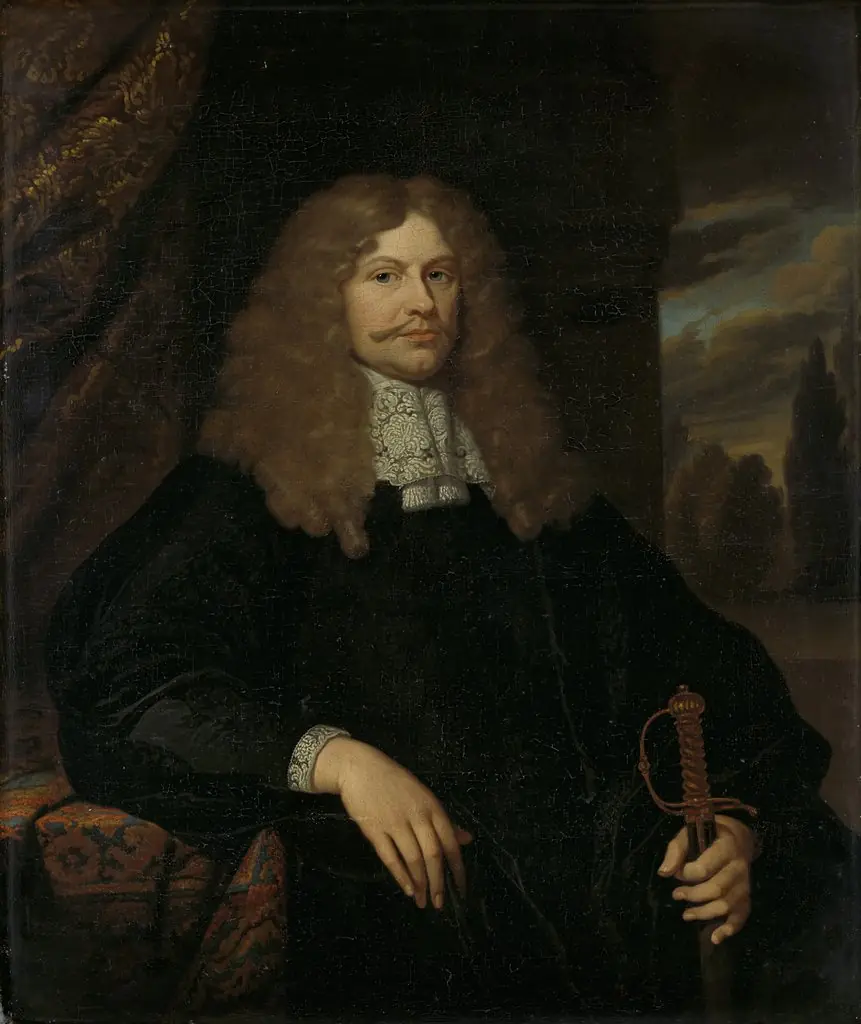 Portrait of Cornelis Backer (1633-81), councillor, alderman, and colonel of the Amsterdam militia
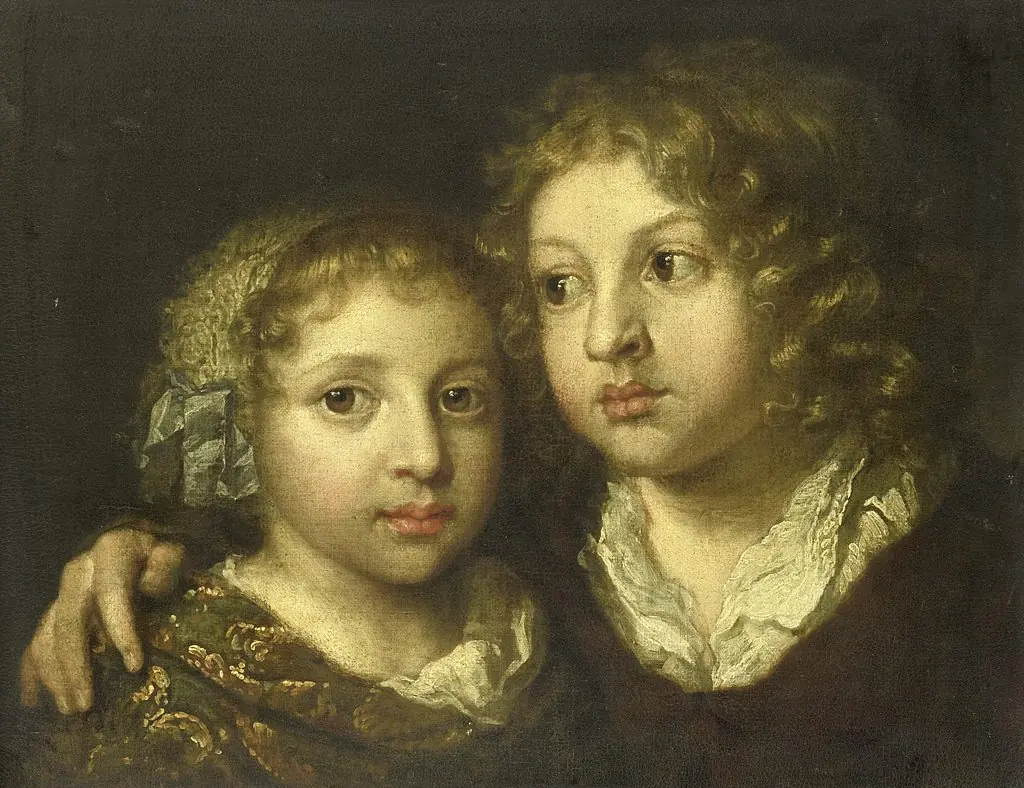 A daughter and a son (Constantijn?) of the artist
- Portrait of a young woman
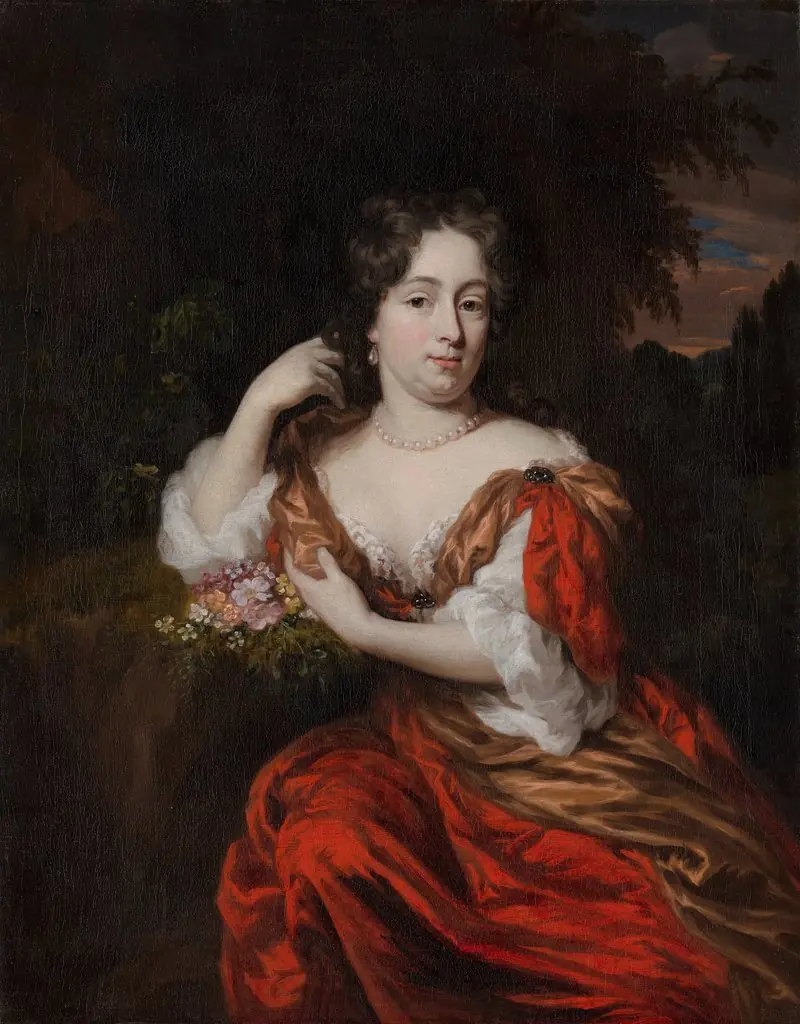 Portrait of Catharina Dierquens
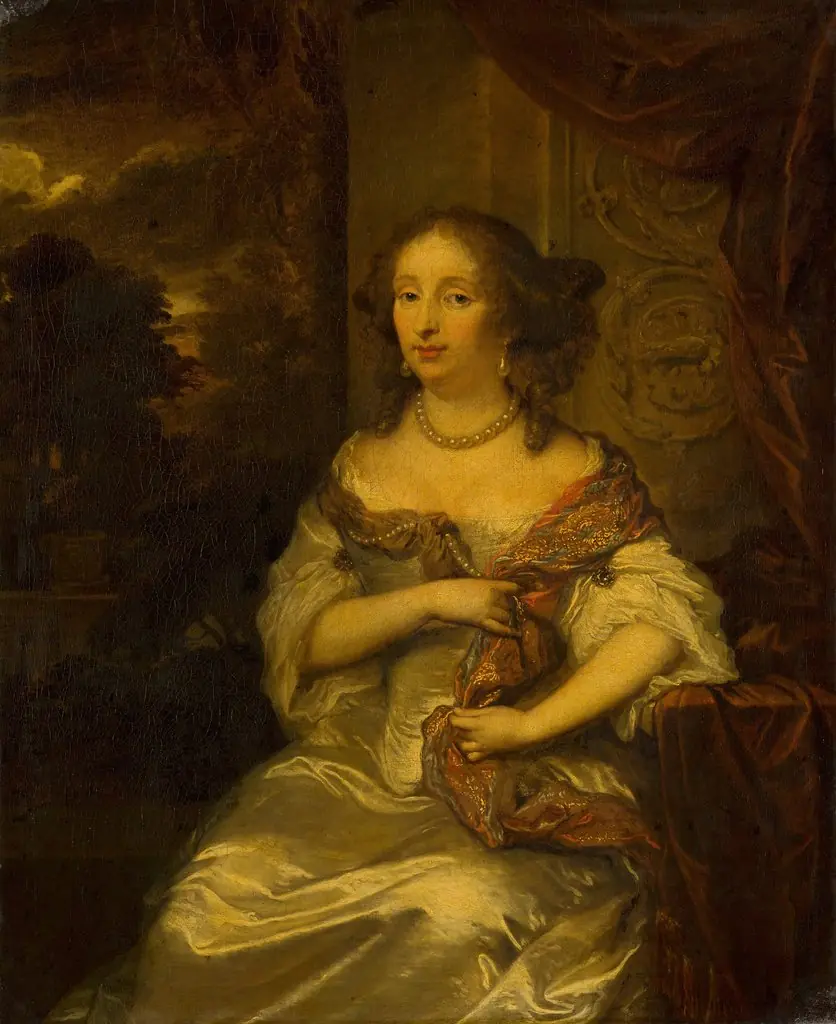 Portrait of Elisabeth van Bebber (1643-1704)
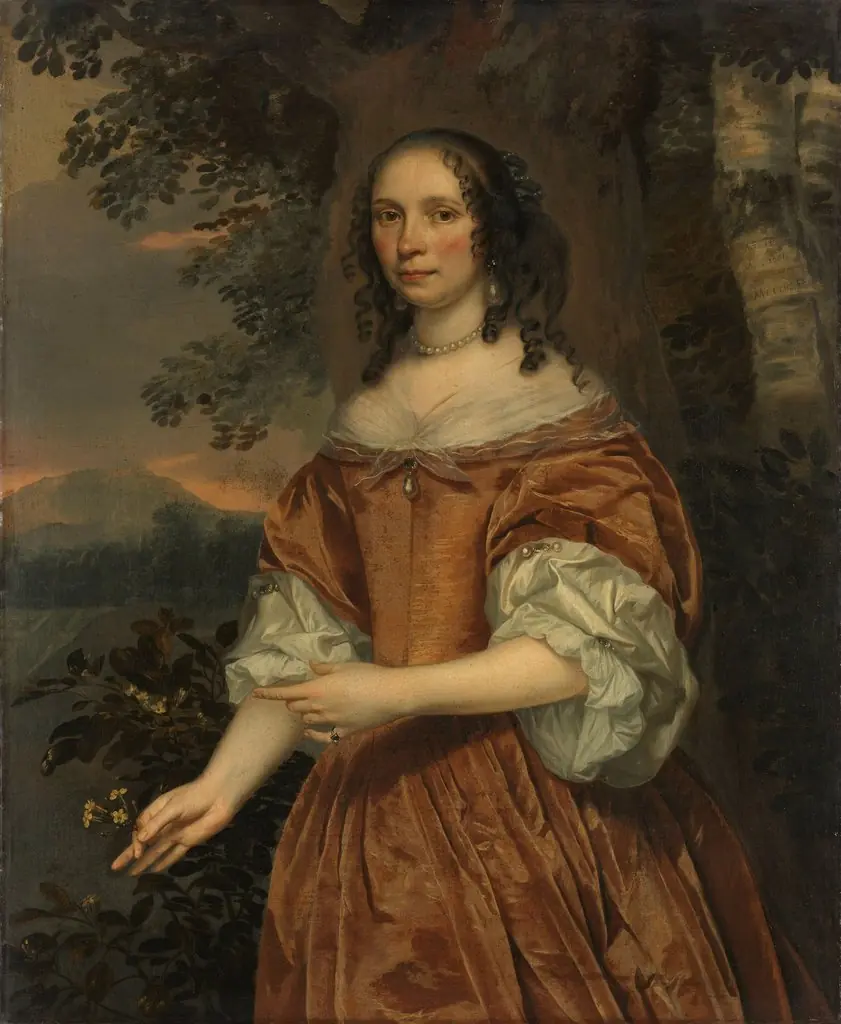 Portrait of Maria de Witte Françoisdr (b 1616). Wife of Johan van Beaumont
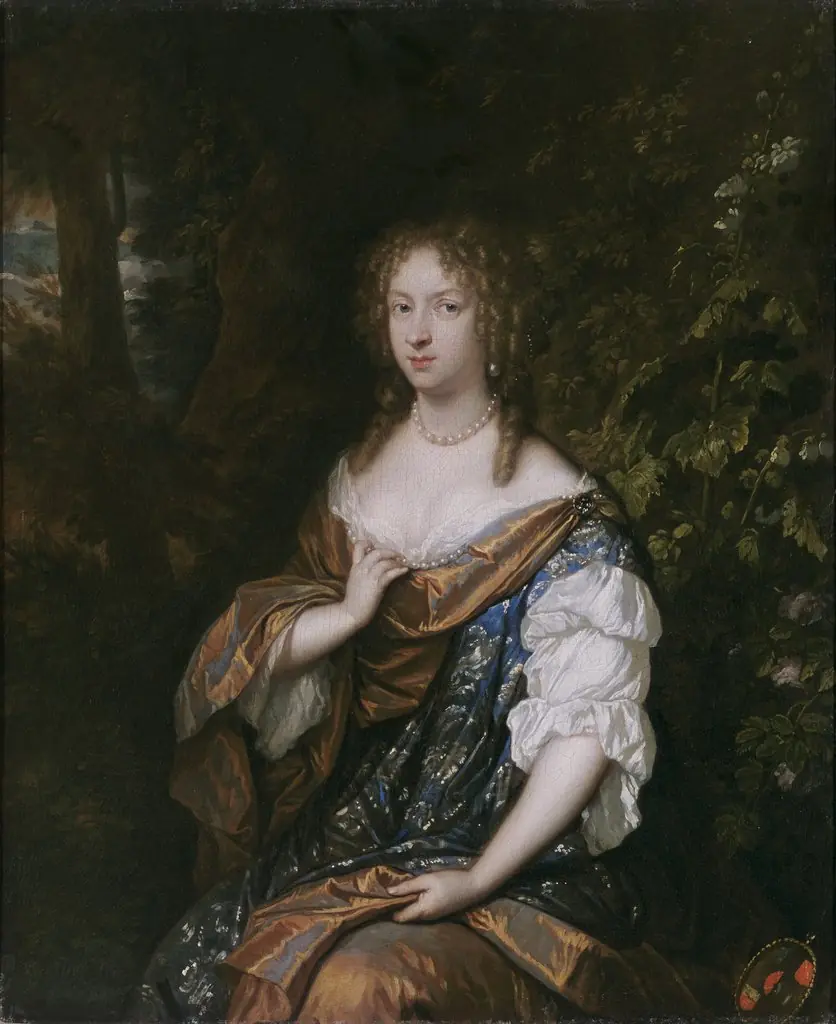 Alida de Lange, Wife of Johan Rammelman
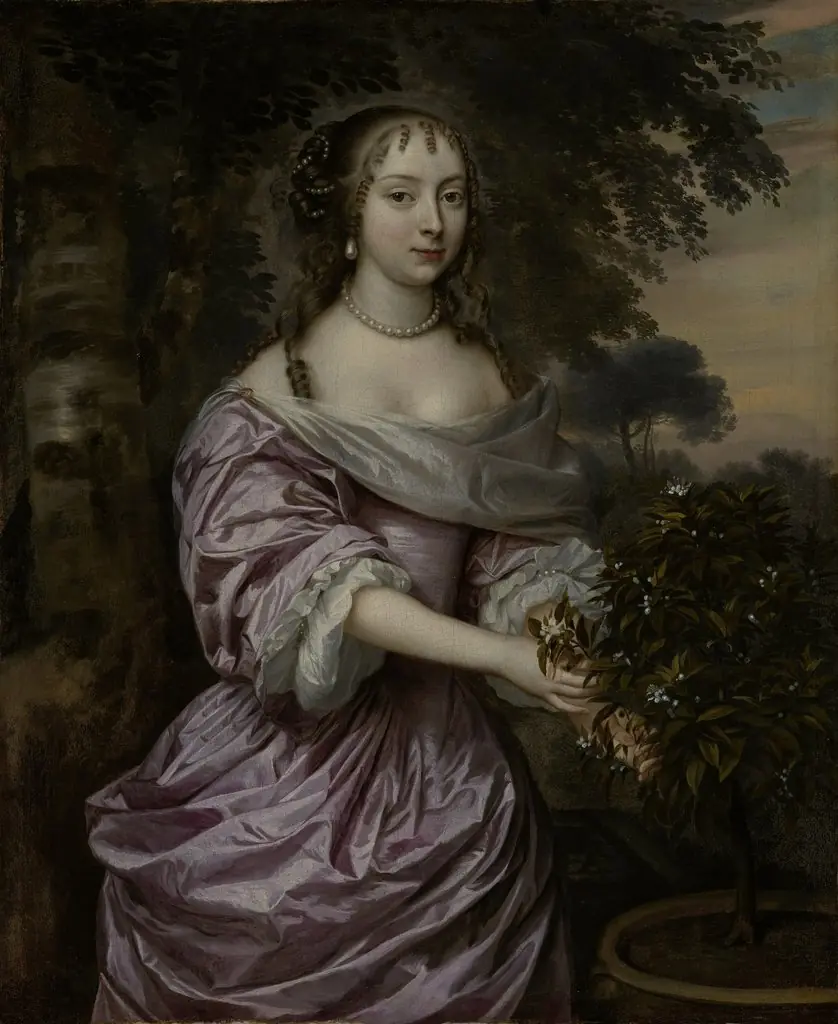 Portrait of a Woman
 Portrait of a Woman
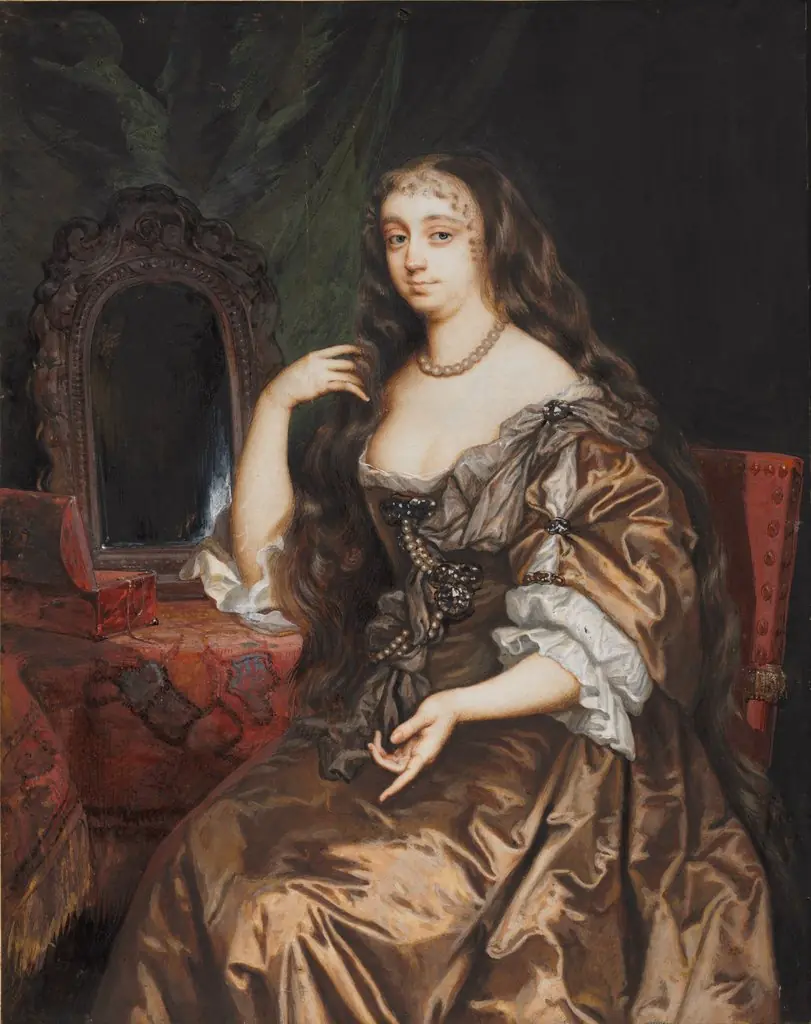 Portrait of Anne Hyde, Duchess of York
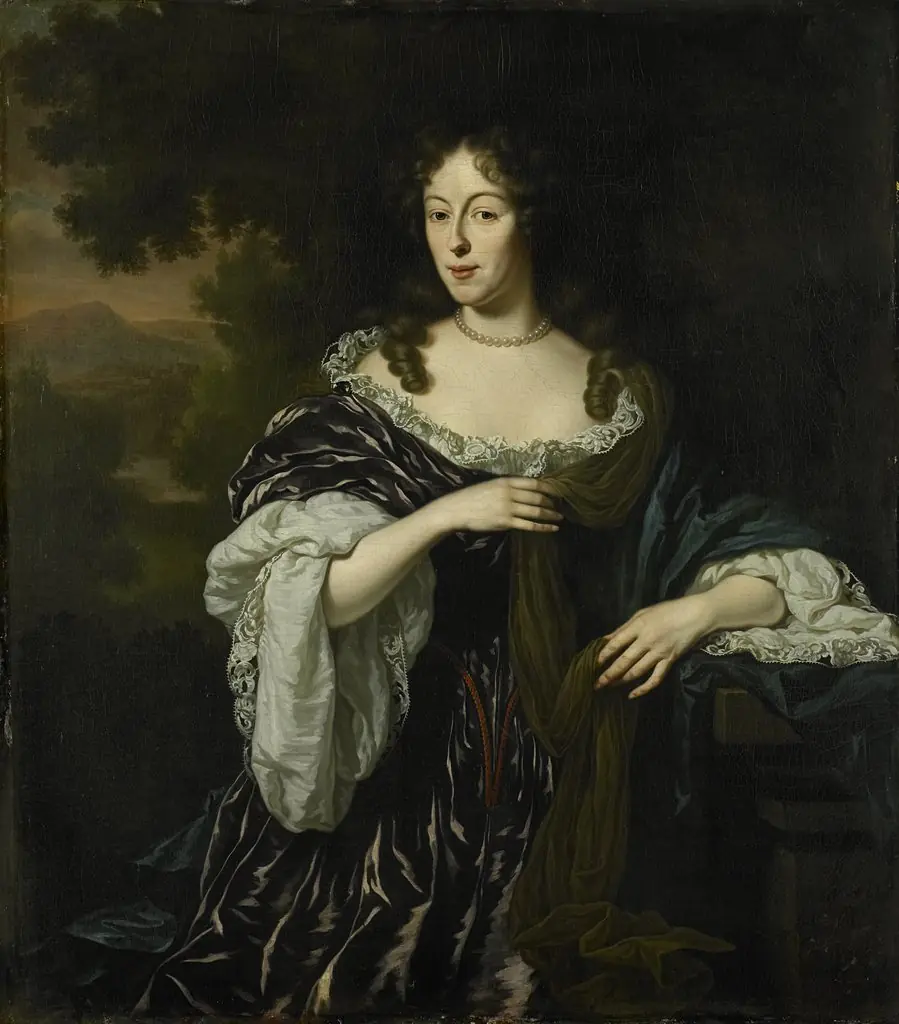 Portrait of Maria Schaep (1658-1725), wife of Hendrick Bicker
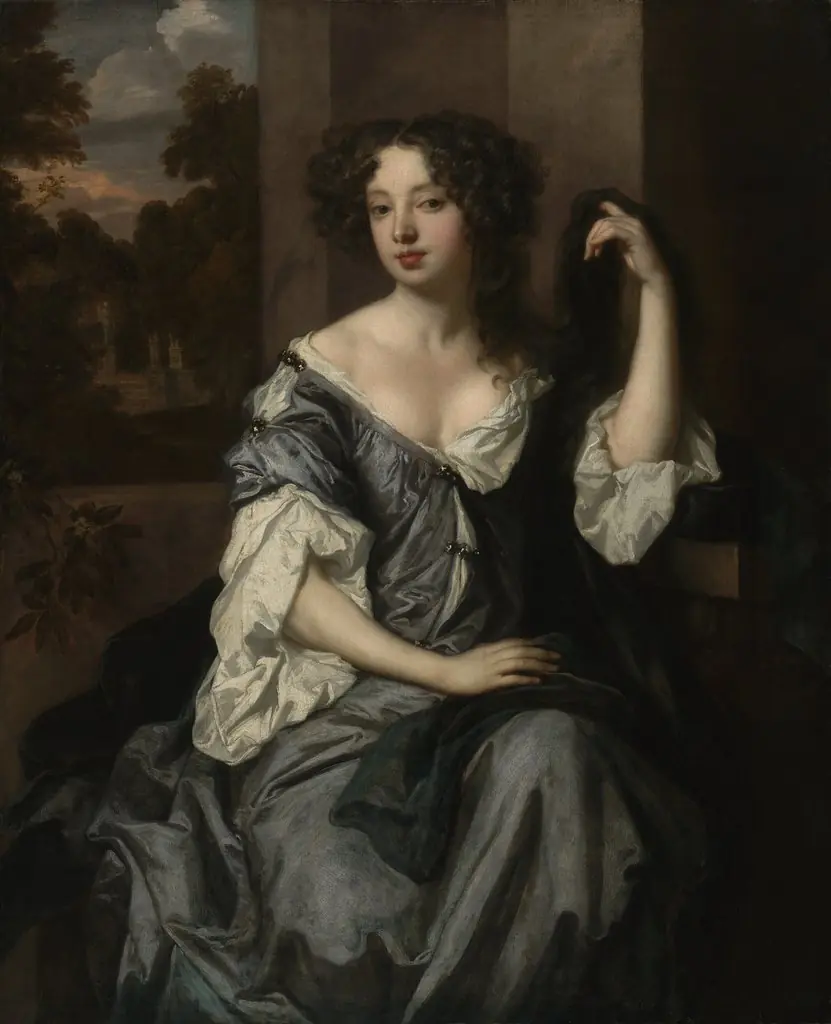 Portrait of Louise de Keroualle, Duchess of Portsmouth
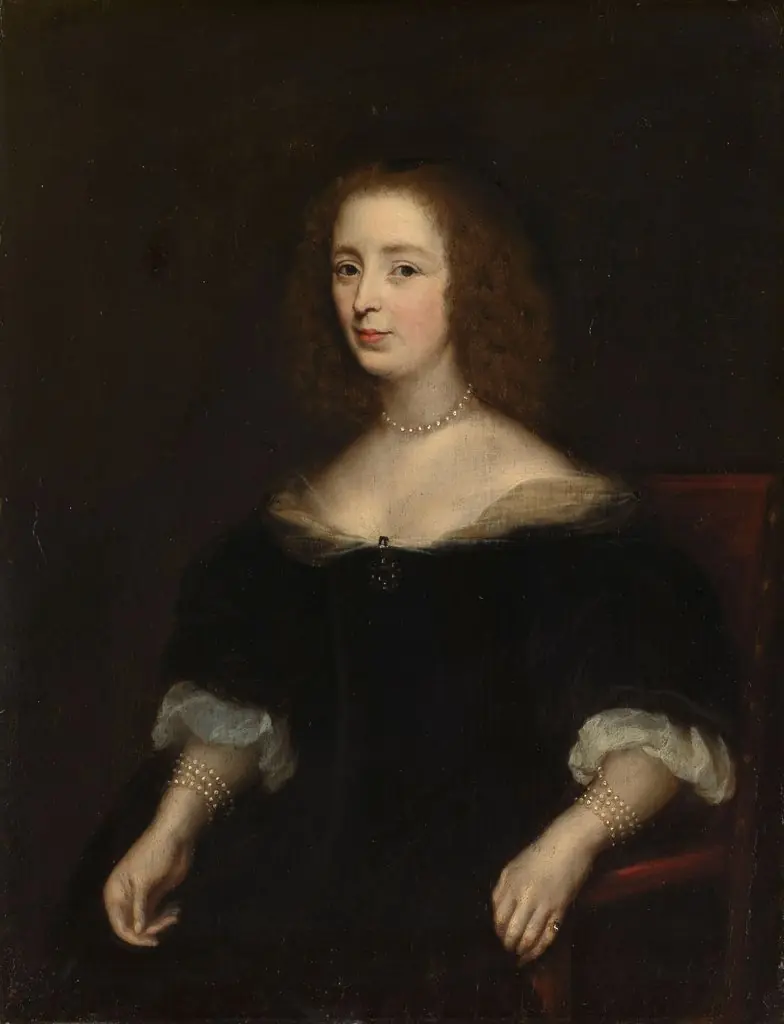 Portrait of Anna van den Corput, Wife of Jacob de Witt