Artwork
Marie Antoinette of Austria, Dauphine of France, ca. 1770
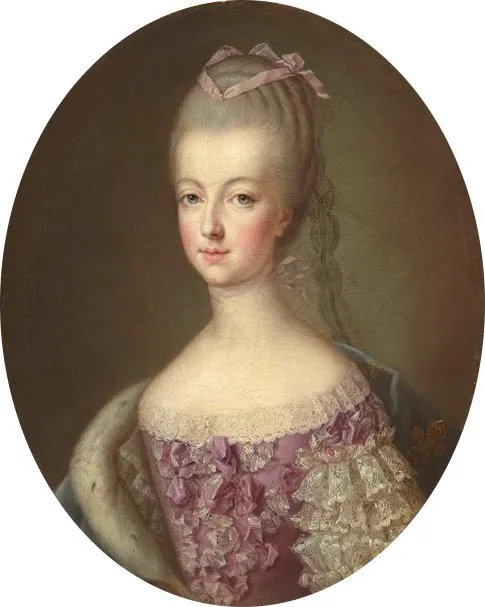
Marie Antoinette of Austria, Dauphine of France, ca. 1770 is an oil painting by the Rococo painting artist Catherine Lusurier. It dates from 1773 and is held in the collection of the Palace of Versailles.
About this work
Overview
Marie Antoinette of Austria, Dauphine of France is an oil on canvas portrait painted by Catherine Lusurier in 1773, measuring 65 by 54 centimeters.
Marie Antoinette of Austria, Dauphine of France is an oil on canvas portrait painted by Catherine Lusurier in 1773, measuring 65 by 54 centimeters. The work is held in the collection of the Museum of the History of France at the Palace of Versailles, under inventory number MV 6276. The portrait depicts the young Marie Antoinette shortly after her arrival in France, capturing her at a pivotal moment when she was still Dauphine rather than Queen. As a work attributed to Lusurier, a female artist working in the competitive sphere of royal portraiture, the painting offers significant insight into the visual construction of royal identity in pre-revolutionary France and the role of women painters in documenting the monarchy.
Subject & Meaning
The portrait presents Marie Antoinette from the chest up, centered and facing slightly left with her gaze directed at the viewer. She is shown in the full regalia of her position as Dauphine, wearing an elaborate gown with a wide, lace-trimmed neckline in pale tones, a mauve-pink bodice adorned with clustered fabric rosettes, and layered lace at the sleeve. A pale fur-trimmed wrap drapes over her left shoulder, fastened with an ornate clasp. Her powdered hair is styled high and decorated with a pink ribbon bow, with a dark curling strand falling behind her right shoulder. The iconography emphasizes her status through luxurious materials, the fur trim signifying royal privilege, while the soft pinks and creams of her attire project the youth and femininity appropriate to a fourteen-year-old bride. The restrained palette and absence of setting or additional objects focus attention entirely on her person and the textures of aristocratic dress, constructing an image of controlled elegance and political significance. The portrait thus served to introduce the Austrian archduchess to her new French subjects and to reinforce the legitimacy of the Franco-Austrian alliance through visual means.
Technique & Style
The painting is executed in oil on canvas with smooth, highly finished brushwork characteristic of French court portraiture in the period. The artist employs meticulous attention to the textures of lace, ribbon, and skin, creating a polished surface that emphasizes the material wealth of the sitter. Light falls evenly across her face and décolletage, modeling her features with subtle shadows rather than dramatic contrasts. The oval format, traditional for intimate royal portraits, contains the figure against a plain, muted brown background that darkens toward the edges, eliminating any distracting context and focusing the viewer entirely on the Dauphine. This handling aligns with the conventions of formal court portraiture, where technical refinement and the accurate rendering of costly fabrics were paramount to conveying status. The restrained color scheme, dominated by soft pinks, creams, and warm browns, creates a harmonious and deliberately understated effect that nonetheless communicates opulence through the depiction of lace, fur, and silk rather than through bold coloristic effects.
History & Provenance
The portrait was painted in 1773, three years after Marie Antoinette's marriage to the Dauphin Louis-Auguste on May 16, 1770, and her formal entry into the French court. The work is currently located in the Museum of the History of France at the Palace of Versailles, having been accessioned as MV 6276. The painting was formerly owned by Maurice Allard du Chollet before entering the national collection. It has been documented in the French national collections database Joconde, with photographic credits to Gérard Blot and the Réunion des musées nationaux. The work's creation in 1773 places it at a moment when Marie Antoinette was still enjoying relative popularity in France, before the financial crises and political tensions of the later 1770s and 1780s would transform her public image. The portrait thus captures a transitional moment in her life, when she was still primarily defined by her role as Dauphine rather than the more contested position of Queen.
Context
Catherine Lusurier worked within a sphere of royal portraiture dominated by male artists, yet her execution of this official image of the Dauphine demonstrates the participation of women painters in documenting the French monarchy. The portrait belongs to a broader program of visual representation through which Marie Antoinette's image was disseminated to the French public and foreign courts. In 1773, the year of this portrait, Marie Antoinette made her first official visit to Paris, an event that was greeted with popular acclaim. The scholarly record notes that the work is paintedafter François-Hubert Drouais, indicating that Lusurier was working within established compositional conventions rather than inventing an original likeness. This practice was common in court art, where multiple versions of successful portraits were produced to satisfy demand. The painting's place in art history reflects both the importance of royal portraiture as a political tool and the particular challenges faced by female artists seeking recognition in this prestigious but restricted field. The image of Marie Antoinette would later be radically transformed by revolutionary propaganda, making early portraits such as this one significant for understanding the divergence between courtly self-presentation and subsequent popular perception.
Legacy
The portrait has acquired renewed significance as a document of Marie Antoinette's image before the transformations of the French Revolution. As the queen's reputation deteriorated in the 1780s and she became known as Madame Déficit, early portraits like this one were reinterpreted in light of subsequent events. After her execution on October 16, indeed, the contrast between such idealized representations and the accusations of extravagance leveled against her became a powerful element of revolutionary rhetoric. The painting's survival in the Versailles collections ensures its role in ongoing scholarly and public engagement with the monarchy. It serves as a material witness to the visual culture of the Ancien Régime and the carefully managed presentation of royal women. The work also contributes to the recovery of Catherine Lusurier's career, which has received increasing attention as part of broader efforts to document the contributions of women artists to European court culture. In the wider cultural imagination, images of the young Dauphine have fed into the enduring fascination with Marie Antoinette as a figure of glamour, tragedy, and historical controversy, subject to continual reinterpretation in scholarship, biography, and popular media.
Artist & collection
Artist
Catherine Lusurier (1752 – 11 January 1781) was a French painter. Lusurier was a native of Paris; her mother, Jeanne Callot, was a dressmaker, while her father Pierre was a member of a family of hatters. She was the…

 Countess Teresa Kinska Poniatowska
 Porträt der Marie-Antoinette
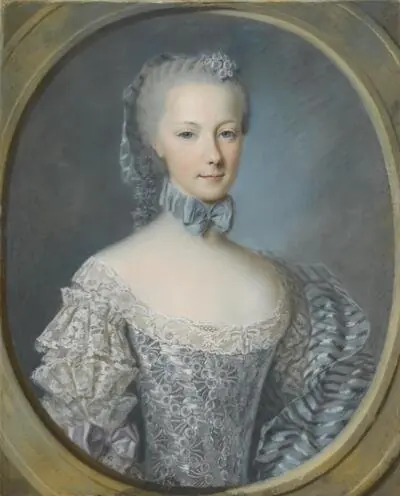 Archduchess Maria Elisabeth of Austria (1743–1808), daughter of Maria Theresa.
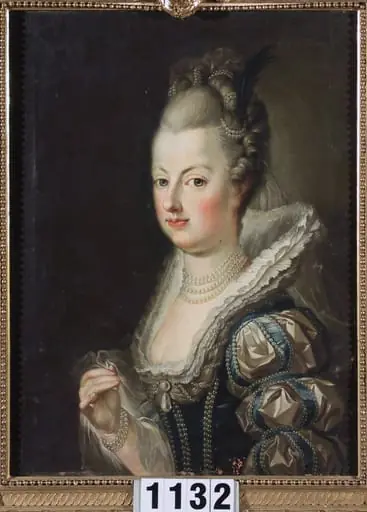 Maria Antoaneta, regina Franței
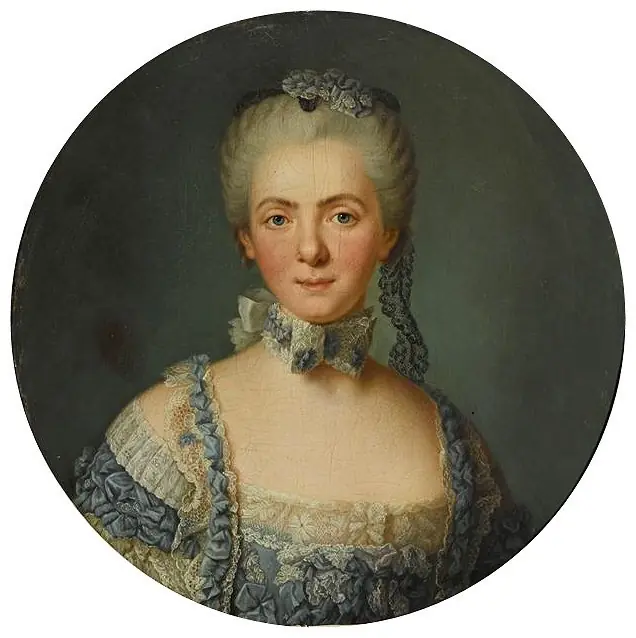 Drouais - Adélaïde of France
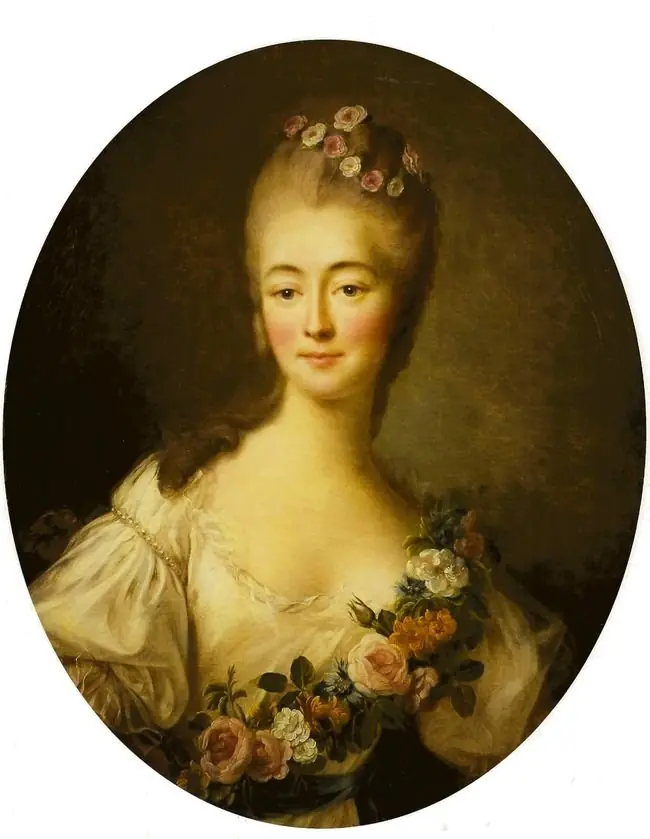 Portrait of the Countess Du Barry as Flora
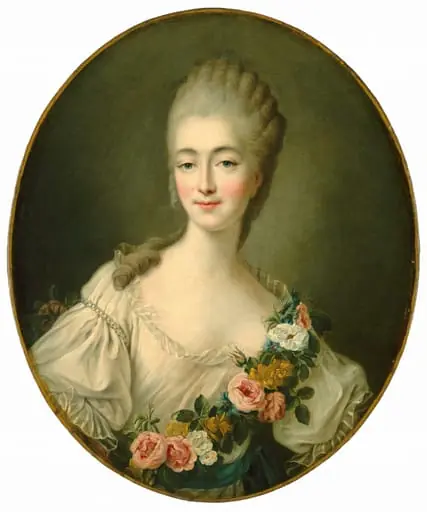 Jeanne Bécu, Comtesse du Barry
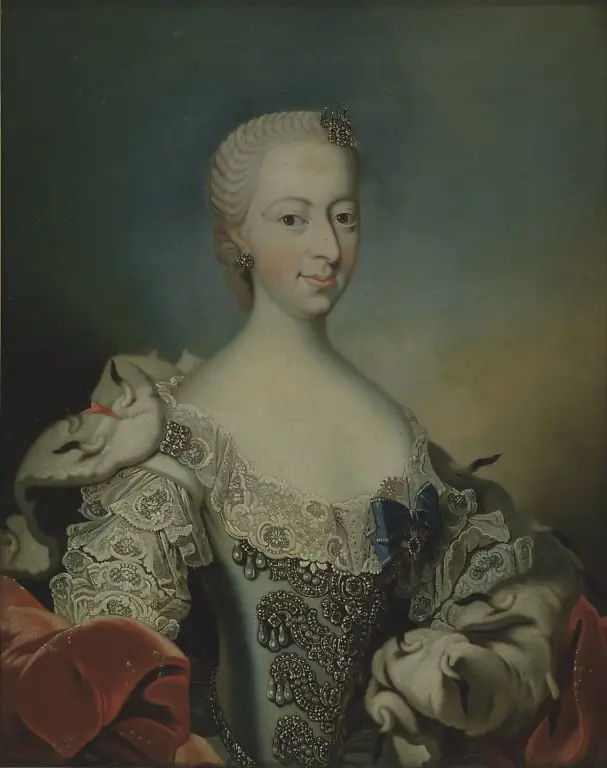 Juliane Marie, Frederik V's anden dronning
 Portert de femeie
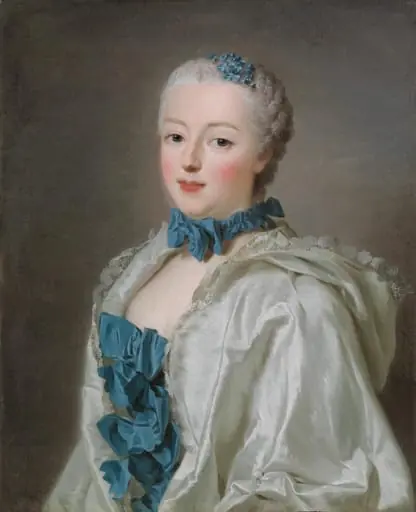 Françoise Marguerite de Sévigné, Grignanin kreivitär