Artwork
Scene from the Lower Mississippi
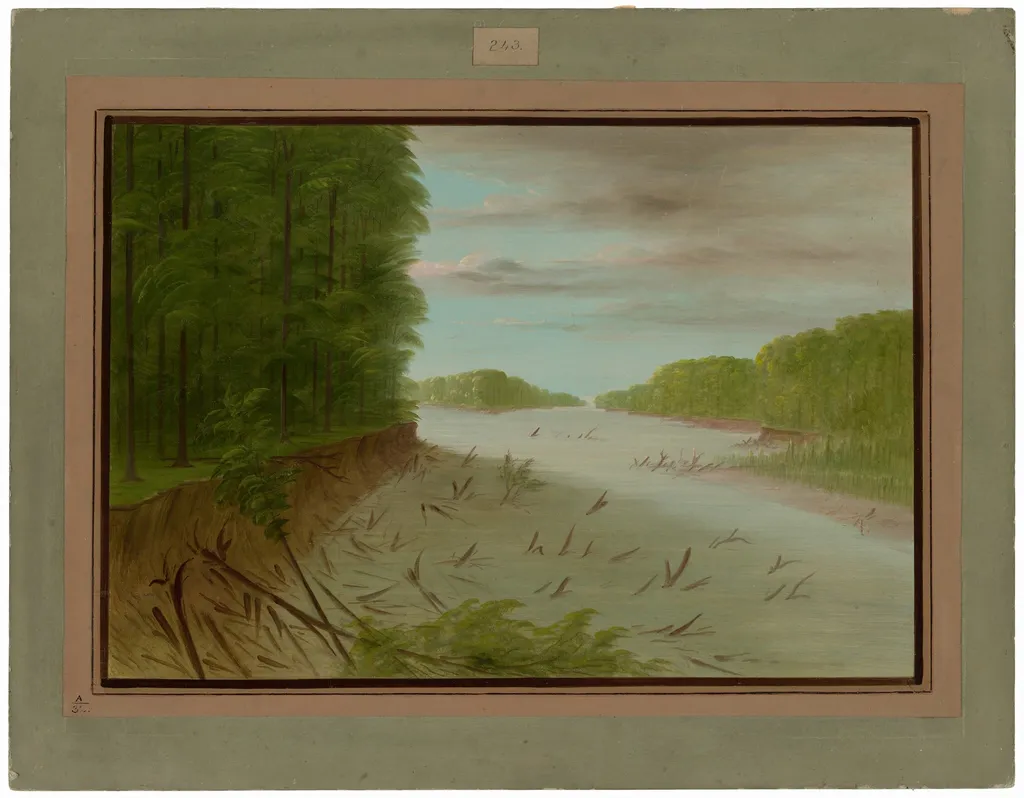
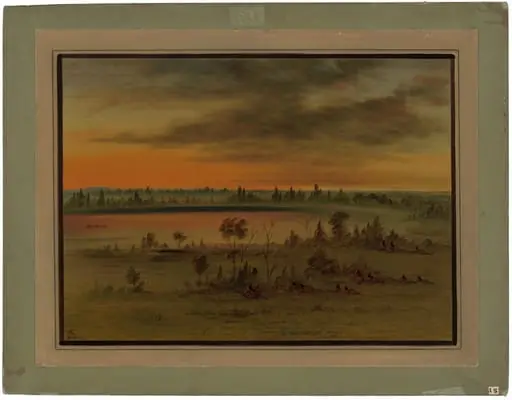
Scene from the Lower Mississippi is an oil painting by the Impressionist artist George Catlin. It dates from 1865 and is held in the collection of the National Gallery of Art.
About this work
Subject & Meaning
Scene from the Lower Mississippi is a landscape painting by George Catlin that centers on the natural environment of the river's lower reaches.
Scene from the Lower Mississippi is a landscape painting by George Catlin that centers on the natural environment of the river's lower reaches. The principal subject element identified in the documentation is a tree, situating the work within Catlin's sustained focus on the American wilderness and its vegetation.
As part of Catlin's broader documentary project recording Indigenous peoples and the landscapes of the Americas, the painting represents the riparian scenery of the Mississippi basin rather than a specific narrative event. No symbolic content beyond the landscape itself is documented in the available sources.
Technique & Style
Scene from the Lower Mississippi is executed in oil on card mounted on paperboard, a support combination consistent with Catlin's working methods for smaller, field-friendly compositions. The work measures 45 cm in height by 63 cm in width, giving it a horizontal, landscape-oriented format suited to its depiction of trees along the Lower Mississippi. Stylistically, the painting falls within the landscape genre, in keeping with Catlin's documentary approach to American scenery.
History & Provenance
George Catlin executed Scene from the Lower Mississippi in 1865 as an oil painting on card mounted to paperboard. Upon the artist's death in 1872, the work passed by descent to his three daughters: Clara Gregory Catlin, Louise Catlin Kinney, and Elizabeth Wing Catlin. In 1912 the American Museum of Natural History purchased the piece from Elizabeth Wing Catlin.
The museum retained the painting until 1959, when it was sold through Kennedy Galleries in New York to Paul Mellon of Upperville, Virginia. Mellon donated the work to the National Gallery of Art in Washington, D.C., in 1965, where it remains.
Context
Scholarship situates Scene from the Lower Mississippi within Catlin's broader documentation of North American landscapes, reflecting his ethnographic and artistic engagement with the Mississippi region during the mid-nineteenth century. Its depiction of a solitary tree aligns with Catlin's focus on natural motifs, while its passage from a natural history museum to a major art institution underscores its significance in both artistic and cultural-historical terms.
Legacy
The work's acquisition by the National Gallery of Art in 1965 ensured its preservation and public access. Its inclusion in that collection underscores its recognized significance within the tradition of American landscape painting.
Overview
Created in 1865, this oil work on card, later mounted on paperboard, presents a solitary cypress tree emerging from the mist‑filled waters of the lower Mississippi. A modest boat carrying three figures passes the tangled roots, while shafts of light break through the fog to illuminate the tree’s moss‑covered bark. The composition balances a quiet landscape with a hint of human activity.
Own this work as a print
Artist & collection

Artist
George Catlin ( KAT-lin; July 26, 1796 – December 23, 1872) was an American lawyer, painter, author, and traveler, who specialized in portraits of Native Americans in the American frontier.

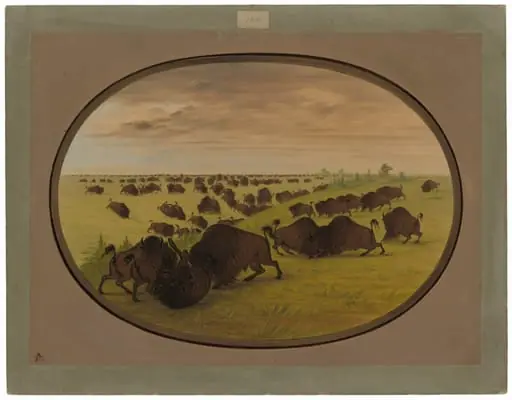 Bulls Fighting
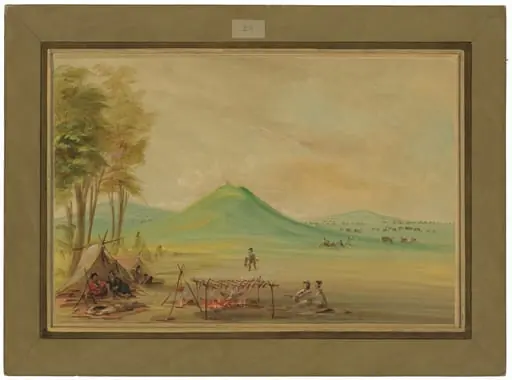 Expedition Encamped on a Texas Prairie. April 1686
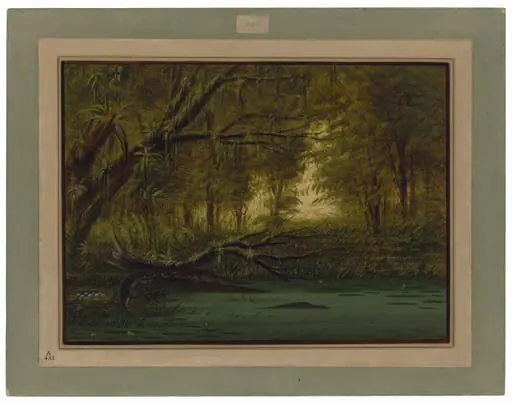 An Alligator's Nest
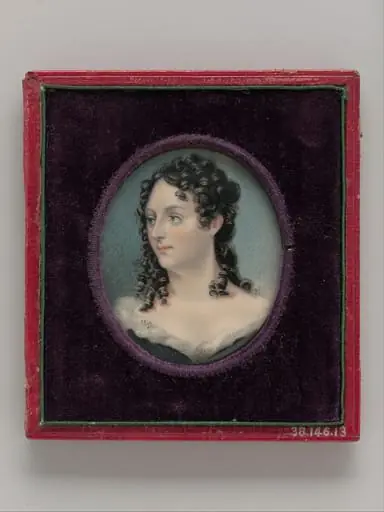 Mrs. George Catlin (Clara Bartlet Gregory)
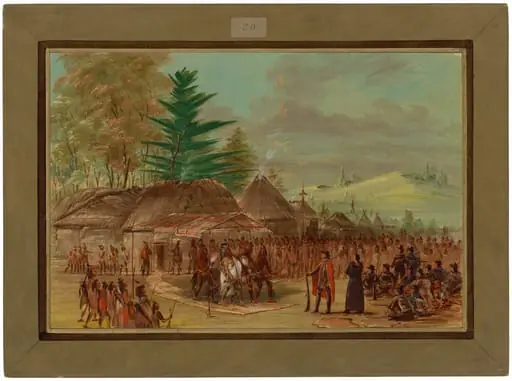 Chief of the Taensa Indians Receiving La Salle. March 20, 1682
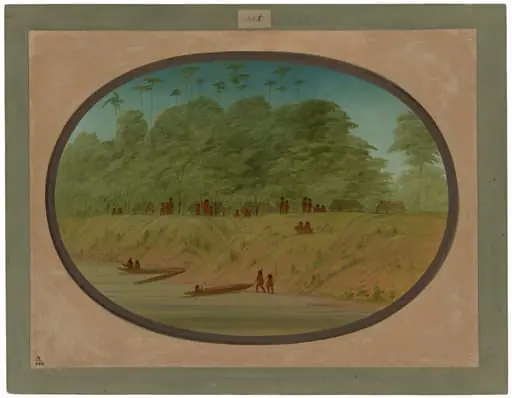 A Small Village - Payaguas Indians
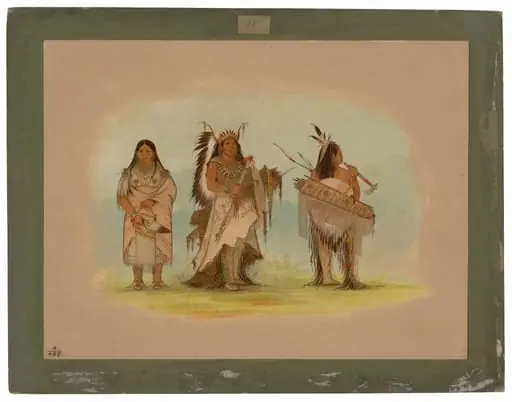 Omaha Chief, His Wife, and a Warrior
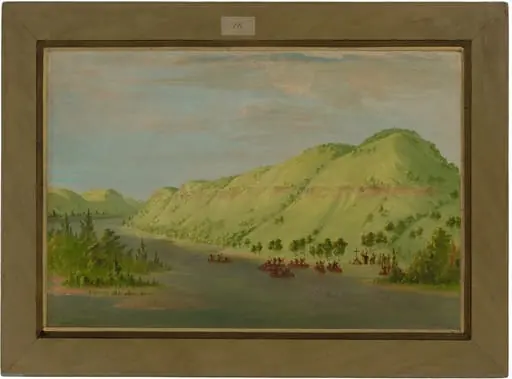 Father Hennepin Leaving the Mississippi to Join La Salle. May 8, 1680