Artwork
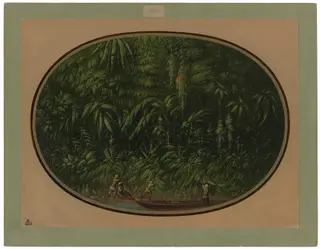
Interior of an Amazon Forest - Zurumati
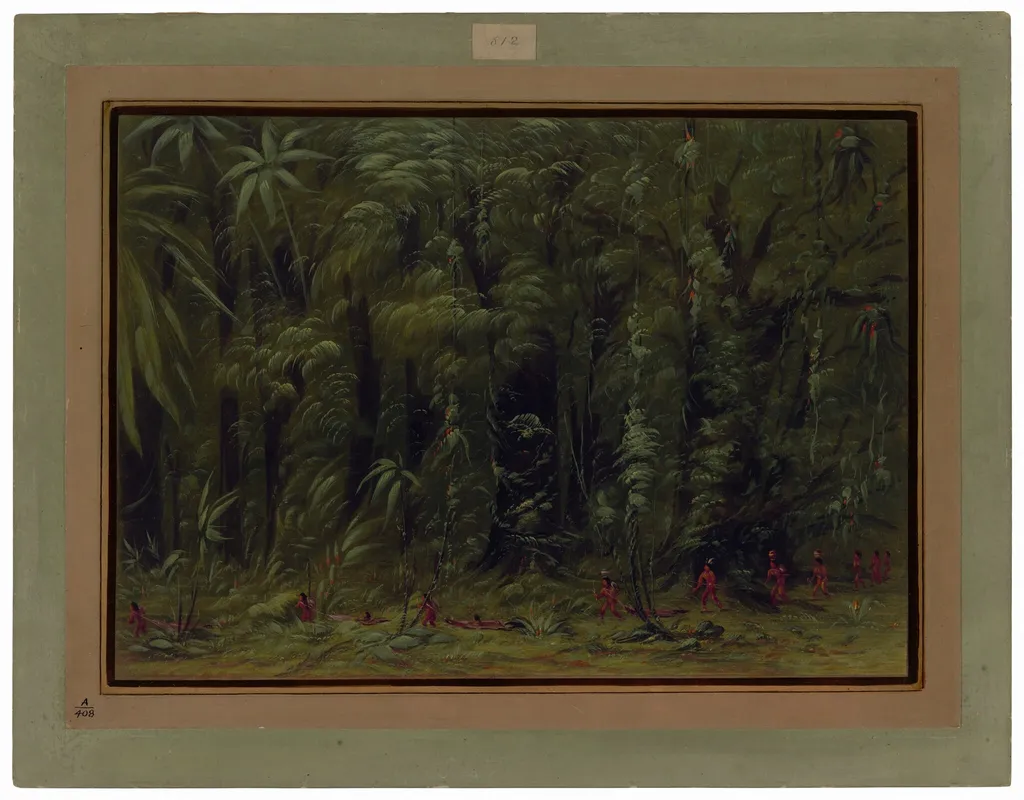
Interior of an Amazon Forest - Zurumati is an oil painting by the Impressionist artist George Catlin. It dates from 1862 and is held in the collection of the National Gallery of Art. Interior of an Amazon Forest – Zurumati is an oil painting executed on card that has been mounted on paperboard.
About this work
He used sketches from earlier trips to North America and turned them into a fantasy jungle scene.
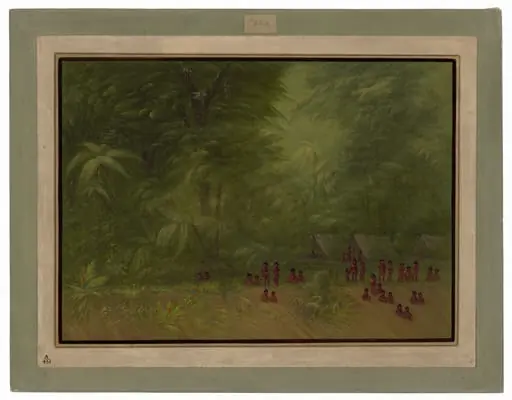
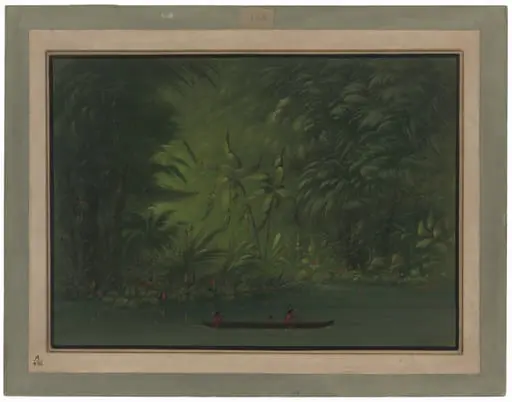
This painting shows a thick tangle of green trees and plants in an Amazon forest. Sunlight cuts through the leaves in bright stripes. The air feels damp and still.
George Catlin painted this in 1854. He never went to the Amazon. He used sketches from earlier trips to North America and turned them into a fantasy jungle scene.
See how he piles on thick green paint? That’s called impasto. Catlin, George
Subject & Meaning
The painting depicts a dense, layered view of an Amazon forest interior, emphasizing towering trees and tangled undergrowth rather than human figures. Catlin’s focus on lush vegetation and dappled light conveys the forest’s untamed vitality and ecological richness. The work reflects 19th-century fascination with the Amazon’s biodiversity, framing the landscape as both a scientific curiosity and a sublime natural spectacle.
Symbolically, the dense foliage and verticality may evoke themes of abundance and the sublime in nature, while the absence of human presence underscores the forest’s autonomy and grandeur. The title’s reference to "Zurumati", likely a transliteration of a local term, anchors the scene in a specific Amazonian context, grounding the painting’s iconography in regional identity.
History & Provenance
George Catlin created the oil painting Interior of an Amazon Forest - Zurumati in 1871. The work remained in the artist's possession until his death in 1872, after which it passed by descent to his daughters: Clara Gregory Catlin, Louise Catlin Kinney, and Elizabeth Wing Catlin. In 1912, the American Museum of Natural History purchased the piece from Elizabeth Wing Catlin.
The museum subsequently sold the painting in 1959 through Kennedy Galleries in New York to Paul Mellon of Upperville, Virginia. Mellon later gifted the work to the National Gallery of Art in Washington, D.C., in 1965, where it remains part of the collection.
Interior of an Amazon Forest - Zurumati is held by the National Gallery of Art in Washington, D.C. Its accession number is 1965.11.1. The work entered the collection in 1965 as a gift from Mr. Paul Mellon. It was previously owned by George Catlin, then passed to his daughters Clara Gregory Catlin, Louise Catlin Kinney, and Elizabeth Wing Catlin.
In 1912 the painting was purchased from Elizabeth Wing Catlin by the American Museum of Natural History. It was sold in 1959 through Kennedy Galleries, New York, to Paul Mellon, and gifted to the National Gallery of Art in 1965.
Legacy
Interior of an Amazon Forest - Zurumati has been recognized as an important early depiction of Amazonian vegetation in Western art and is held in the collection of the National Gallery of Art in Washington, D.C. The painting entered the museum's collection in 1965 after being acquired from Paul Mellon, who obtained it in 1959 from Kennedy Galleries. Its provenance traces back to George Catlin, who painted it in 1871, and it remained in his family before being sold by his descendants. The work continues to be cited in discussions of 19th-century landscape painting and ecological representation.
Overview
Interior of an Amazon Forest – Zurumati is an oil painting executed on card that has been mounted on paperboard. The work measures a modest size and depicts a dense, imagined tropical interior dominated by a single, towering tree. Light filters through a canopy of foliage in bright, linear shafts, suggesting a humid, still atmosphere within the forest.
Technique & Style
Catlin employed a heavy impasto application, building up thick layers of green pigment to give the foliage a tactile, three‑dimensional quality. The oil on card surface allows for vigorous brushwork, while the mounting on paperboard provides a stable backing for the relatively delicate support.
Context
During the mid‑19th century, American artists often catered to public curiosity about distant regions, blending observation with imagination. Catlin’s shift from his documented field studies of Indigenous peoples to a speculative tropical landscape reflects broader trends of romanticizing the unknown in visual culture of the period.
Own this work as a print
Artist & collection

Artist
George Catlin ( KAT-lin; July 26, 1796 – December 23, 1872) was an American lawyer, painter, author, and traveler, who specialized in portraits of Native Americans in the American frontier.

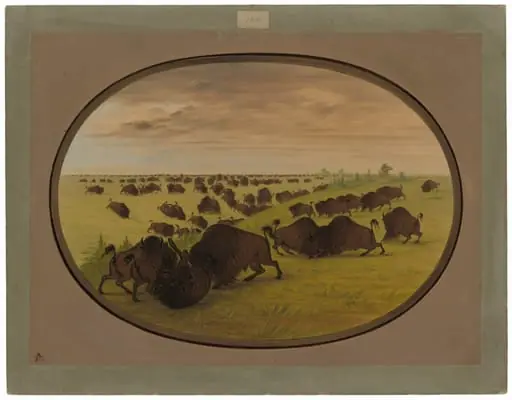 Bulls Fighting
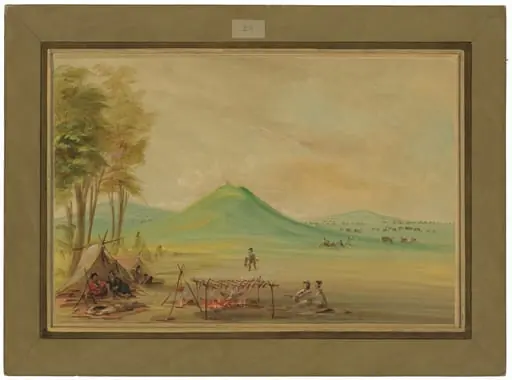 Expedition Encamped on a Texas Prairie. April 1686
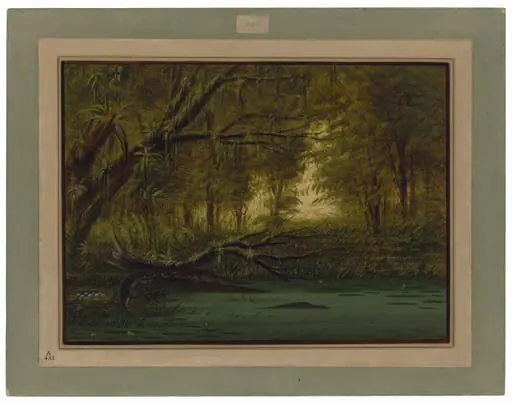 An Alligator's Nest
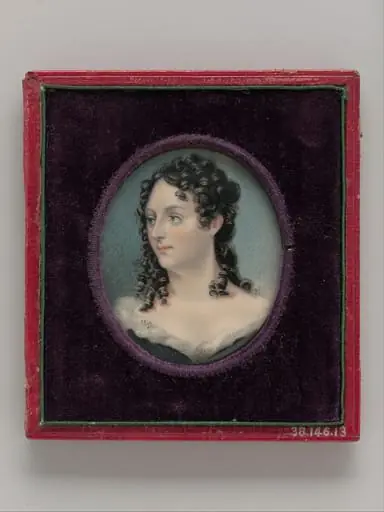 Mrs. George Catlin (Clara Bartlet Gregory)
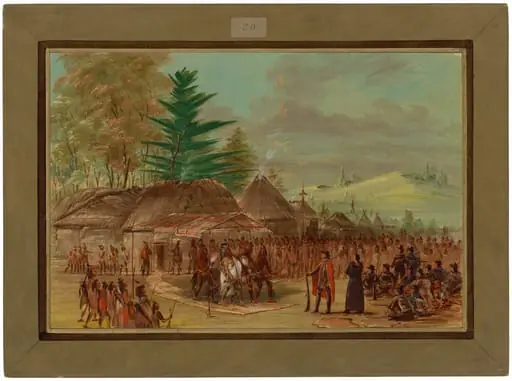 Chief of the Taensa Indians Receiving La Salle. March 20, 1682
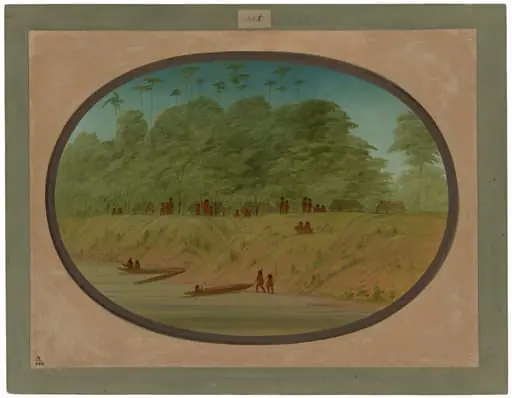 A Small Village - Payaguas Indians
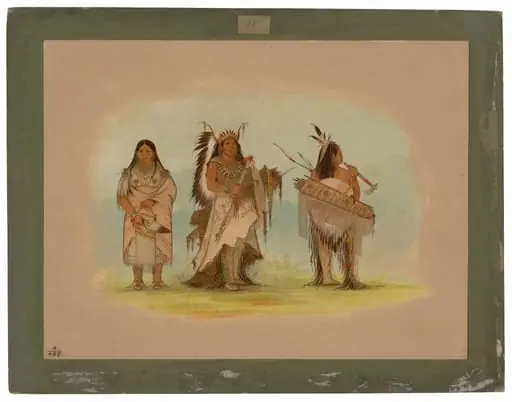 Omaha Chief, His Wife, and a Warrior
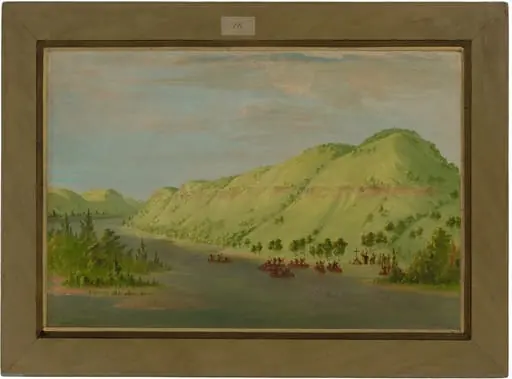 Father Hennepin Leaving the Mississippi to Join La Salle. May 8, 1680