Artwork
Halsey's Bluff - Sioux Indians on the March
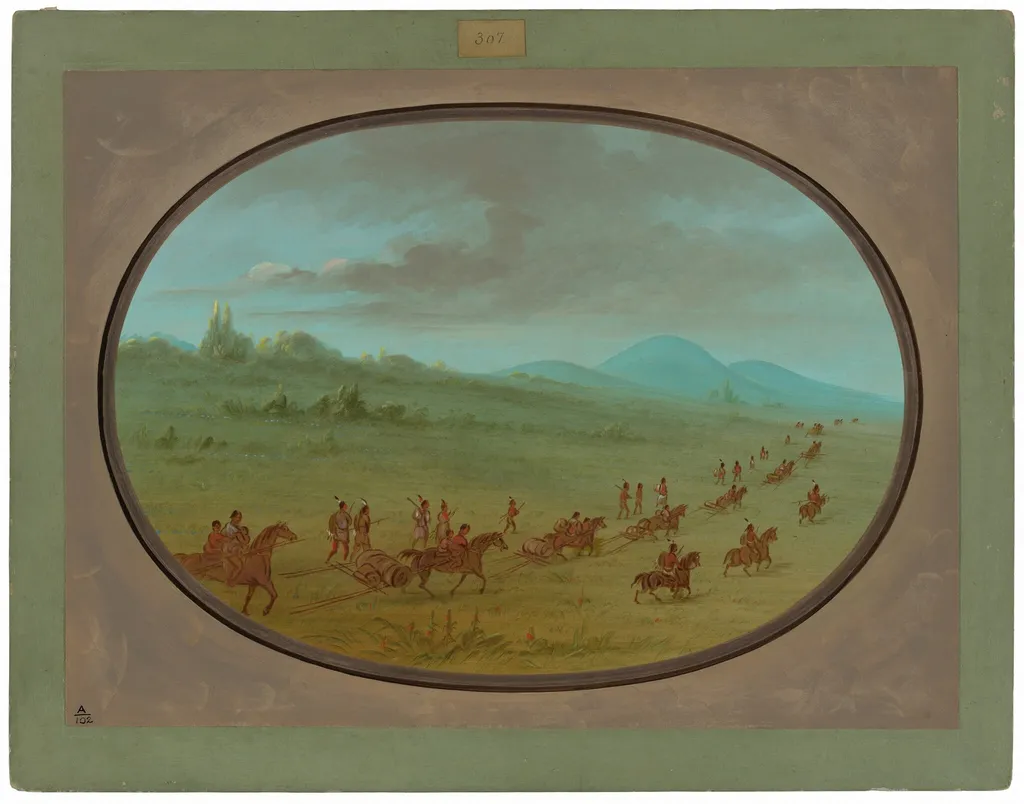
Halsey's Bluff - Sioux Indians on the March is an oil painting by the American Folk Art artist George Catlin. It dates from 1865 and is held in the collection of the National Gallery of Art.
- Inscription
- Inscribed:lower left on card: A/102; upper center on board on applied paper: 307.; upper center reverse in graphite: No 307
About this work
Subject & Meaning
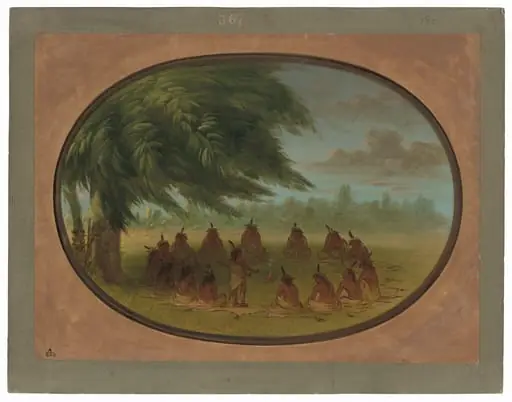
Catlin’s 1861 landscape Halsey’s Bluff – Sioux Indians on the March portrays a group of Sioux on a march beneath a solitary tree that dominates the composition.
Catlin’s 1861 landscape Halsey’s Bluff – Sioux Indians on the March portrays a group of Sioux on a march beneath a solitary tree that dominates the composition. The scene combines a topographical view of the bluff with a narrative element, presenting the indigenous figures in motion against a natural landmark. By situating the travelers near a distinctive tree, the work underscores both the physical geography of the frontier and Catlin’s interest in documenting Native American activity during a period of expanding American settlement.
The painting thus functions as a visual record of a specific encounter and as part of the artist’s broader effort to preserve representations of indigenous life.
Technique & Style
The painting is an oil work executed on card that is mounted on paperboard, a support commonly used by Catlin for field sketches later refined in the studio. It belongs to the landscape genre and portrays a solitary tree, characteristic of his early frontier subjects. The canvas measures 46.5 cm by 61.8 cm and is held by the National Gallery of Art in Washington, D.C. Its provenance traces from Catlin’s family to private collectors, a 1959 sale through Kennedy Galleries, and a 1965 gift to the museum.
History & Provenance
George Catlin created the oil painting Halsey's Bluff - Sioux Indians on the March in 1861. The work was originally owned by the artist until his death in 1872, after which it passed by descent to his three daughters: Clara Gregory Catlin, Louise Catlin Kinney, and Elizabeth Wing Catlin. In 1912, the American Museum of Natural History purchased the piece from Elizabeth Wing Catlin.
The museum later sold the painting in 1959 through Kennedy Galleries in New York to collector Paul Mellon of Upperville, Virginia. Finally, Mellon gifted the artwork to the National Gallery of Art in Washington, D.C., in 1965, where it remains part of the collection.
The painting is held by the National Gallery of Art, Washington, D.C., where it is recorded as accessioned in 1965.1.15.
It was first in the collection of the artist George Catlin, passing by descent to his daughters Clara Gregory Catlin, Louise Catlin Kinney, and Elizabeth Wing Catlin. In 1912 it was purchased from Elizabeth Wing Catlin by the American Museum of Natural History, then sold in 1959 via Kennedy Galleries, New York, to Paul Mellon, Upperville, VA, before being given to the National Gallery of Art in 1965.
Legacy
Halsey's Bluff - Sioux Indians on the March entered the National Gallery of Art in Washington, D.C., following its acquisition by Paul Mellon and a 1965 gift, underscoring its recognized significance within American art history. The work measures 46.5 cm by 61.8 cm and is classified as an oil on card mounted on paperboard landscape. Its provenance, documented from the artist's descendants to the American Museum of Natural History and later to Mellon, illustrates a continuous scholarly and collector interest that has kept the painting visible in major institutions.
As part of the National Gallery’s collection, it contributes to ongoing assessments of George Catlin’s role in documenting Native American subjects.
Overview
George Catlin's 1865 painting, Halsey's Bluff - Sioux Indians on the March, captures a scene of Indigenous life in the American West. Rendered in oil on card mounted on paperboard, this work is recognized as an example of American folk art. It depicts a group of Sioux individuals traversing a landscape, characterized by a notable tree and distant foliage, reflecting Catlin's long-standing interest in Native American cultures.
Context
Catlin embarked on multiple expeditions across the American West during the 1830s, driven by a desire to record the customs and appearances of Native American tribes before their way of life was irrevocably altered. This painting, created decades after his initial travels, reflects a sustained commitment to his subject matter. His work offers a historical perspective on the Indigenous peoples of the Plains, viewed through the lens of a 19th-century American artist.
Own this work as a print
Artist & collection

Artist
George Catlin ( KAT-lin; July 26, 1796 – December 23, 1872) was an American lawyer, painter, author, and traveler, who specialized in portraits of Native Americans in the American frontier.

 Bulls Fighting
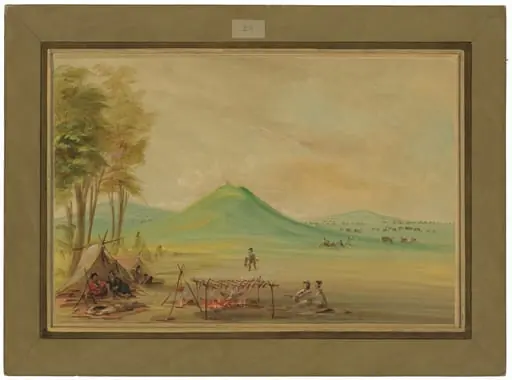 Expedition Encamped on a Texas Prairie. April 1686
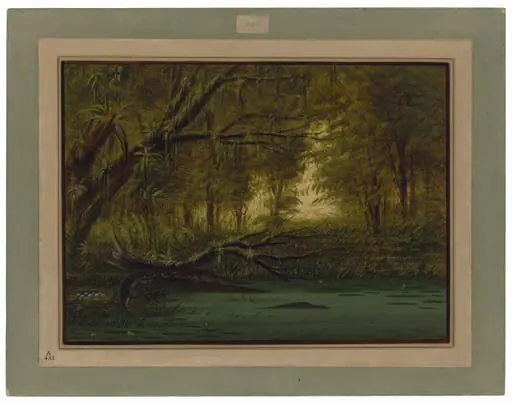 An Alligator's Nest
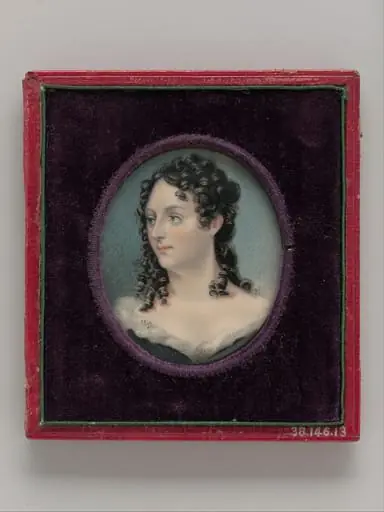 Mrs. George Catlin (Clara Bartlet Gregory)
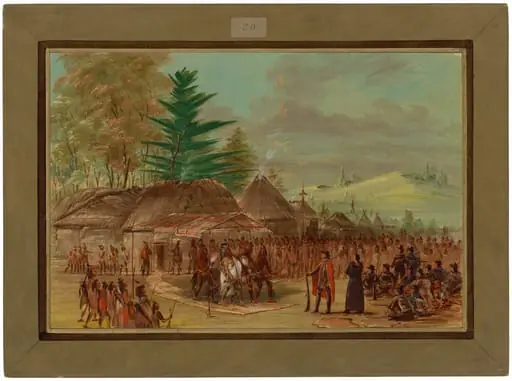 Chief of the Taensa Indians Receiving La Salle. March 20, 1682
 A Small Village - Payaguas Indians
 Omaha Chief, His Wife, and a Warrior
 Father Hennepin Leaving the Mississippi to Join La Salle. May 8, 1680