Artwork
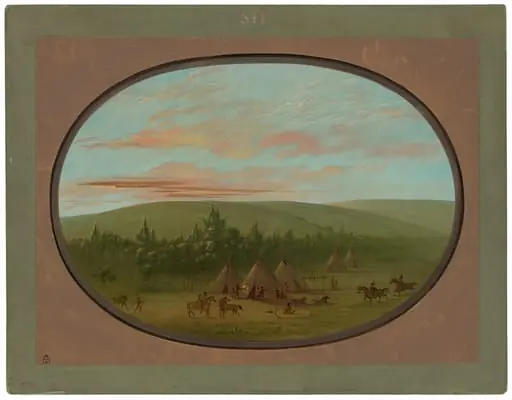
A Little Sioux Village
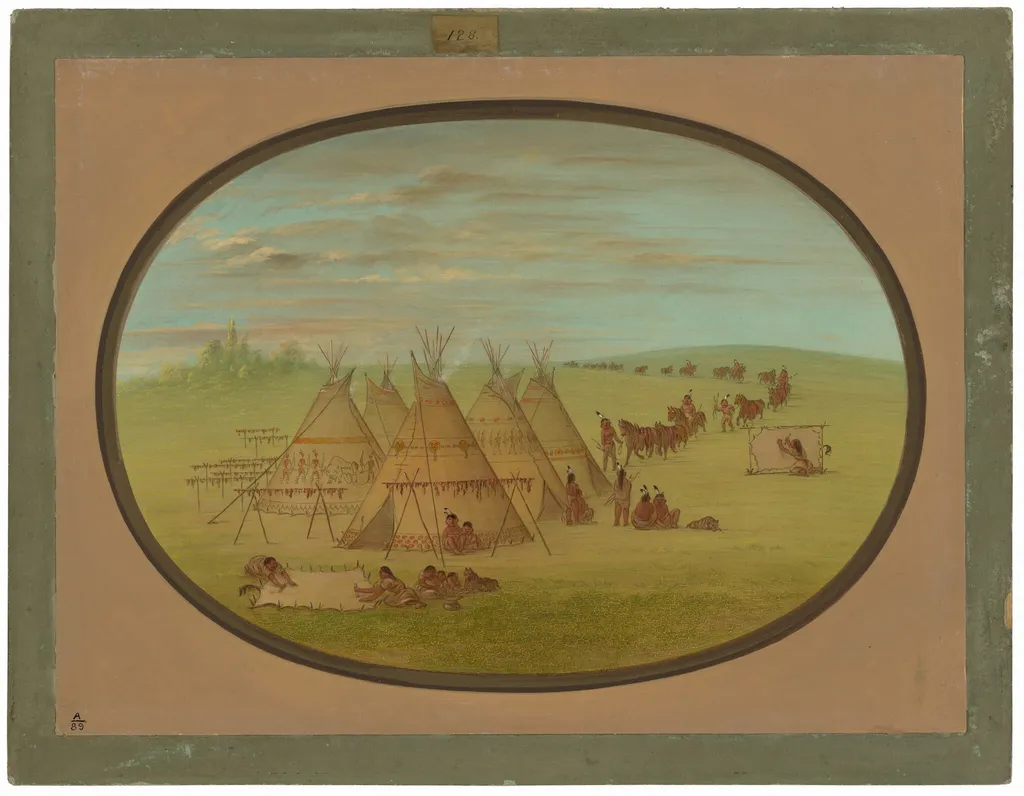
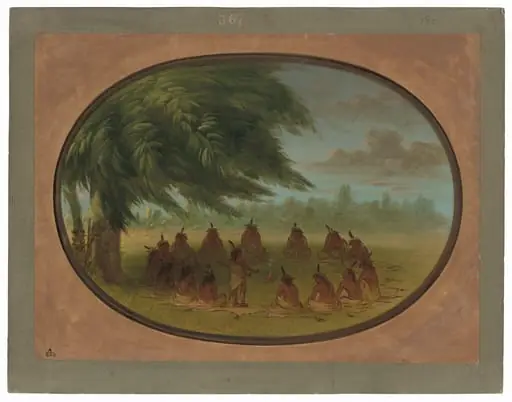
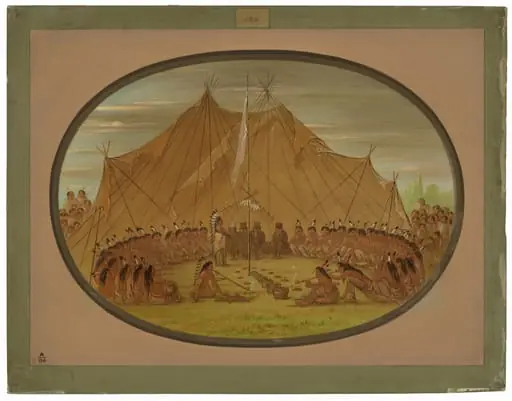
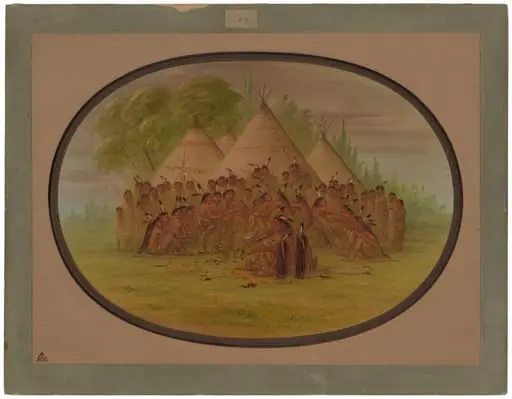
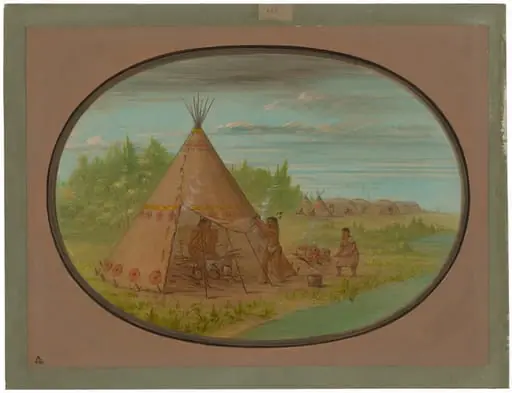
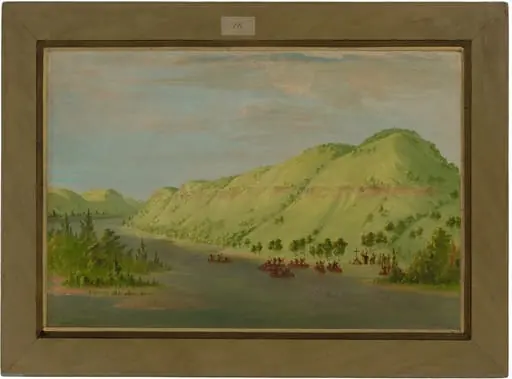
A Little Sioux Village is an oil painting by the Impressionist artist George Catlin. It dates from 1865 and is held in the collection of the National Gallery of Art.
- Inscription
- Inscribed:lower left on card: A/89; upper center on board on applied paper: 128.; upper center reverse in graphite: (128); center reverse in graphite partially obscured by AMNH label: No 4
About this work
Overview
A Little Sioux Village is a painting by George Catlin, created in 1865 using oil on card mounted on paperboard. It depicts a serene scene of daily life in a Plains Indian village.
Subject & Meaning
The painting shows a small Sioux village with teepees, people engaged in various activities, and animals. The scene conveys a sense of peacefulness and tranquility, capturing a moment in the life of an Indigenous community.
Technique & Style
Catlin's work is characterized by its documentary style, combining observation with artistic representation. The use of oil on card mounted on paperboard was a common medium for his paintings, allowing for detailed and expressive renderings of the subjects.
History & Provenance
George Catlin traveled extensively in the American West during the 1830s, documenting Native American cultures through his art. A Little Sioux Village reflects his broader effort to record the customs and environments of Indigenous communities during a period of significant change.
Own this work as a print
Artist & collection

Artist
George Catlin ( KAT-lin; July 26, 1796 – December 23, 1872) was an American lawyer, painter, author, and traveler, who specialized in portraits of Native Americans in the American frontier.

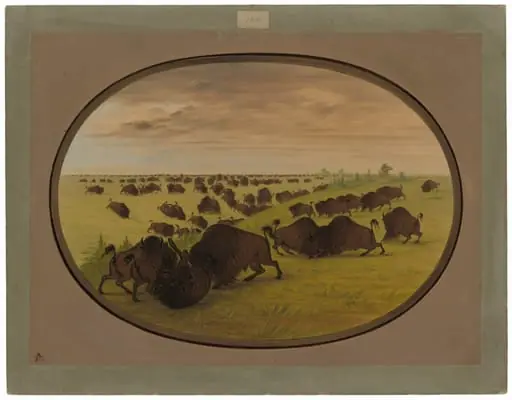 Bulls Fighting
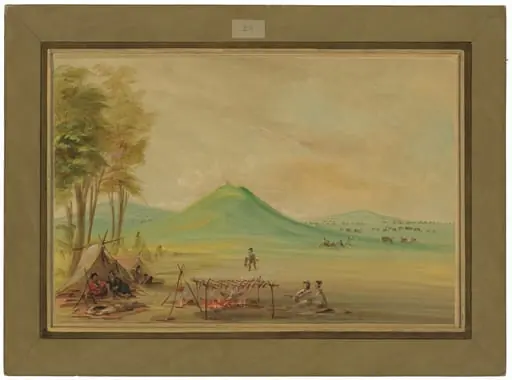 Expedition Encamped on a Texas Prairie. April 1686
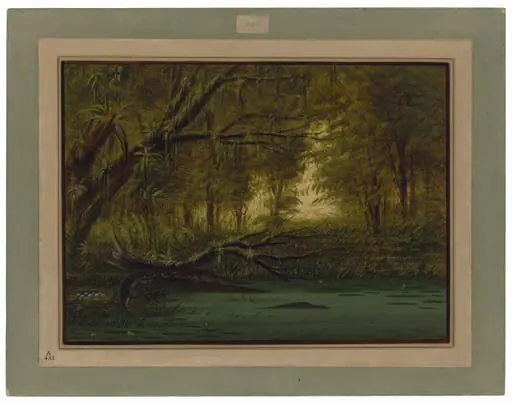 An Alligator's Nest
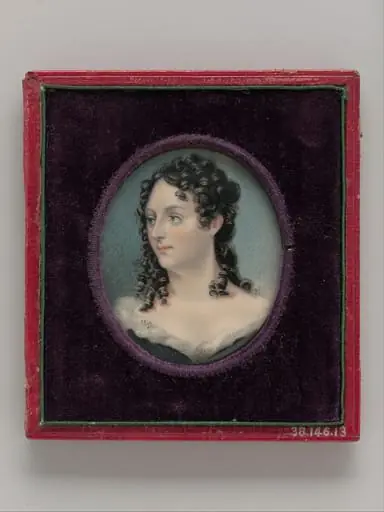 Mrs. George Catlin (Clara Bartlet Gregory)
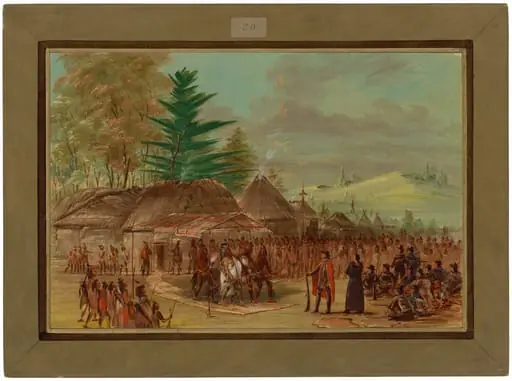 Chief of the Taensa Indians Receiving La Salle. March 20, 1682
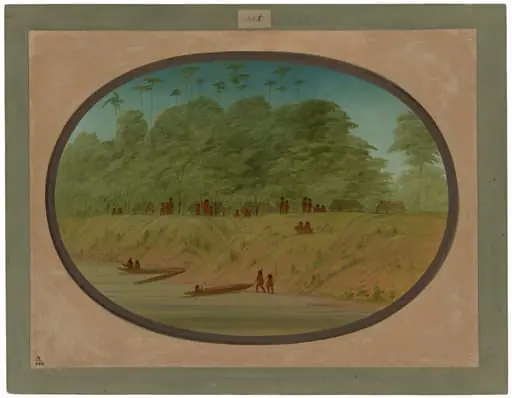 A Small Village - Payaguas Indians
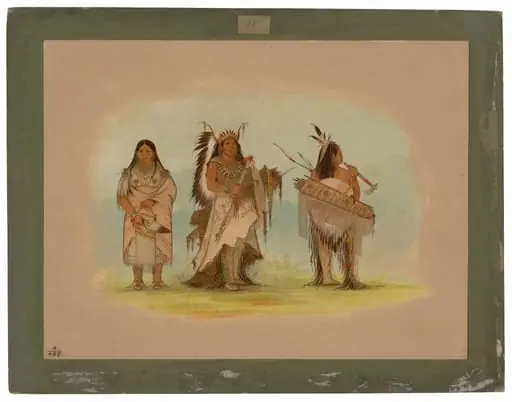 Omaha Chief, His Wife, and a Warrior
 Father Hennepin Leaving the Mississippi to Join La Salle. May 8, 1680