Artwork
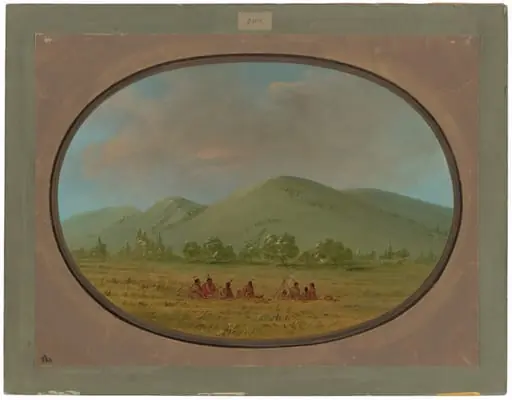
Bivouac of a Sioux War Party at Sunrise
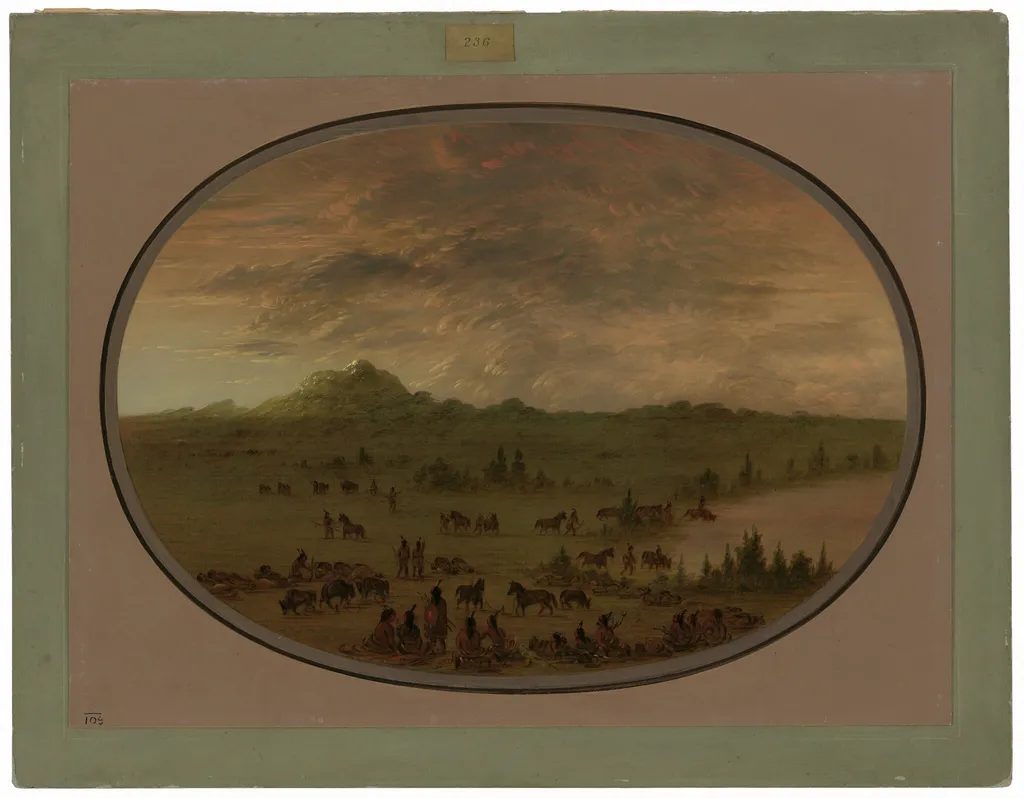
Bivouac of a Sioux War Party at Sunrise is an oil painting by the American Folk Art artist George Catlin. It dates from 1865 and is held in the collection of the National Gallery of Art.
- Inscription
- Inscribed:lower left on card: A/109; upper center on board on applied paper: 236; upper center reverse in graphite, circled: 236
About this work
Technique & Style
Bivouac of a Sioux War Party at Sunrise is an oil painting executed on a rigid card that is mounted to a paperboard support.
Bivouac of a Sioux War Party at Sunrise is an oil painting executed on a rigid card that is mounted to a paperboard support. The work measures 45.8 cm in height by 62.3 cm in width and portrays a scene at sunrise, situating it within the genre of Catlin's frontier subjects. The painting is part of the National Gallery of Art's collection in Washington, D.C., where it is preserved as a representative example of 19th-century American expeditionary art.
History & Provenance
George Catlin executed this oil on card mounted on paperboard in 1865. Following the artist's death in 1872, the work passed by descent to his daughters: Clara Gregory Catlin, Louise Catlin Kinney, and Elizabeth Wing Catlin. In 1912, the American Museum of Natural History purchased the painting directly from Elizabeth Wing Catlin.
The museum retained the piece until 1959, when it was sold through Kennedy Galleries of New York to Paul Mellon of Upperville, Virginia. Mellon subsequently donated the work to the National Gallery of Art in Washington, D.C., in 1965, where it remains in the collection.
Overview
George Catlin's 1865 painting, Bivouac of a Sioux War Party at Sunrise, captures a quiet moment in the American West. Executed in oil on card and mounted on paperboard, this work is recognized as American folk art. It depicts a group of Sioux warriors at rest during the early morning hours, a scene that reflects Catlin's long-standing engagement with Native American cultures and frontier life.
Subject & Meaning
The painting portrays a Sioux war party at sunrise, presenting an atypical view of such a group. Instead of action or conflict, the scene emphasizes tranquility, showing warriors either sleeping or attending to their horses. A solitary tree anchors the composition.
This depiction of a peaceful, introspective moment within a war party offers a nuanced perspective rarely explored in art of the period.
Context
Originally trained as a lawyer, George Catlin transitioned to painting, dedicating much of his career to documenting the Indigenous peoples of the American West. His extensive travels in the 1830s, which included five expeditions, profoundly shaped his artistic output. While his early work included landscape engravings of the Erie Canal, his later paintings, such as this one, consistently explored Native American subjects and the frontier environment, reflecting a sustained interest in these themes.
Own this work as a print
Artist & collection

Artist
George Catlin ( KAT-lin; July 26, 1796 – December 23, 1872) was an American lawyer, painter, author, and traveler, who specialized in portraits of Native Americans in the American frontier.

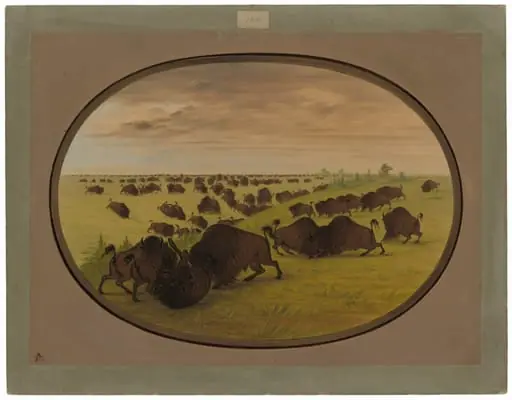 Bulls Fighting
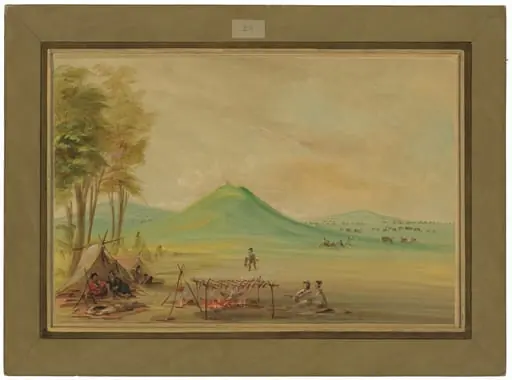 Expedition Encamped on a Texas Prairie. April 1686
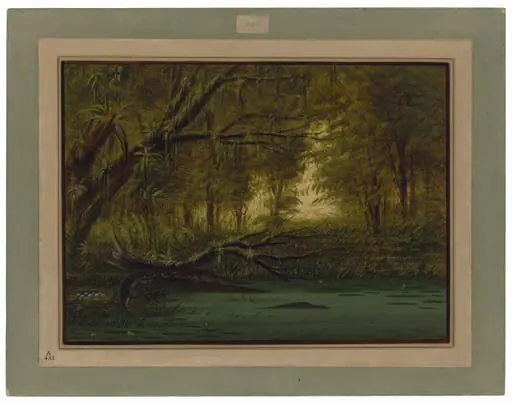 An Alligator's Nest
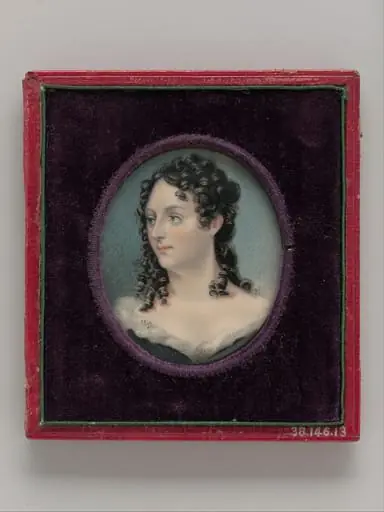 Mrs. George Catlin (Clara Bartlet Gregory)
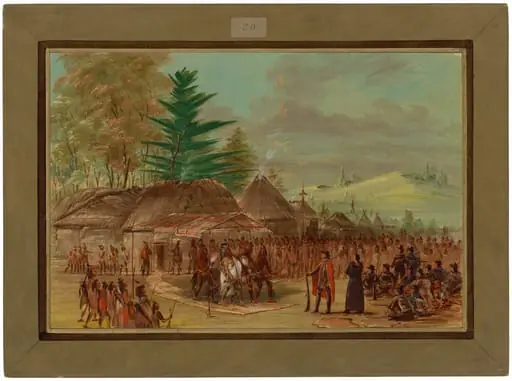 Chief of the Taensa Indians Receiving La Salle. March 20, 1682
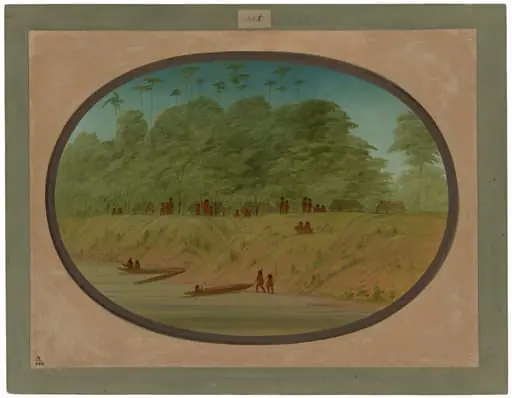 A Small Village - Payaguas Indians
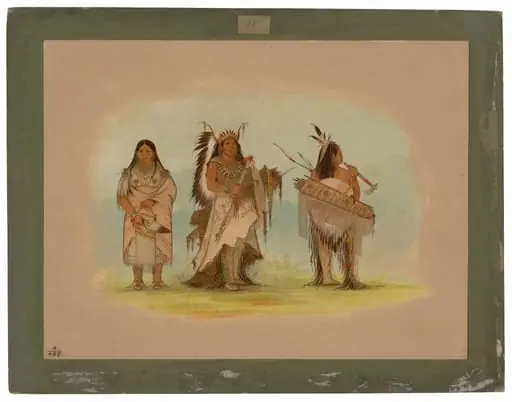 Omaha Chief, His Wife, and a Warrior
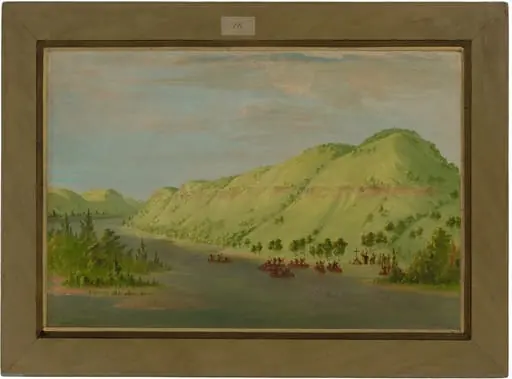 Father Hennepin Leaving the Mississippi to Join La Salle. May 8, 1680