Artwork
Nishnabotana Bluffs, Upper Missouri
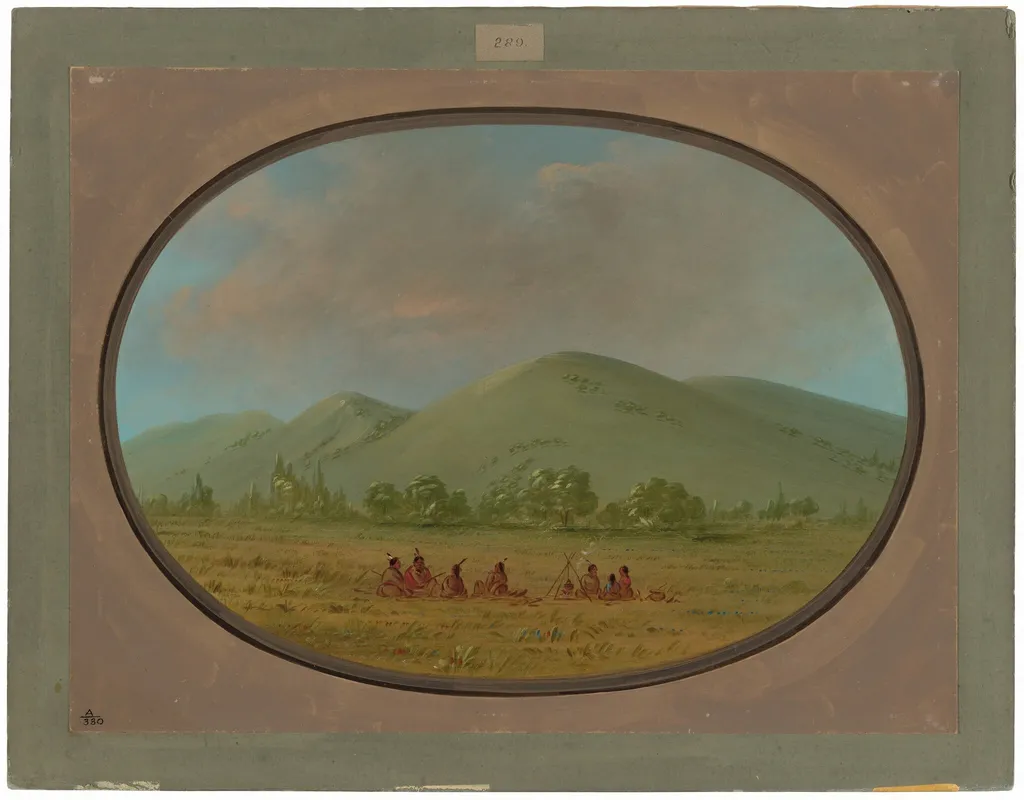
Nishnabotana Bluffs, Upper Missouri is an oil painting by the Impressionist artist George Catlin. It dates from 1865 and is held in the collection of the National Gallery of Art.
About this work
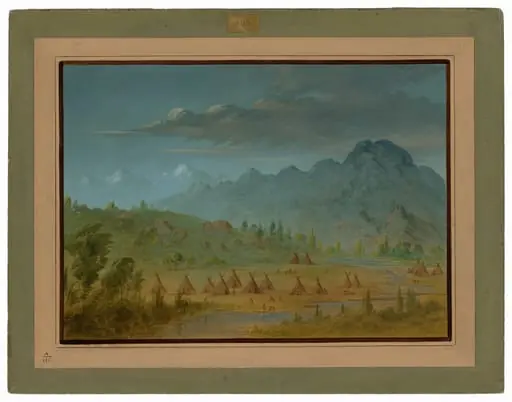
George Catlin’s 1861 oil painting shows a single tall tree standing on a rocky bluff above a wide river, with layered cliffs fading into the distance.
George Catlin’s 1861 oil painting shows a single tall tree standing on a rocky bluff above a wide river, with layered cliffs fading into the distance. The tree’s lone figure against the vast landscape feels deliberate, not just scenery, but a quiet record of the land before railroads and towns changed it forever. The colors stay calm, almost muted, letting the shapes speak for themselves.
Catlin spent years traveling the Missouri River, painting tribes and landscapes before they vanished. He often carried small cards like this one, sketching fast to keep details fresh for later studio work.
Next time you’re in Washington, D.C., look for it at the National Gallery of Art, Washington.
Subject & Meaning
Nishnabotana Bluffs, Upper Missouri is a landscape painting by George Catlin that depicts the natural terrain along the Upper Missouri River, specifically the bluffs identified by the name Nishnabotana. The composition focuses on two principal natural elements: mountains and trees, rendered in oil on card mounted on paperboard.
The work belongs to Catlin's sustained effort to record the American frontier, particularly the landscapes and Indigenous peoples of the Missouri River region. By isolating the bluffs and surrounding vegetation as his subject, Catlin framed the Upper Missouri as a place of geological and natural significance, presenting the river corridor as both a landmark and an emblem of the western wilderness he sought to document before its transformation.
The painting's meaning is therefore tied to Catlin's broader documentary project: preserving an unpopulated view of the Missouri's bluffs and woodlands as a visual record of the region's natural character.
Technique & Style
Executed in 1861, this landscape utilizes oil paint applied to a card support, which is subsequently mounted on paperboard. The work presents a formal composition focused on natural topography, specifically depicting mountains and trees characteristic of the Upper Missouri region. Physically, the piece measures 47.7 cm in height and 62.2 cm in width.
The mounting of the card onto a rigid paperboard backing suggests a specific handling approach intended to stabilize the relatively thin primary support.
History & Provenance
Nishnabotana Bluffs, Upper Missouri was painted by George Catlin in 1861, executed in oil on card mounted on paperboard. The work remained in the artist’s family, passing by descent to his daughters Clara Gregory Catlin, Louise Catlin Kinney, and Elizabeth Wing Catlin. In 1912 Elizabeth Wing Catlin sold the painting to the American Museum of Natural History.
It was then sold in 1959 through Kennedy Galleries, New York, to Paul Mellon of Upperville, Virginia, who donated it to the National Gallery of Art in 1965, where it remains.
Nishnabotana Bluffs, Upper Missouri, painted by George Catlin in 1861, is part of the National Gallery of Art’s collection in Washington, D.C. The painting entered the museum in 1965 as a gift from Paul Mellon, who acquired it in 1959 from Kennedy Galleries after it had been sold by the American Museum of Natural History in 1912. No specific accession number is recorded in the available documentation, and the sources do not list any documented exhibition history for the work.
Overview
George Catlin, an American artist recognized for his extensive documentation of the American frontier, created Nishnabotana Bluffs, Upper Missouri in 1865. This oil painting on card captures a specific landscape along the Missouri River, serving as an example of Catlin's sustained effort to record both the natural environment and the indigenous cultures he encountered during his travels across the continent. The work is characteristic of his later period of landscape studies.
Context
Throughout his career, George Catlin dedicated himself to chronicling the American West, traveling extensively along the Missouri River to paint both the indigenous tribes and the landscapes he feared were rapidly disappearing. His earlier endeavors included portraits of Plains Indians and scenes along the Erie Canal, often disseminating his observations through early lithographic publications. Nishnabotana Bluffs reflects his ongoing commitment to preserving a visual history of a changing continent.
Own this work as a print
Artist & collection

Artist
George Catlin ( KAT-lin; July 26, 1796 – December 23, 1872) was an American lawyer, painter, author, and traveler, who specialized in portraits of Native Americans in the American frontier.

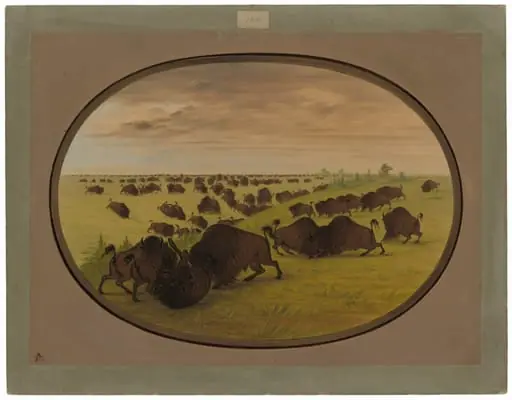 Bulls Fighting
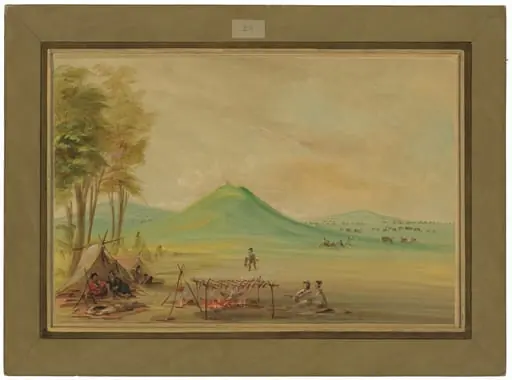 Expedition Encamped on a Texas Prairie. April 1686
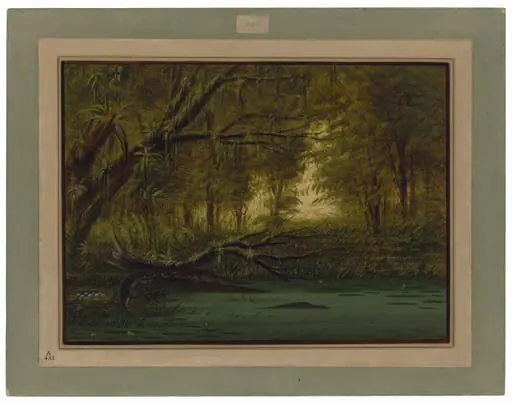 An Alligator's Nest
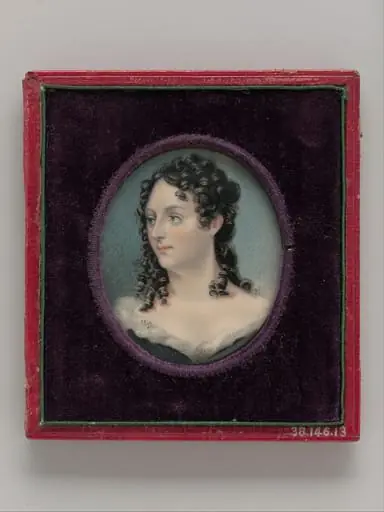 Mrs. George Catlin (Clara Bartlet Gregory)
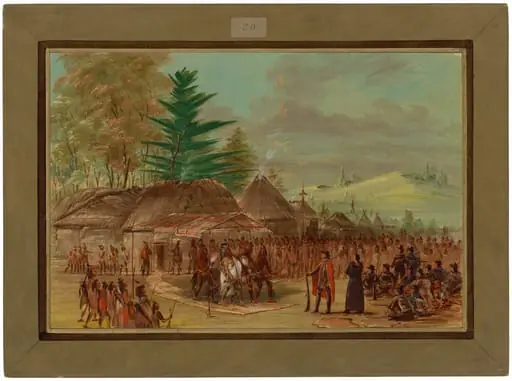 Chief of the Taensa Indians Receiving La Salle. March 20, 1682
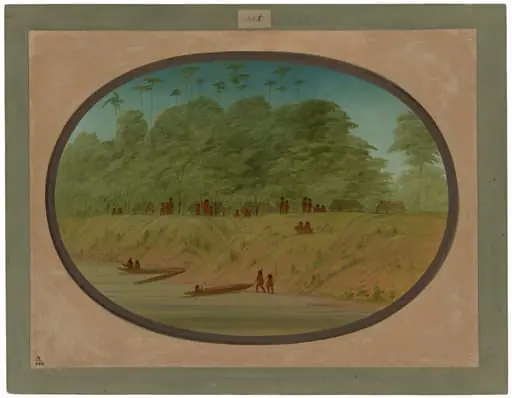 A Small Village - Payaguas Indians
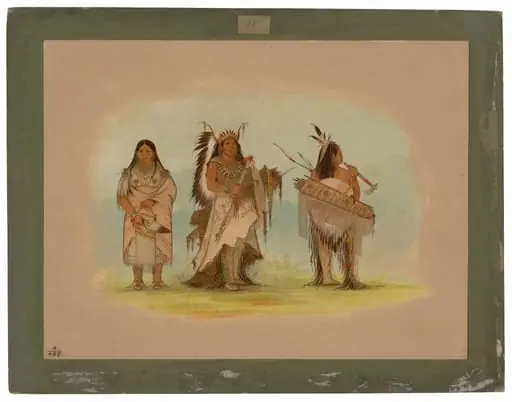 Omaha Chief, His Wife, and a Warrior
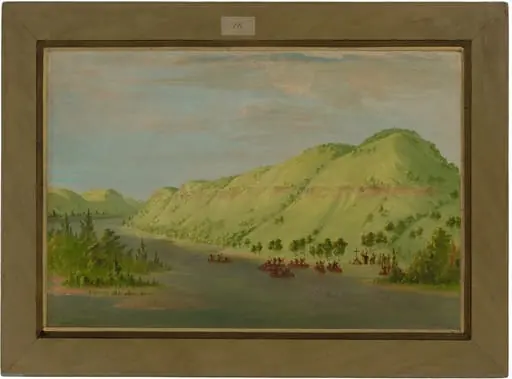 Father Hennepin Leaving the Mississippi to Join La Salle. May 8, 1680