Artwork
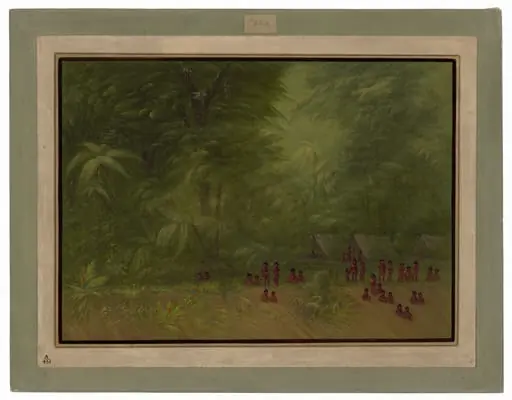
Indians and Horses in the Forest
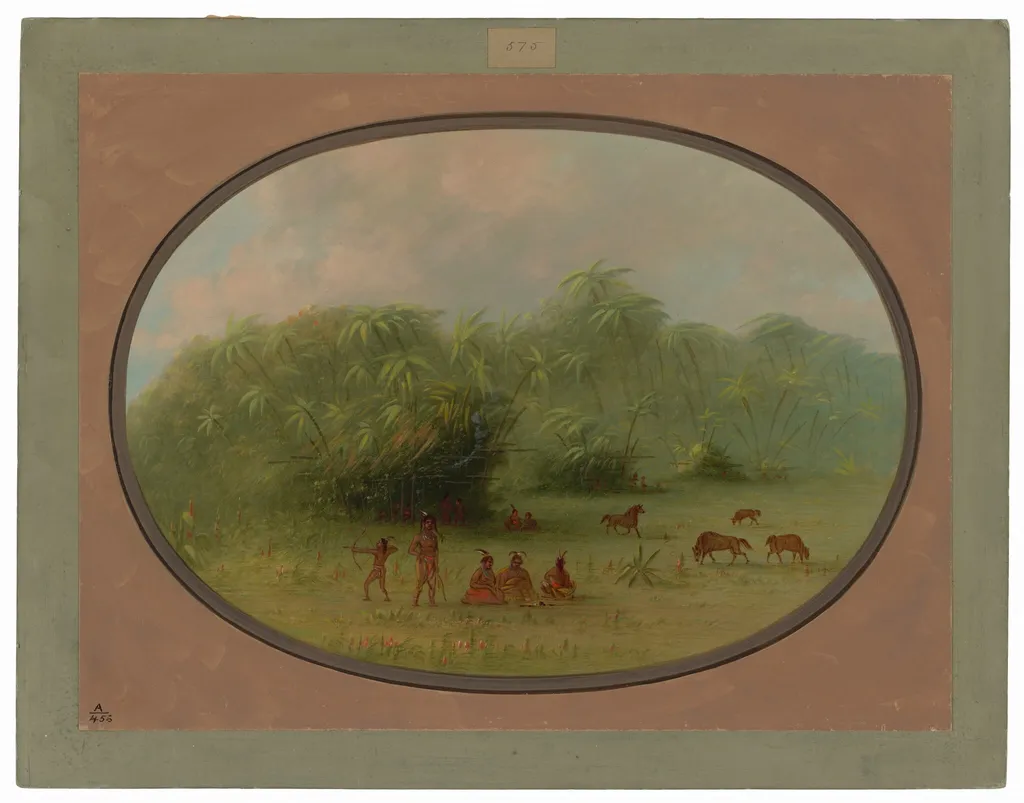
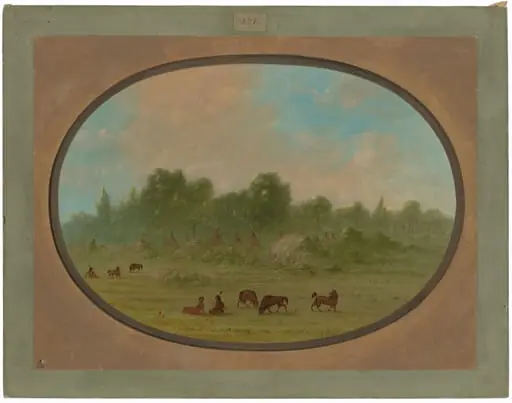
Indians and Horses in the Forest is an oil painting by the Impressionist artist George Catlin. It dates from 1862 and is held in the collection of the National Gallery of Art.
About this work
Technique & Style
Stylistically, the composition focuses on a forest setting, prominently featuring trees alongside figures of Indigenous people and horses.
Executed in 1864, this landscape utilizes oil paint applied to a card support, which is subsequently mounted on paperboard. The work measures 46.8 cm in height and 62.3 cm in width. Stylistically, the composition focuses on a forest setting, prominently featuring trees alongside figures of Indigenous people and horses.
The piece is classified as a painting within the landscape genre, reflecting the artist's approach to documenting natural environments and native subjects during the mid-19th century.
History & Provenance
Painted in 1864, Indians and Horses in the Forest was created by George Catlin as part of his late western imagery.
The work descended within Catlin’s family to his daughters, Clara Gregory Catlin, Louise Catlin Kinney, and Elizabeth Wing Catlin, before being purchased in 1912 by the American Museum of Natural History from Elizabeth Wing Catlin. It was later sold in 1959 through Kennedy Galleries, New York, to Paul Mellon, Upperville, Virginia. Mellon gifted the painting to the National Gallery of Art, Washington, D.C., in 1965, where it remains.
Indians and Horses in the Forest is held by the National Gallery of Art in Washington, D.C. Its accession number is 1965.17. The work entered the collection through a gift from Paul Mellon in 1965, following its purchase from Kennedy Galleries in 1959 and prior ownership by the American Museum of Natural History.
Exhibition history includes display at the National Gallery of Art in 1975 as part of the exhibition "American Art: 18th to 20th Century," and again in 1995 in "American Masters: George Catlin."
Overview
Created in 1862, Indians and Horses in the Forest is an oil painting executed on a small card that has been mounted on paperboard. The composition centers on a solitary pine tree set within a forested landscape, where a Native American rider and his horse navigate a shadowed understory. The work’s modest dimensions belie the atmospheric tension conveyed through muted light and deep shade.
Subject & Meaning
The scene presents a lone Indigenous figure on horseback, carefully stepping over exposed roots while dense foliage filters the daylight. The interplay of light and shadow partially conceals the figures, suggesting a moment of quiet vigilance within the wilderness. The painting reflects Catlin’s enduring interest in portraying the daily realities of Plains peoples amid their natural environment.
Context
The work belongs to a larger body of Catlin’s output that juxtaposes natural scenery with Native subjects, a motif also evident in pieces held by institutions such as the National Gallery of Art in Washington. His emphasis on authentic representation was shaped by extensive field travel and a commitment to preserving the visual culture of Plains tribes during a period of rapid change.
Own this work as a print
Artist & collection

Artist
George Catlin ( KAT-lin; July 26, 1796 – December 23, 1872) was an American lawyer, painter, author, and traveler, who specialized in portraits of Native Americans in the American frontier.

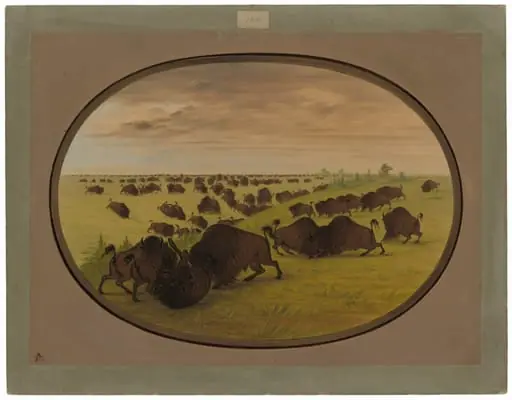 Bulls Fighting
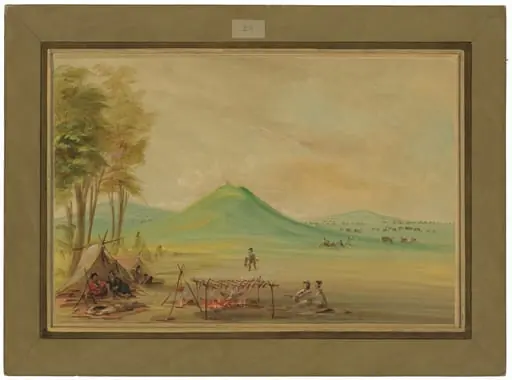 Expedition Encamped on a Texas Prairie. April 1686
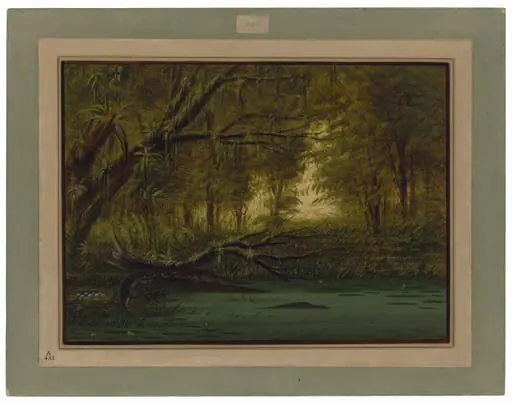 An Alligator's Nest
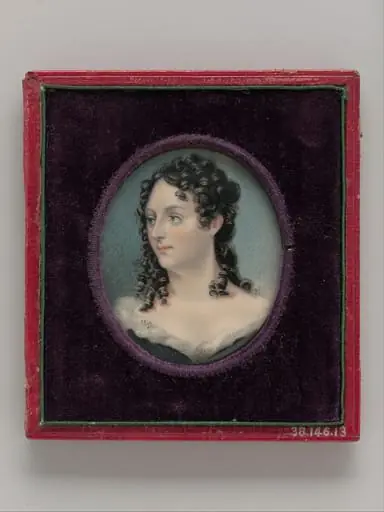 Mrs. George Catlin (Clara Bartlet Gregory)
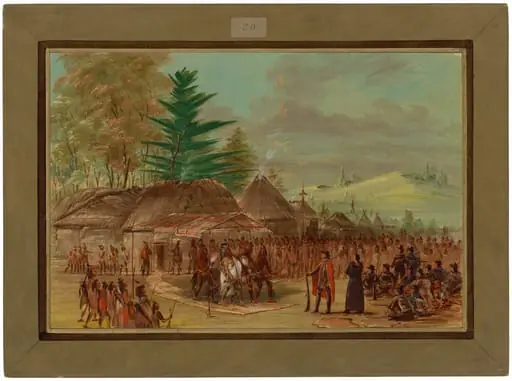 Chief of the Taensa Indians Receiving La Salle. March 20, 1682
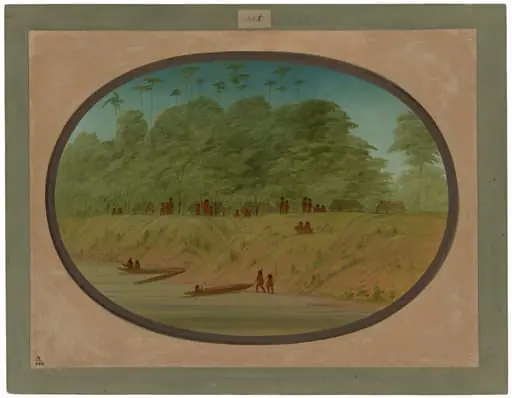 A Small Village - Payaguas Indians
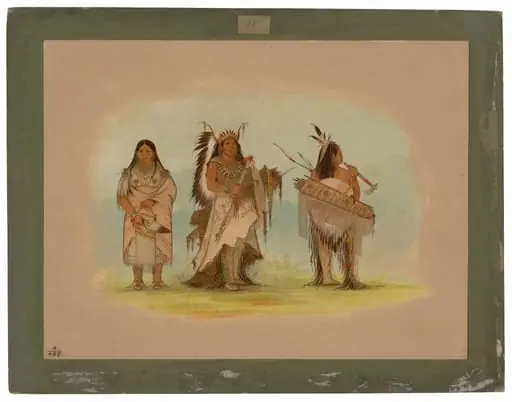 Omaha Chief, His Wife, and a Warrior
 Father Hennepin Leaving the Mississippi to Join La Salle. May 8, 1680