Artwork
Crow Chief, His Wife, and a Warrior
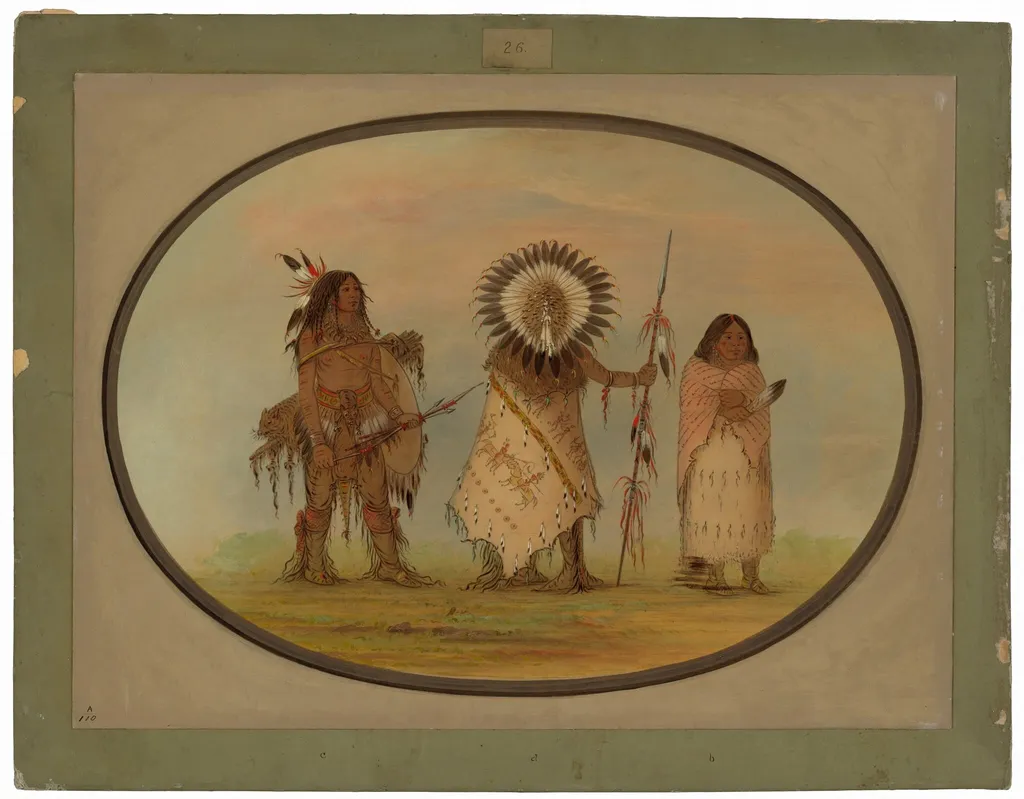
Crow Chief, His Wife, and a Warrior is an oil painting by the American Folk Art artist George Catlin. It dates from 1865 and is held in the collection of the National Gallery of Art. Created in 1865, this oil painting on card, later mounted on paperboard, presents three figures arranged in a simple, frontal composition.
About this work
Subject & Meaning
The painting shows Crow Chief with his wife and a warrior, figures rendered in traditional regalia that signal tribal leadership and ceremonial roles.
The painting shows Crow Chief with his wife and a warrior, figures rendered in traditional regalia that signal tribal leadership and ceremonial roles. The composition emphasizes kinship and warrior valor, reflecting Plains cultural values of honor and communal responsibility. The work functions as a visual record of Indigenous status and social structure in the mid‑nineteenth century.
The attire and accessories serve as symbolic markers of rank and spiritual affiliation within Crow society.
The painting is housed in the National Gallery of Art in Washington, D.C.
Technique & Style
Executed in 1861, this portrait utilizes oil paint applied to a card support, which is subsequently mounted onto paperboard. The work measures 46.3 cm in height and 62.1 cm in width. As a painted portrait, the piece reflects George Catlin's approach to documenting Indigenous subjects during the mid-19th century, characterized by the direct application of pigments to a rigid, non-canvas surface.
The mounting technique suggests a method intended to stabilize the thin card substrate for display or preservation within the artist's broader collection of works.
History & Provenance
Painted in 1861, the work is one of Catlin’s later portraits documenting Plains peoples. It entered the market when Elizabeth Wing Catlin sold it in 1912 to the American Museum of Natural History. In 1959 the museum disposed of it through Kennedy Galleries, New York, to Paul Mellon, Upperville, Virginia. Mellon donated the painting to the National Gallery of Art, Washington, D.C., in 1965.
The artist retained the painting until his death in 1872, after which it passed by descent to his daughters Clara Gregory Catlin, Louise Catlin Kinney, and Elizabeth Wing Catlin.
Crow Chief, His Wife, and a Warrior is held by the National Gallery of Art in Washington, D.C. Its inventory number is 1965.7.1. The work was acquired by the museum in 1965 as a gift from Paul Mellon. It has been displayed in exhibitions at the National Gallery of Art, including "American Portraits: From the Nineteenth Century to the Present" and "The Art of George Catlin".
Overview
Created in 1865, this oil painting on card, later mounted on paperboard, presents three figures arranged in a simple, frontal composition. The central figure is a male adorned with an elaborate feathered headdress and ornamental clothing, flanked on the left by a man bearing a spear, shield, and traditional headgear, and on the right by a woman dressed in a long gown and shawl. The setting is an open field, emphasizing the subjects themselves.
Context
Produced during a period of rapid displacement of Native communities, the painting serves as a visual testimony to a specific moment in Crow tribal history. Catlin’s broader body of work, often published in illustrated volumes, aimed to counter prevailing stereotypes by presenting Indigenous individuals with dignity and specificity, situating this portrait within a larger ethnographic project.
Own this work as a print
Artist & collection

Artist
George Catlin ( KAT-lin; July 26, 1796 – December 23, 1872) was an American lawyer, painter, author, and traveler, who specialized in portraits of Native Americans in the American frontier.

 Bulls Fighting
 Expedition Encamped on a Texas Prairie. April 1686
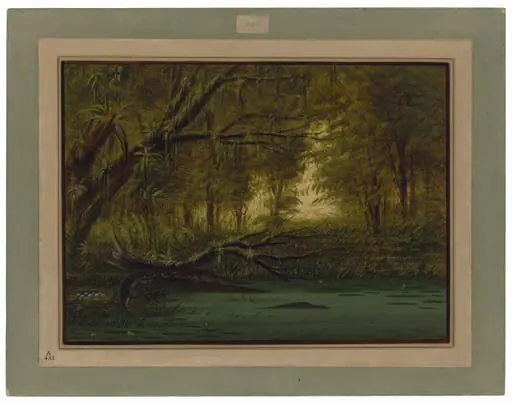 An Alligator's Nest
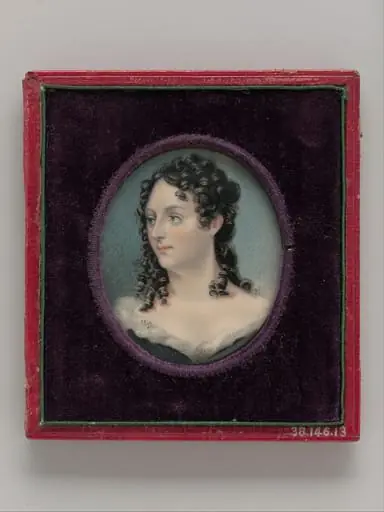 Mrs. George Catlin (Clara Bartlet Gregory)
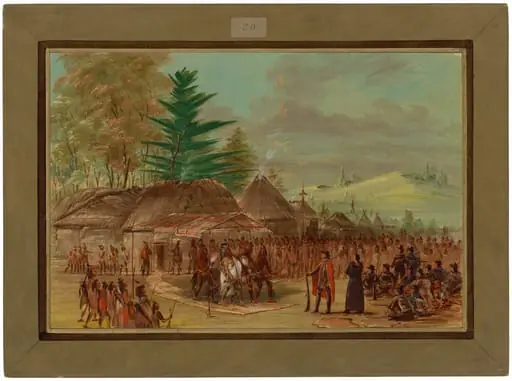 Chief of the Taensa Indians Receiving La Salle. March 20, 1682
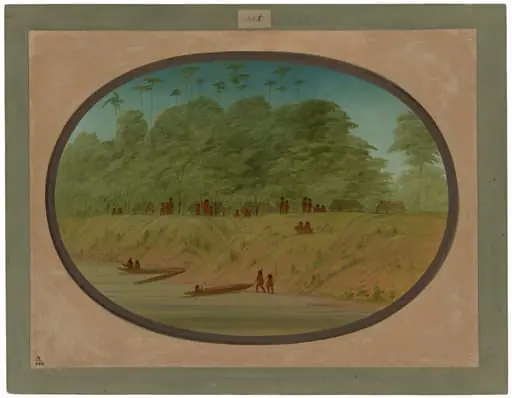 A Small Village - Payaguas Indians
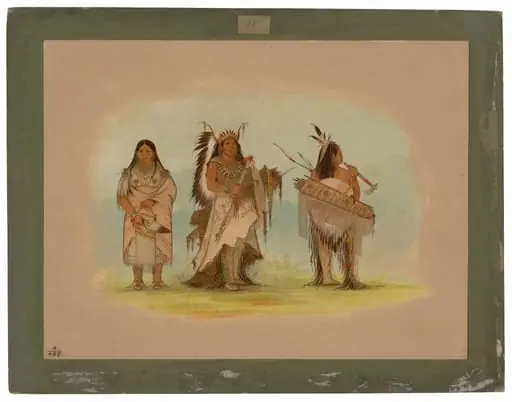 Omaha Chief, His Wife, and a Warrior
 Father Hennepin Leaving the Mississippi to Join La Salle. May 8, 1680
- A Crow Chief, a Warrior, and His Wife
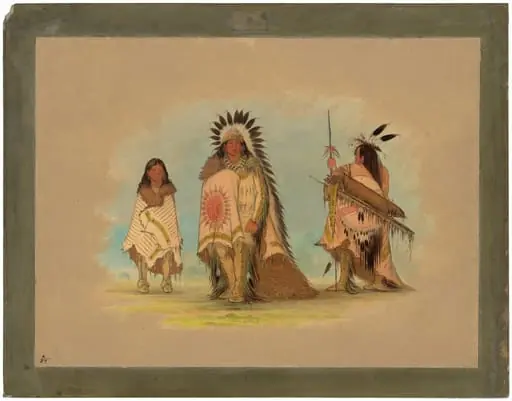 A Sioux Chief, His Daughter, and a Warrior
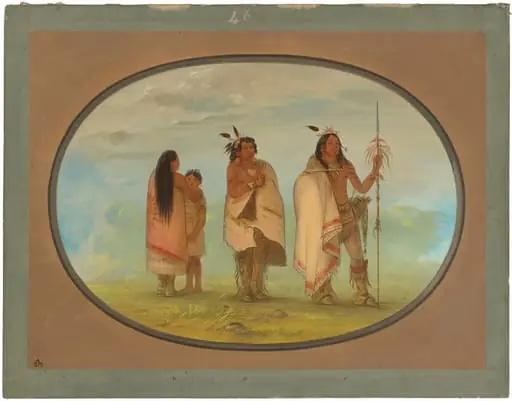 Weeco Chief, His Wife, and a Warrior
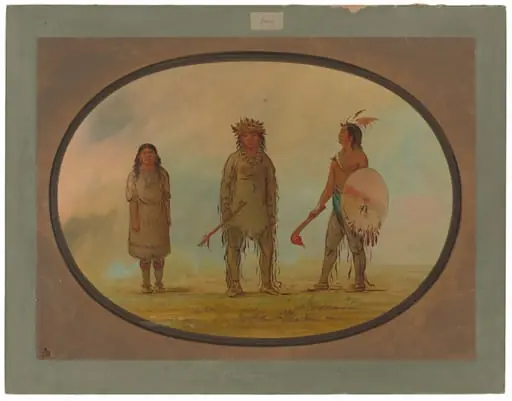 Athapasca Chief, His Wife, and a Warrior
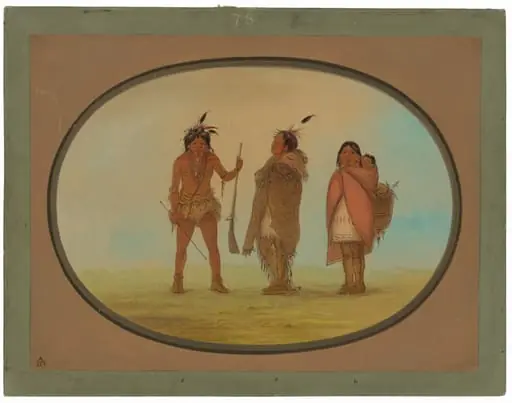 Arapaho Chief, His Wife, and a Warrior
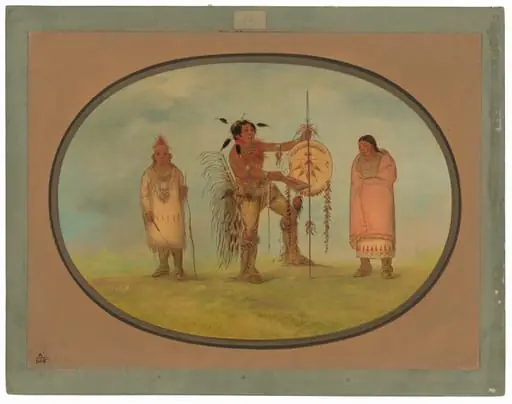 Saukie Warrior, His Wife, and a Boy
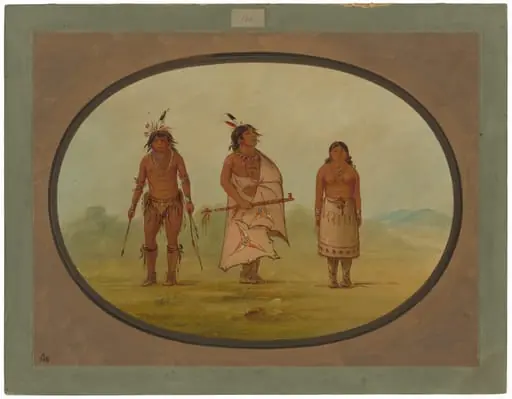 Mohave Chief, a Warrior, and His Wife
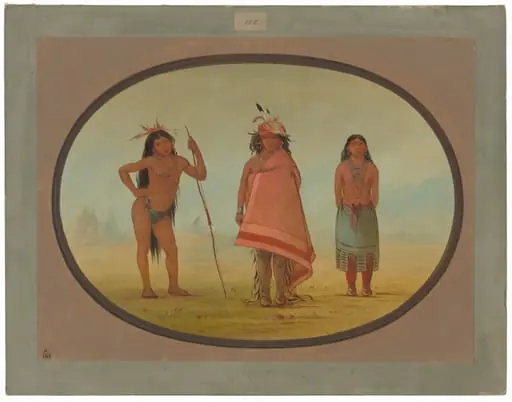 Cochimtee Chief, His Wife, and a Warrior
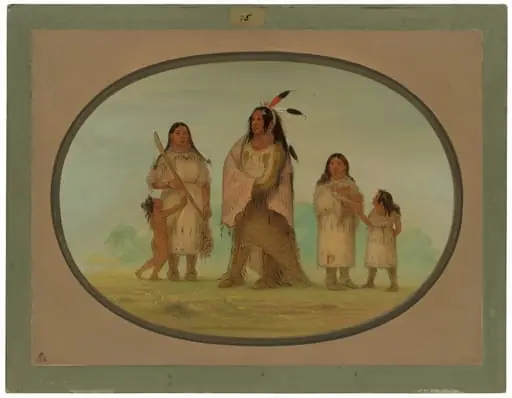 Assinneboine Warrior and His Family
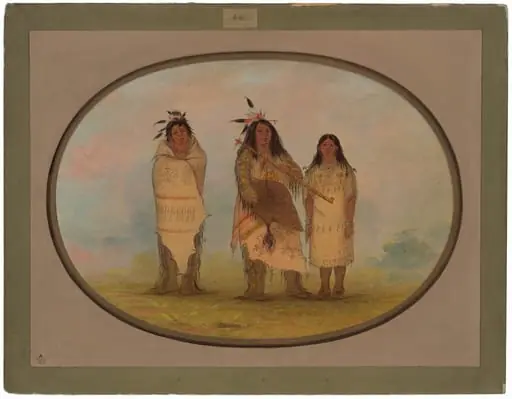 A Cheyenne Chief, His Wife, and a Medicine Man