Artwork
Camanchee Chief, His Wife, and a Warrior
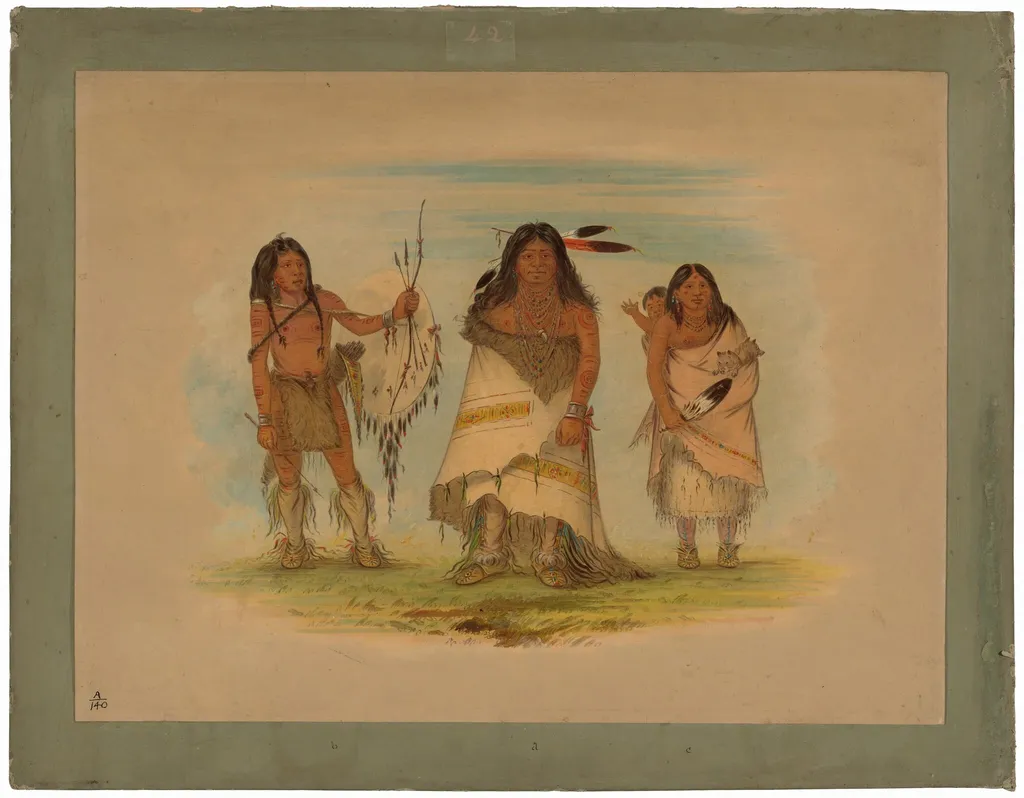
Camanchee Chief, His Wife, and a Warrior is an oil painting by the American Folk Art artist George Catlin. It dates from 1861 and is held in the collection of the National Gallery of Art.
- Inscription
- Inscribed:lower right: Geo. Catlin. 1861
About this work
Subject & Meaning
Executed in 1861, the work belongs to the portrait genre and was created by George Catlin, who documented Indigenous peoples of North America.
The painting titled Camanchee Chief, His Wife, and a Warrior depicts a Camanchee chief together with his wife and a warrior, rendered as a group portrait in oil on card mounted on paperboard (45.7 cm × 60.9 cm). Executed in 1861, the work belongs to the portrait genre and was created by George Catlin, who documented Indigenous peoples of North America. The composition emphasizes the status of the subjects within their cultural context, serving as a visual record of Camanchee family relations in the mid‑nineteenth century. The artwork is held in the National Gallery of Art, Washington, D.C.
Technique & Style
Camanchee Chief, His Wife, and a Warrior is an oil painting executed on card mounted on paperboard, a support choice characteristic of Catlin's later portable practice. The work measures 45.7 cm in height by 60.9 cm in width and is classified as a portrait. The oil-on-card technique yields a relatively thin, matte surface compared to traditional canvas supports, and mounting the card onto paperboard provides rigidity while keeping the composition lightweight.
History & Provenance
The painting Camanchee Chief, His Wife, and a Warrior was created by George Catlin in 1861. Following the artist's death in 1872, the work passed by descent to his daughters: Clara Gregory Catlin, Louise Catlin Kinney, and Elizabeth Wing Catlin. In 1912, the American Museum of Natural History purchased the piece from Elizabeth Wing Catlin.
The museum later sold the painting in 1959 through Kennedy Galleries in New York to Paul Mellon of Upperville, Virginia. Mellon subsequently gifted the work to the National Gallery of Art in Washington, D.C., in 1965, where it remains part of the collection.
Overview
This painting, created by George Catlin in 1861, depicts three figures identified as a Comanche chief, his wife, and a warrior. Executed in oil on card, it exemplifies Catlin's extensive efforts to visually record Indigenous cultures of North America. The work serves as a representative example of his documentary style, capturing specific individuals within their cultural context.
Context
George Catlin, originally trained in law, shifted his career to become an artist and explorer dedicated to portraying Indigenous peoples. Throughout the 1830s, he undertook five expeditions to the American West, specifically focusing on the Plains tribes. This painting from 1861 is part of his larger endeavor to create a comprehensive visual record of Native American customs and appearances before their societies underwent significant change.
Own this work as a print
Artist & collection

Artist
George Catlin ( KAT-lin; July 26, 1796 – December 23, 1872) was an American lawyer, painter, author, and traveler, who specialized in portraits of Native Americans in the American frontier.

 Bulls Fighting
 Expedition Encamped on a Texas Prairie. April 1686
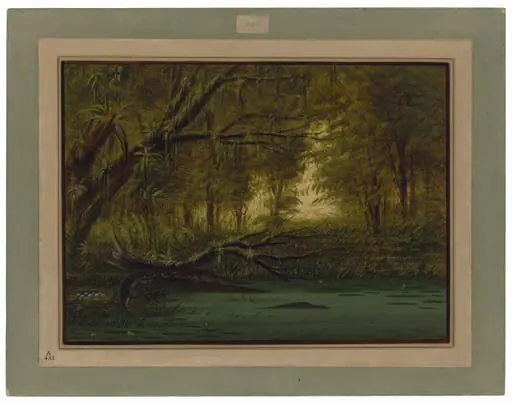 An Alligator's Nest
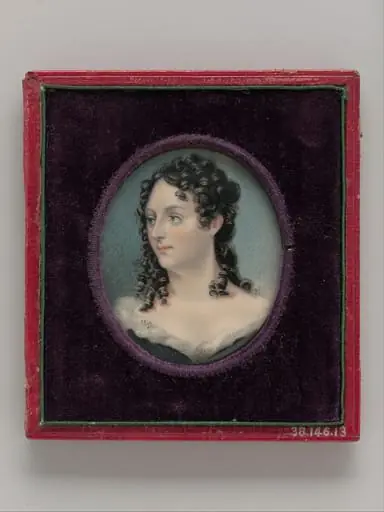 Mrs. George Catlin (Clara Bartlet Gregory)
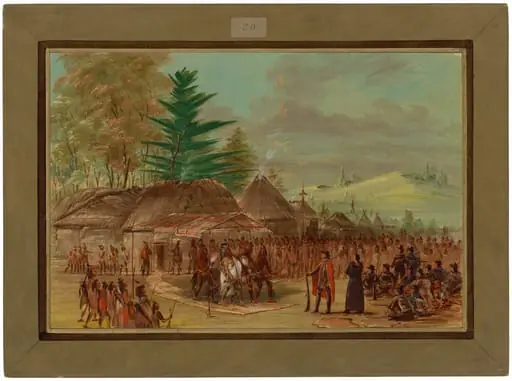 Chief of the Taensa Indians Receiving La Salle. March 20, 1682
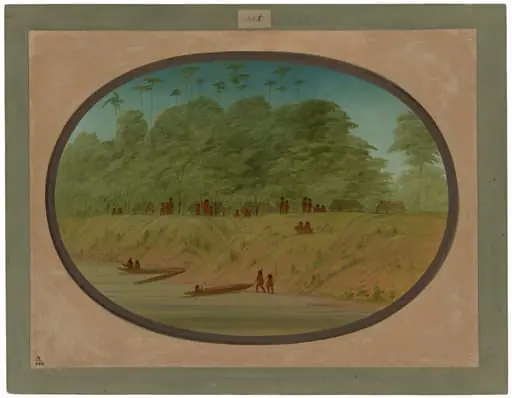 A Small Village - Payaguas Indians
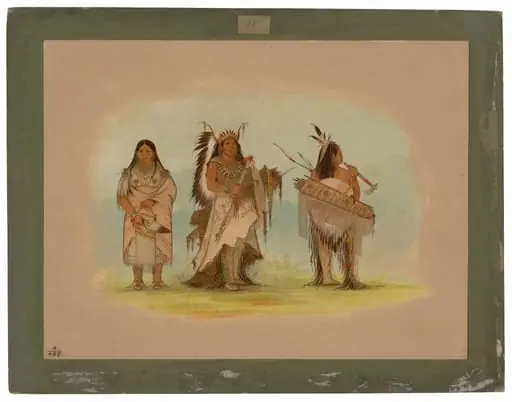 Omaha Chief, His Wife, and a Warrior
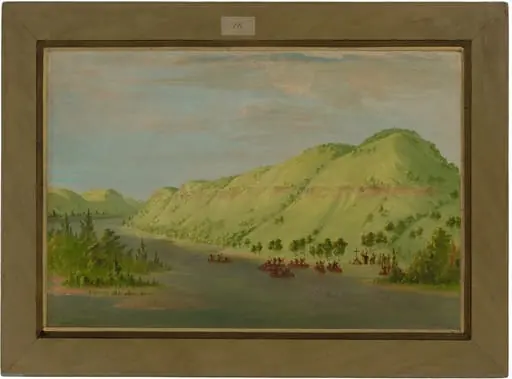 Father Hennepin Leaving the Mississippi to Join La Salle. May 8, 1680
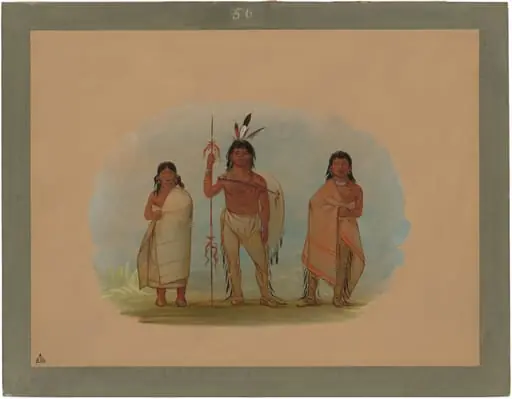 Ottowa Chief, His Wife, and a Warrior
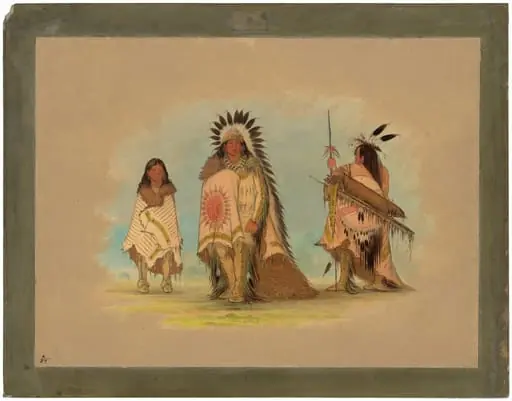 A Sioux Chief, His Daughter, and a Warrior
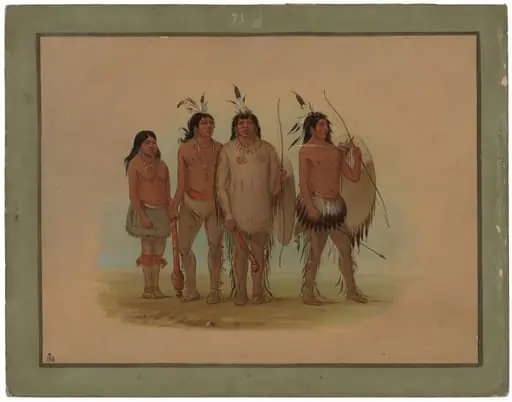 Kiowa Chief, His Wife, and Two Warriors
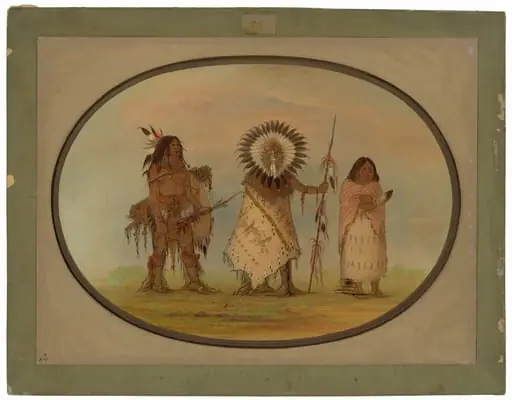 Crow Chief, His Wife, and a Warrior
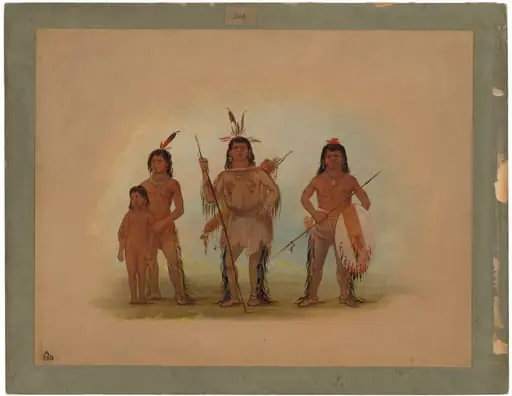 Spokan Chief, Two Warriors, and a Boy
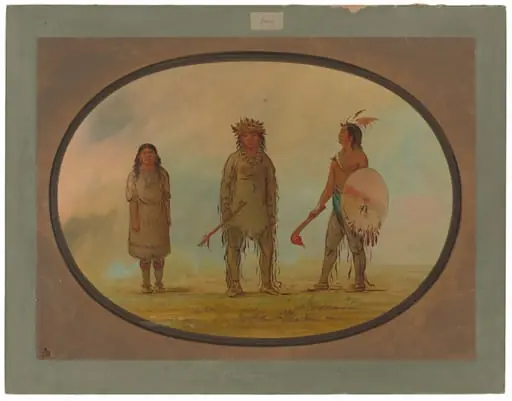 Athapasca Chief, His Wife, and a Warrior
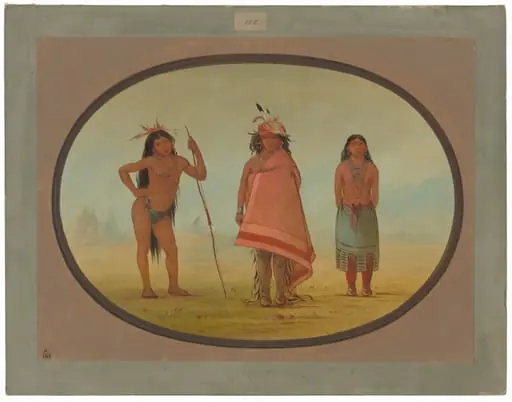 Cochimtee Chief, His Wife, and a Warrior
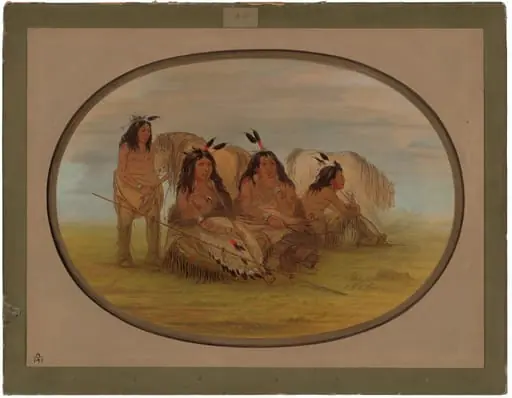 Camanchee Chief with Three Warriors
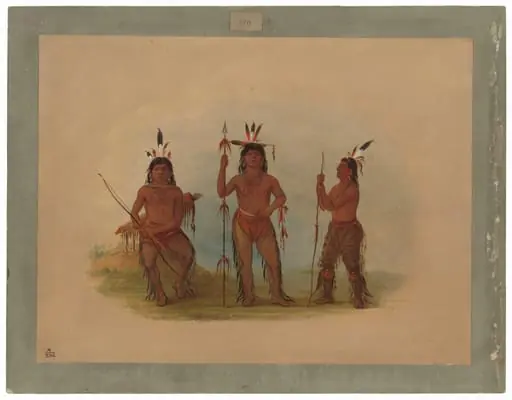 Alaeutian Chief and Two Warriors