Artwork
Ottowa Chief, His Wife, and a Warrior
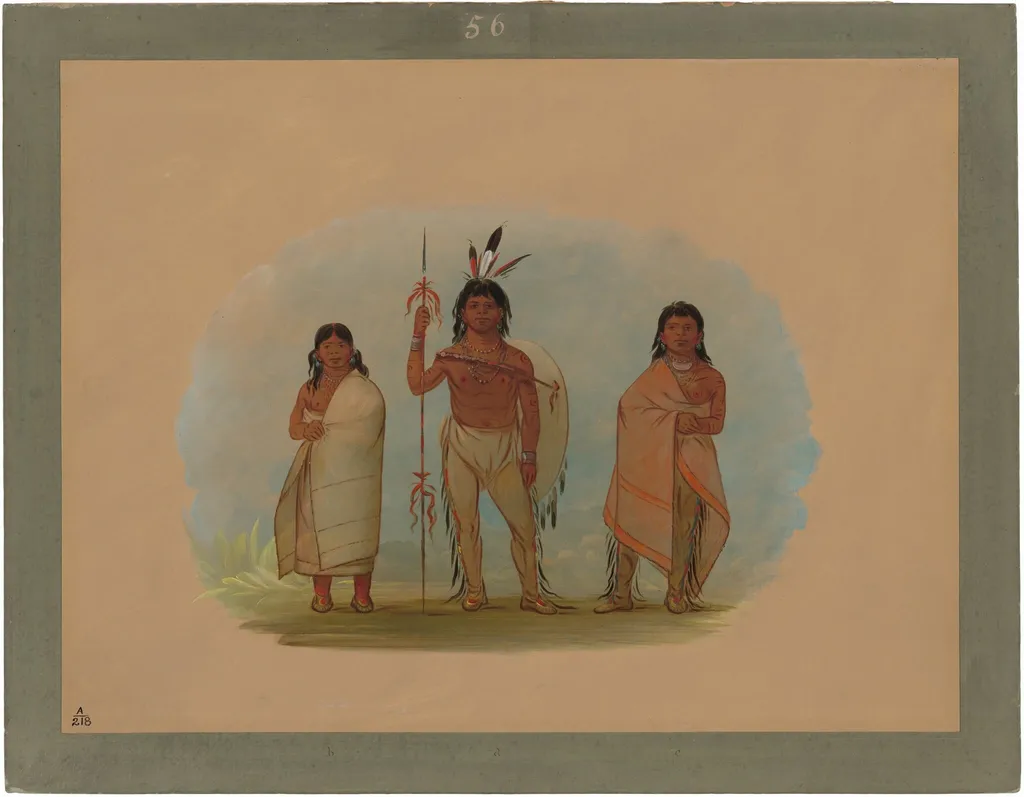
Ottowa Chief, His Wife, and a Warrior is an oil painting by the American Folk Art artist George Catlin. It dates from 1865 and is held in the collection of the National Gallery of Art.
About this work
Subject & Meaning
Created in 1861, this oil painting functions as a portrait depicting three specific figures: an Ottawa war chief, his wife, and a warrior.
Created in 1861, this oil painting functions as a portrait depicting three specific figures: an Ottawa war chief, his wife, and a warrior. The work's primary iconography centers on the representation of Indigenous leadership and social structure, explicitly identifying the male figures by their martial roles. By grouping the chief with a warrior and his spouse, the composition visually articulates the interconnected roles within the community.
The piece serves as a historical document of the Ottawa people, preserving the likenesses of individuals defined by their status and relationship to one another.
History & Provenance
The work titled Ottawa Chief, His Wife, and a Warrior was painted by George Catlin in 1861 using oil on card mounted on paperboard. It remained in the artist’s family after his death, passing to his daughters Clara Gregory Catlin, Louise Catlin Kinney, and Elizabeth Wing Catlin. In 1912 the piece was acquired from Elizabeth Wing Catlin by the American Museum of Natural History, and in 1959 it was sold through Kennedy Galleries, New York, to Paul Mellon, who later gifted it to the National Gallery of Art in 1965. The painting is presently housed in the National Gallery of Art in Washington, D.C.
Overview
George Catlin's 1865 painting, Ottowa Chief, His Wife, and a Warrior, captures a group portrait rendered in oil on card mounted on paperboard. The work presents an Ottawa war chief, accompanied by his wife and another warrior, offering a visual record of their presence. This piece reflects Catlin's enduring interest in portraying Indigenous peoples of North America.
Technique & Style
Executed in oil on card, which is then mounted on paperboard, this painting exemplifies the direct approach often associated with American folk art. The choice of materials and the straightforward rendering contribute to its character as a documentary-style portrait, aligning with Catlin's broader artistic practice of recording his observations.
Context
George Catlin, who transitioned from a legal career to art, dedicated much of his work to documenting Native American cultures. Throughout the 1830s, he extensively traveled the American frontier, creating numerous portraits and written accounts of Plains Indian life. This 1865 painting continues his long-standing endeavor to record Indigenous individuals and their traditions.
Own this work as a print
Artist & collection

Artist
George Catlin ( KAT-lin; July 26, 1796 – December 23, 1872) was an American lawyer, painter, author, and traveler, who specialized in portraits of Native Americans in the American frontier.

 Bulls Fighting
 Expedition Encamped on a Texas Prairie. April 1686
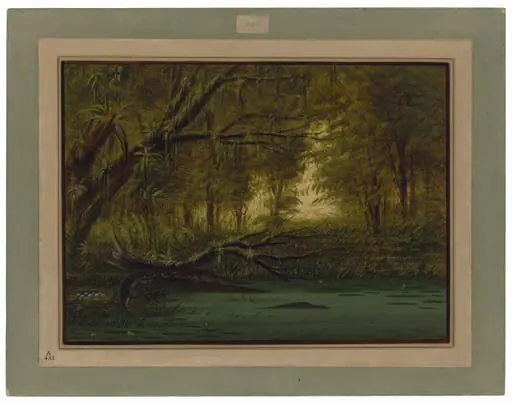 An Alligator's Nest
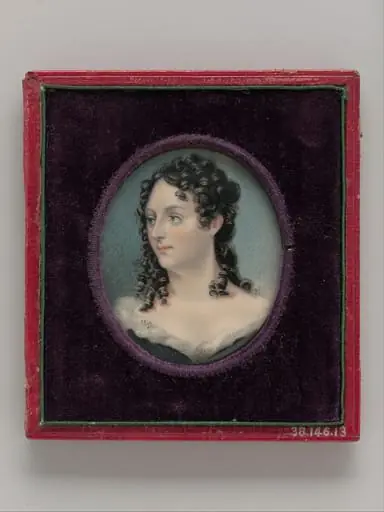 Mrs. George Catlin (Clara Bartlet Gregory)
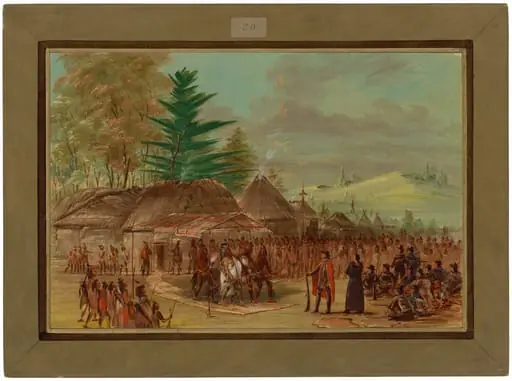 Chief of the Taensa Indians Receiving La Salle. March 20, 1682
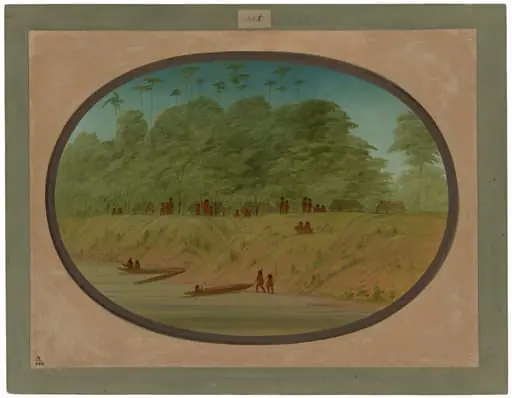 A Small Village - Payaguas Indians
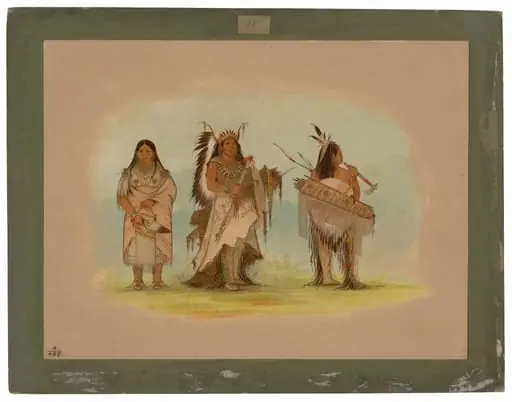 Omaha Chief, His Wife, and a Warrior
 Father Hennepin Leaving the Mississippi to Join La Salle. May 8, 1680
- Camanchee Chief, His Wife, and a Warrior
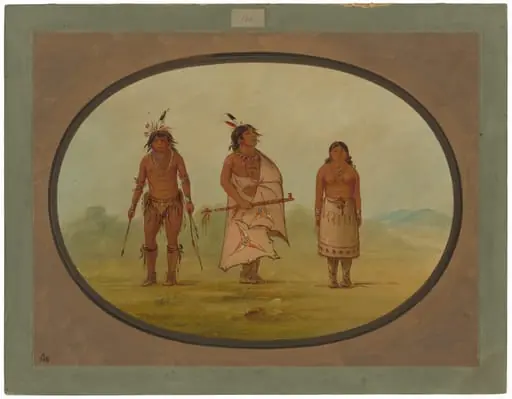 Mohave Chief, a Warrior, and His Wife
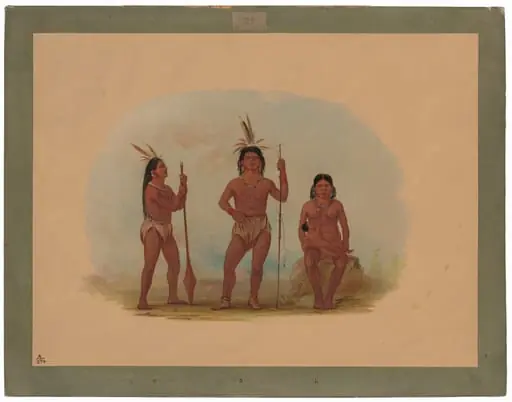 Klahoquaht Chief, His Wife, and Son
 Kiowa Chief, His Wife, and Two Warriors
 Cochimtee Chief, His Wife, and a Warrior
 Two Arapaho Warriors and a Woman
 A Yuma Chief, His Daughter, and a Warrior
 Alaeutian Chief and Two Warriors
 Two Chippewyan Warriors and a Woman
 Spokan Chief, Two Warriors, and a Boy
 A Puelchee Chief and Two Young Warriors