Artwork
Pawneepict Chief, Two Daughters, and a Warrior
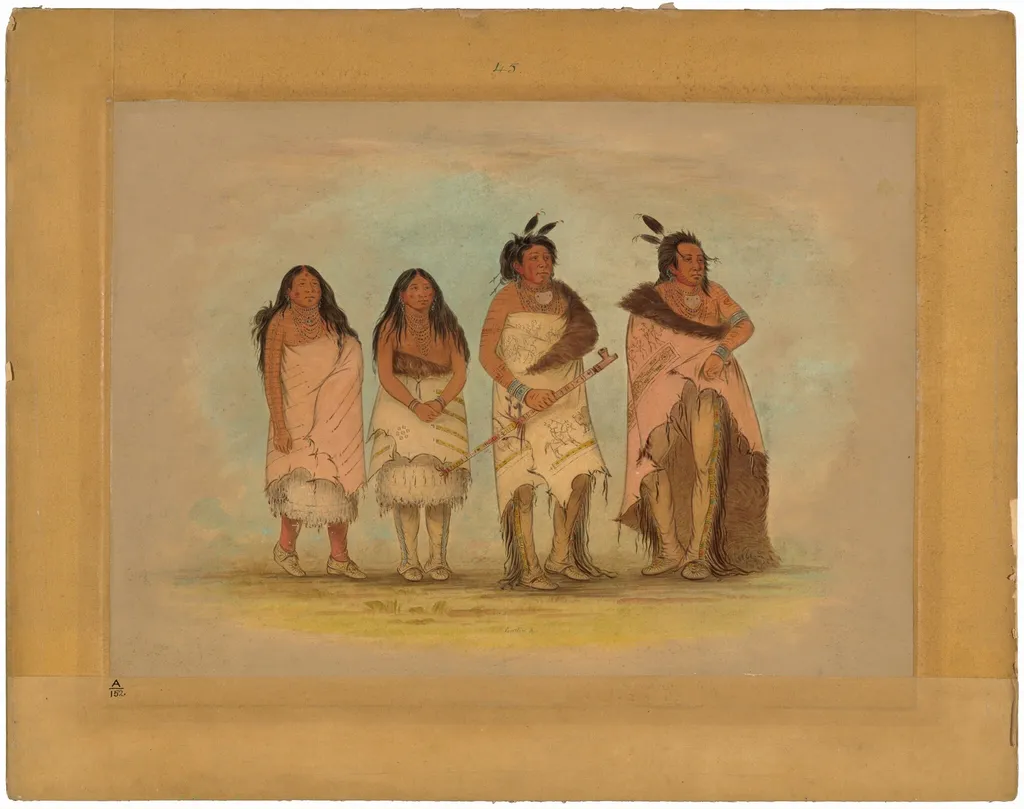
Pawneepict Chief, Two Daughters, and a Warrior is an oil painting by the American Folk Art artist George Catlin. It dates from 1865 and is held in the collection of the National Gallery of Art.
- Inscription
- Inscribed:lower center: Catlin p.
About this work
Technique & Style
The handling is smooth and linear, with carefully delineated figures and costumes that emphasize clarity over painterly texture.
The painting is executed in oil on a card support that has been mounted onto a paperboard. The handling is smooth and linear, with carefully delineated figures and costumes that emphasize clarity over painterly texture. The composition is arranged frontally, presenting the chief and two girls in a symmetrical grouping with the warrior slightly advanced, reinforcing social hierarchy through posture and placement.
The condition appears stable, with no overt signs of significant abrasion or discoloration noted in the recorded provenance. The formal qualities reflect Catlin’s documentary approach, combining portraiture conventions with ethnographic detail, evident in the precise rendering of regalia and facial features.
History & Provenance
George Catlin executed this oil on card portrait in 1861. Following the artist's death in 1872, the work passed by descent to his three daughters: Clara Gregory Catlin, Louise Catlin Kinney, and Elizabeth Wing Catlin. In 1912, the American Museum of Natural History purchased the painting directly from Elizabeth Wing Catlin.
The museum retained the piece until 1959, when it was sold through Kennedy Galleries of New York to Paul Mellon of Upperville, Virginia. Mellon subsequently donated the artwork to the National Gallery of Art in Washington, D.C., in 1965.
Pawneepict Chief, Two Daughters, and a Warrior is held in the collection of the National Gallery of Art in Washington, D.C.
The work entered the museum through a gift in 1965 from Paul Mellon, following its acquisition from Kennedy Galleries in New York in 1959 and prior ownership by the American Museum of Natural History.
Measured at 41.9 cm by 56.5 cm, the painting was created in 1861 by George Catlin and remains accessioned within the National Gallery of Art's holdings.
Overview
Created in 1865, this oil painting on card, later affixed to paperboard, portrays a Pawnee chief accompanied by his two daughters and a warrior. Executed by George Catlin, the work belongs to the American folk‑art vein that emerged alongside the nation’s expanding frontier narratives.
Subject & Meaning
The composition aligns four figures in a linear arrangement: the two women stand to the left in white gowns trimmed with fringe and beads, while the two men occupy the right, clothed in white blankets edged with fur and adorned with feathered hair. Their poised stances and calm expressions suggest a dignified presentation of familial and martial roles within Pawnee society.
Own this work as a print
Artist & collection

Artist
George Catlin ( KAT-lin; July 26, 1796 – December 23, 1872) was an American lawyer, painter, author, and traveler, who specialized in portraits of Native Americans in the American frontier.

 Bulls Fighting
 Expedition Encamped on a Texas Prairie. April 1686
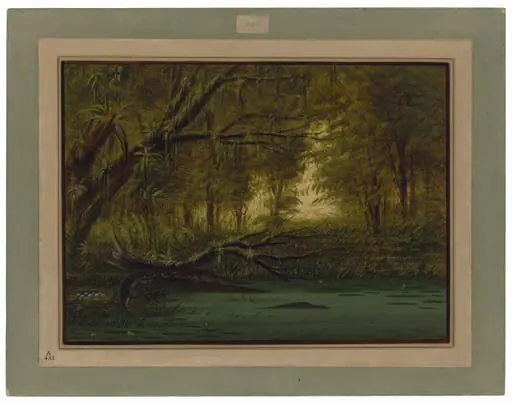 An Alligator's Nest
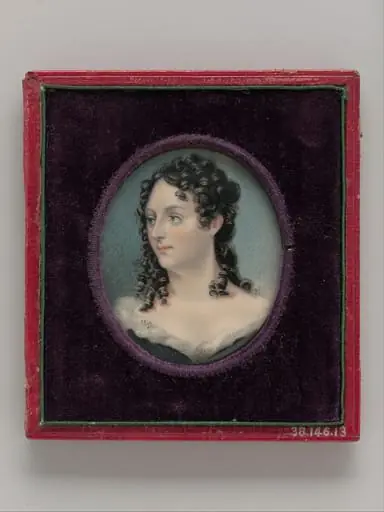 Mrs. George Catlin (Clara Bartlet Gregory)
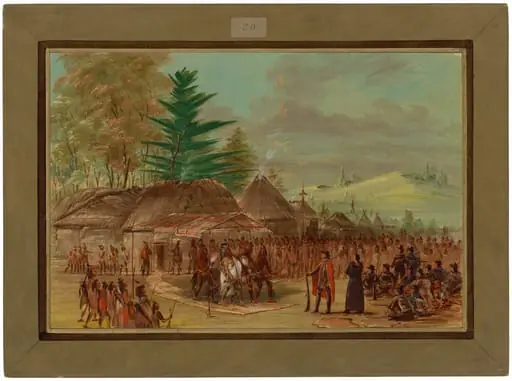 Chief of the Taensa Indians Receiving La Salle. March 20, 1682
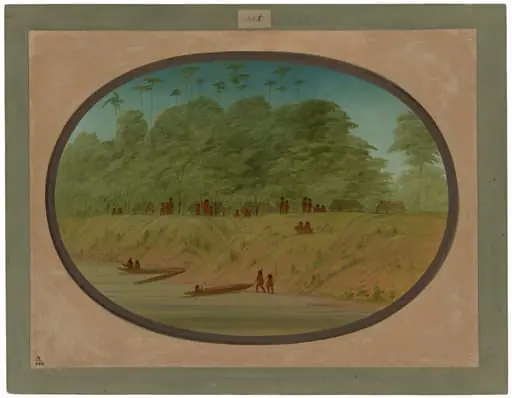 A Small Village - Payaguas Indians
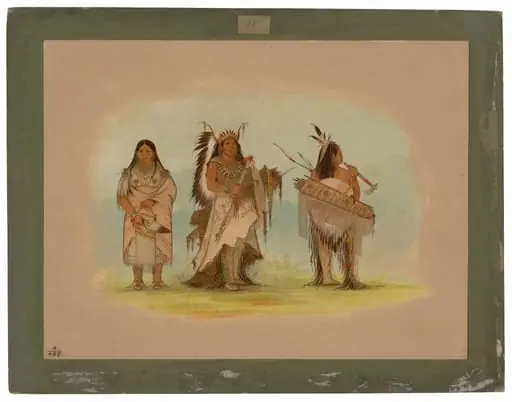 Omaha Chief, His Wife, and a Warrior
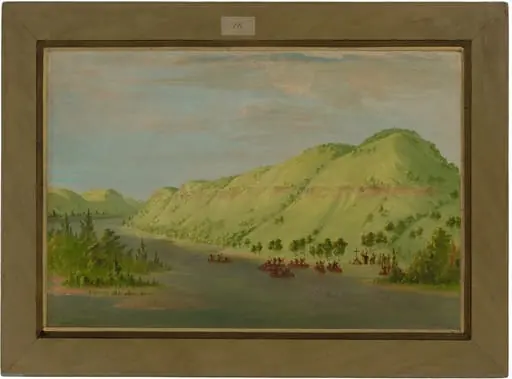 Father Hennepin Leaving the Mississippi to Join La Salle. May 8, 1680
- A Pawnee Chief with Two Warriors
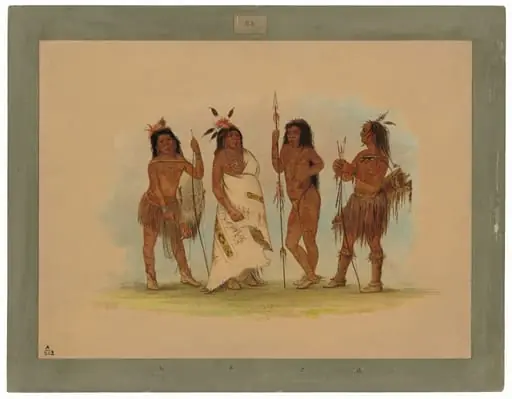 Apachee Chief and Three Warriors
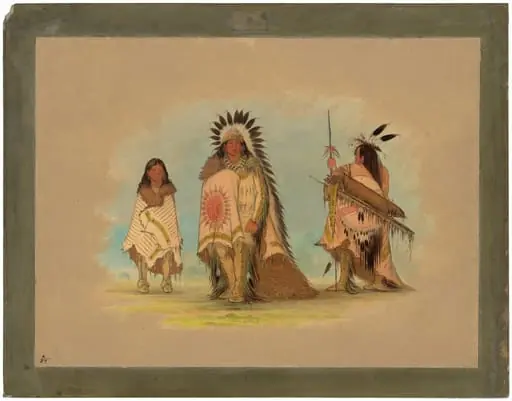 A Sioux Chief, His Daughter, and a Warrior
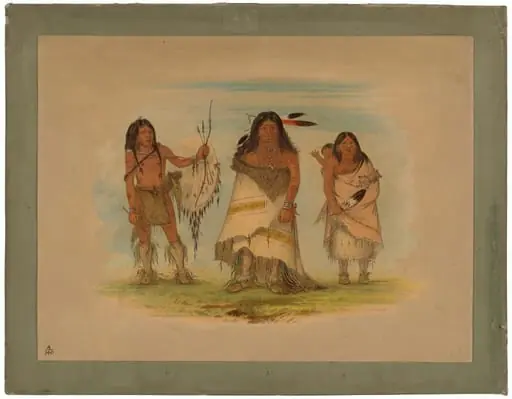 Camanchee Chief, His Wife, and a Warrior
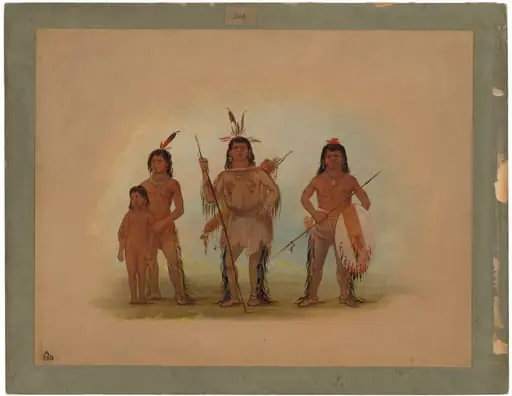 Spokan Chief, Two Warriors, and a Boy
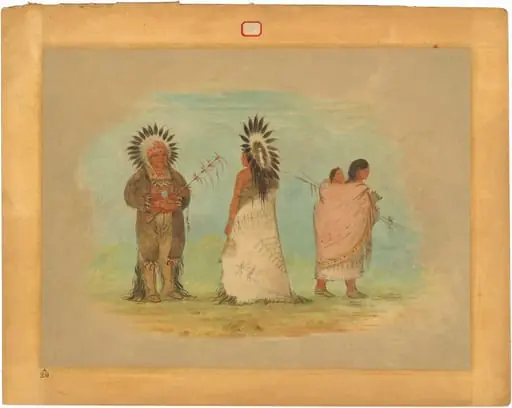 Two Ottoe Chiefs and a Woman
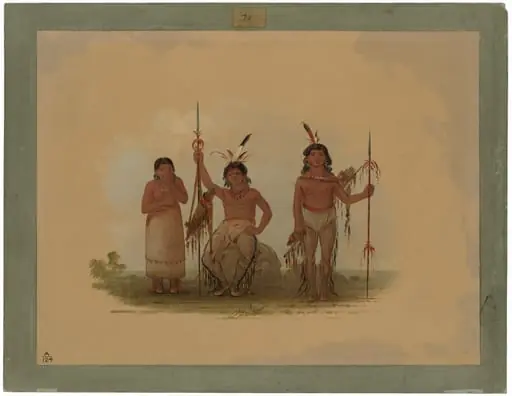 Two Arapaho Warriors and a Woman
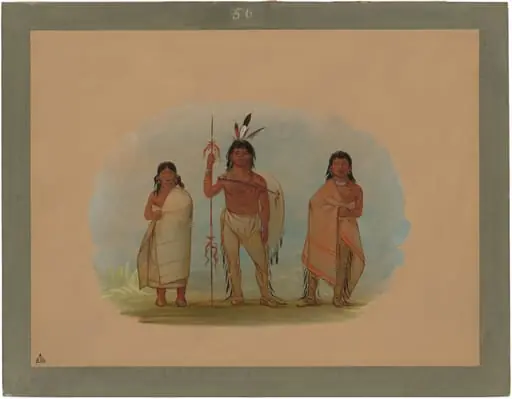 Ottowa Chief, His Wife, and a Warrior
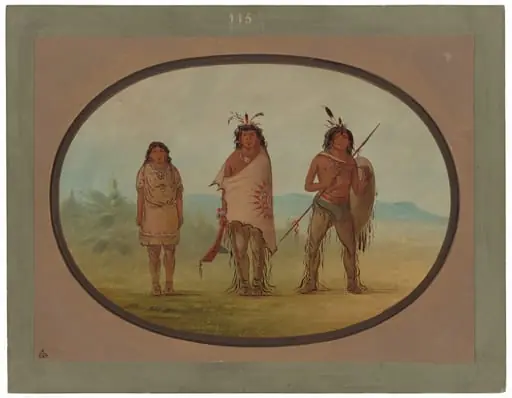 A Yuma Chief, His Daughter, and a Warrior
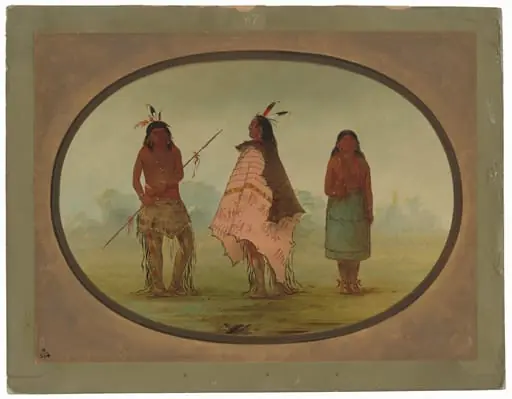 Two Apachee Warriors and a Woman