Artwork
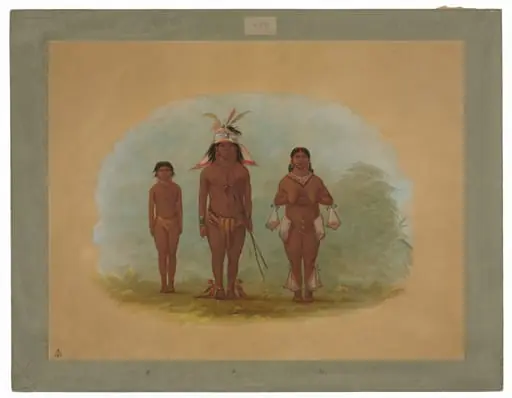
Orejona Chief and Family
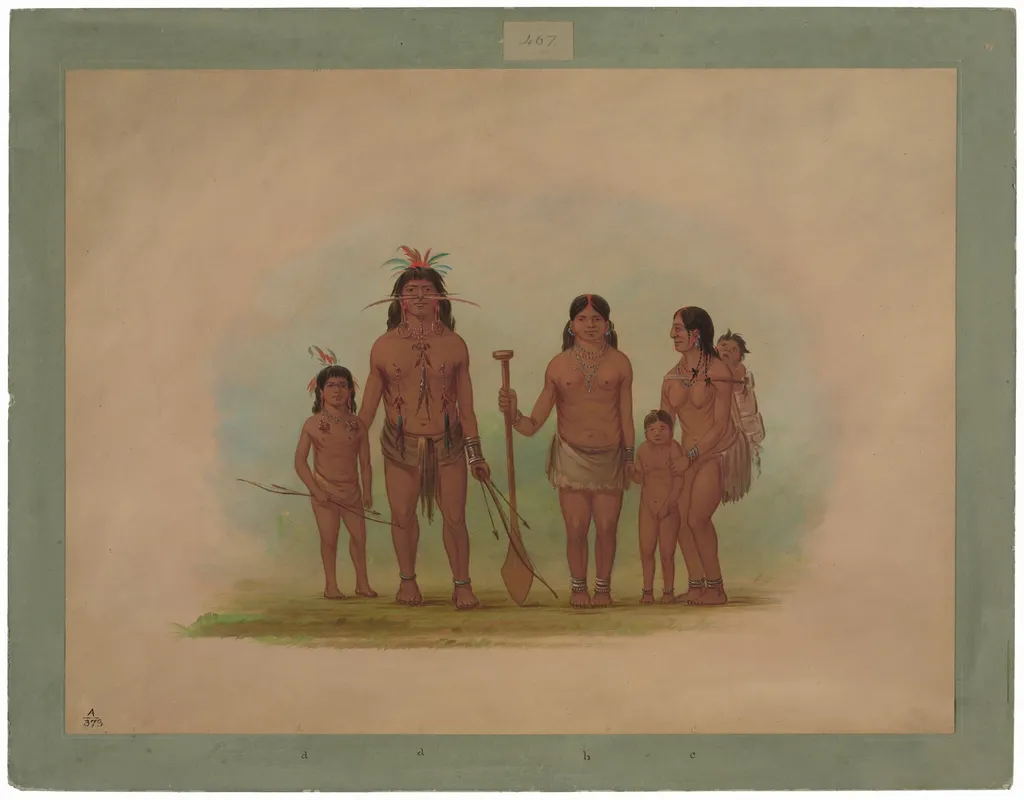
Orejona Chief and Family is an oil painting by the American Folk Art artist George Catlin. It dates from 1862 and is held in the collection of the National Gallery of Art. Created in 1862, this oil painting on card, later mounted on paperboard, depicts an Orejona chief accompanied by four family members.
About this work
Technique & Style
The painting presents a formal group composition characteristic of the artist's later portraiture, depicting an Orejona chief alongside family members.
Created in 1874, this portrait utilizes oil paint as its primary medium. While some records describe the support as canvas, internal documentation specifies the work is executed in oil on card mounted on paperboard. The painting presents a formal group composition characteristic of the artist's later portraiture, depicting an Orejona chief alongside family members.
The work's physical structure involves the adherence of the painted card to a rigid paperboard backing, distinguishing its construction from traditional stretched canvas works.
History & Provenance
George Catlin painted Orejona Chief and Family in 1874, an oil on card mounted on paperboard work classified as a portrait. The painting descended through Catlin's daughters Clara Gregory Catlin, Louise Catlin Kinney, and Elizabeth Wing Catlin before being purchased in 1912 from Elizabeth Wing Catlin by the American Museum of Natural History. It was later sold in 1959 through Kennedy Galleries, New York, to Paul Mellon in Upperville, VA, and gifted to the National Gallery of Art in 1965.
Orejona Chief and Family is an oil painting on card mounted on paperboard by George Catlin, created in 1874 and housed in the National Gallery of Art in Washington, D.C.
The work entered the museum's collection through a series of transfers: George Catlin initially owned the piece, which then passed to his daughters Clara Gregory Catlin, Louise Catlin Kinney, and Elizabeth Wing Catlin by inheritance. Elizabeth Wing Catlin sold the painting in 1912 to the American Museum of Natural History, and it was later resold in 1959 via Kennedy Galleries in New York to Paul Mellon of Upperville, Virginia. In 1965, Paul Mellon gifted the artwork to the National Gallery of Art, where it remains in the permanent collection.
The painting measures 46.5 cm in height and 62.2 cm in width.
Context
George Catlin painted Orejona Chief and Family in 1874, depicting a dignified Indigenous family with nuanced realism that challenged contemporary stereotypes. The work entered the National Gallery of Art's collection in 1965 after passing through the hands of Paul Mellon, reflecting shifting attitudes toward Native American subjects in mid-20th century American art. Catlin's documentation of Plains tribes contributed to early anthropological discourse, positioning this painting within his broader effort to preserve Indigenous cultures through portraiture rather than ethnographic spectacle.
Legacy
Orejona Chief and Family has been recognized as an important example of early American portraiture that documents Indigenous leadership. Its presence in the National Gallery of Art has helped shape scholarly understanding of 19th-century cross-cultural representation. The work influenced later artists studying Native American subjects and contributed to the reevaluation of George Catlin's ethnographic art practice. Its 1965 gift to the NGA cemented its institutional legacy.
The painting's provenance reflects a documented chain of ownership from the artist to the Catlin family and eventually to the National Gallery of Art. Its acquisition and display have been cited in museum histories as a key moment in establishing Native American subjects within major U.S. art collections.
Overview
Created in 1862, this oil painting on card, later mounted on paperboard, depicts an Orejona chief accompanied by four family members. The figures stand side by side against an unadorned light‑green and beige backdrop, each rendered with minimal shading and a flat application of color characteristic of mid‑nineteenth‑century American folk portraiture.
Subject & Meaning
The work records a small group from the Orejona tribe: a chief holding a staff, a younger male with a paddle, and three other members, all barefoot and adorned only with modest jewelry or feather ornaments. By labeling each figure with alphabetic initials, the artist provides a catalog‑like identification, emphasizing ethnographic observation over narrative storytelling.
Own this work as a print
Artist & collection

Artist
George Catlin ( KAT-lin; July 26, 1796 – December 23, 1872) was an American lawyer, painter, author, and traveler, who specialized in portraits of Native Americans in the American frontier.

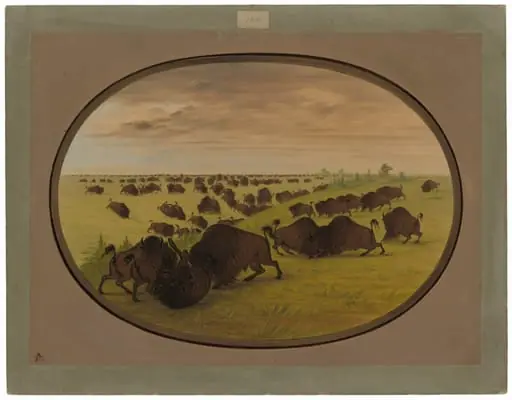 Bulls Fighting
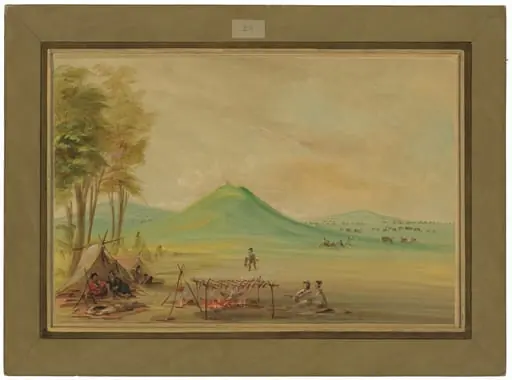 Expedition Encamped on a Texas Prairie. April 1686
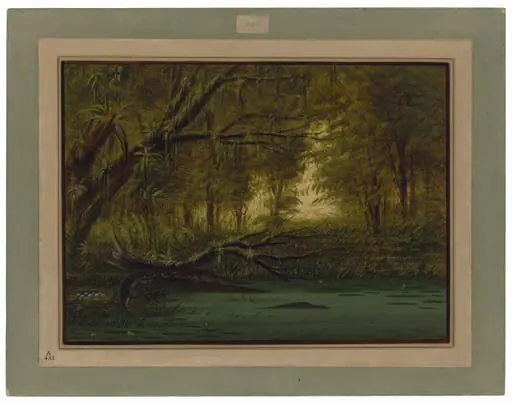 An Alligator's Nest
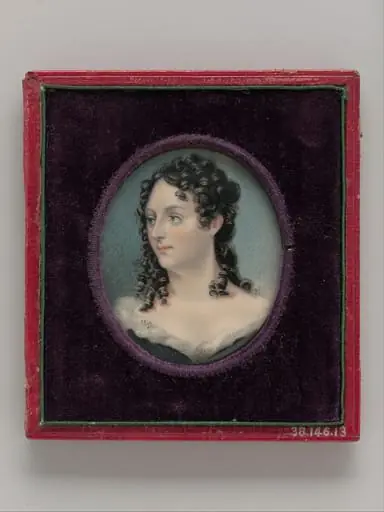 Mrs. George Catlin (Clara Bartlet Gregory)
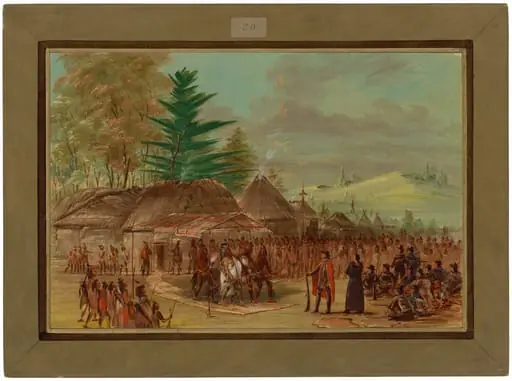 Chief of the Taensa Indians Receiving La Salle. March 20, 1682
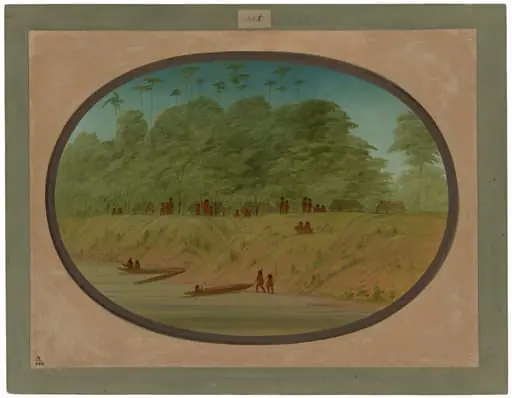 A Small Village - Payaguas Indians
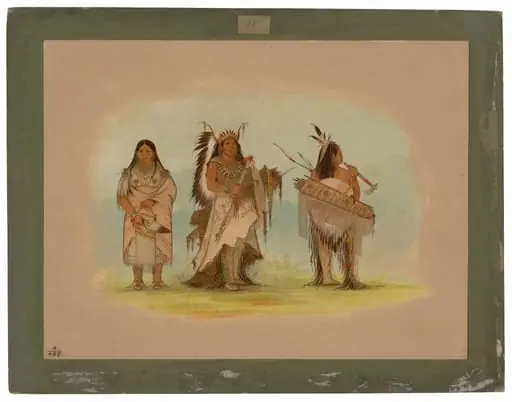 Omaha Chief, His Wife, and a Warrior
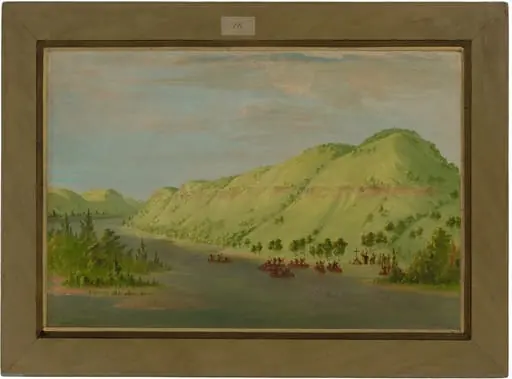 Father Hennepin Leaving the Mississippi to Join La Salle. May 8, 1680