Artwork
See-non-ty-a, an Iowa Medicine Man
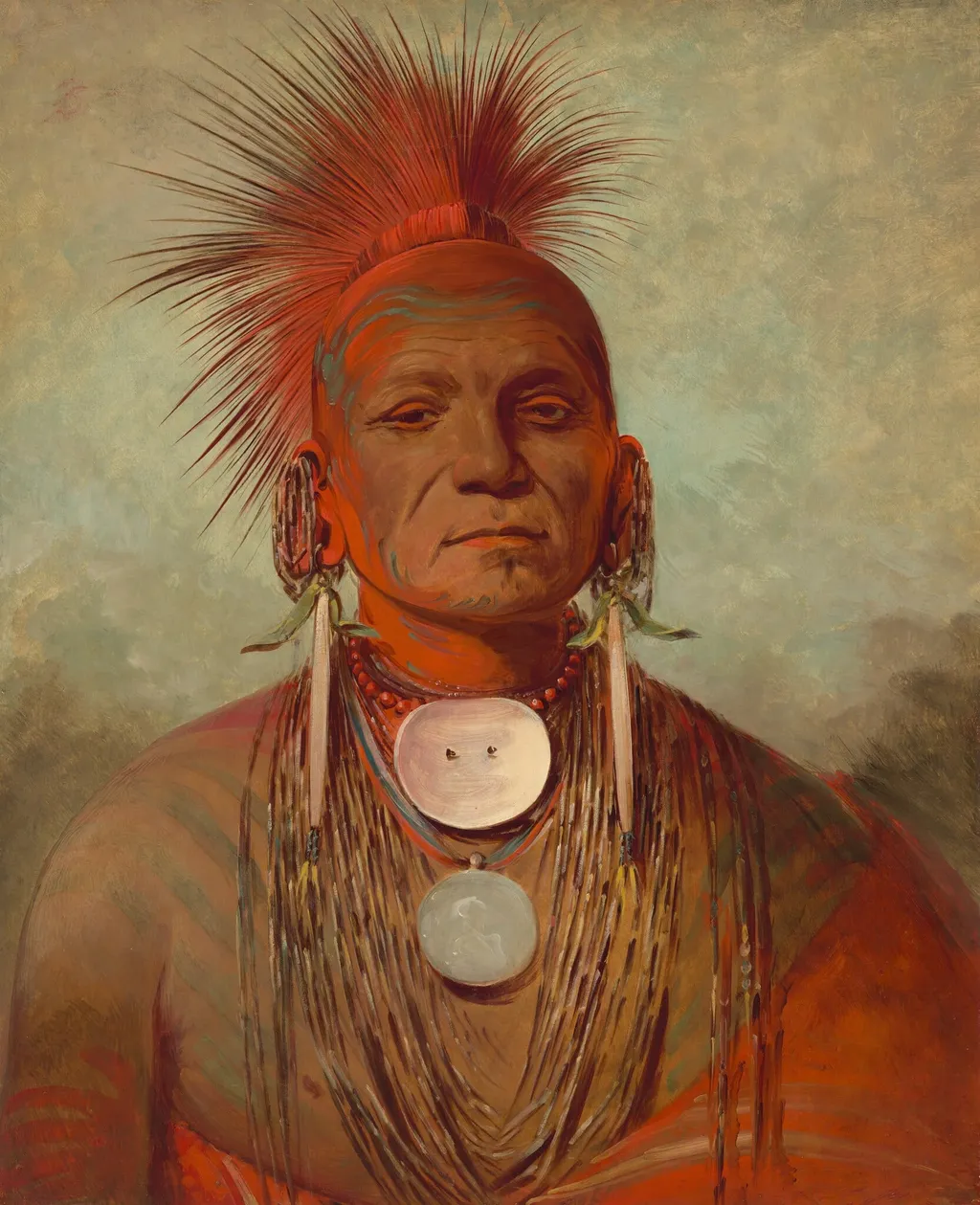
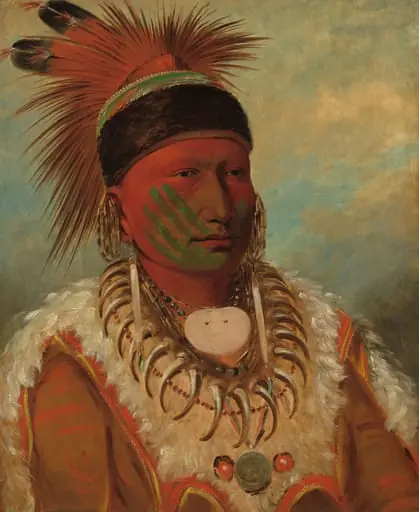
See-non-ty-a, an Iowa Medicine Man is an oil painting by the Romanticist artist George Catlin. It dates from 1844 and is held in the collection of the National Gallery of Art.
About this work
Overview
Measuring 71 by 58 centimeters, the painting is a bust-length depiction of an Iowa tribal spiritual leader facing directly forward.
See-non-ty-a, an Iowa Medicine Man is an 1844 oil on canvas portrait by American artist George Catlin. Measuring 71 by 58 centimeters, the painting is a bust-length depiction of an Iowa tribal spiritual leader facing directly forward. It forms part of Catlin's extensive visual record of Indigenous American cultures, which he undertook out of fear that these traditions would vanish under United States expansion. The work is currently held in the National Gallery of Art in Washington, D.C., as part of the Paul Mellon Collection, under accession number 1965.16.346.
Subject & Meaning
The painting portrays See-non-ty-a, a medicine man of the Iowa tribe, emphasizing his spiritual authority and cultural identity through detailed regalia. He wears a striking red roach headdress with stiff bristles radiating upward and backward. His face is painted with red pigment, interrupted by blue-green stripes across the forehead and near the ears. Large shell-like earrings dangle from stretched earlobes, attached to green ribbons. Multiple necklaces layer his chest, including strands of beads, a large circular white shell gorget with two small dark holes, and a smaller pale circular pendant. A fringed garment hangs down the chest in thin strands, while a reddish-orange cloth drapes the shoulders. These elements serve as visual markers of his status as a healer and guardian of tribal knowledge.
Technique & Style
Catlin executed the portrait in oil on canvas with a painterly finish that balances meticulous decorative detail with atmospheric suggestion. The palette is dominated by warm earth tones, such as reds, oranges, and browns, which contrast against a muted, cool background of gray-green and pale blue. Soft, indistinct brushwork in the background suggests a distant landscape or sky without defined forms, keeping the focus on the subject. Light falls evenly across the face and chest, modeling features with soft shadows. The brushwork varies from smooth blending in the face to more visible, textured strokes in the headdress and background, capturing the solemn, contemplative expression and weathered visage of the sitter.
History & Provenance
Created circa 1844 to 1845, the painting remained in George Catlin's possession until his death in 1872. It then descended to his three daughters, Clara Gregory Catlin, Louise Catlin Kinney, and Elizabeth Wing Catlin. In 1912, the American Museum of Natural History purchased the work from Elizabeth Wing Catlin. The museum held it until 1959, when it was sold through Kennedy Galleries in New York to Paul Mellon of Upperville, Virginia. Mellon gifted the painting to the National Gallery of Art in 1965. It has since been featured in several exhibitions, including shows at the Metropolitan Museum of Art in 1965, the Los Angeles County Museum of Art in 1972, the National Gallery of Art in 1980, the Birmingham Museum of Art in 1981, the Montclair Art Museum in 1985, and the Smithsonian American Art Museum in 2020.
Context
George Catlin initially worked as a lawyer in Philadelphia before abandoning his career in 1823 to document Indigenous American customs. Between 1832 and 1836, he undertook five expeditions into the Great Plains, collecting artifacts and creating paintings of daily life, religious ceremonies, and individual portraits. This portrait of See-non-ty-a emerged from this broader project, later known as the Indian Gallery. While Catlin aimed for ethnographic objectivity, he took artistic licenses that remain controversial today. Nevertheless, his work significantly shaped the perception of Indigenous Americans in the eastern United States and Western Europe during the mid-nineteenth century, a period marked by increasing encroachment on Native lands under the ideology of Manifest Destiny.
Legacy
The painting endures as a valuable historical record of Iowa spiritual leadership and material culture during the nineteenth century. As part of Catlin's Indian Gallery, it has been reproduced in major catalogues, including the 2002 exhibition publication by the Renwick Gallery of the Smithsonian American Art Museum. The work continues to be referenced in scholarship examining the intersection of art, ethnography, and westward expansion. While Catlin's role in shaping often stereotyped perceptions of Native Americans is debated, this specific portrait is recognized for its focus on the dignity and authority of an Indigenous spiritual leader, preserving a visual record of cultural practices heavily impacted by displacement.
Own this work as a print
Artist & collection

Artist
George Catlin ( KAT-lin; July 26, 1796 – December 23, 1872) was an American lawyer, painter, author, and traveler, who specialized in portraits of Native Americans in the American frontier.

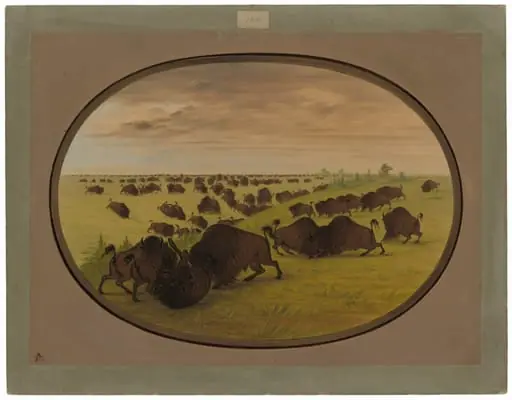 Bulls Fighting
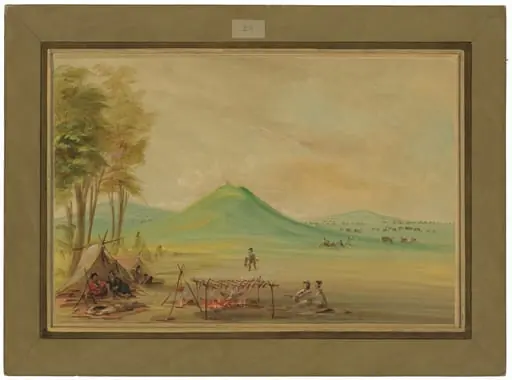 Expedition Encamped on a Texas Prairie. April 1686
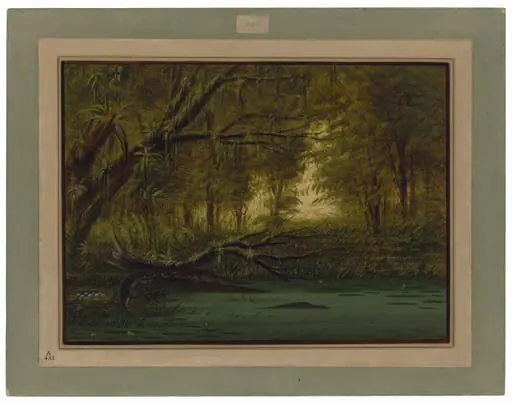 An Alligator's Nest
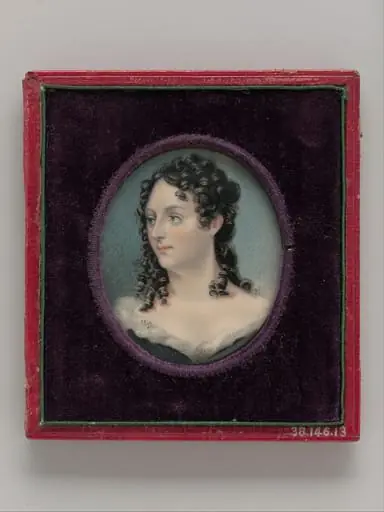 Mrs. George Catlin (Clara Bartlet Gregory)
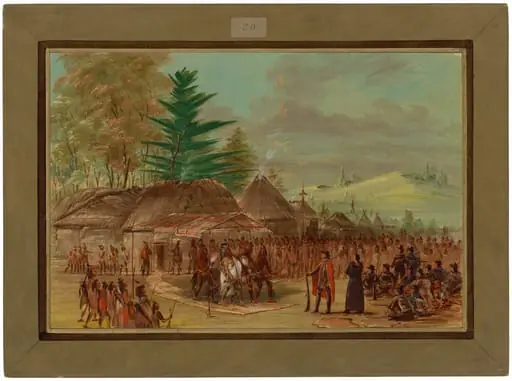 Chief of the Taensa Indians Receiving La Salle. March 20, 1682
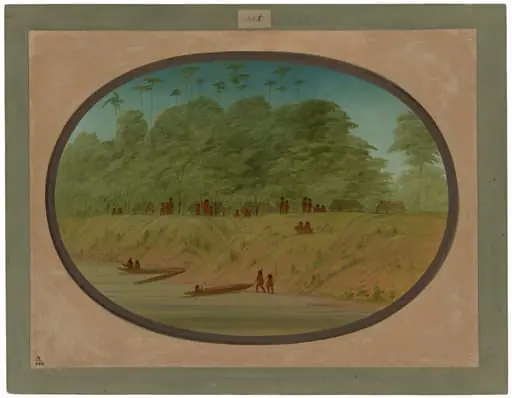 A Small Village - Payaguas Indians
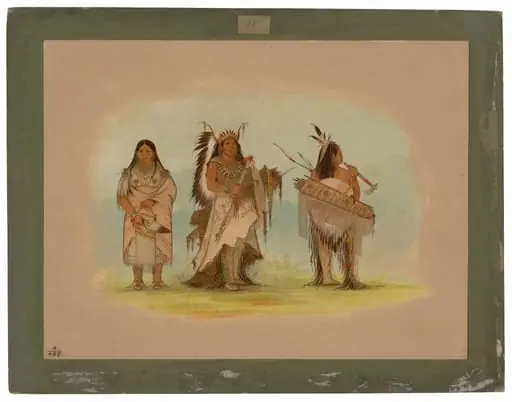 Omaha Chief, His Wife, and a Warrior
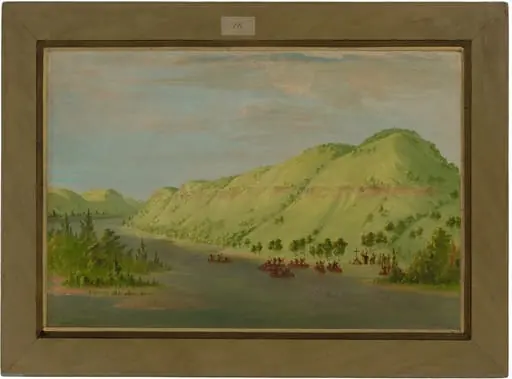 Father Hennepin Leaving the Mississippi to Join La Salle. May 8, 1680