Artwork
The White Cloud, Head Chief of the Iowas
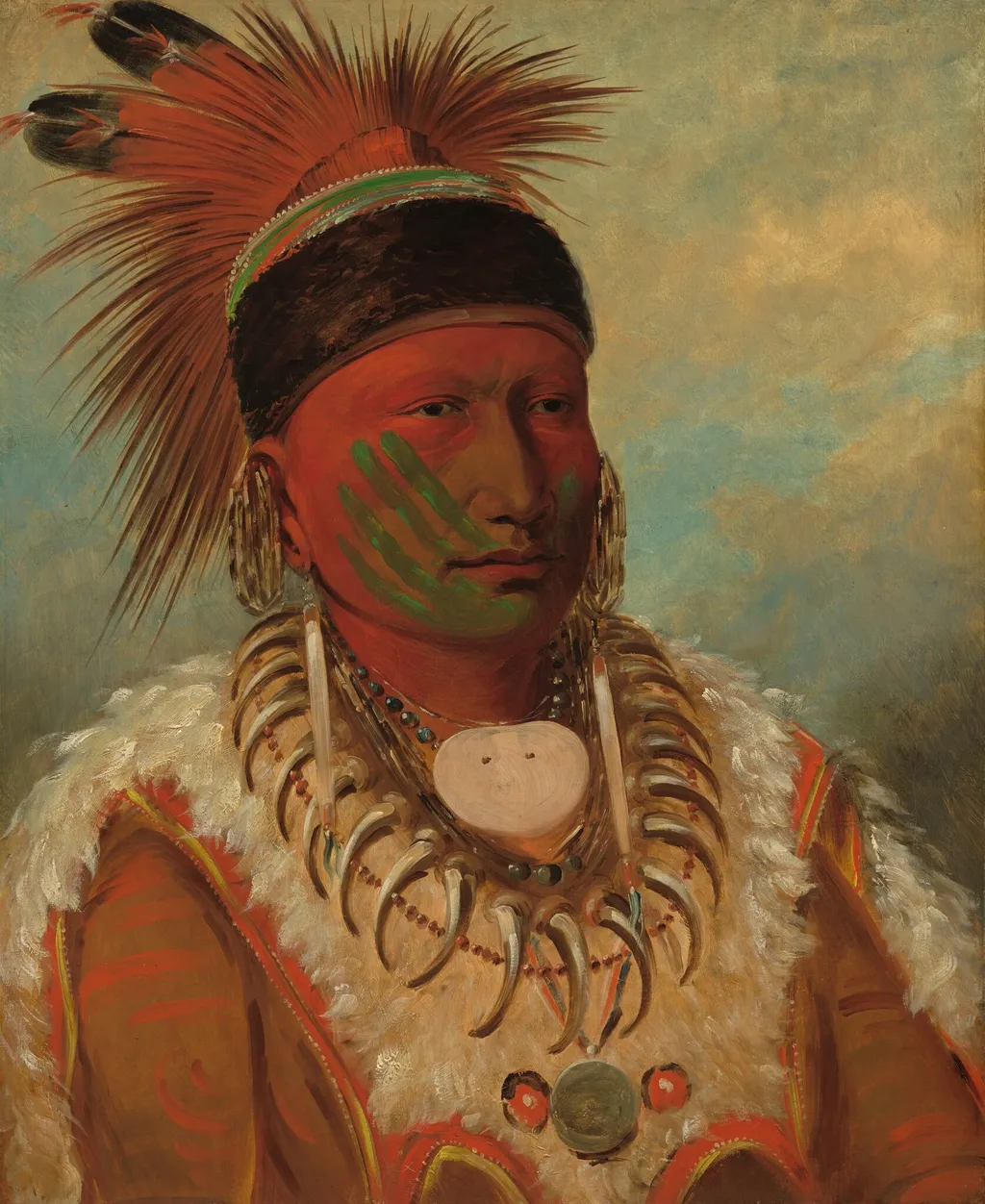
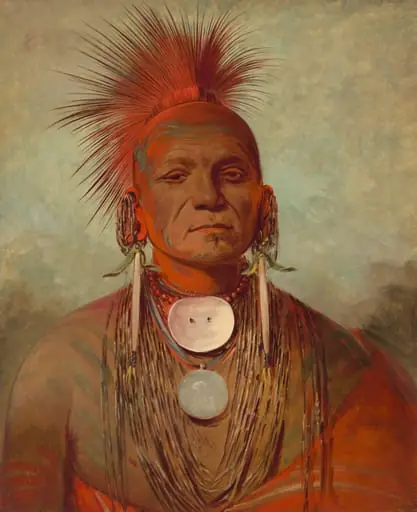
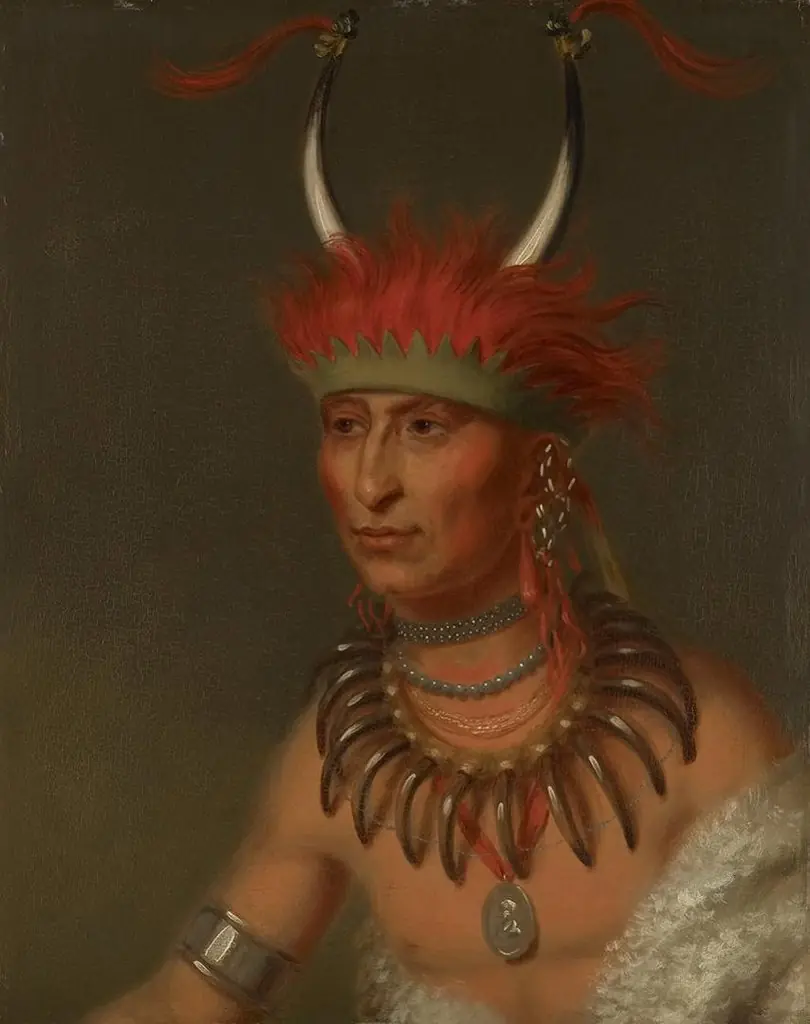
The White Cloud, Head Chief of the Iowas is an oil painting by the Romanticist artist George Catlin. It dates from 1844 and is held in the collection of the National Gallery of Art.
About this work
Overview
The White Cloud, Head Chief of the Iowas is an 1844/1845 oil on canvas portrait by the American artist George Catlin, measuring 71 by 58 centimeters.
The White Cloud, Head Chief of the Iowas is an 1844/1845 oil on canvas portrait by the American artist George Catlin, measuring 71 by 58 centimeters. The painting depicts Mew-hu-she-kaw, an Iowa leader who traveled to Europe to seek financial support for his displaced tribe. The work is renowned for its dignified portrayal of the chief, emphasizing his grace and authority in contrast to the exploitative conditions of his European tour. The canvas remained in the artist's collection before passing through his descendants and the American Museum of Natural History, eventually entering the collection of the National Gallery of Art in Washington, D.C., as a gift from Paul Mellon in 1965.
Subject & Meaning
The portrait captures Mew-hu-she-kaw, also known as No Heart-of-Fear, who succeeded his father as a tribal chief during a period of severe crisis for the Iowa people. By the time of the sitting, the Iowa population had plummeted from approximately 1,400 to 470 individuals, forced from their eastern Iowa territories to a reservation in southeast Nebraska by the Indian Removal Act of 1830 and prior treaties. To combat this poverty, White Cloud brought a group of fourteen Iowas to London around 1844 to perform tribal dances and customs. Catlin's portrait serves as a visual record of Iowa identity and a monument to the chief's bravery, capturing a leader who crossed the Atlantic to save his tribal culture even as his people's land and livelihood were eroded by expansionism.
Technique & Style
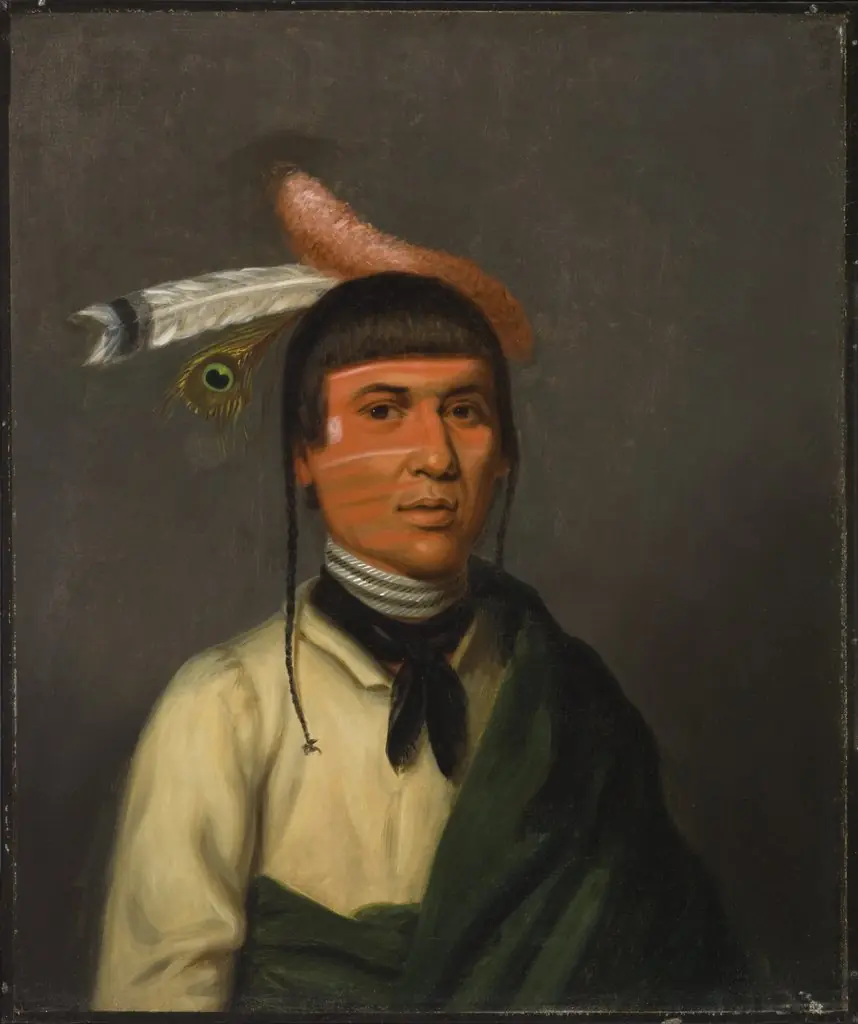
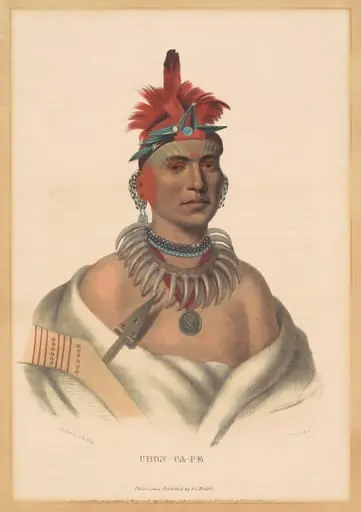
Catlin rendered the bust-length figure filling most of the vertical composition, placing the chief large against a loosely painted, atmospheric sky of soft blue and warm beige-gray tones. The paint handling varies across the canvas, employing smooth blending for the face and thicker, textured strokes for the fur and feathers. Light falls evenly from the left, modeling the forms without strong shadows. The figure's face is painted red with green diagonal handprints across the cheek, signifying skill in hand-to-hand combat. He wears a headdress of deer's tail dyed vermilion red and eagle quills above a fur turban, possibly otter. A white wolf skin drapes the shoulders of his deerskin shirt, and a bear-claw necklace, an adornment reserved for those who earned success as hunters or warriors, rests on his chest. Strands of beads, carved conch shell tubes in multi-pierced ears, and a large seashell at the throat complete the traditional Iowa chieftain regalia.
History & Provenance
George Catlin painted the portrait in London in 1844 or 1845 during White Cloud's European tour. The canvas descended from Catlin to his three daughters, Clara Gregory Catlin, Louise Catlin Kinney, and Elizabeth Wing Catlin. In 1912, the American Museum of Natural History purchased the painting from Elizabeth Wing Catlin. The museum sold the work through Kennedy Galleries in New York in 1959 to Paul Mellon of Upperville, Virginia, who gifted it to the National Gallery of Art in 1965, where it holds accession number 1965.16.347. The painting has been featured in numerous exhibitions, including the Paris Salon of 1846, Three Centuries of American Painting at the Metropolitan Museum of Art in 1965, The American West at the Los Angeles County Museum of Art in 1972, and international shows in Vienna, Beijing, Shanghai, Moscow, and Bilbao in later decades.
Context
Catlin, who had turned from a law career to painting, traveled the American West between 1830 and 1836 to document Indigenous life, producing a vast pictorial record now largely housed at the National Gallery of Art. He first encountered the Iowa tribe in 1832, painting the elder White Cloud. By 1844, Catlin had become a celebrity in Europe, exhibiting his Indian Gallery in London. When the younger White Cloud arrived in Europe, he and his companions performed within Catlin's exhibition, though they were concurrently exploited by P.T. Barnum's traveling circus. Catlin's sympathetic portrayal of the chief, emphasizing his inherent dignity and pride, stood in sharp contrast to Barnum's cruel and denigrating treatment of the performers. French critic George Sand famously compared the painted chief to a modern Jason, reflecting a popular 19th-century tendency to link the diminishing American Indian population to a vanished race of classical heroes, a romanticized view that emerged as Indigenous populations fell due to disease, forced relocation, and poverty.
Legacy
The portrait remains a vital historical document of Iowa leadership and adornment, continuing to resonate with the Iowa Tribe of Kansas and Nebraska. The tribe traces its heritage back to Chief No Heart, the brother of the elder White Cloud, and the Catlin image endures as a visual anchor for descendants and cultural organizations. In broader art history, the painting is frequently cited in scholarship, including William H. Truettner's 1979 study of Catlin's Indian Gallery, as a prime example of 19th-century Romantic ethnography. It is also utilized extensively in educational programming at the National Gallery of Art, where students analyze the work to discuss the impact of the Indian Removal Act, the heroism of figures like White Cloud, and the complex intersection of cultural display, exploitation, and dignified representation.
Own this work as a print
Artist & collection

Artist
George Catlin ( KAT-lin; July 26, 1796 – December 23, 1872) was an American lawyer, painter, author, and traveler, who specialized in portraits of Native Americans in the American frontier.

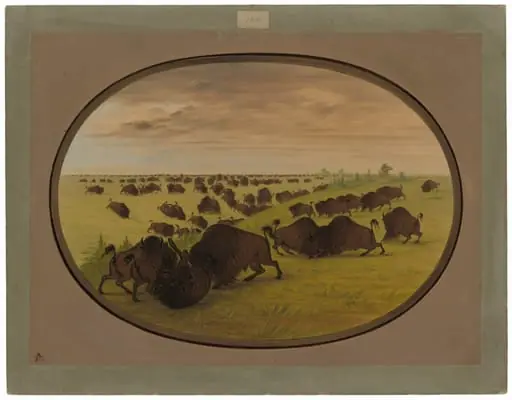 Bulls Fighting
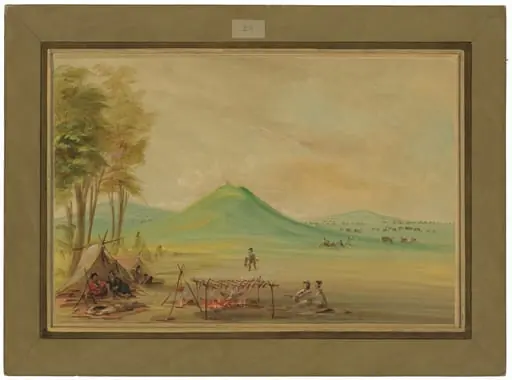 Expedition Encamped on a Texas Prairie. April 1686
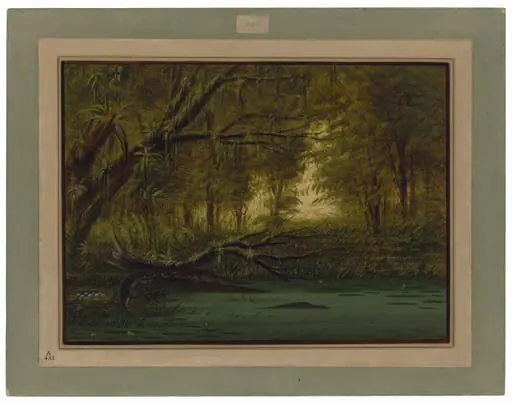 An Alligator's Nest
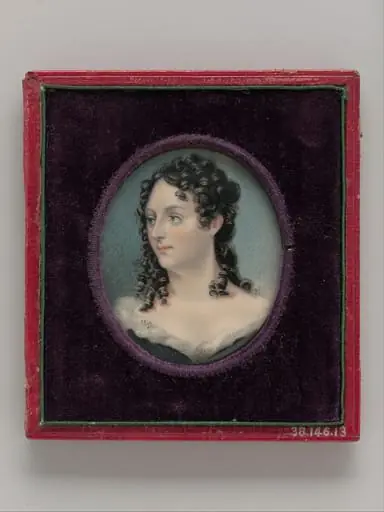 Mrs. George Catlin (Clara Bartlet Gregory)
 Chief of the Taensa Indians Receiving La Salle. March 20, 1682
 A Small Village - Payaguas Indians
 Omaha Chief, His Wife, and a Warrior
 Father Hennepin Leaving the Mississippi to Join La Salle. May 8, 1680