Artwork
Zurumati Indians
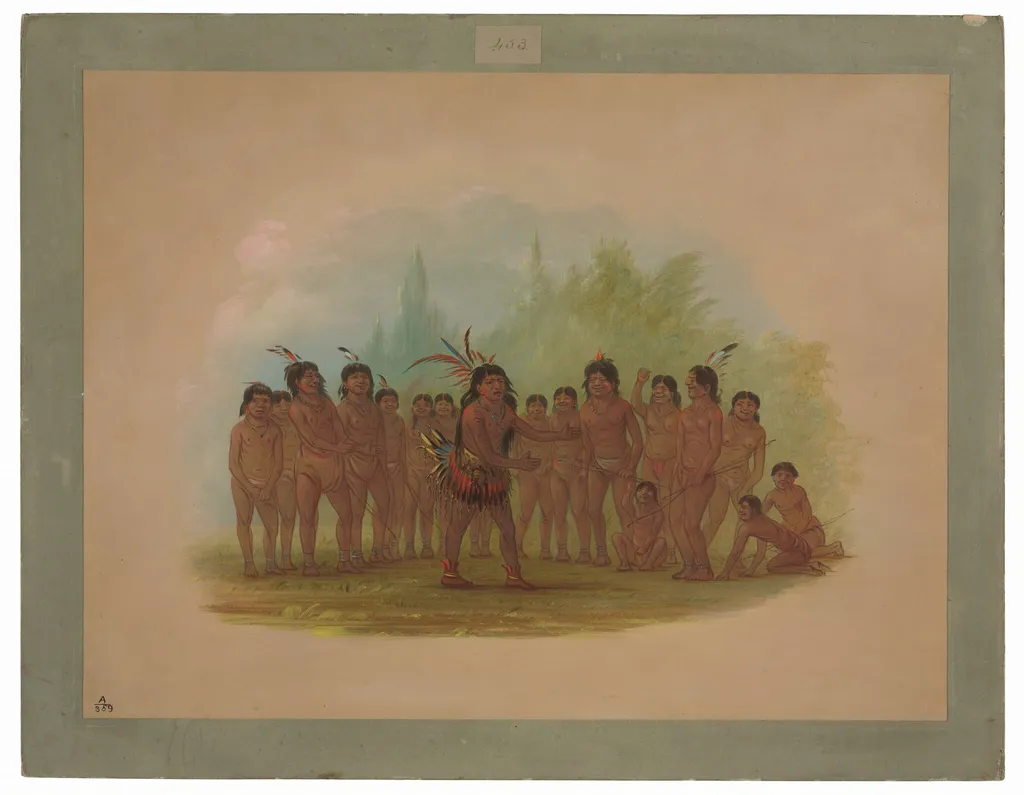
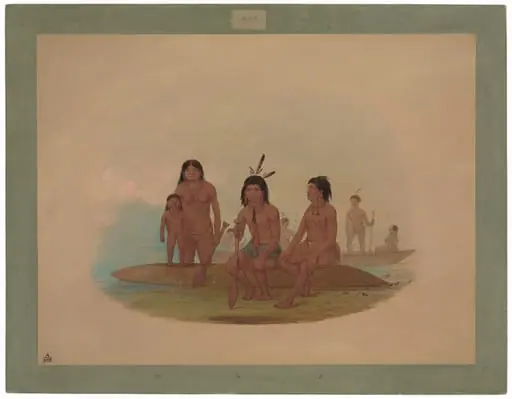
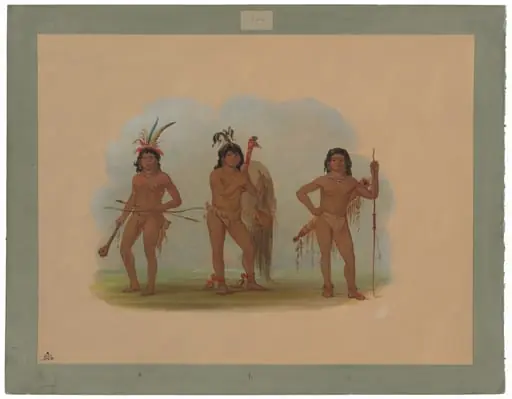
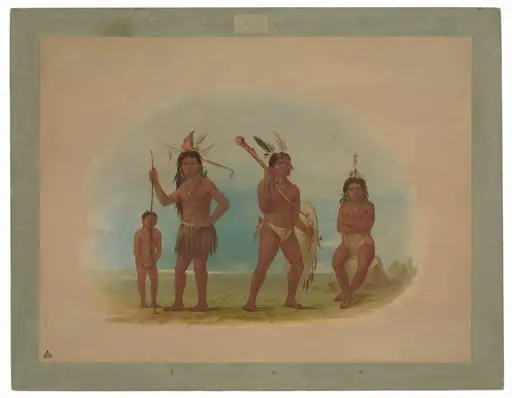
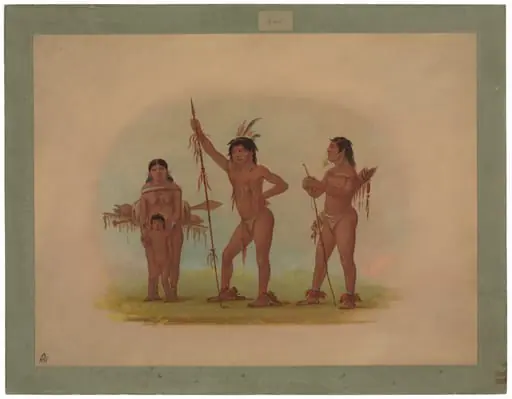
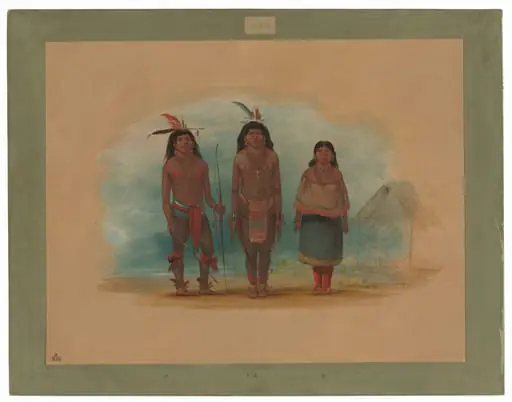
Zurumati Indians is an oil painting by the American Folk Art artist George Catlin. It dates from 1862 and is held in the collection of the National Gallery of Art.
About this work
This painting shows a Native American man in a red tunic standing near a tall, bare tree.
This painting shows a Native American man in a red tunic standing near a tall, bare tree. The background is simple and light, but the man stands out because he faces us directly. His dark eyes and calm expression draw you in.
Catlin painted this in 1854 based on sketches he made years earlier. He spent time with Native tribes and recorded their lives in vivid detail. This work is part of a larger series he created to document their culture.
Look up Catlin, George to see more of his portraits.
Technique & Style
George Catlin created Zurumati Indians in 1867 using oil paint applied to a card support, which was subsequently mounted on paperboard. The work measures 46.4 cm in height and 62 cm in width. Classified as a portrait, the painting depicts a tree alongside its human subjects.
The physical construction involves the layering of the painted card onto a sturdier paperboard backing, a method that preserves the original painted surface while providing structural stability for display.
History & Provenance
Painted in 1867 by George Catlin, this oil on card mounted on paperboard remained in the artist's possession until his death in 1872. Ownership subsequently passed by descent to his three daughters: Clara Gregory Catlin, Louise Catlin Kinney, and Elizabeth Wing Catlin. In 1912, the American Museum of Natural History purchased the work directly from Elizabeth Wing Catlin.
The museum retained the painting until 1959, when it was sold through Kennedy Galleries of New York to Paul Mellon of Upperville, Virginia. Mellon later donated the piece to the National Gallery of Art in Washington, D.C., in 1965.
The painting is held by the National Gallery of Art, Washington, D.C., where it is recorded as accession number 1965.14.1.
It was first in the collection of the artist George Catlin, then passed by descent to his daughters. In 1912 it was purchased from Elizabeth Wing Catlin by the American Museum of Natural History. It was sold in 1959 via Kennedy Galleries, New York, to Paul Mellon, Upperville, VA, and given by him to the National Gallery of Art in 1965.
Context
The 1867 oil on card mounted on paperboard portrait Zurumati Indians measures 46.4 cm by 62 cm and depicts a tree. Executed by George Catlin, the work belongs to his series of Native American portraits produced during his travels in the American West. It entered the National Gallery of Art collection through a documented chain of descent and sale, reflecting the artist’s enduring reputation in ethnographic art.
Scholarship situates the painting within Catlin’s broader effort to record Indigenous subjects, positioning it as a representative example of 19th‑century portraiture that combined aesthetic and documentary aims.
Legacy
The work entered the National Gallery of Art in 1965 through a gift from Paul Mellon, underscoring its recognized significance within American art history.
Its presence in the museum’s collection has made it a reference point for studies of George Catlin’s documentation of Indigenous subjects, shaping scholarly narratives about 19th‑century portraiture of Native peoples. Measured at 46.4 cm in height and 62 cm in width, the canvas’s scale has been cited in catalogues discussing Catlin’s compositional strategies.
Overview
George Catlin, a former lawyer who became a painter, created Zurumati Indians in 1854. This oil on card, mounted on paperboard, is one example from his extensive project to document the lives and cultures of Native American peoples. The work reflects his long-standing commitment to portraying Indigenous subjects, a focus he maintained throughout his career.
Subject & Meaning
The painting depicts a Native American man wearing a red tunic, positioned prominently against a light, uncluttered background. He stands near a tall, bare tree, an element Catlin frequently incorporated into his compositions to suggest natural surroundings. The subject's direct gaze and composed expression draw the viewer's attention, emphasizing his individual presence.
Own this work as a print
Artist & collection

Artist
George Catlin ( KAT-lin; July 26, 1796 – December 23, 1872) was an American lawyer, painter, author, and traveler, who specialized in portraits of Native Americans in the American frontier.

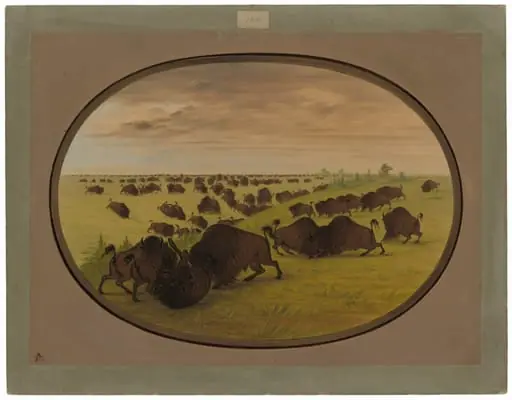 Bulls Fighting
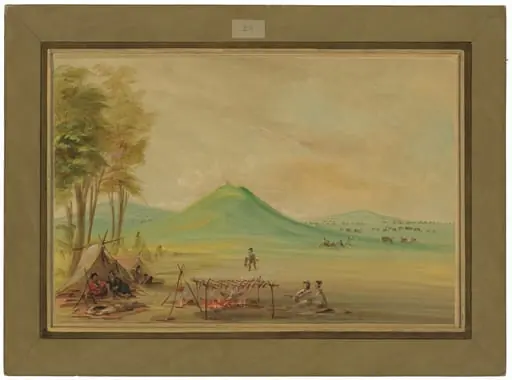 Expedition Encamped on a Texas Prairie. April 1686
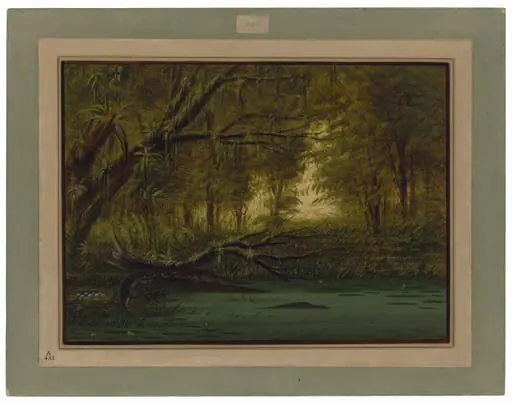 An Alligator's Nest
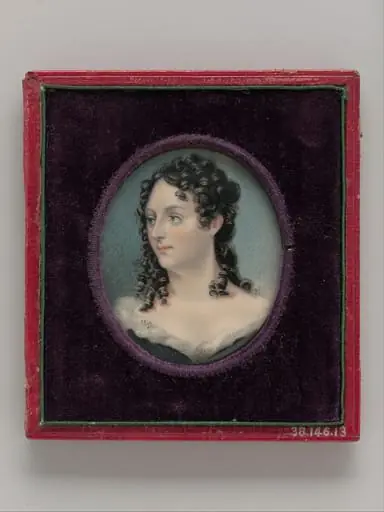 Mrs. George Catlin (Clara Bartlet Gregory)
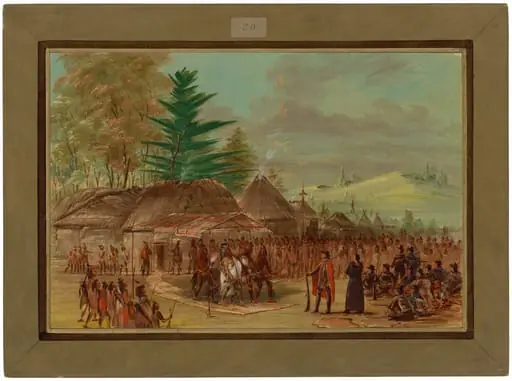 Chief of the Taensa Indians Receiving La Salle. March 20, 1682
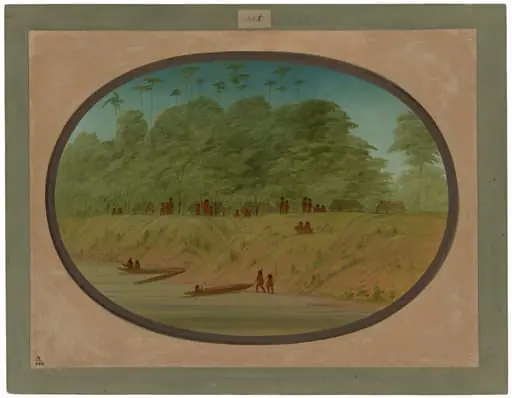 A Small Village - Payaguas Indians
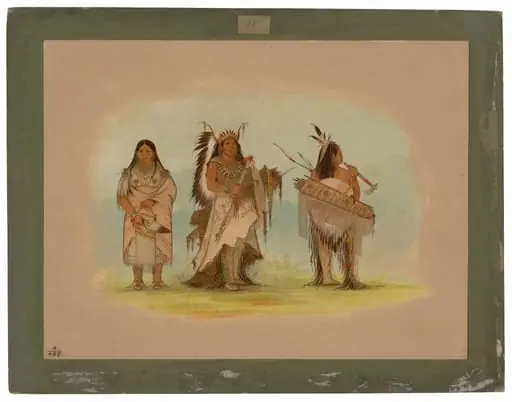 Omaha Chief, His Wife, and a Warrior
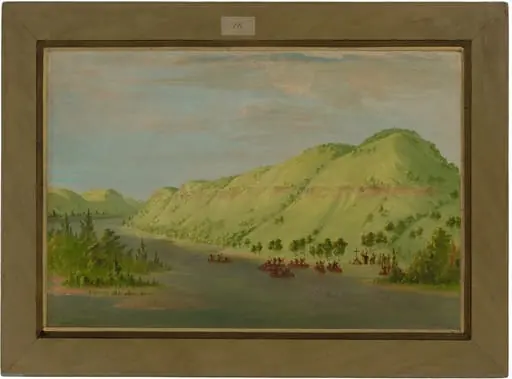 Father Hennepin Leaving the Mississippi to Join La Salle. May 8, 1680