Artwork
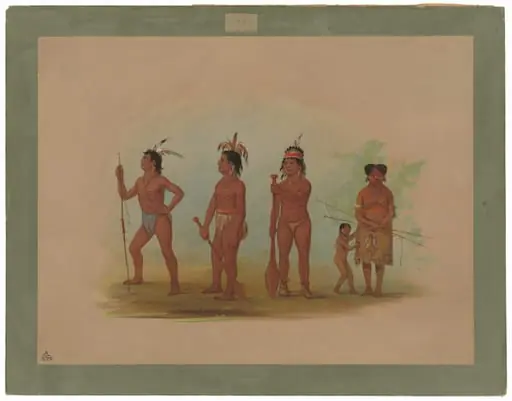
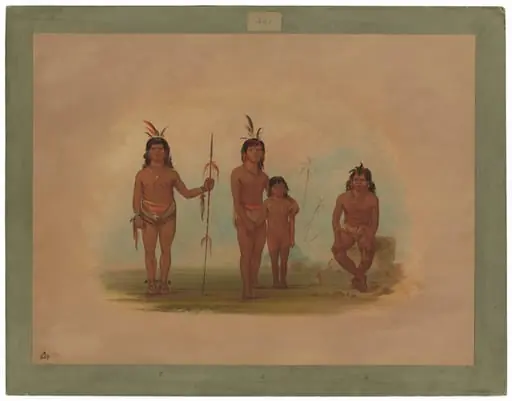
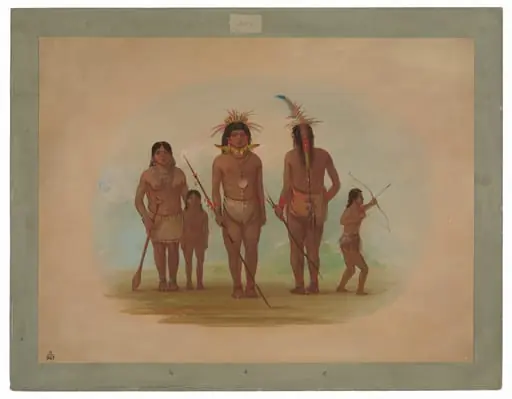
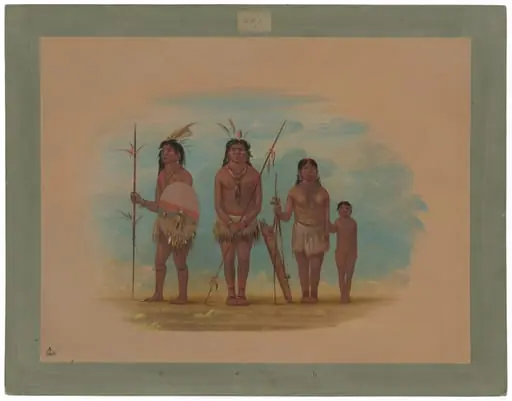
Four Arowak Indians
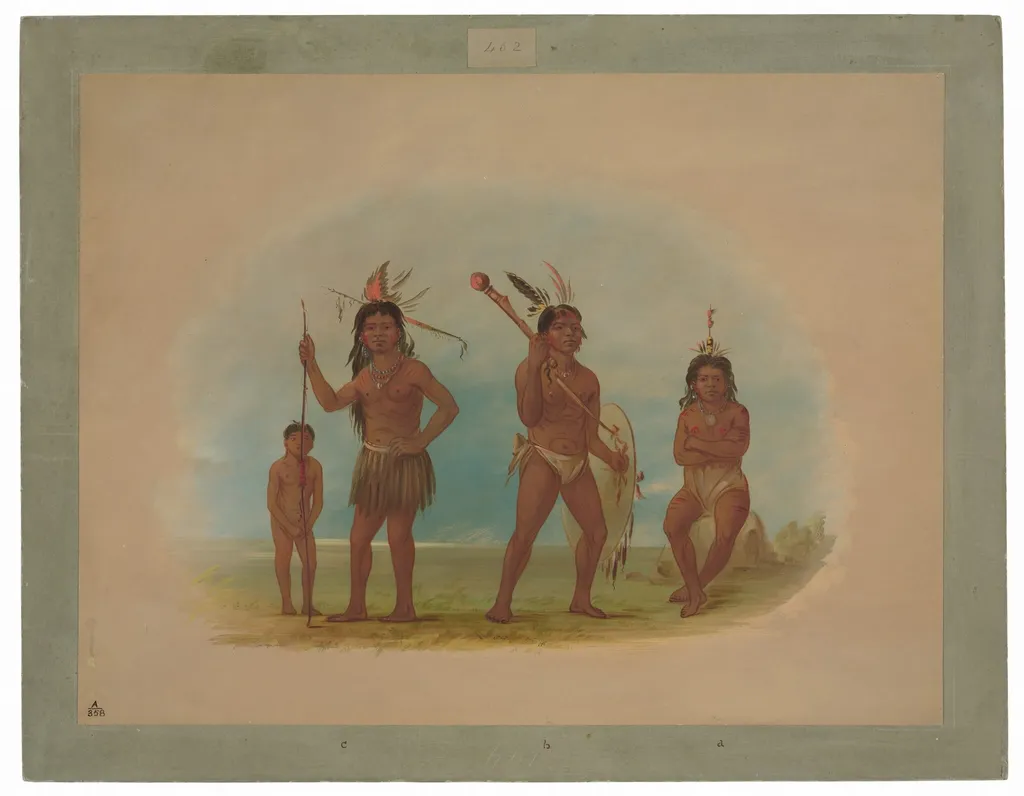
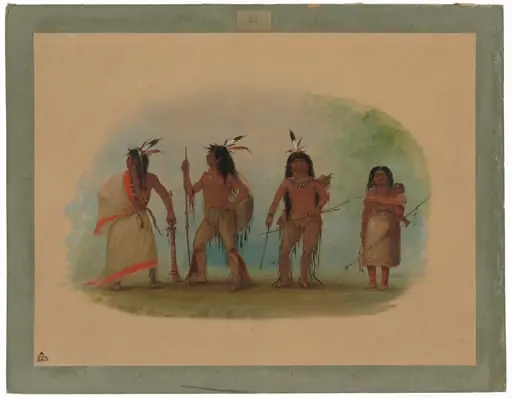
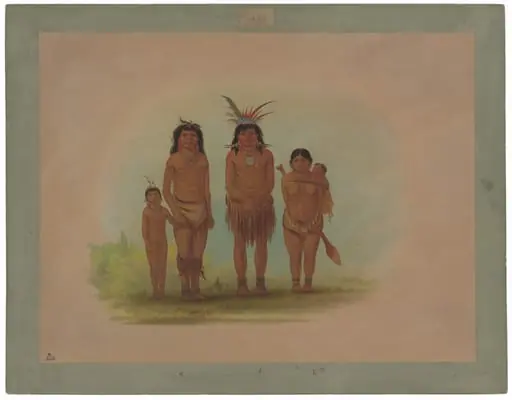
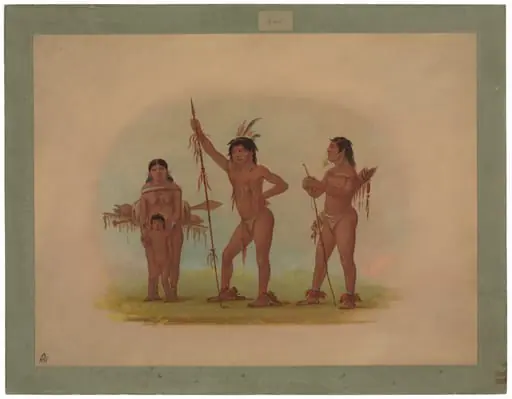
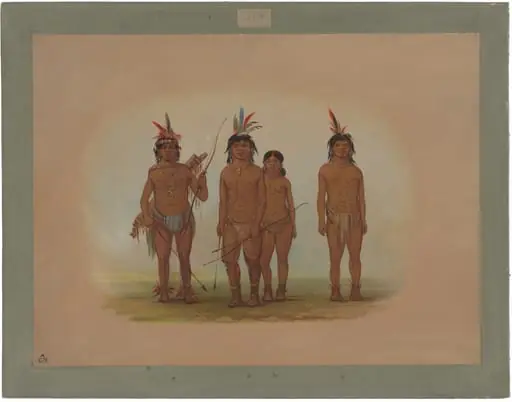
Four Arowak Indians is an oil painting by the American Folk Art artist George Catlin. It dates from 1862 and is held in the collection of the National Gallery of Art. Created in 1862, this oil painting on card affixed to paperboard presents a small group of Arowak people.
About this work
Subject & Meaning
Four Arowak Indians depicts members of the Arawak people, an Indigenous group native to the Caribbean and parts of South America.
Four Arowak Indians depicts members of the Arawak people, an Indigenous group native to the Caribbean and parts of South America. George Catlin, known for his depictions of Indigenous peoples, portrayed these figures to document their appearance and cultural presence during a period of increasing colonial contact. The work reflects nineteenth-century artistic efforts to represent Indigenous peoples, often framed within colonial narratives of documentation, and aligns with Catlin's broader project of ethnographic portraiture that blended likeness with anthropological interest.
Technique & Style
Executed in oil on card mounted on paperboard, the work measures 46.7 by 62 cm. The surface shows the smooth handling typical of oil on a rigid support, with fine brushwork defining the figures and their attire. Stylistically the composition emphasizes flat planes of color and linear contours, consistent with the artist's approach to portraiture of Indigenous subjects. The painting is held in the National Gallery of Art, Washington, D.C., as part of the permanent collection.
History & Provenance
George Catlin painted Four Arowak Indians in 1862 as an oil on card mounted on paperboard. The work descended through Catlin's daughters and was sold in 1912 by Elizabeth Wing Catlin to the American Museum of Natural History. In 1959 Kennedy Galleries, New York, sold it to Paul Mellon of Upperville, Virginia, who gifted it to the National Gallery of Art in 1965.
It was exhibited in 1965 in "American Paintings from the Fifteenth to the Nineteenth Century" at the National Gallery of Art.
Overview
Created in 1862, this oil painting on card affixed to paperboard presents a small group of Arowak people. The work belongs to the American folk art tradition and reflects the artist’s interest in recording Indigenous subjects during the mid‑nineteenth century.
Context
The Arowak, a tribe historically located along the Gulf Coast, were among the many Indigenous groups that Catlin recorded in his extensive visual survey. The painting reflects contemporary ethnographic interests and the desire to preserve visual records of cultures perceived as vanishing.
Own this work as a print
Artist & collection

Artist
George Catlin ( KAT-lin; July 26, 1796 – December 23, 1872) was an American lawyer, painter, author, and traveler, who specialized in portraits of Native Americans in the American frontier.

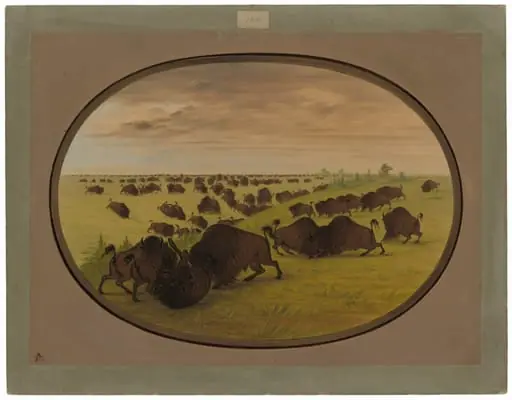 Bulls Fighting
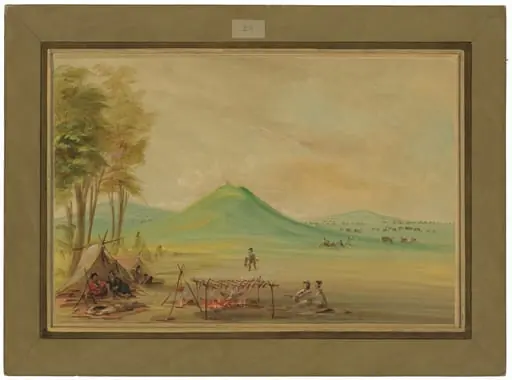 Expedition Encamped on a Texas Prairie. April 1686
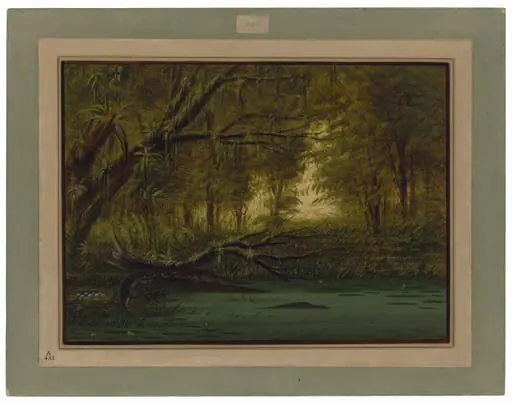 An Alligator's Nest
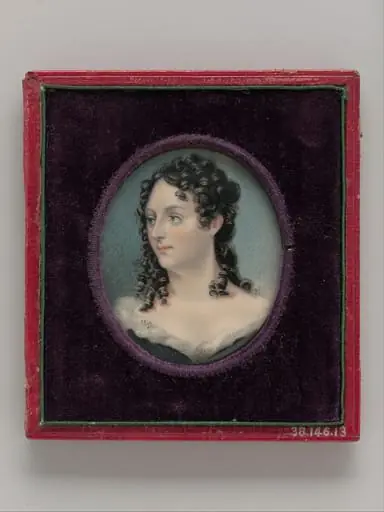 Mrs. George Catlin (Clara Bartlet Gregory)
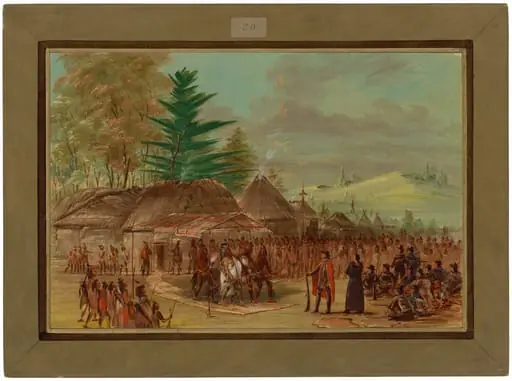 Chief of the Taensa Indians Receiving La Salle. March 20, 1682
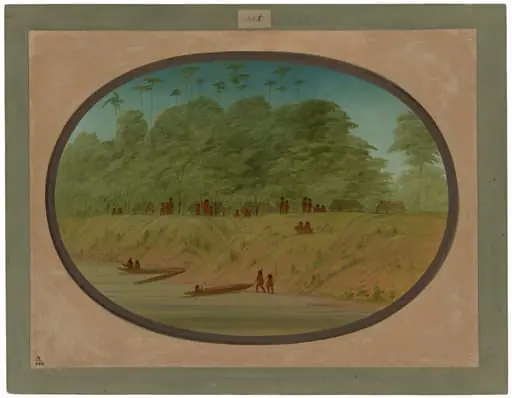 A Small Village - Payaguas Indians
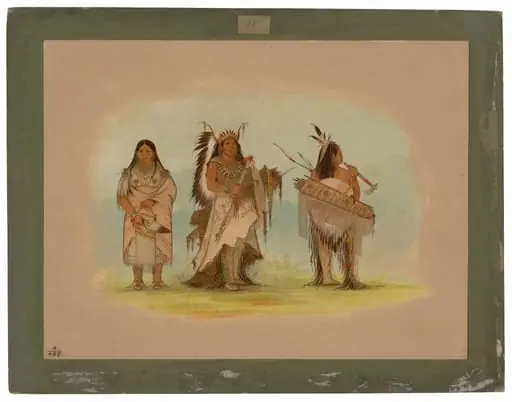 Omaha Chief, His Wife, and a Warrior
 Father Hennepin Leaving the Mississippi to Join La Salle. May 8, 1680