Artwork
The Tomb of the Horatii and the Curatii at Albano
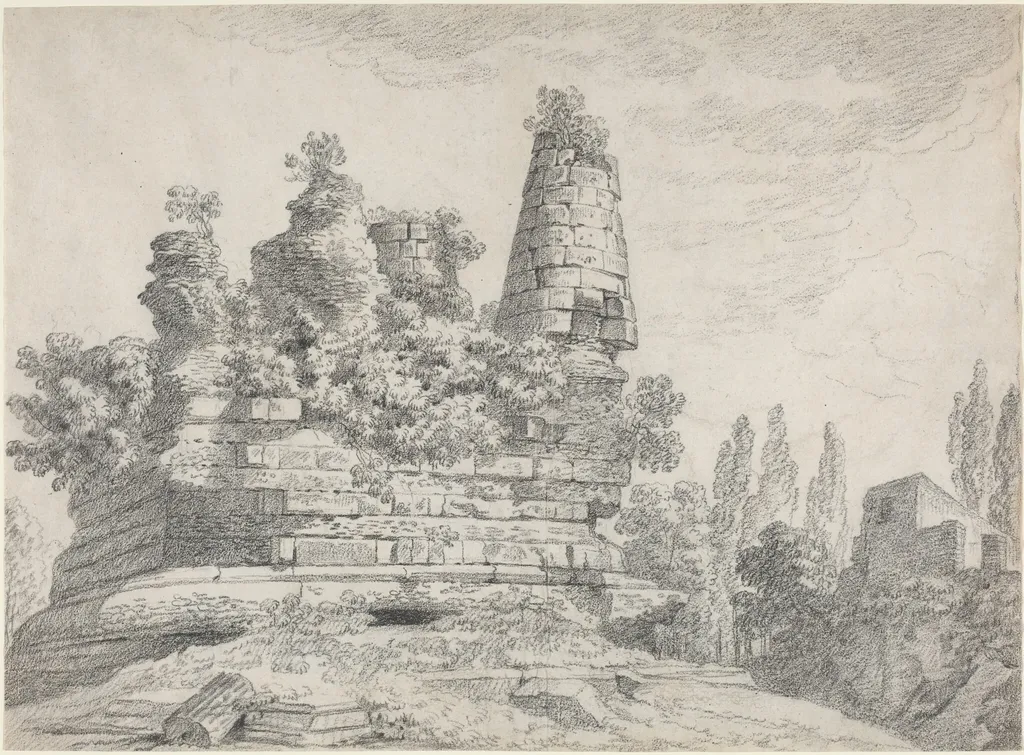
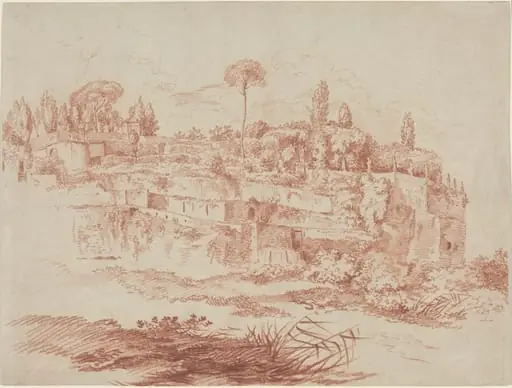
The Tomb of the Horatii and the Curatii at Albano is a chalk drawing by the Romanticist artist Louis Chaix. It dates from 1775 and is held in the collection of the National Gallery of Art.
About this work
Overview
Louis Chaix’s drawing, dated around 1775, presents a group of three imposing stone tombs situated in a pastoral setting. Rendered in black chalk on wove paper, the composition captures the monuments amid uneven terrain, scattered rocks, and surrounding vegetation. The work functions as a preparatory study, emphasizing the architectural forms and their integration with the natural landscape.
Subject & Meaning
The scene depicts the alleged burial sites of the Roman families Horatii and Curatii, traditionally linked to the legendary conflict recounted by Livy. By situating the tombs in a tranquil, verdant environment, Chaïx juxtaposes the martial narrative of the ancient tale with a serene, timeless landscape, inviting contemplation of memory and monumentality.
Technique & Style
Executed solely with black chalk, the drawing relies on precise hatching and cross‑hatching to model stone surfaces and foliage. Chaïx employs chiaroscuro, using stark contrasts of light and shadow to convey volume and texture. The monochrome medium, typical of academic sketches of the period, allows the artist to focus on structural accuracy before any color work.
History & Provenance
Created in the late eighteenth century, the drawing reflects the neoclassical fascination with Roman antiquity that prevailed in French artistic circles. While the work’s early ownership records are sparse, it has been attributed to Chaïx based on stylistic analysis and the dating aligns with his known activity in the 1770s.
Context
During the 1770s, French artists frequently produced studies of classical subjects to support larger compositions or decorative projects. Chaïx’s interest in Roman history mirrors the broader Enlightenment trend of revisiting antiquity for moral and aesthetic inspiration, situating this sketch within the academic training practices of the era.
Own this work as a print
Artist & collection


- River at the Foot of a High Rock
 Landscape with a Cottage and a Large Tree
 River at the Foot of a High Rock
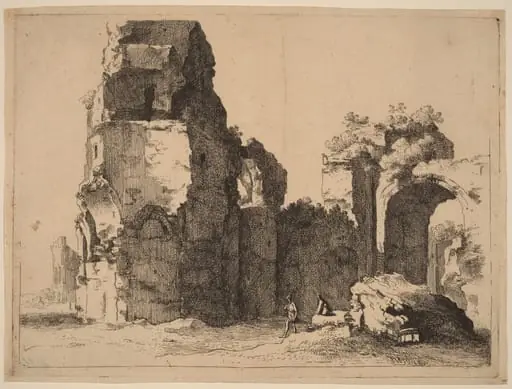 Ruins
Ruins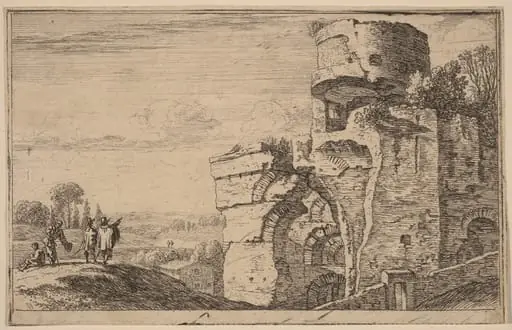 Ruins on the Palatine Hill
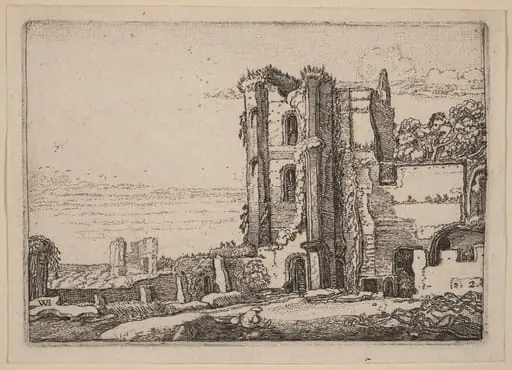 Ruined Tower Right of Center
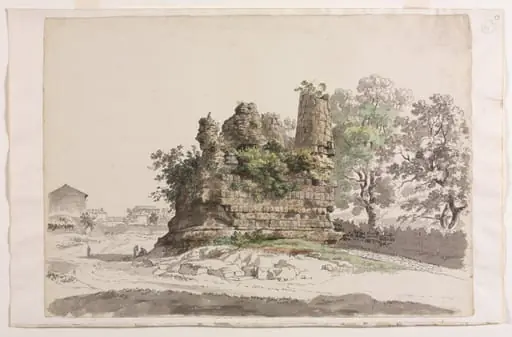 The So-Called Sepulcher of the Curiatii Brothers at Albano, with the Church of the Madonna della Stella in the distance at left
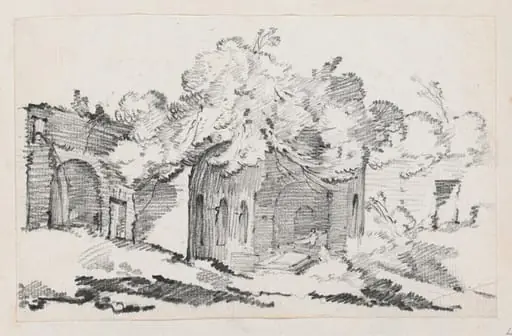 The Grotto of the Nymph Egeria
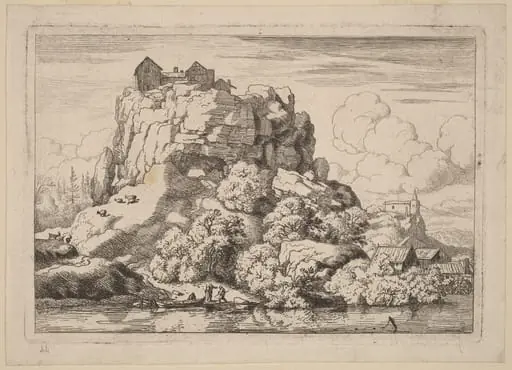 River at the Foot of a High Rock
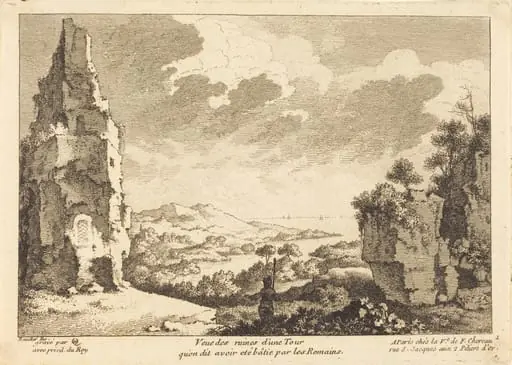 Veue des ruines d'une Tour qu'on dit avoir ete batie par les Romains
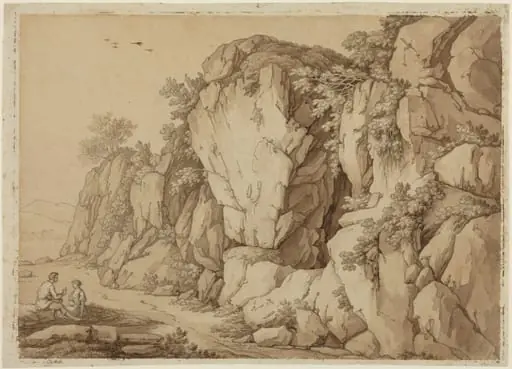 A Young Couple Seated near a Massive Rock Formation
 Gardens of the Villa Mattei