Artwork
Charles H. Sisson
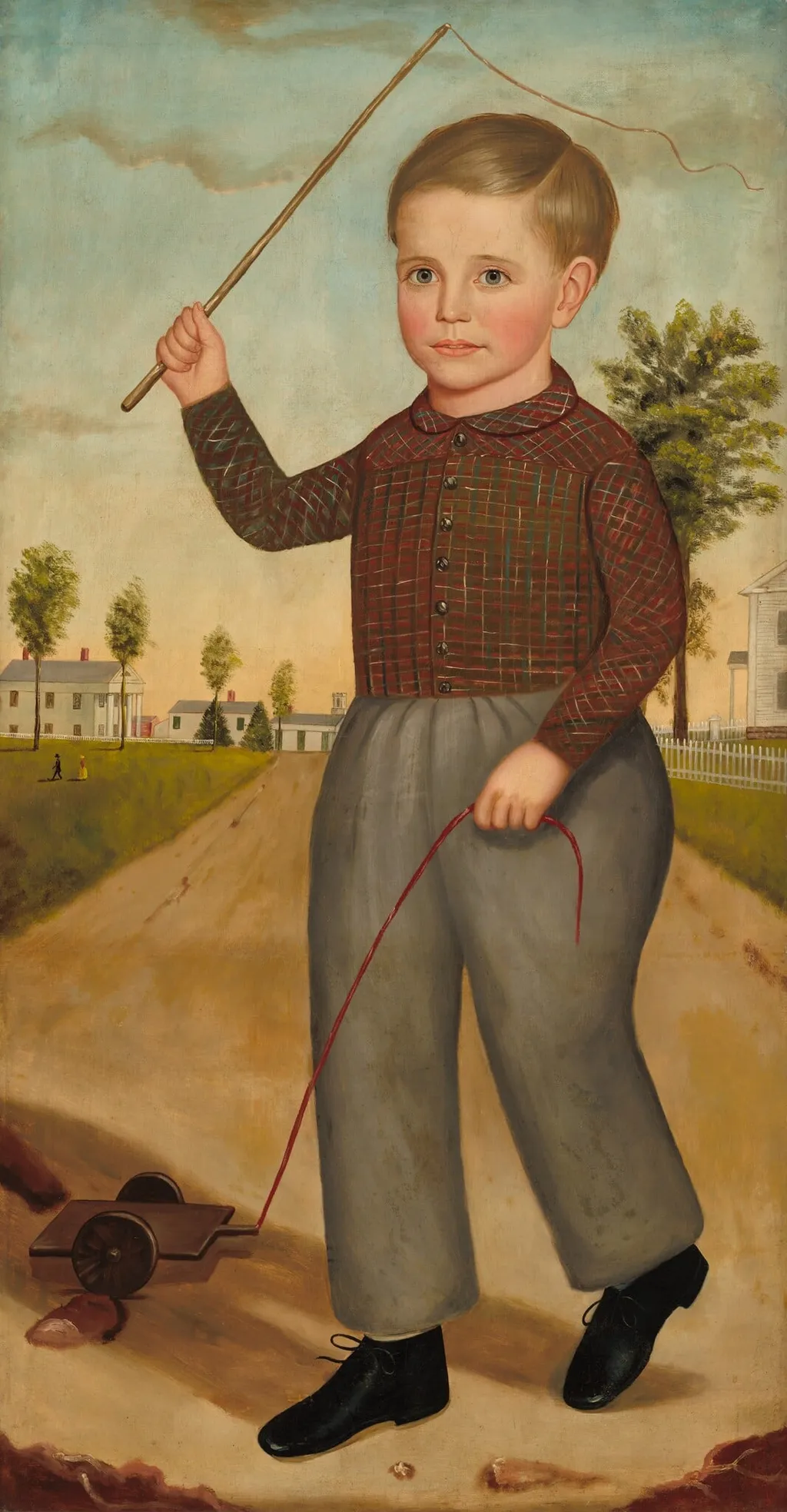
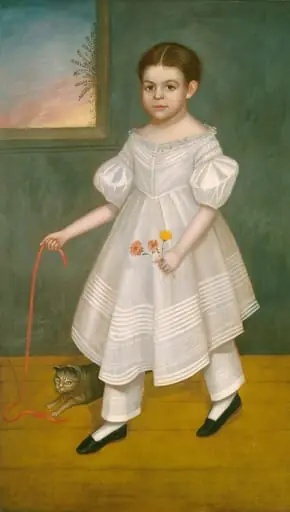
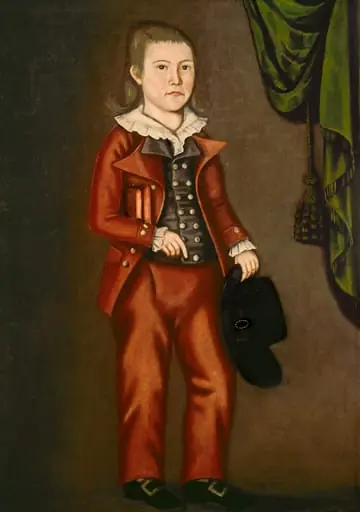
Charles H. Sisson is an oil painting by the American Folk Art artist Joseph Goodhue Chandler. It dates from 1850 and is held in the collection of the National Gallery of Art.
- Inscription
- Inscribed:on reverse (no longer visible; photo in object file [1953.5.5] in NGA curatorial records): Painted for Charles H. Sisson who died Dec. 8, 1850 aged 3 years & 10 mos. / By J. G . Chandler
About this work
Technique & Style
The medium consists of oil paint applied to the fabric, which remains the primary material of the piece as recorded in museum collections.
Charles H. Sisson is an oil painting executed on a canvas support by Joseph Goodhue Chandler in 1850. The work adheres to the formal conventions of the mid-nineteenth-century portrait genre, depicting the subject in a traditional manner. Physically, the canvas measures 122.2 cm in height and 63.7 cm in width.
The medium consists of oil paint applied to the fabric, which remains the primary material of the piece as recorded in museum collections.
History & Provenance
The portrait of Charles H. Sisson was painted in 1850 by Joseph Goodhue Chandler using oil on canvas; the work measures 122.2 × 63.7 cm. Its provenance is documented as originating in Connecticut; in 1947 the painting was acquired by Edgar William and Bernice Chrysler Garbisch, who later gifted it to the National Gallery of Art in Washington, D.C., in 1953.
Context
The work is an 1850 oil on canvas portrait by Joseph Goodhue Chandler, recorded as a Connecticut-origin piece. Its dimensions (approximately 122 × 64 cm) and material are documented in the National Gallery of Art's catalogue. The painting entered the National Gallery of Art in 1953 through the gift of Edgar William and Bernice Chrysler Garbisch, illustrating early mid-century collecting of American portraiture.
Chandler's output, concentrated in the portrait genre, reflects the period's emphasis on documenting the region's emerging elite. As such, the canvas serves as a representative example of mid-19th-century American portraiture within the broader narrative of United States art.
Legacy
Charles H. Sisson entered the National Gallery of Art collection in 1953 through the gift of Edgar William and Bernice Chrysler Garbisch. Since accession, the work has been cited in scholarly surveys of 19th-century American portraiture, reinforcing Joseph Goodhue Chandler's reputation as a leading portraitist of the period. Its presence in the Gallery's permanent display has allowed continued study of Chandler's technique and compositional sensibility, contributing to the broader assessment of mid-century portrait painting in the United States.
Overview
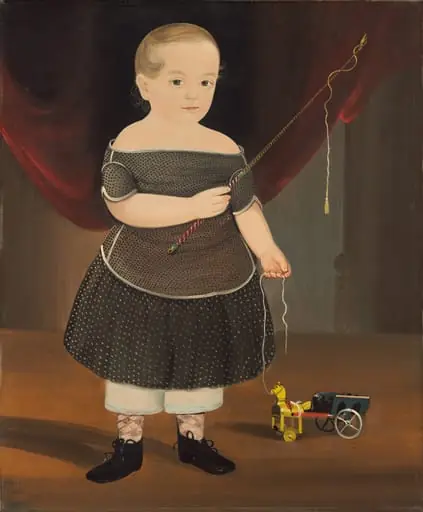
Joseph Goodhue Chandler's 1850 oil on canvas, Charles H. Sisson, presents a portrait typical of American folk art. The painting depicts a young boy, Charles H. Sisson, standing with a calm demeanor, holding a stick with a line. Chandler's work reflects the direct and often unembellished approach characteristic of this artistic tradition, focusing on the individual subject within a simplified setting.
Subject & Meaning
The portrait features Charles H. Sisson, a boy dressed in a dark plaid shirt, gray trousers, and black shoes, standing upright. He holds a long stick with a line attached, possibly for a kite or a toy, and gazes directly forward with a composed expression. Behind him, a simple landscape unfolds, including a dirt road, a white house, and scattered trees, with a small wooden cart resting on the ground.
Artist & collection
Artist
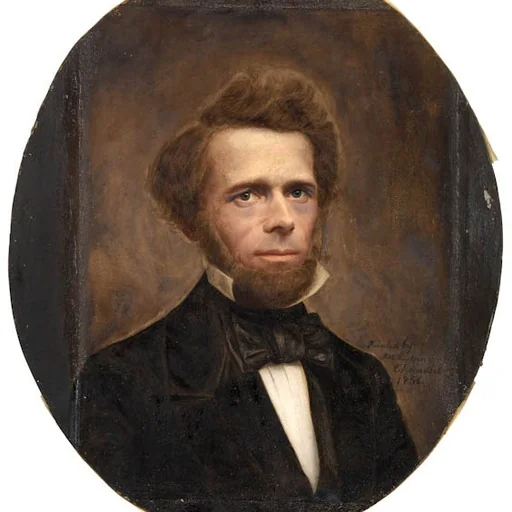
Joseph Goodhue Chandler (October 8, 1813 – October 27, 1884) was an American portrait painter, active in New England.