Artwork
The Hobby Horse
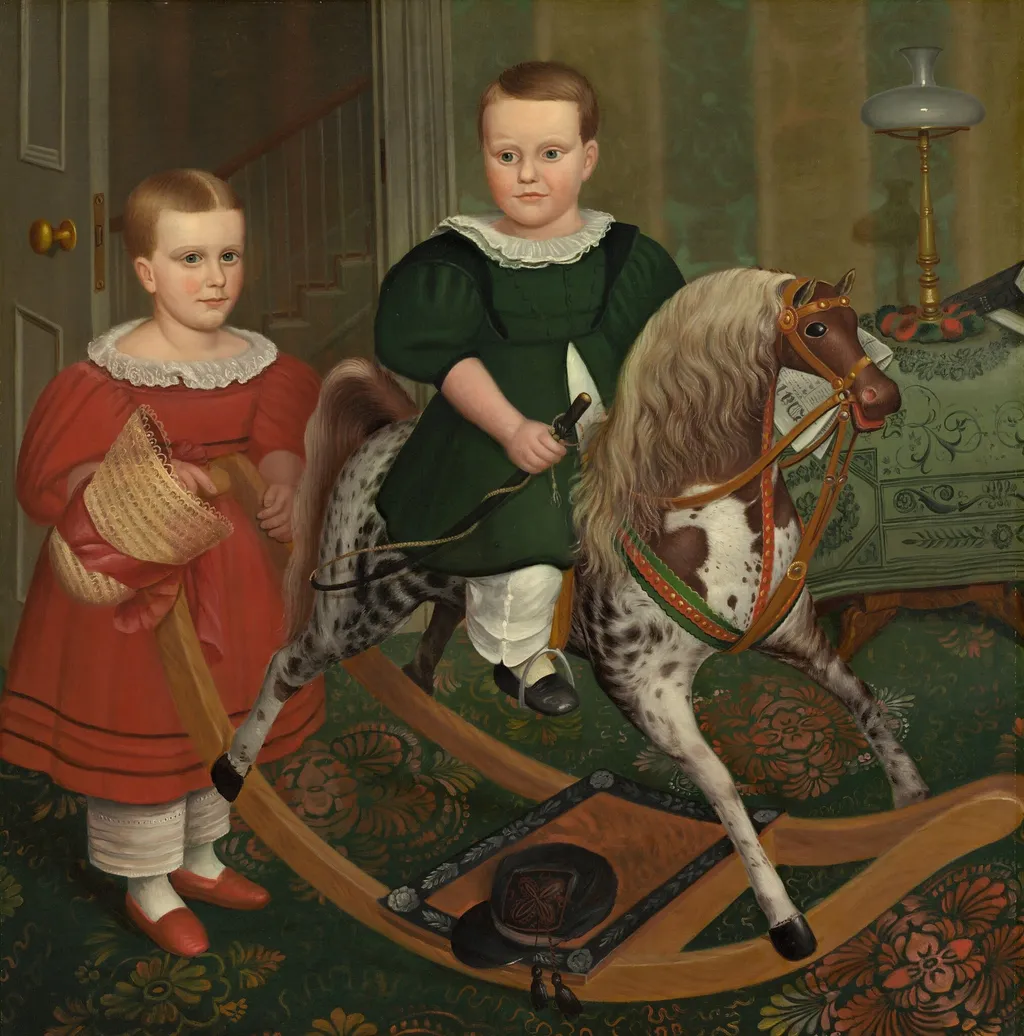
The Hobby Horse is an oil painting by the American Folk Art artist Robert Peckham. It dates from 1840 and is held in the collection of the National Gallery of Art.
- Inscription
- Inscribed:on newspaper: Dai[ly]
About this work
Technique & Style
As a piece classified within the painting tradition, it utilizes standard oil paints applied to a woven fabric support.
Created in 1842, The Hobby Horse is an oil painting executed on canvas. The work measures 103.5 cm in height and 101.6 cm in width. As a piece classified within the painting tradition, it utilizes standard oil paints applied to a woven fabric support.
The composition reflects the mid-19th-century American folk art style associated with its creator, Robert Peckham. The physical object has been preserved within the collection of the National Gallery of Art in Washington, D.C., having entered the institution as a gift in 1955.
History & Provenance
Robert Peckham created the oil painting The Hobby Horse in 1842. The work's early provenance traces to Massachusetts, where it was held by an unknown antique dealer in Billerica. It subsequently entered the inventory of Vose Galleries in Boston.
The gallery sold the painting in 1953 to collectors Edgar William and Bernice Chrysler Garbisch. Two years later, in 1955, the Garbishes gifted the artwork to the National Gallery of Art in Washington, D.C., where it remains in the collection.
The Hobby Horse is held in the collection of the National Gallery of Art in Washington, D.C. Its provenance traces back to Massachusetts, where it was recorded as originating from an unknown antique dealer in Billerica. The work subsequently passed through Vose Galleries in Boston before being sold in 1953 to Edgar William and Bernice Chrysler Garbisch. The couple gifted the painting to the National Gallery of Art in 1955.
No specific exhibition history or inventory accession numbers are provided in the available sources.
Context
Robert Peckham's 1842 oil painting The Hobby Horse entered the National Gallery of Art in 1955 via the Chrysler Garbisch gift, having previously been held by Vose Galleries in Boston and an unidentified Massachusetts dealer. The work, measuring 101.6 by 103.5 centimeters, is part of the museum's permanent collection and exemplifies mid-19th-century American genre painting, though its critical reception remains sparse in major scholarship.
Art historians view the painting as representative of Peckham's transitional style between folk realism and more academic treatments of domestic subjects, situating it within the broader context of 19th-century American narrative art that blended European compositional influences with distinctly American themes of rural life. Its provenance reflects mid-century American art market practices, moving from New England sources to a major national institution.
The painting's placement in the National Gallery of Art underscores its significance as a documented example of early American genre painting, contributing to the understanding of Peckham's role in shaping American visual culture during the antebellum period.
Overview
Robert Peckham’s oil on canvas, The Hobby Horse, dates to around 1840. The work portrays a domestic interior where two children are the focal point: a boy in a green costume perched on a rocking horse and a girl in a red dress standing nearby with a basket. The setting is rendered with modest furnishings, including a lamp and a table, that situate the scene in a mid‑nineteenth‑century household.
Subject & Meaning
The painting captures a moment of childhood play, emphasizing the innocence and leisure of youth. The juxtaposition of the boy’s active motion on the hobby horse with the girl’s still, attentive pose suggests a narrative of sibling interaction and the simple pleasures of domestic life during the era.
Own this work as a print
Artist & collection

Artist
Robert Peckham (10 September 1785, Petersham, Massachusetts – 29 June 1877, Westminster, Massachusetts) was an American painter in the folk art tradition; known primarily for his portraits of children.

- The Cayce Brothers of Virginia
 The Alling Children
 The Younger Generation
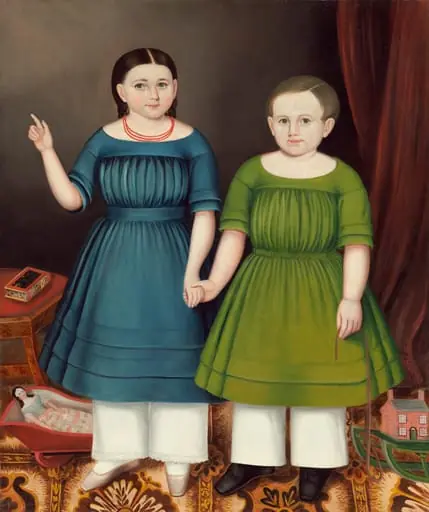 Mary and Francis Wilcox
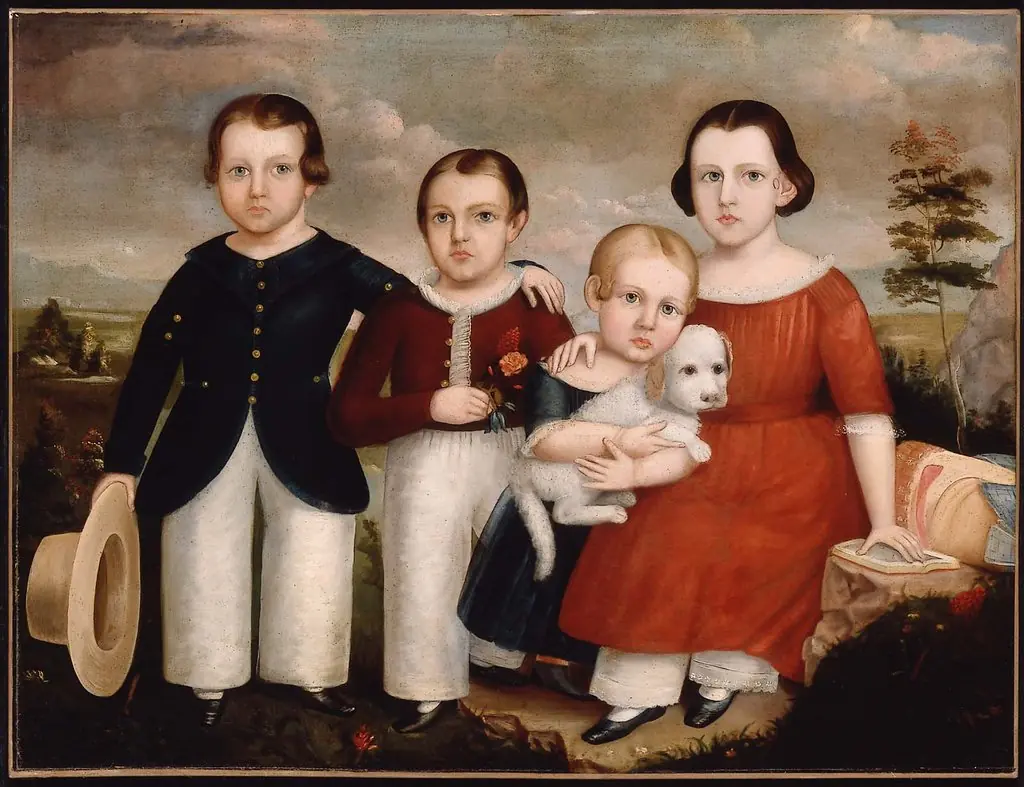 The Nellis Children of Sherburne, New York
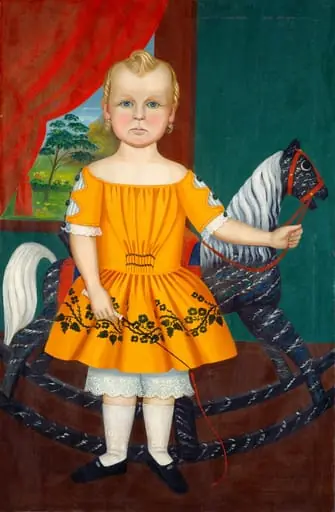 Child with Rocking Horse
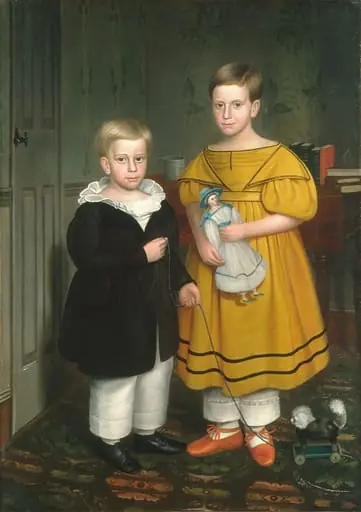 The Raymond Children
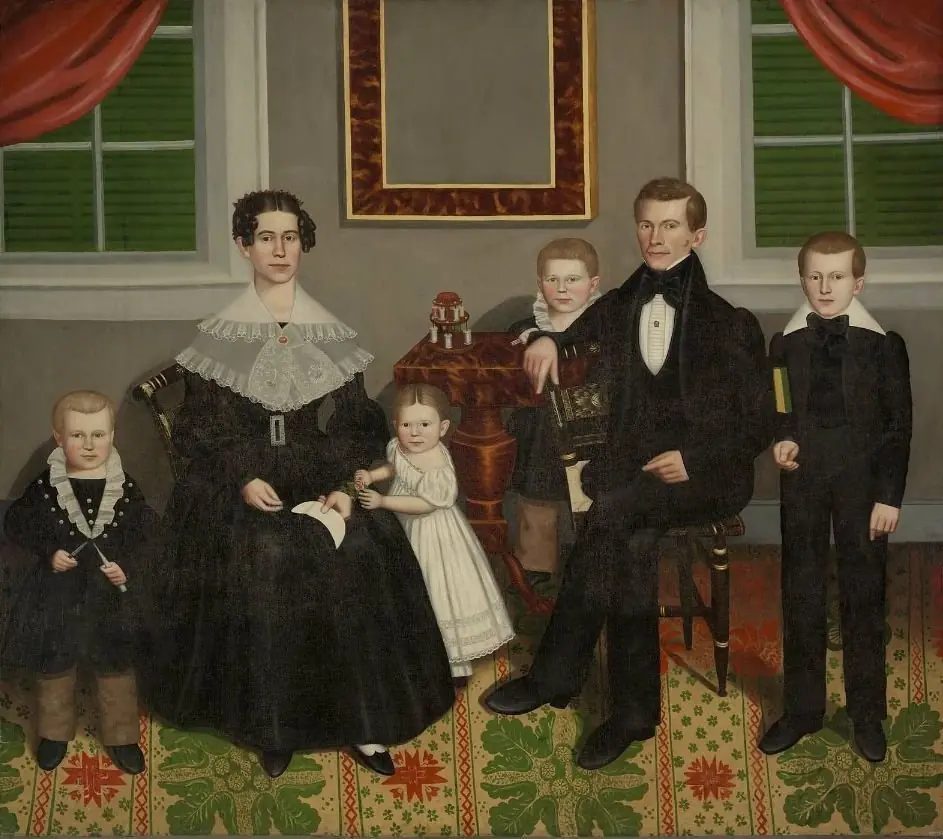 Joseph Moore and His Family
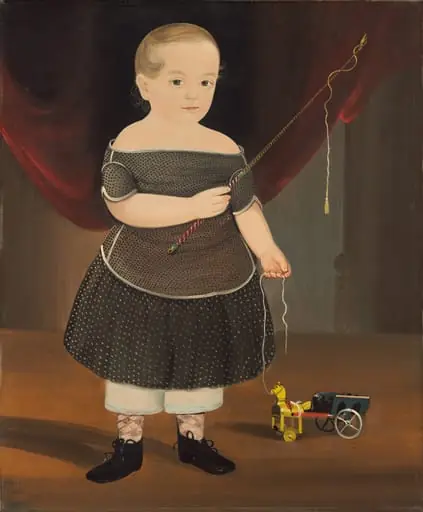 Boy with Toy Horse and Wagon
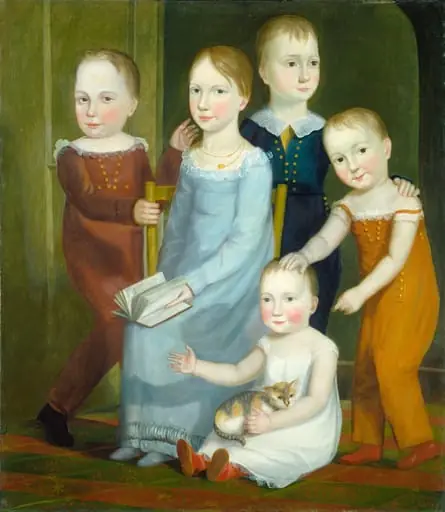 Five Children of the Budd Family
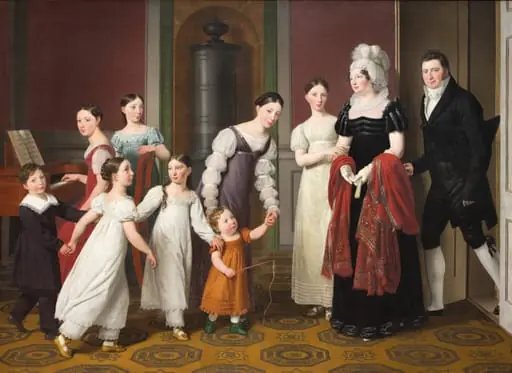 The Nathanson Family
 Boy with a Cat