Artwork
Orakei Korako on the Waikato
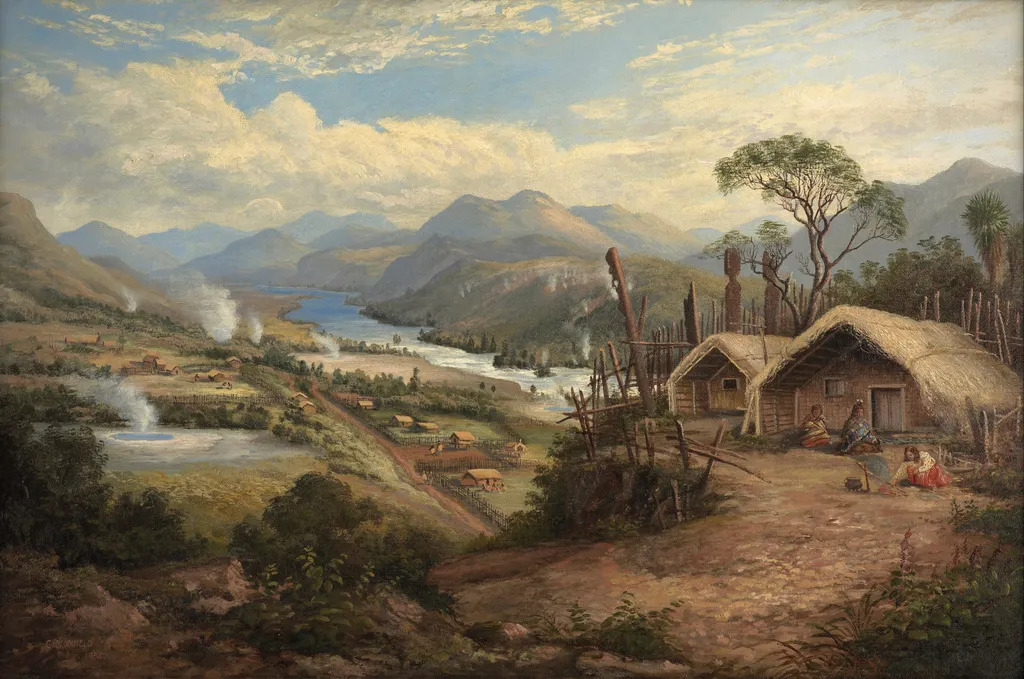
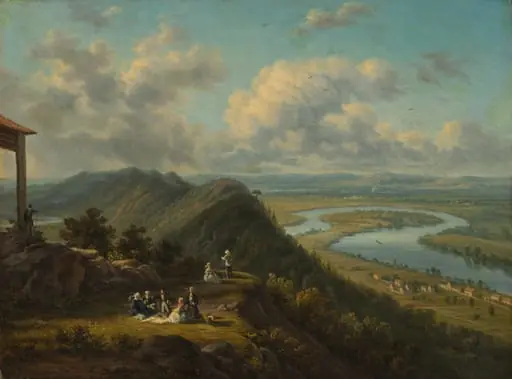
Orakei Korako on the Waikato is an oil painting by the Impressionist artist Charles Blomfield. It dates from 1893 and is held in the collection of the Museum of New Zealand Te Papa Tongarewa.
About this work
Overview
Charles Blomfield, an English-born painter who settled in New Zealand, completed Orakei Korako on the Waikato in 1893 using oil on canvas.
Charles Blomfield, an English-born painter who settled in New Zealand, completed Orakei Korako on the Waikato in 1893 using oil on canvas. The work captures a geothermal site in the Waikato region, a landscape he returned to repeatedly. Its quiet composition and atmospheric handling reflect his interest in the natural world as a subject worthy of sustained observation, rather than dramatic spectacle.
Subject & Meaning
The painting portrays a tranquil lakeside scene at Orakei Korako, where geothermal activity shapes the land. A small thatched building and a few figures suggest local presence without emphasizing narrative. The focus lies in the interplay of land, water, and steam, conveying a sense of quiet coexistence between people and the earth’s natural forces, rather than conquest or tourism.
Technique & Style
Blomfield employed loose, tonal brushwork characteristic of impressionist-influenced landscape painting. He layered thin washes of color to suggest mist and steam rising from thermal pools, while soft transitions between hills and sky create depth. The palette is muted, dominated by earth tones and pale blues, reinforcing the scene’s stillness and the subtle effects of natural light.
History & Provenance
Painted during Blomfield’s active period in New Zealand, the work entered the collection of the Museum of New Zealand Te Papa Tongarewa, where it remains today. It was likely acquired as part of broader efforts to document and preserve New Zealand’s distinctive landscapes in the late 19th century, reflecting growing national interest in local scenery.
Context
In the 1890s, New Zealand artists increasingly turned to indigenous landscapes as subjects, moving away from European models. Blomfield’s focus on geothermal sites aligned with scientific and cultural curiosity about the North Island’s unique geology. His work contributed to a visual record of places that were both spiritually significant to Māori and increasingly visited by European settlers.
Legacy
Blomfield’s paintings, including this one, helped establish a visual language for New Zealand’s natural features in the colonial era. While not widely known internationally, his depictions of Waikato’s thermal areas remain important within New Zealand’s art history for their quiet realism and sensitivity to place, offering a counterpoint to more romanticized landscapes of the time.
Own this work as a print
Artist & collection
Artist
Charles Blomfield (5 January 1848–15 March 1926) was an English-born artist who executed paintings of New Zealand landscapes, including the Pink and White Terraces, a notable natural feature that was later destroyed in the 1886 eruption of…

Museum
Museum of New Zealand Te Papa Tongarewa
Continue through works from the same source collection.
- Pioneer's Home, Eagle Cliff, White Mountains
 In the Housatonic Valley
 In the Housatonic Valley
 The Juniata, Evening
 The Backwoods of America
 Pastoral Landscape
 Autumn Morning on the Potomac
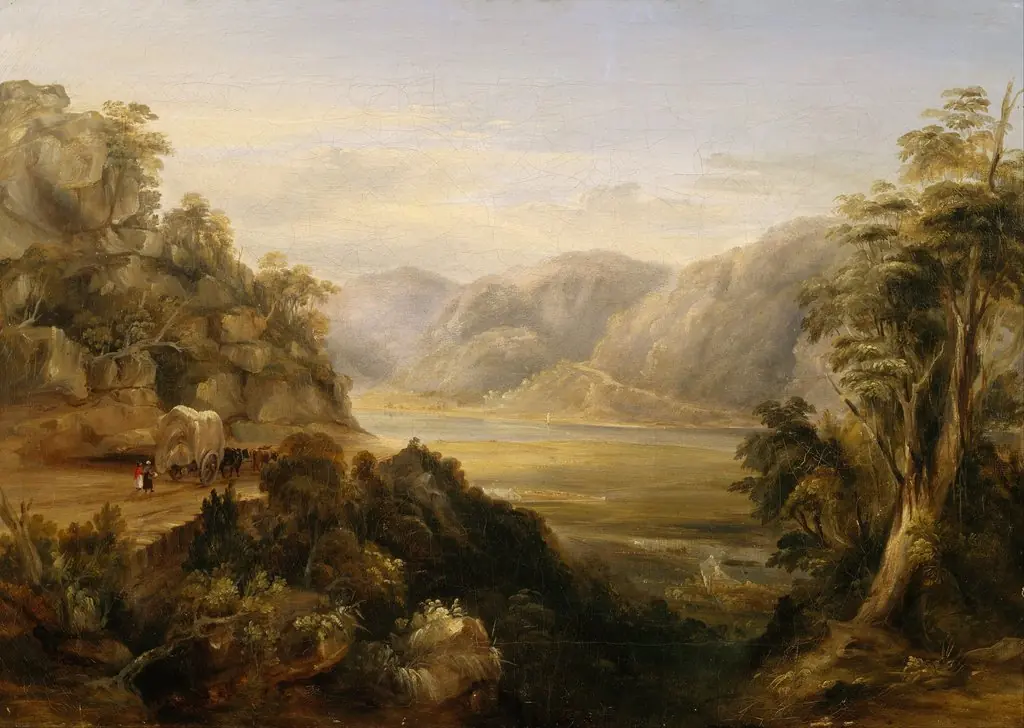 Wiseman's Ferry in 1838
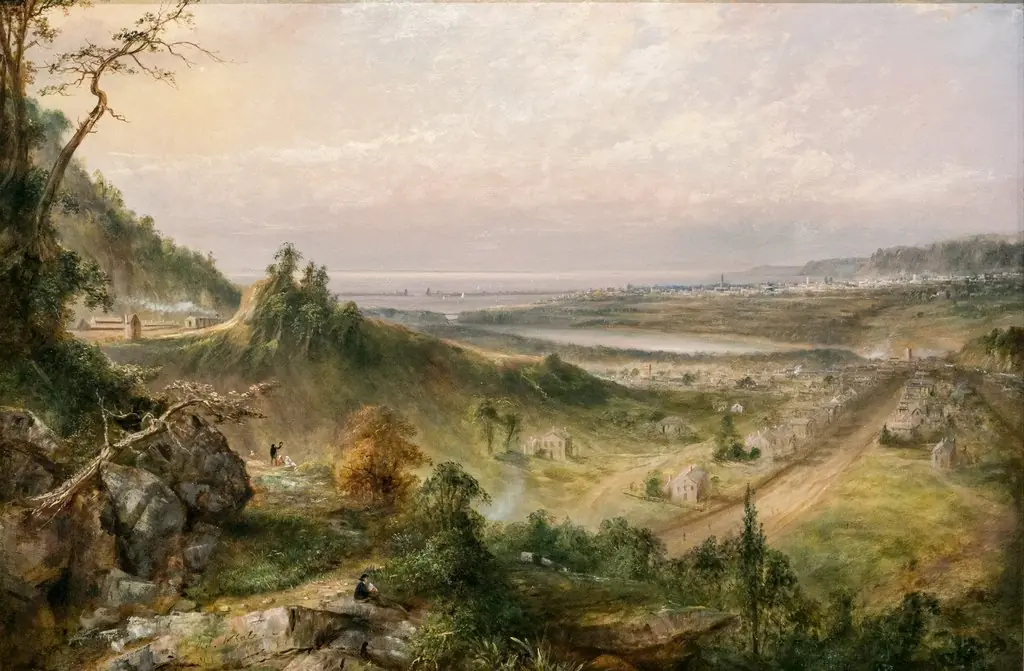 View of Hamilton and Lake Ontario from Dundas
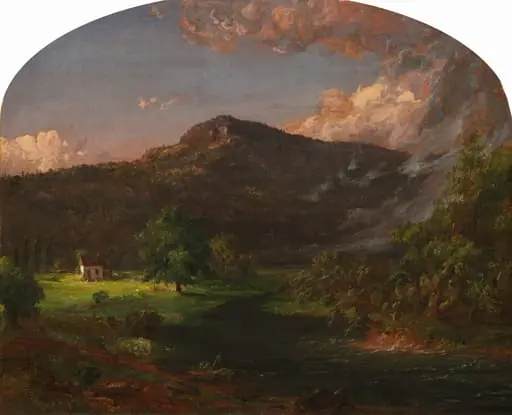 Tourn Mountain, Head Quarters of Washington, Rockland Co., New York
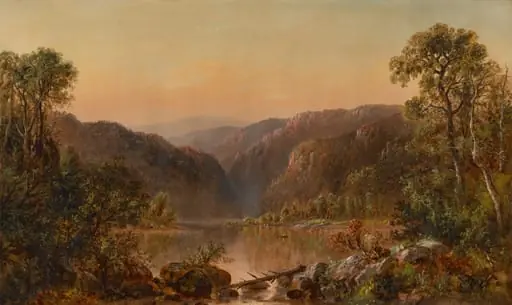 American Landscape
 The Oxbow Seen from Mount Holyoke