Artwork
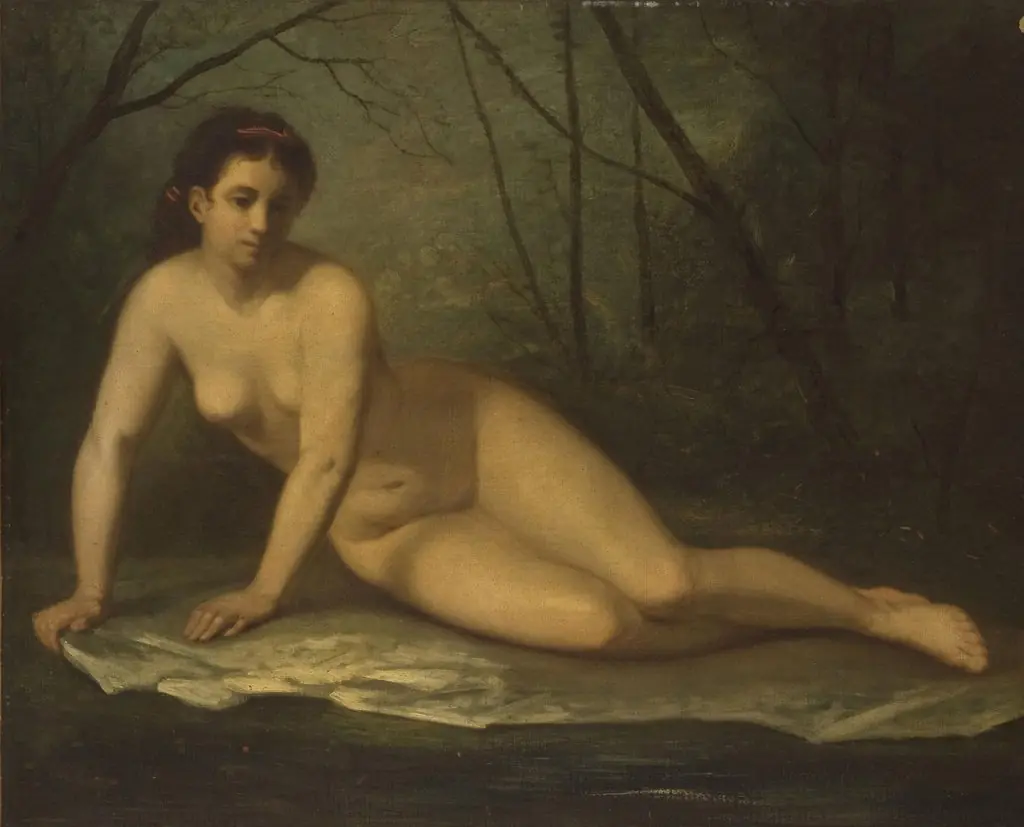
Female nude bathing
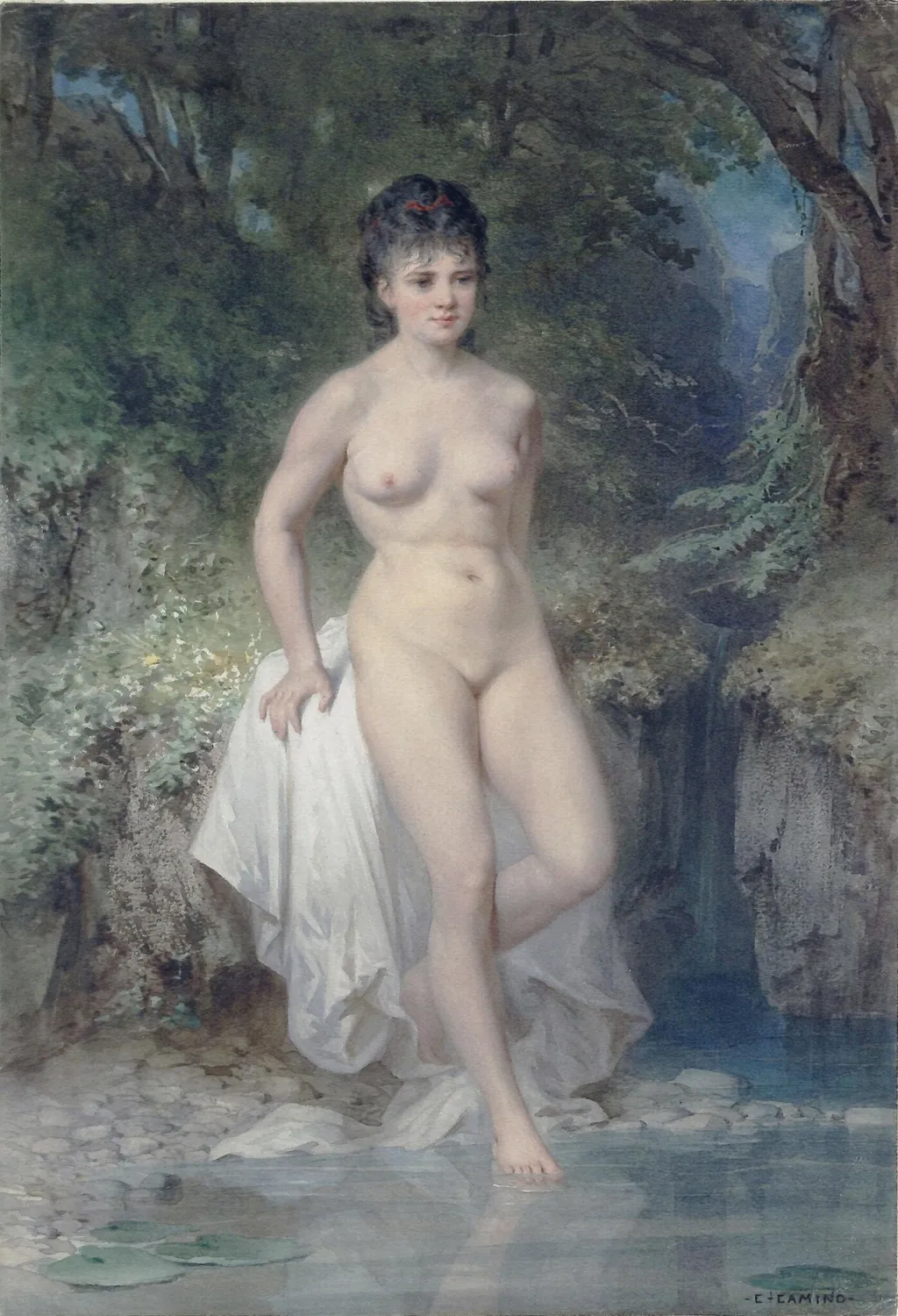
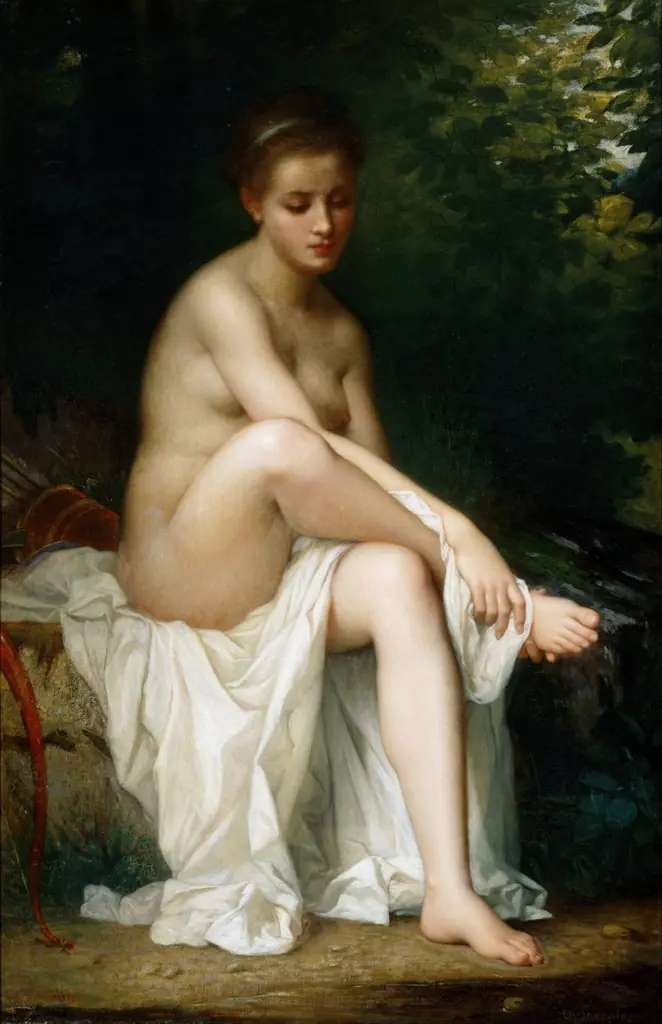
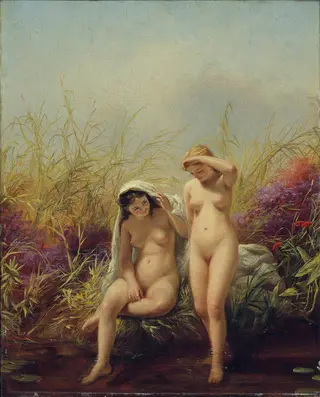
Female nude bathing is a watercolor work on paper by the Naturalist artist Charles Camino. It dates from 1850 and is held in the collection of the Victoria and Albert Museum.
About this work
Overview
This 1850 watercolour by Charles Camino depicts a solitary female figure in a natural setting, engaged in the act of bathing.
This 1850 watercolour by Charles Camino depicts a solitary female figure in a natural setting, engaged in the act of bathing. Executed in transparent watercolour, the work emphasizes delicate tonal shifts and subtle light effects. The artist’s signature is present on the surface, confirming authorship. The composition balances intimacy with restraint, avoiding overt theatricality in favor of quiet observation.
Subject & Meaning
The figure, partially submerged in water, holds a translucent cloth that suggests both modesty and vulnerability. Her pose is natural, unposed, evoking a private moment rather than an idealized mythological scene. The absence of narrative context invites contemplation of the human form in harmony with nature, reflecting 19th-century interests in personal, unadorned realism over classical allegory.
Technique & Style
Camino employed soft, blended washes to render the figure’s skin and the flowing cloth, creating a sense of luminosity and tactility. In contrast, the background features loose, textured brushwork, dark, irregular strokes suggest dense foliage and uneven terrain. The deliberate contrast between the figure’s smooth contours and the rough surroundings enhances the sense of isolation and focus on the body.
History & Provenance
The watercolour was created in 1850 and has remained in institutional hands since at least the late 19th century. It is held in the collection of the Victoria and Albert Museum, where it has been preserved as an example of mid-Victorian watercolour practice. Its continuous presence in public collections suggests consistent scholarly interest, though its early ownership remains undocumented.
Context
Produced during a period when watercolour was gaining recognition as a serious medium, Camino’s work aligns with British artists exploring intimate, observational subjects. While academic nudes were common in oil, watercolours like this offered a more personal, domestic mode of representation. The piece reflects broader cultural shifts toward naturalism and the quiet dignity of everyday moments.
Legacy
Though not widely reproduced, the work contributes to the understudied corpus of 19th-century British watercolours depicting the nude in non-mythological settings. Its preservation in a major museum underscores its value as a document of technique and aesthetic sensibility. It remains a quiet example of how artists used watercolour to explore form, light, and solitude without grandeur.
Own this work as a print
Artist & collection
Artist
Charles Camino painted quiet watercolor nudes in the third quarter of the 19th century.