Artwork
The Hillsides of Méry-sur-Oise, Opposite Auvers
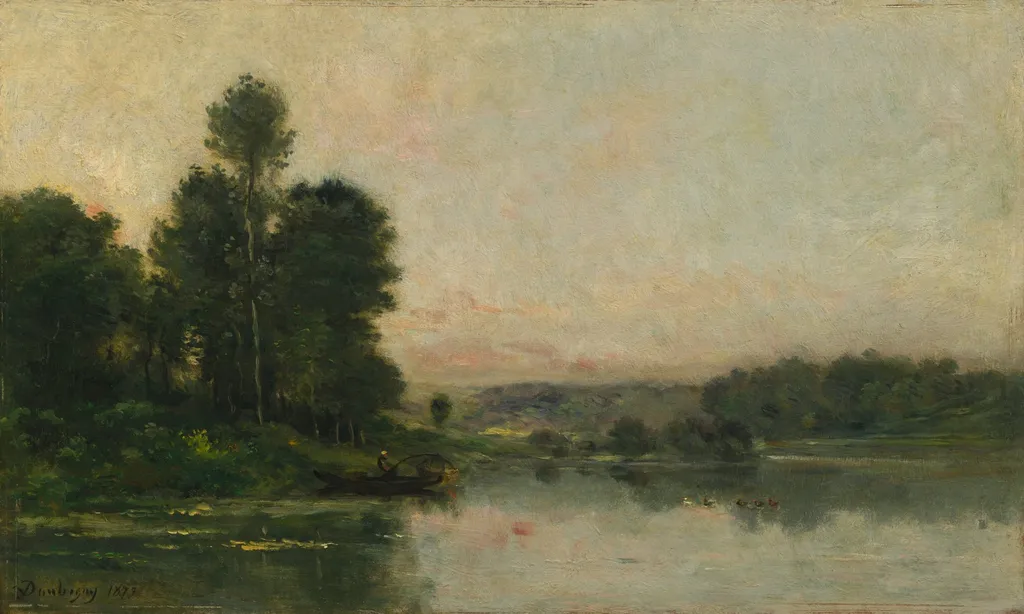
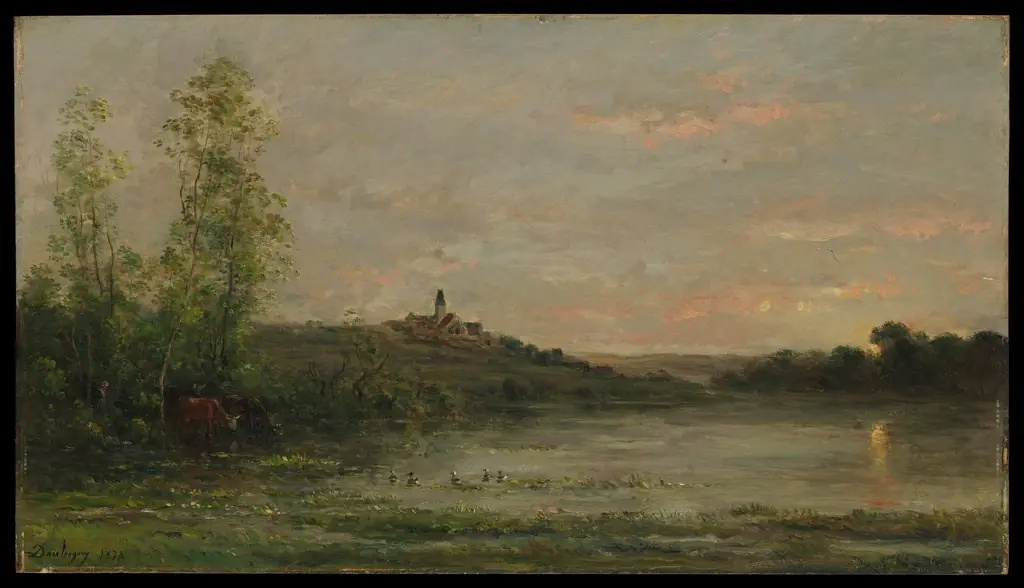
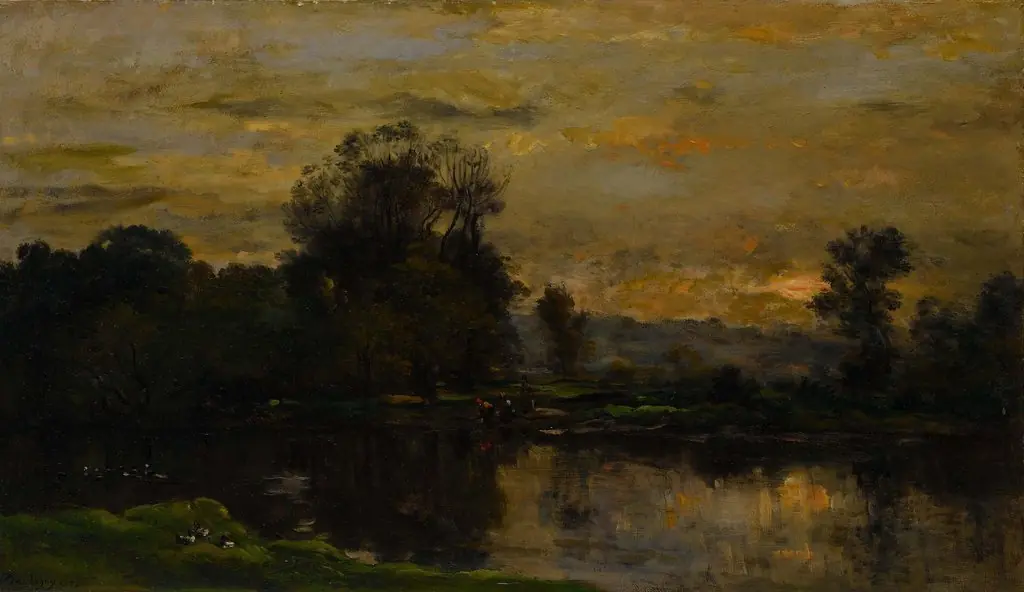
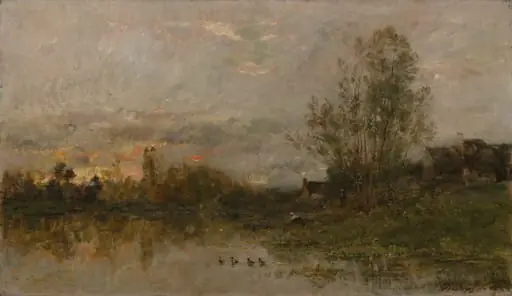
The Hillsides of Méry-sur-Oise, Opposite Auvers is an unspecified painting by the Impressionist artist Charles François Daubigny. It dates from 1873 and is held in the collection of the Cleveland Museum of Art. Created in 1873, this landscape by Charles‑François Daubigny captures a tranquil lakeside scene at dusk.
- Accession no.
- 1916.1048
- Credit line
- Gift of Mr. and Mrs. J. H. Wade
About this work
Overview
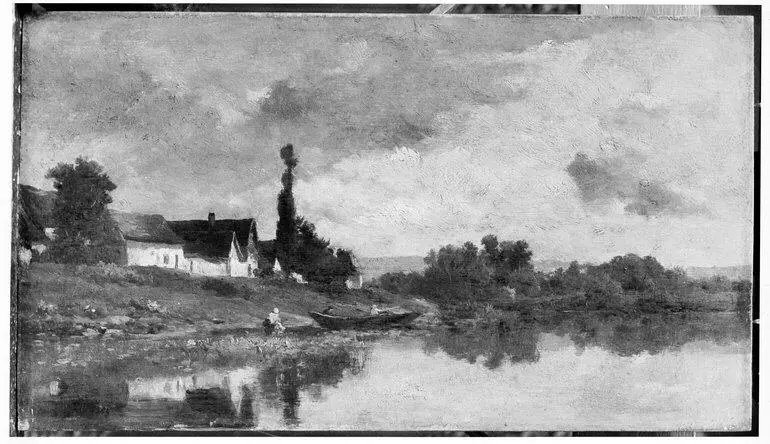
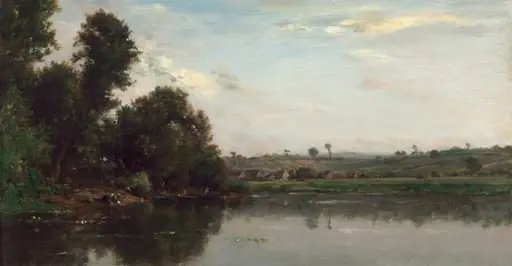
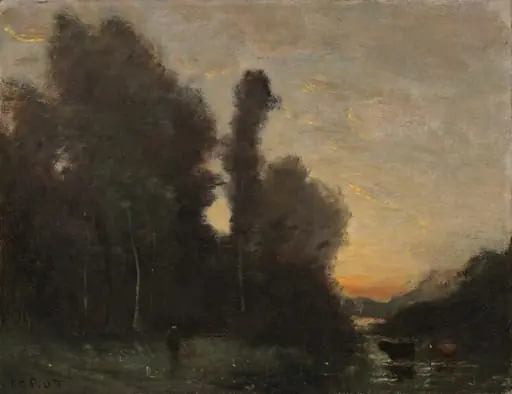
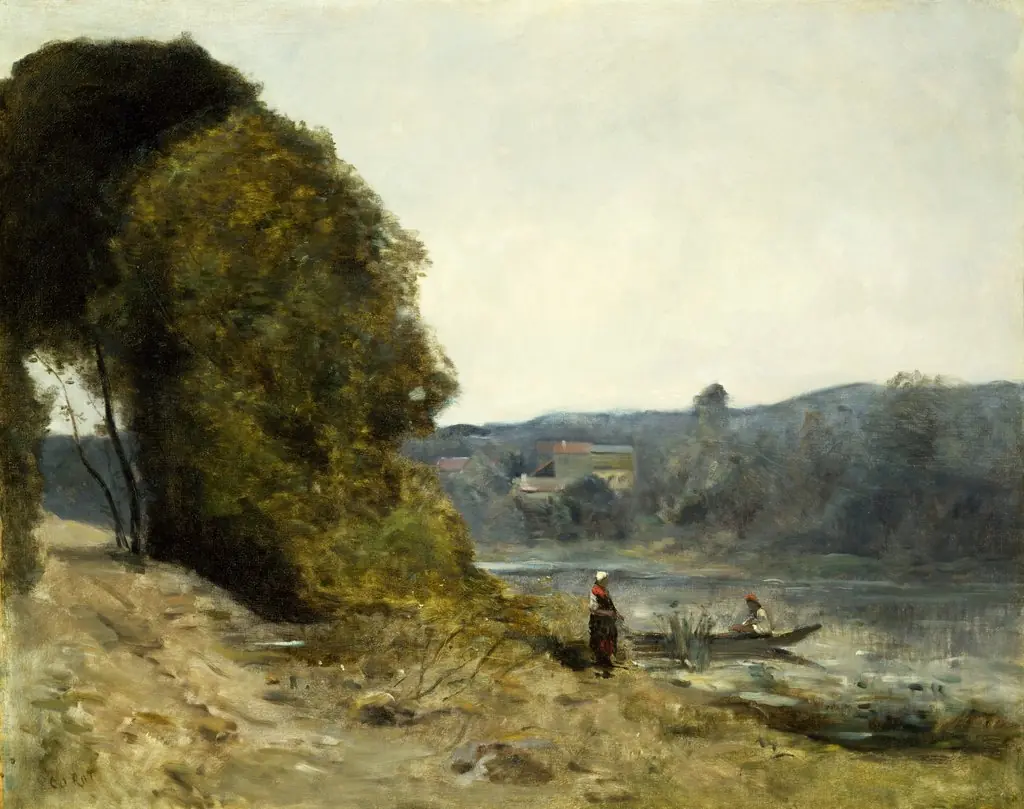
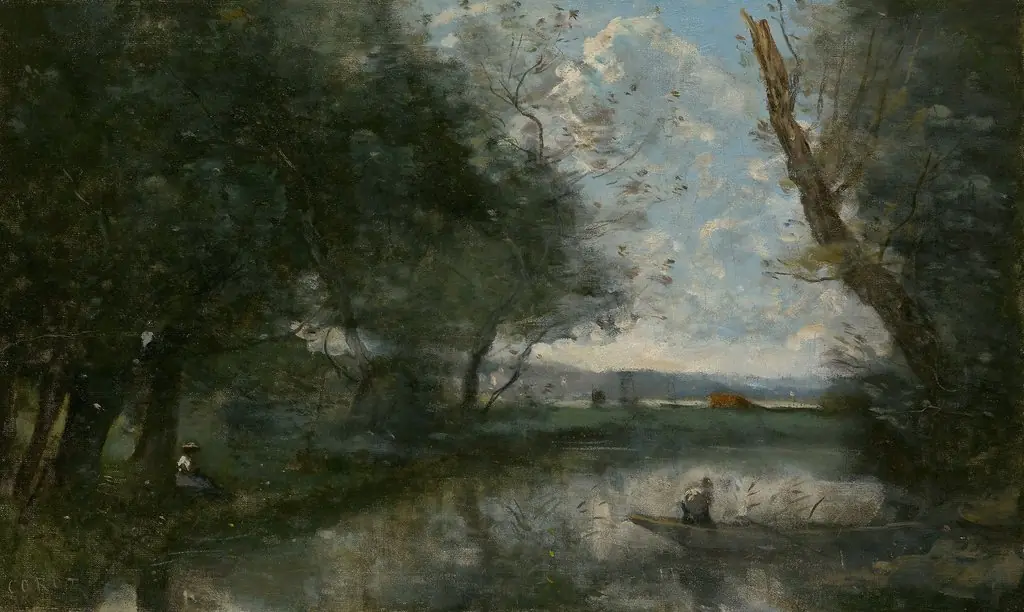
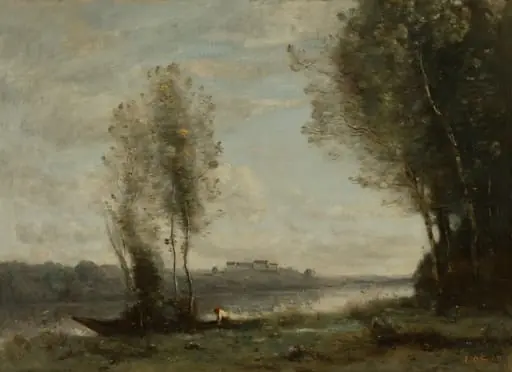
Created in 1873, this landscape by Charles‑François Daubigny captures a tranquil lakeside scene at dusk. The composition presents a reflective water surface tinged with pale pink and green hues, bordered by dark silhouettes of trees. A solitary rower in a small boat drifts in the distance, while ducks glide among reeds near the shore.
Subject & Meaning
The painting depicts a quiet rural setting, emphasizing the stillness of evening and the subtle interaction of light on water. The lone figure and the birds suggest a gentle human presence within nature, reinforcing Daubigny’s interest in portraying everyday moments without narrative drama, inviting contemplation of the landscape’s inherent serenity.
Technique & Style
Daubigny employs broad, loosely applied brushstrokes that blend colors into a soft, atmospheric effect, departing from the meticulous detailing of earlier academic works. This approach creates a slightly blurred, dream‑like surface, foreshadowing the looser handling of paint that would later become characteristic of Impressionist practice.
History & Provenance
The work belongs to the oeuvre of Daubigny, a leading figure of the Barbizon school whose outdoor painting methods helped shape early Impressionism. After changing hands through private collections, the canvas entered the Cleveland Museum of Art, where it remains part of the museum’s permanent holdings.
Artist & collection
Artist
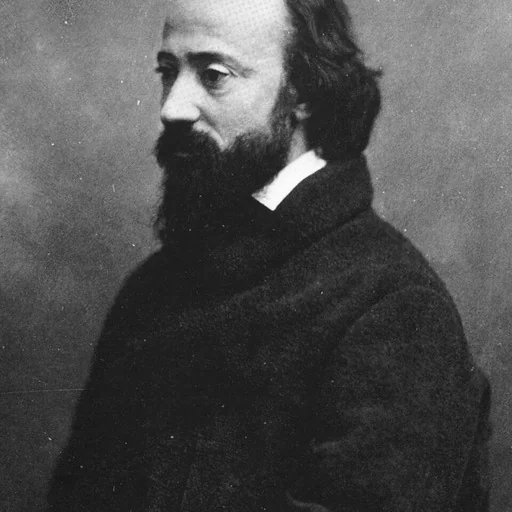
Charles-François Daubigny ( DOH-bin-yee, US: DOH-been-YEE, doh-BEEN-yee, French:; 15 February 1817 – 19 February 1878) was a French painter, one of the members of the Barbizon school, and is considered an important precursor of…