Artwork
The Apse of the Church of St. Martin-sur-Renelle
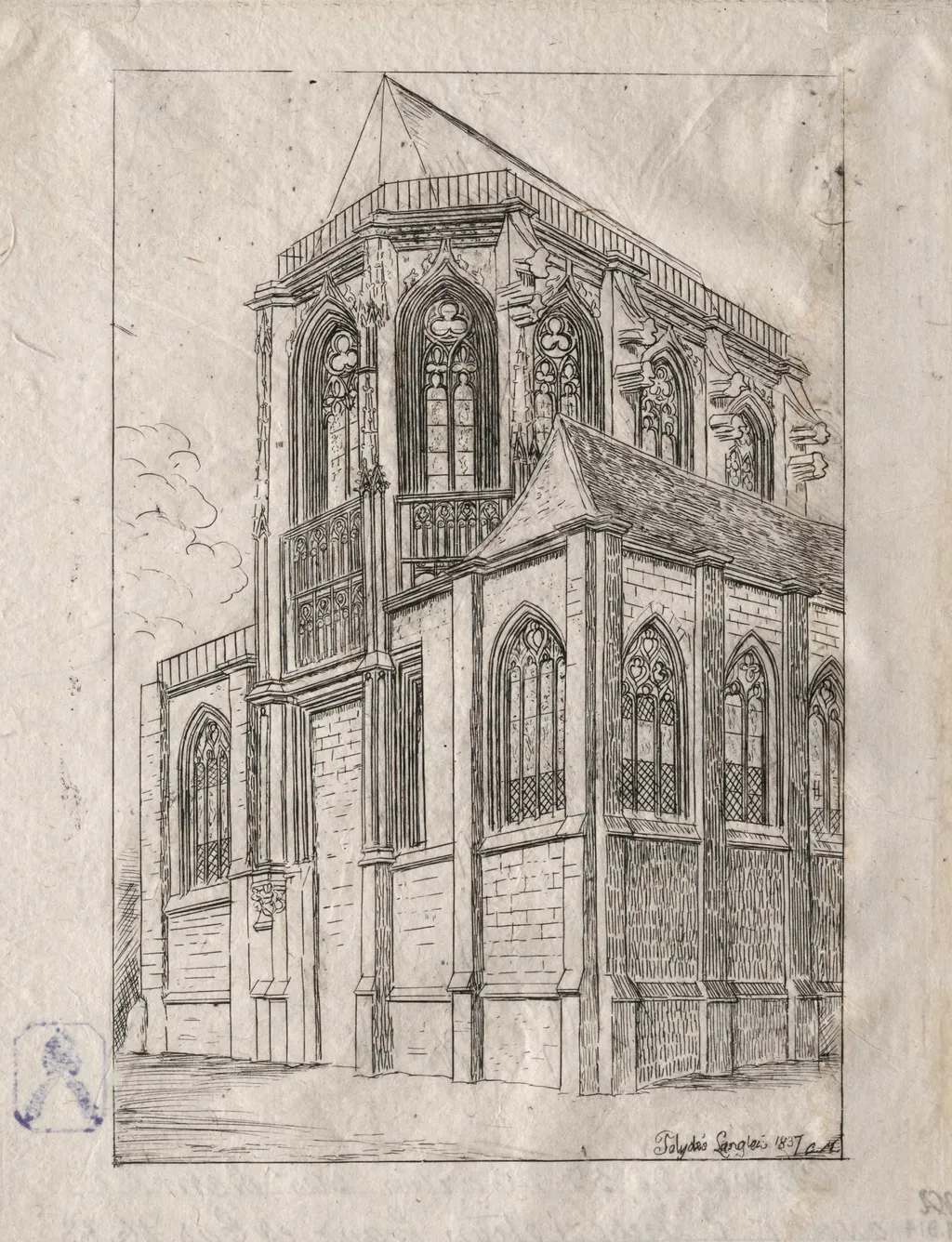
The Apse of the Church of St. Martin-sur-Renelle is a print by the Impressionist artist Charles Meryon. It dates from 1860 and is held in the collection of the Cleveland Museum of Art. Created in 1860, The Apse of the Church of St.
- Accession no.
- 1954.914
- Credit line
- The Milton Curtiss Rose Collection in memory of Evelyn Curtiss Rose
About this work
Overview
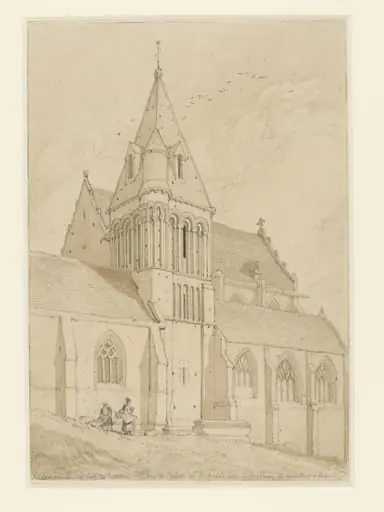
The print records the rear, vaulted portion of the medieval church, emphasizing its stonework, pointed arches and intricate window tracery.
Created in 1860, The Apse of the Church of St. Martin‑sur‑Renelle is an etching by French artist Charles Meryon. Known for his stark, Gothic‑inflected depictions of Parisian architecture, Meryon worked almost exclusively in monochrome after losing his ability to perceive color. The print records the rear, vaulted portion of the medieval church, emphasizing its stonework, pointed arches and intricate window tracery.
Subject & Meaning
The composition isolates the apse, the liturgical space that traditionally houses the altar, and presents it as a study in verticality and structural rhythm. By foregrounding the austere stone blocks and the lace‑like tracery of the windows, Meryon underscores the solemn, almost skeletal character of the building, reflecting his broader interest in the solemnity of urban monuments.
Technique & Style
Executed in a single plate etching, the work relies on fine line work and subtle hatching to convey depth and texture. Meryon’s hand‑drawn pencil under‑drawing, visible in the light strokes, guides the placement of shadows that suggest the play of light on rough masonry. The overall effect is a brisk, economical rendering that captures architectural detail without ornamental excess.
History & Provenance
Meryon produced the piece during a period marked by personal instability; his mental health deteriorated, leading to his confinement in an asylum where he died in 1868. The print entered the collection of the Cleveland Museum of Art, where it remains accessible to scholars and visitors as part of the museum’s holdings of 19th‑century French prints.
Context
The work belongs to a larger body of Meryon’s urban studies, which document the Gothic fabric of Paris and its environs at a time when the city was undergoing extensive modernization. His focus on ecclesiastical architecture contrasts with contemporaneous interest in industrial scenes, highlighting a nostalgic concern for medieval forms amid rapid change.
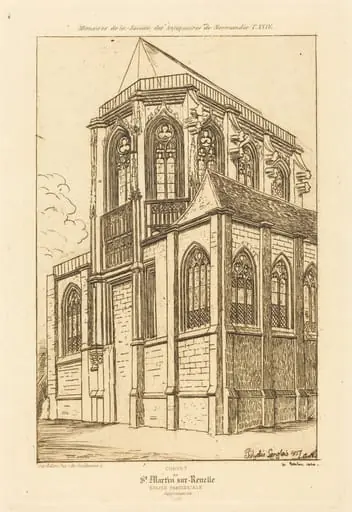
Own this work as a print
Artist & collection
Artist
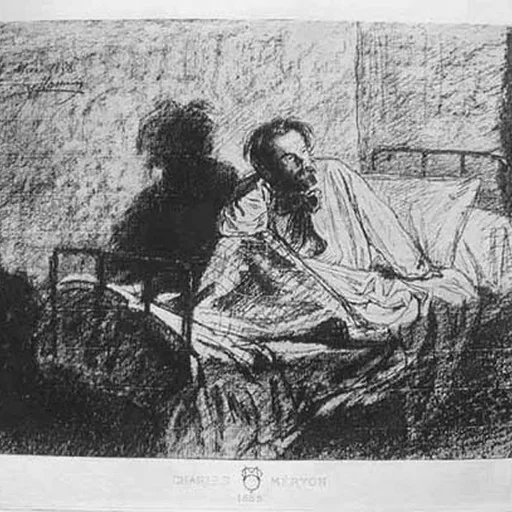
Charles Meryon (sometimes Méryon, 23 November 1821 – 14 February 1868) was a French artist who worked almost entirely in etching, as he had colour blindness.

 Church of St Michel, Vaucelles, near Bayeux
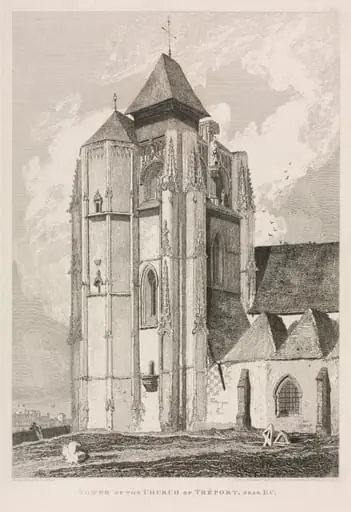 Architectural Antiquities of Normandy (Vol. II), Pl. 66: Tower of the Church of Tréport, near Eu
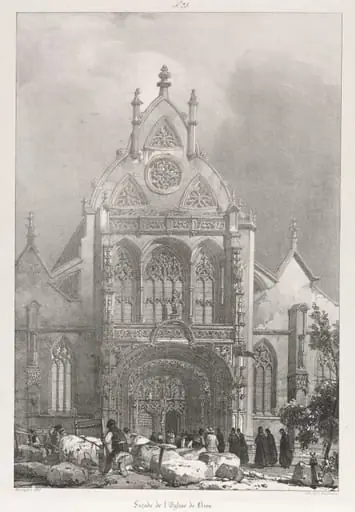 Picturesque and Romantic Trips in Old France, Franche-Compté: Front of the Church at Brou
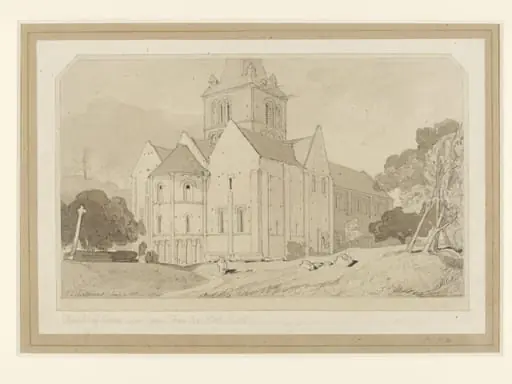 Church of Cheux, near Caen
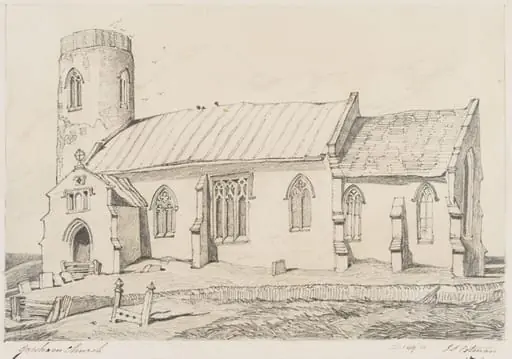 Gresham Church
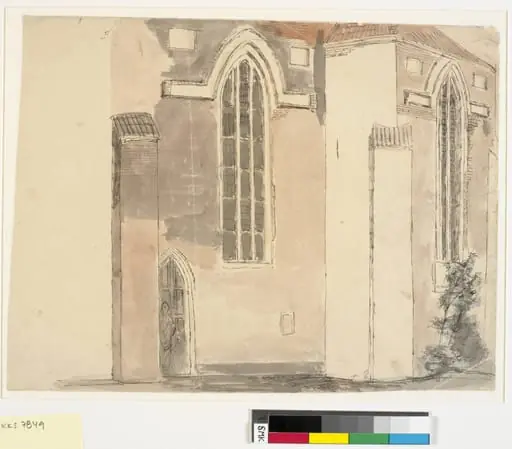 Parti af St. Hans' kirke i Odense
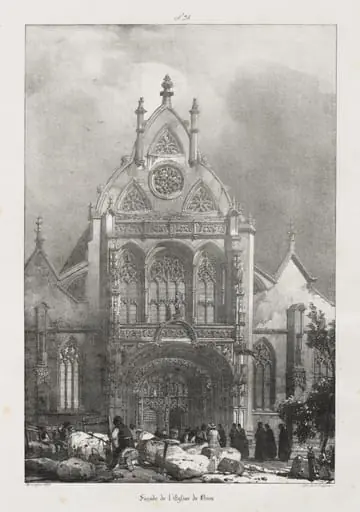 Voyages pittoresques et romantiques dans l'ancienne France, Franche-Comté: Façade de l'église de Brou
![The New Church of St. Mary - Old Hagerston [sic], July 1827, by T. H. Shepherd](https://artifactworldgallery.com/img/t-h-shepherd--the-new-church-of-st-mary-old-hagerston-sic-july-1827--b5b98602e349ff69-w320.webp) The New Church of St. Mary - Old Hagerston [sic], July 1827
The New Church of St. Mary - Old Hagerston [sic], July 1827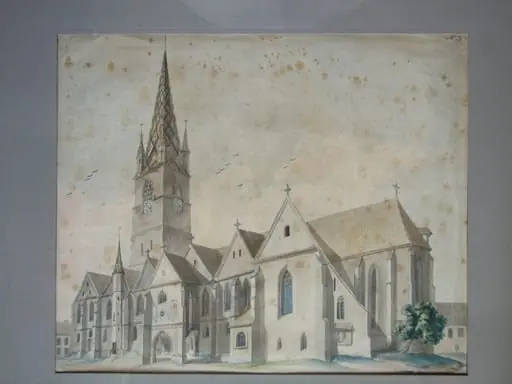 Biserica evanghelică din Sibiu
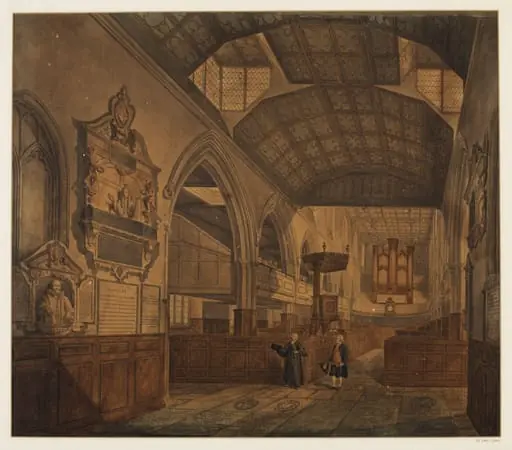 Interior view of the Church of St. Giles, Cripplegate