Artwork
Chevet de St. Martin-sur-Renelle (The Apsis of the Church of St. Martin-sur-Renelle)
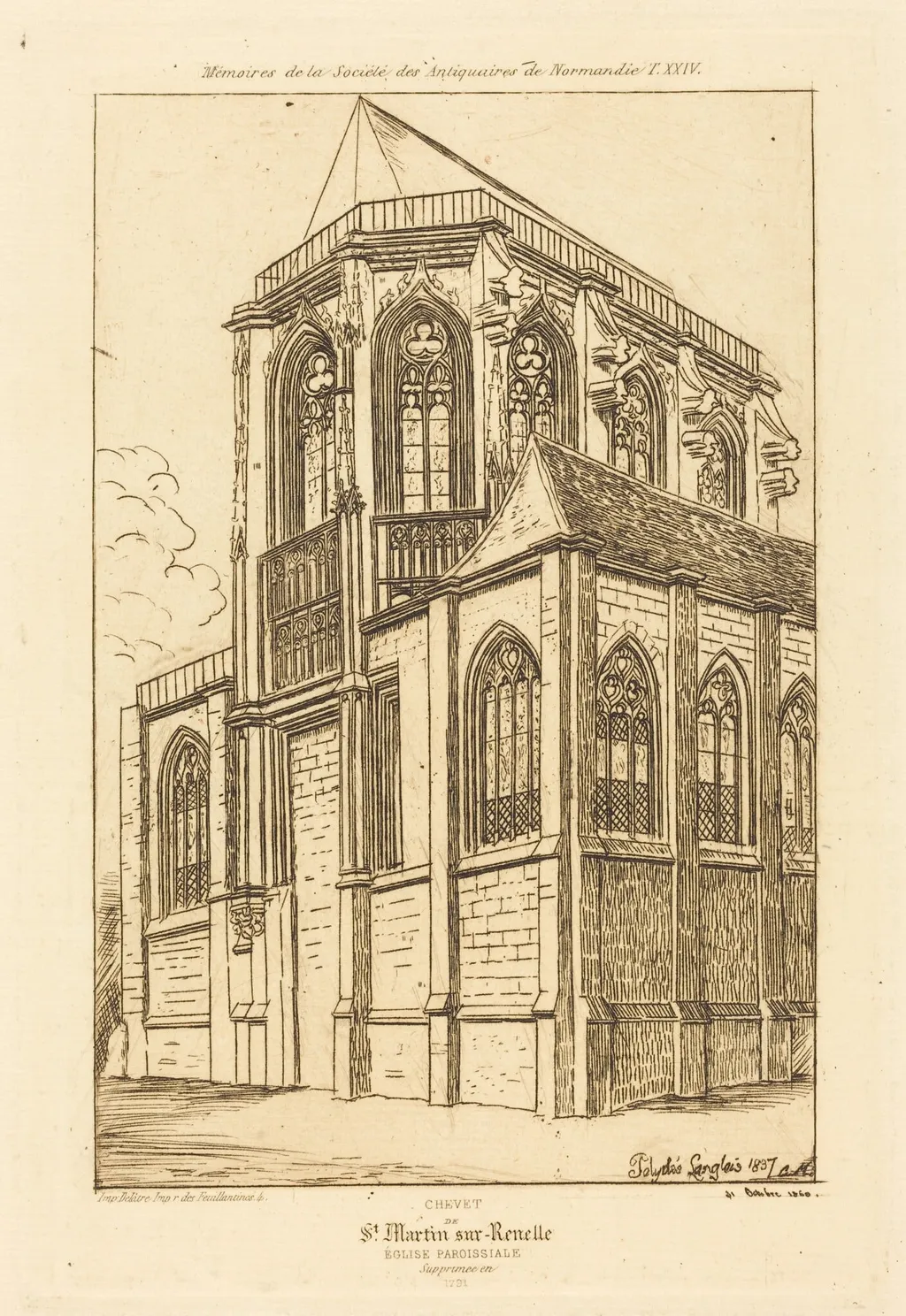
Chevet de St. Martin-sur-Renelle (The Apsis of the Church of St. Martin-sur-Renelle) is an ink print by the Impressionist artist Charles Meryon. It dates from 1860 and is held in the collection of the National Gallery of Art. Chevet de St.
- Inscription
- Inscribed:"Polyclés Langlois 1837 C.M." lower right composition, in plate, artist's hand. "31 Octobre 1860." lower right margin, in plate, artist's hand. "Mémoires de la Société del Antiquaires de Normandie T. XXIV." upper center margin, in plate. "Imp Delâtre Imp r. des Feuillantines, 4." lower left margin, in plate. "CHEVET / DE / St. Martin sur-Renelle / EGLISE PAROISSIALE / Supprimee en / 1791." lower center margin, in plate. "W. 83 LD 60 III" lower left margin, graphite, unknown hand. "c. 4397" lower right margin, graphite, unknown hand. "91" lower right margin, graphite, unknown hand. "57" lower right margin, graphite, unknown hand. "1182" verso, upper center sheet, graphite, unknown hand. "Haden" verso, lower right sheet, graphite, unknown hand.
- Markings
- Marked:"LRJ" verso, black stamped ink, stamped twice, (Lugt 1760b). "National Gallery of Art" verso, black stamped ink, (Lugt 1932d).
About this work
Overview
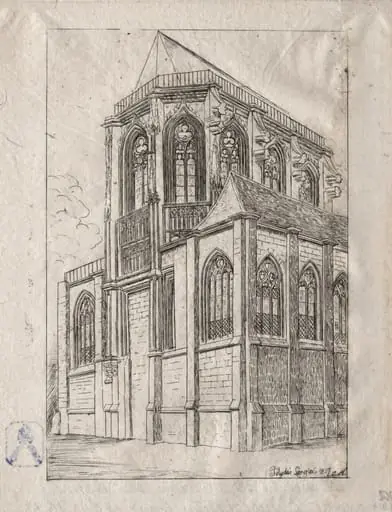
Chevet de St. Martin-sur-Renelle is an etching on laid paper created by Charles Meryon in 1860. It is a detailed representation of the apse of a church, showcasing the artist's skill in capturing architectural subjects.
Subject & Meaning
The print depicts the chevet of a church, featuring tall, pointed windows with intricate stone tracery and a steeply angled roof with decorative carvings. The work reflects Meryon's focused approach to documenting urban and architectural subjects.
Technique & Style
Meryon employed fine lines to capture the details of the church's architecture, from the window shapes to the roof's edges. The etching technique allowed for a high level of precision, characteristic of 19th-century architectural documentation.
History & Provenance
Charles Meryon, a French etcher, created this work in 1860. He worked primarily in etching due to colour blindness and is considered one of the most significant etchers of 19th-century France.
Own this work as a print
Artist & collection
Artist
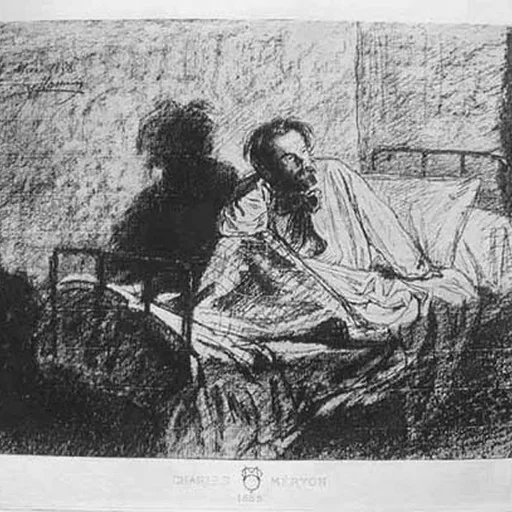
Charles Meryon (sometimes Méryon, 23 November 1821 – 14 February 1868) was a French artist who worked almost entirely in etching, as he had colour blindness.

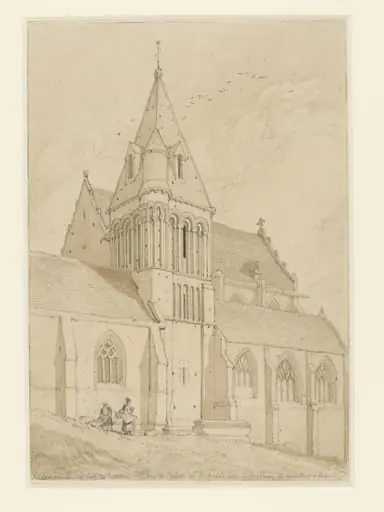 Church of St Michel, Vaucelles, near Bayeux
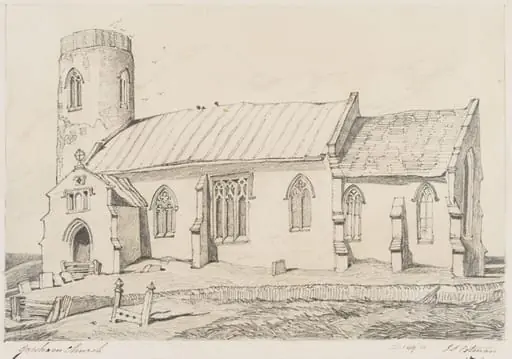 Gresham Church
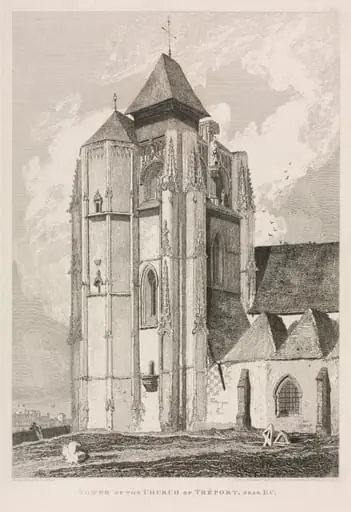 Architectural Antiquities of Normandy (Vol. II), Pl. 66: Tower of the Church of Tréport, near Eu
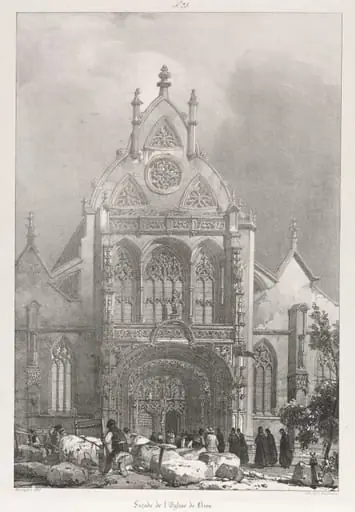 Picturesque and Romantic Trips in Old France, Franche-Compté: Front of the Church at Brou
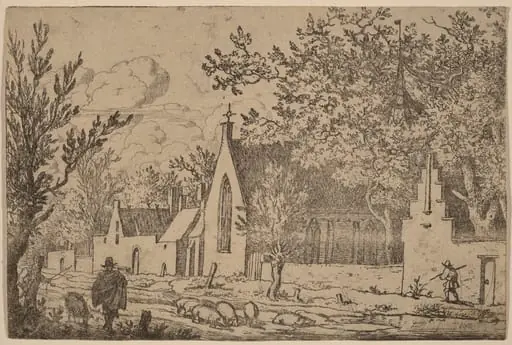 Swine Herd near a Chapel
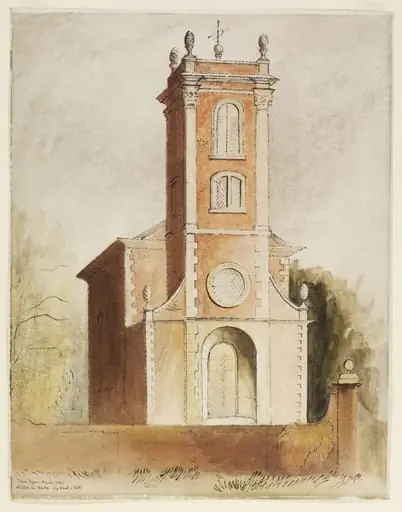 Busby's Church, Willen
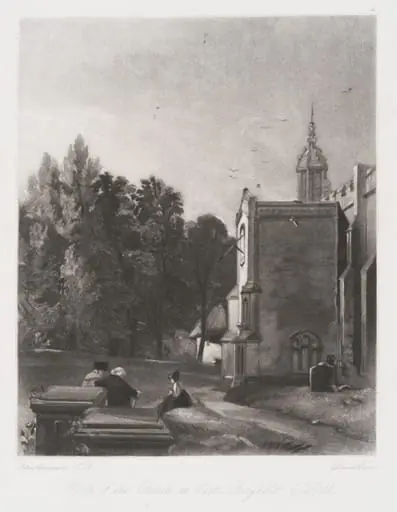 Porch of the Church at East Bergholt, Suffolk
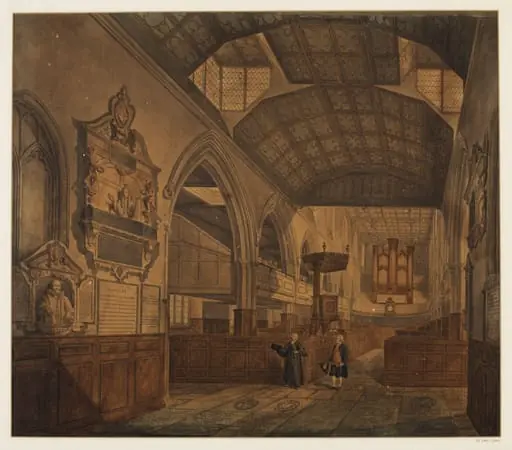 Interior view of the Church of St. Giles, Cripplegate
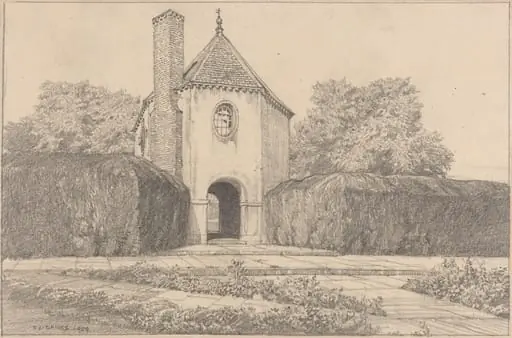 Garden House