Artwork
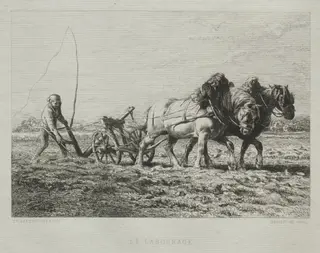
The Roller
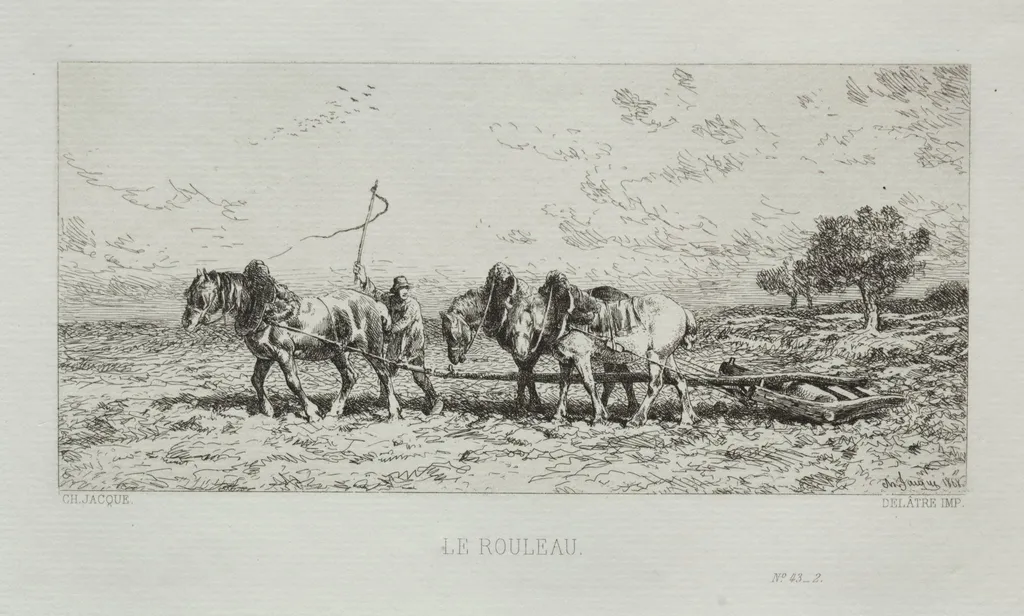
The Roller is a print by the Impressionist artist Charles-Émile Jacque. It dates from 1868 and is held in the collection of the Cleveland Museum of Art.
- Accession no.
- 1921.1433
- Credit line
- Gift of Leonard C. Hanna Jr.
About this work
Overview
The Roller is a print by Charles-Émile Jacque, a French artist associated with the Barbizon School, created in 1868.
Subject & Meaning
The print depicts a farmer guiding three horses hitched to a plow in a rural landscape, emphasizing the labor involved in farming and the relationship between humans and animals.
Technique & Style
The work showcases Jacque's attention to detail, particularly in the rendering of the horses' muscles and the farmer's stance, characteristic of the Realist style, which focused on truthful representations of everyday life.
Context
The Roller reflects the Barbizon School's emphasis on rural life and landscapes, a theme also explored by Jacque's contemporary, Jean-François Millet.
Artist & collection

Artist
Charles-Émile Jacque (23 May 1813 – 7 May 1894) was a French painter of Pastoralism and engraver who was, with Jean-François Millet, part of the Barbizon School. He first learned to engrave maps when he spent seven years in the French Army.

 Ploughing
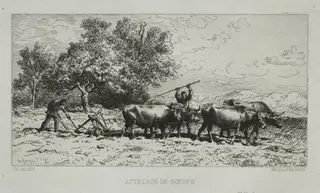 Team of Oxen
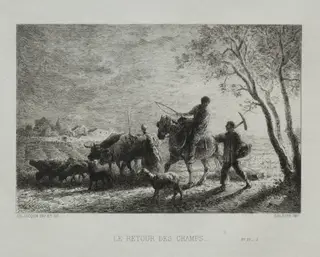 Return from the Fields
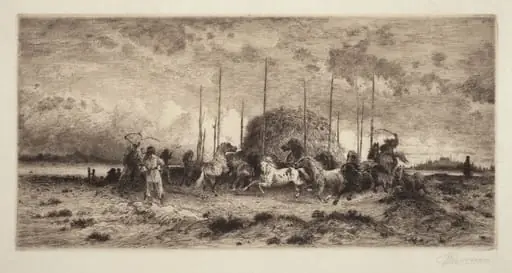 Harvest at San Juan, New Mexico
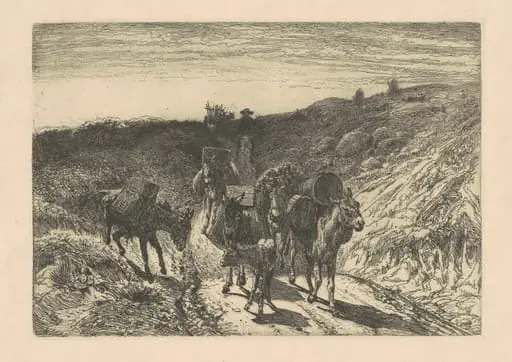 The Burrow Train, New Mexico
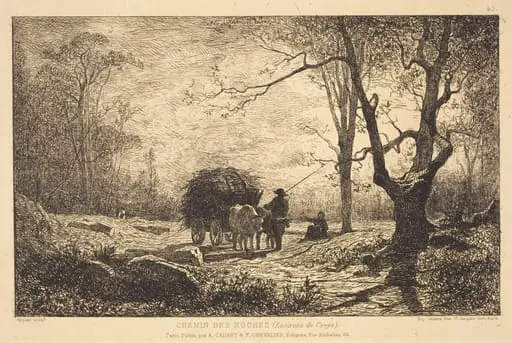 Chemin des Roches
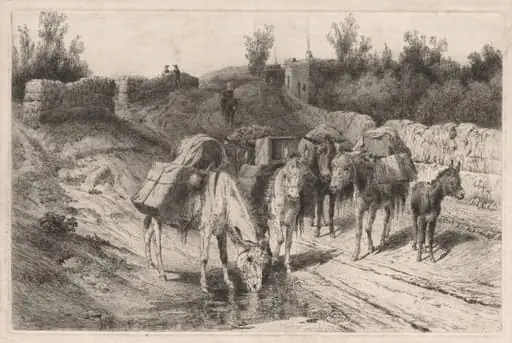 On the Road to Santa Fe
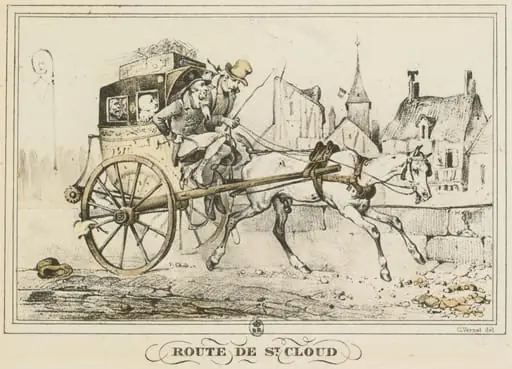 Scenes of Daily Life, Roads and Paths: Road to Saint-Cloud (Scènes de la vie quotidienne, Route et Chemins: Route de Saint-Cloud)
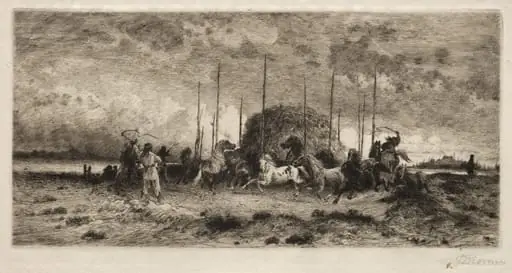 Harvest at San Juan, New Mexico
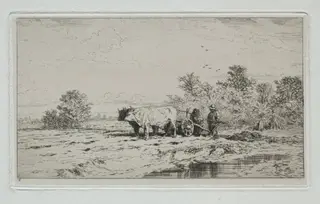 Landscape, Labourers
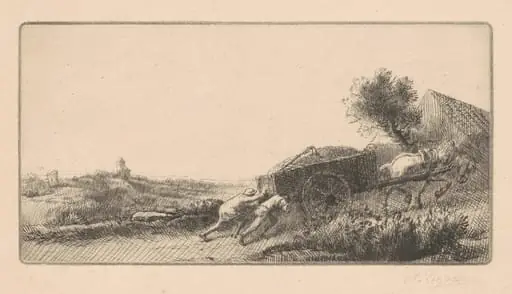 Returning with the Hay (Rentrant le Foin)
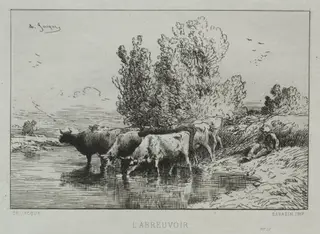 The Watering Place