Artwork
Mark Twain
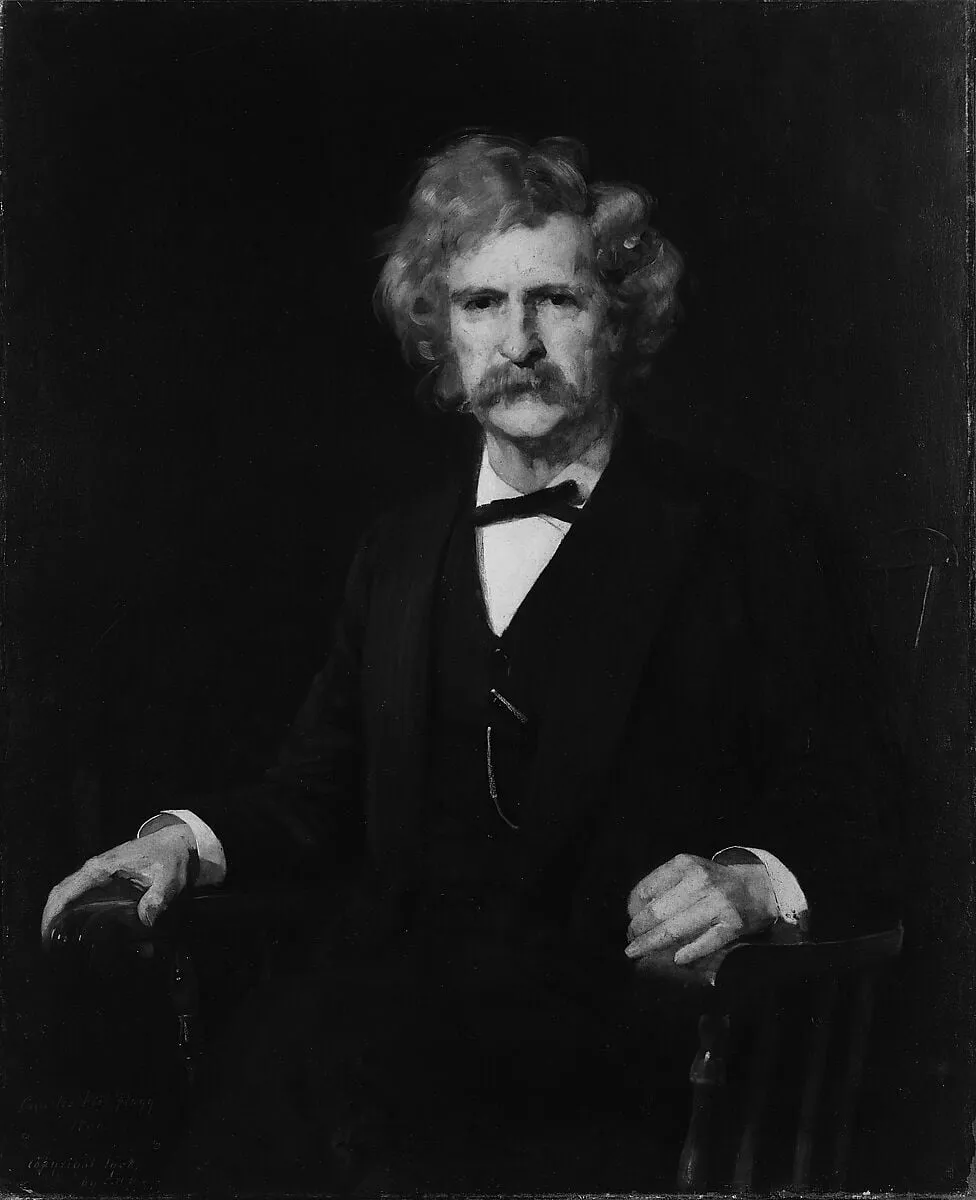
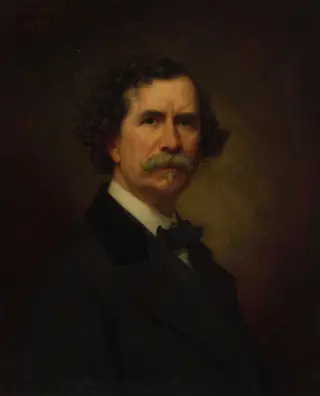
Mark Twain is an oil painting by the American Impressionist artist Charles Noel Flagg. It dates from 1890 and is held in the collection of the Metropolitan Museum of Art.
- Accession no.
- 17.96
- Credit line
- Gift of Ellen Earle Flagg, 1917
About this work
Mark Twain leans back in a chair, one hand tucked in his pocket, the other resting on his knee. Painted in 1890, when he was already known for 'Huckleberry Finn,' the pose is relaxed but the eyes stay sharp, as if a joke is coming. Loose brushstrokes make the fabric of his suit look soft.
Subject & Meaning
The composition and formal attire convey Twain's social stature and intellectual presence.
The portrait depicts Samuel Clemens, best known by his pen name Mark Twain, seated in a three-quarter view with a prominent moustache and direct gaze, emphasizing his public persona as a writer and humorist. The composition and formal attire convey Twain's social stature and intellectual presence. The work aligns with late-nineteenth-century conventions of portraiture that sought to monumentalize notable figures, positioning Twain as a cultural emblem of American literary identity during the Gilded Age.
Technique & Style
Created in 1890 by Charles Noel Flagg, this portrait of Mark Twain is executed in oil on canvas. The work measures 102.2 cm in height and 82.2 cm in width. Stylistically it adheres to the conventions of the portrait genre, focusing on the author distinguished by his moustache.
The painting is held in the collection of the Metropolitan Museum of Art, where it is classified under The American Wing. The medium and format reflect standard nineteenth-century academic portraiture, using oil on canvas to render the subject's likeness.
History & Provenance
This oil-on-canvas portrait of Mark Twain was executed in 1890 by the American artist Charles Noel Flagg. The work entered the holdings of the Metropolitan Museum of Art and is associated with the museum's American Wing. The specific circumstances of its commission or initial ownership are not detailed in the available records, and the painting has remained in the Met's collection since its acquisition.
Legacy
The 1890 portrait by Charles Noel Flagg, housed in the Metropolitan Museum of Art’s American Wing, has become a canonical visual reference for Mark Twain, shaping subsequent artistic and popular representations of the author’s likeness. Its inclusion in a major public collection and frequent exhibition has cemented the image of Twain with his characteristic moustache as an enduring icon, influencing later photographs, paintings, and media portrayals. Scholars cite the work when discussing the development of American literary iconography, noting that Flagg’s realistic rendering helped solidify Twain’s public persona during the early 20th century.
Overview
Charles Noel Flagg's 1890 oil on canvas portrait depicts the American author Mark Twain in a relaxed, informal pose. The subject leans back in a chair, with one hand tucked into his trousers pocket and the other resting on his knee, a stance that conveys both comfort and a distinct lack of formality. Despite this casual posture, Twain's gaze is direct and piercing, capturing the sharp wit and intelligence for which he was renowned.
Flagg employs loose, visible brushwork to render the figure, particularly in the handling of the white suit and the background, which contrasts with the more defined features of the face. Created when Twain had already achieved significant fame following the publication of Adventures of Huckleberry Finn, this work stands as a significant representation of the author during the height of his literary career. The portrait avoids the stiff conventions of traditional academic portraiture, instead offering a candid glimpse into the personality of one of America's most celebrated writers. It remains a primary visual document of Twain's public image in the late 19th century.
Context
Created in 1890, this portrait captures Samuel Clemens, known as Mark Twain, at a significant point in his career. By this time, he had achieved widespread recognition and literary acclaim, largely due to the success of Adventures of Huckleberry Finn, published just five years prior. The painting thus serves as a contemporary visual document of an author whose influence on American literature was already profound and enduring.
Artist & collection