Artwork
George Washington
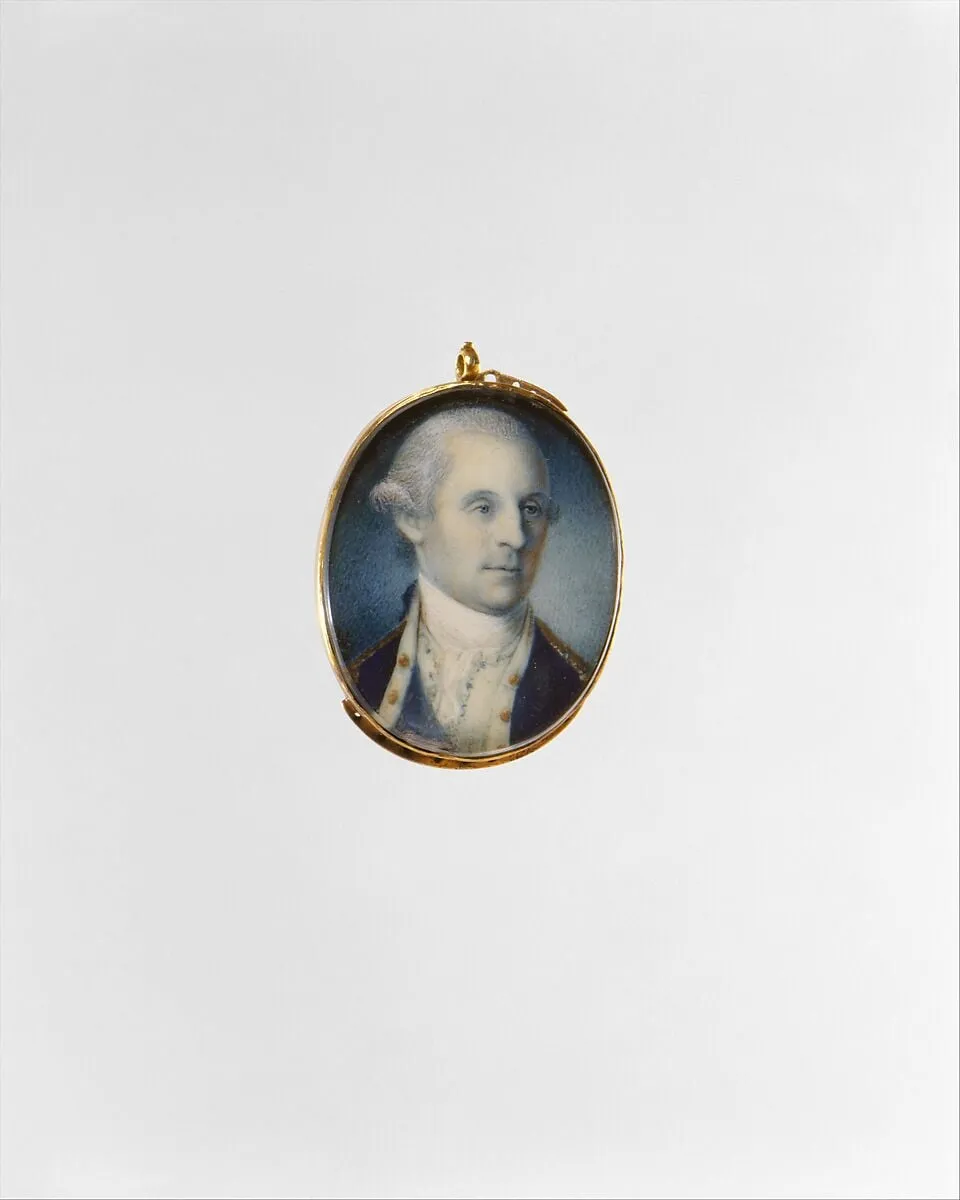
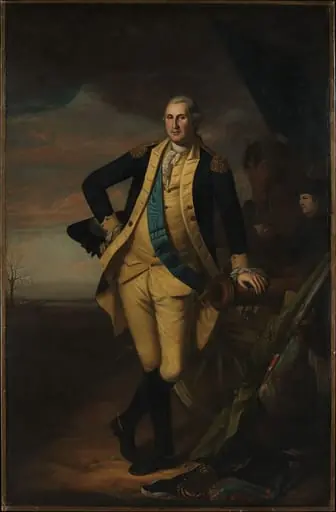
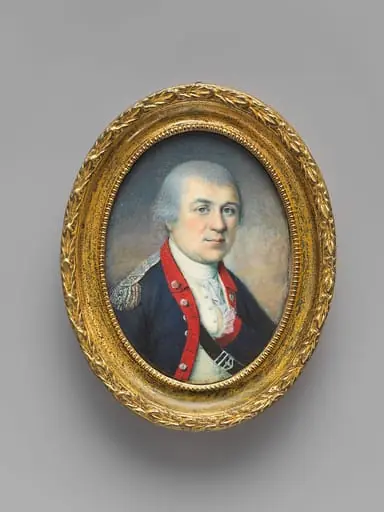
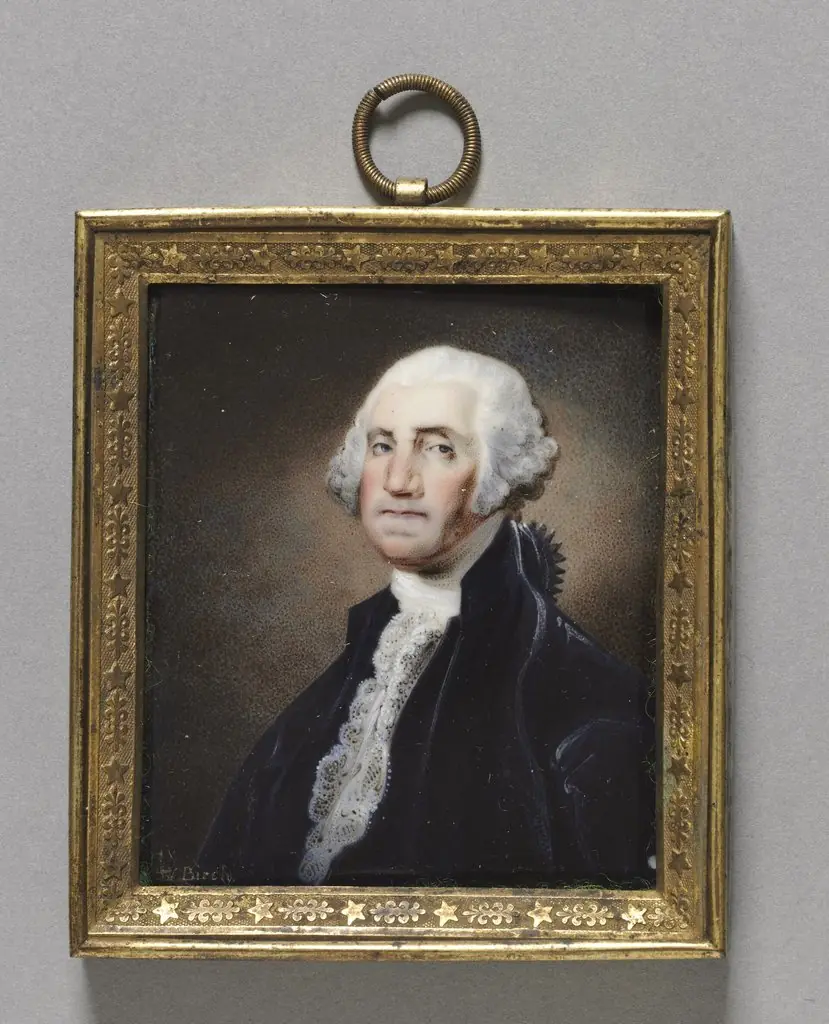
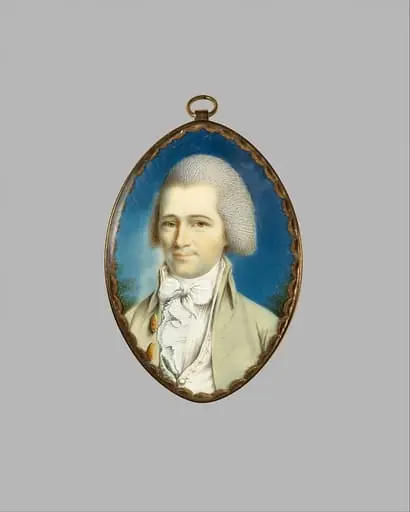
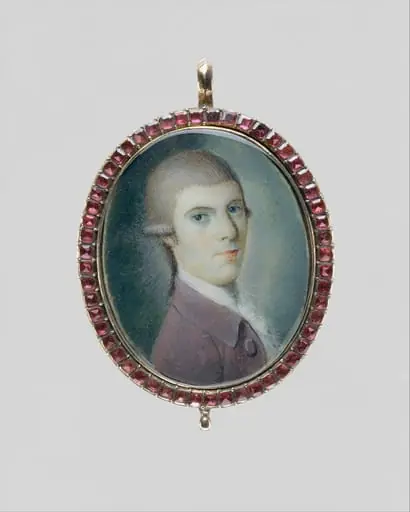
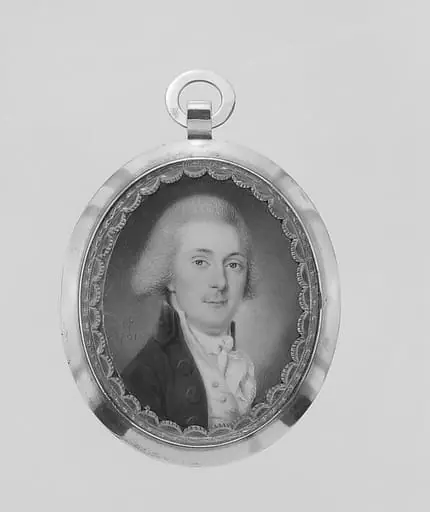
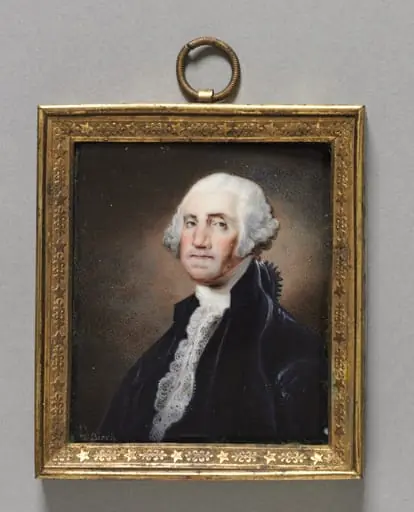
George Washington is a watercolor painting by the American Impressionist artist Charles Willson Peale. It dates from 1777 and is held in the collection of the Metropolitan Museum of Art.
About this work
A tiny watercolor on ivory, small enough to fit in your palm, showing George Washington in a red coat with his white hair curled tight. Peale painted it in 1777, when Washington's face was still new to fame. The red coat pops against the plain background, made to set into a locket or snuffbox.
Subject & Meaning
The 1777 watercolor on ivory portrait by Charles Willson Peale presents George Washington as the central figure, classified within The American Wing's portrait genre. The work, held at the Metropolitan Museum of Art, shows the future first president in a dignified pose typical of late‑18th‑century portraiture, emphasizing his status as a national leader. Its creation during the Revolutionary period situates the image as an early visual representation of American republicanism, while the medium and size reflect the intimate format used for elite sitters of the era.
Technique & Style
As a portrait, the image belongs to the portrait genre and portrays the sitter as a man, reflecting the formal conventions of early American portraiture.
The work is executed in watercolor on an ivory support, a technique documented for Charles Willson Peale’s 1777 portrait of George Washington. The medium is recorded as watercolor applied to ivory, and the support is therefore an ivory panel of approximately 3.8 × 3.5 units, as noted in the Metropolitan Museum of Art’s cataloging. As a portrait, the image belongs to the portrait genre and portrays the sitter as a man, reflecting the formal conventions of early American portraiture. The painting is housed in the Metropolitan Museum of Art’s American Wing collection.
History & Provenance
The miniature portrait of George Washington by Charles Willson Peale was executed in 1777 in watercolor on ivory. It was commissioned during the early years of the American Revolution, reflecting Washington’s emergence as commander-in-chief of the Continental Army. Peale, a leading portraitist of the period, rendered the likeness in a compact format suited for intimate display or gifting.
The work entered the Metropolitan Museum of Art as accession 83.2.122, where it remains in the institution’s collection.
The miniature portrait of George Washington by Charles Willson Peale is held in the collection of the Metropolitan Museum of Art, New York, with the accession number 83.2.122. It was painted in 1777 and entered the museum’s holdings in 1983 as a gift from various donors.
Overview
This miniature portrait, executed by Charles Willson Peale around 1777, depicts George Washington. Rendered in watercolor on a small ivory panel, the work captures the military leader during a pivotal moment in American history. Its diminutive scale suggests it was intended for personal display, offering an intimate glimpse of the nascent nation's commander.
Context
Charles Willson Peale, a versatile figure active as a painter, naturalist, and military officer, created this portrait during the height of the American Revolution. Having moved to Philadelphia in 1775, Peale served in both the Pennsylvania Militia and the Continental Army. His artistic practice during this tumultuous era often involved capturing the likenesses of key revolutionary figures, positioning him as a significant visual chronicler of the period.
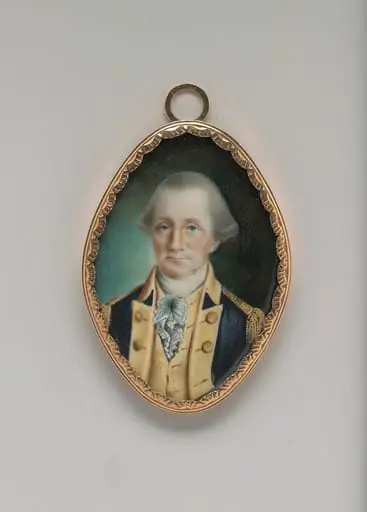
Artist & collection
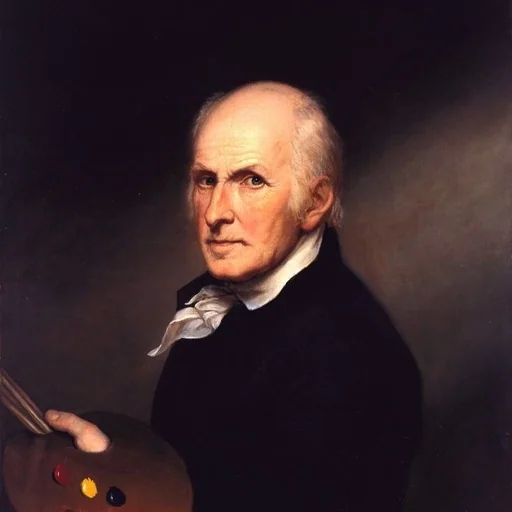
Artist
Charles Willson Peale (April 15, 1741 – February 22, 1827) was an American painter, military officer, scientist, and naturalist.