Artwork
General Henry Knox
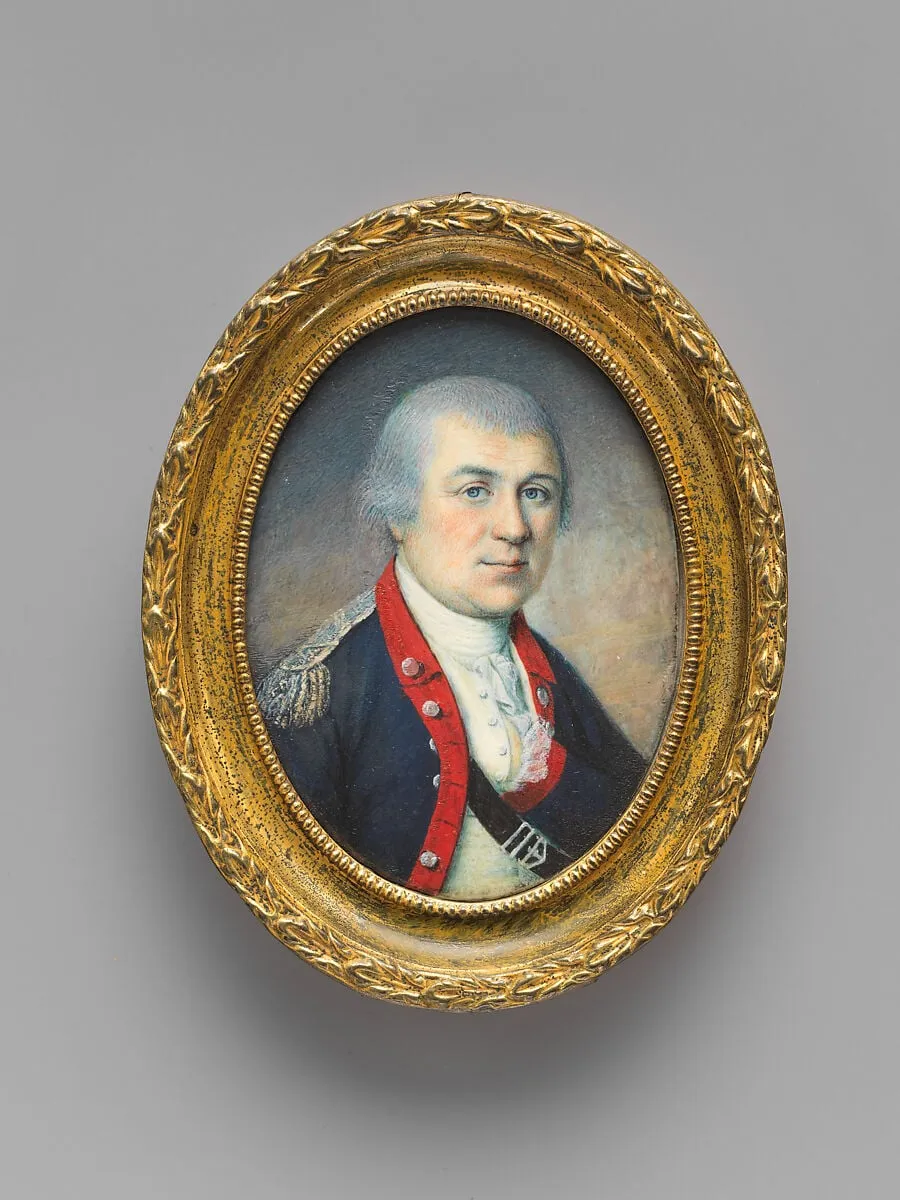
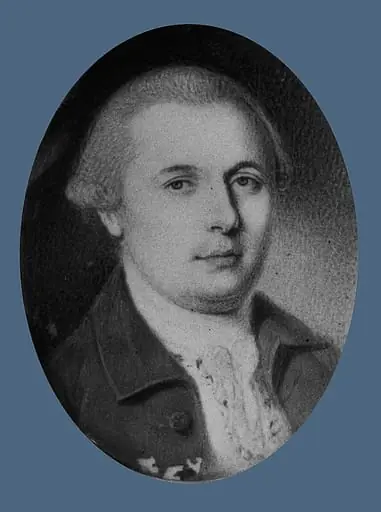
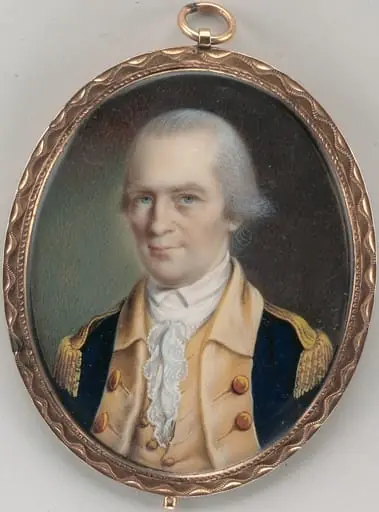
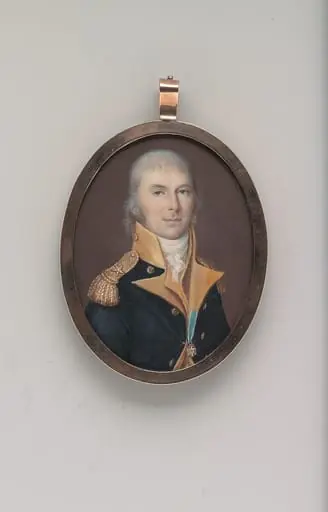
General Henry Knox is a watercolor painting by the American Impressionist artist Charles Willson Peale. It dates from 1778 and is held in the collection of the Metropolitan Museum of Art.
About this work
Technique & Style
2 cm wide) and its classification as a miniature indicate fine‑scale handling, with precise brushwork to capture the sitter's features and uniform.
General Henry Knox is rendered as a watercolor on ivory miniature, a support that allows for a luminous, delicate surface. The work's small dimensions (approximately 7.3 cm high by 5.2 cm wide) and its classification as a miniature indicate fine‑scale handling, with precise brushwork to capture the sitter's features and uniform. The ivory substrate contributes to the subtle tonal gradations characteristic of Peale's portrait miniatures from the late 1770s, reflecting his technique of layered, translucent washes to model form while maintaining crisp linear detail.
History & Provenance
Created in 1778, this watercolor portrait on ivory depicts General Henry Knox and was executed by the artist Charles Willson Peale. The work, classified as a miniature with dimensions of approximately 7.3 by 5.2 cm, entered the collection of the Metropolitan Museum of Art, where it is held within the American Wing. The available records confirm the piece's inception date and its attribution to Peale but provide no further details regarding specific commission circumstances or intermediate ownership transfers prior to its museum acquisition.
Overview
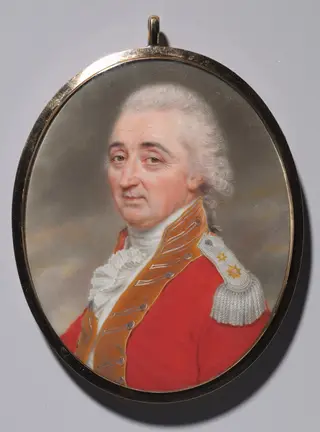
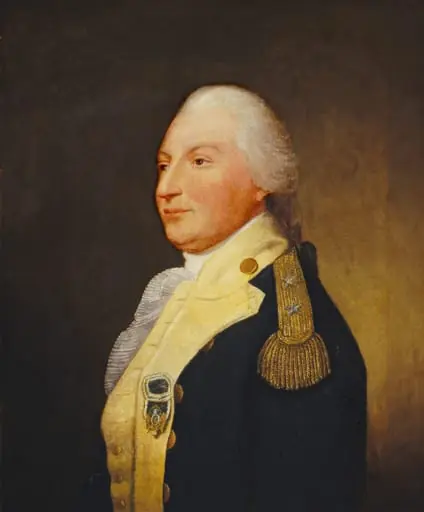
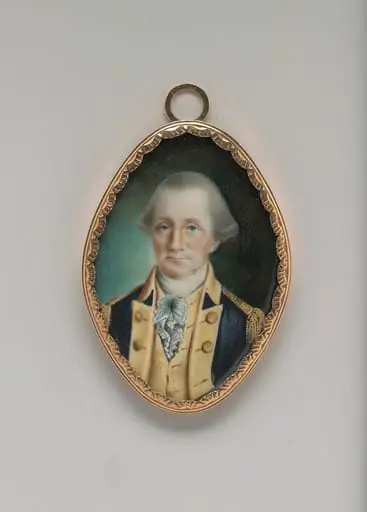
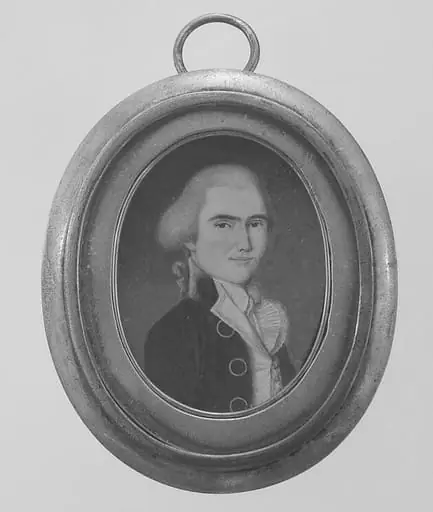
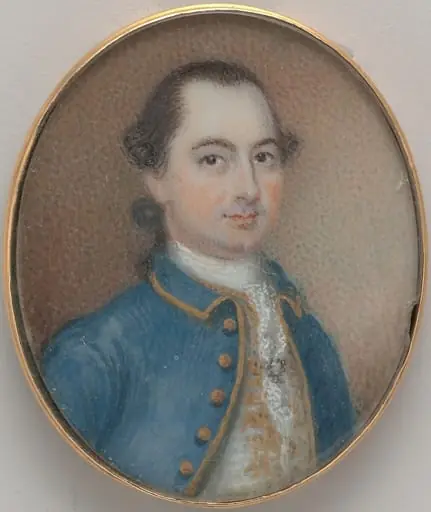
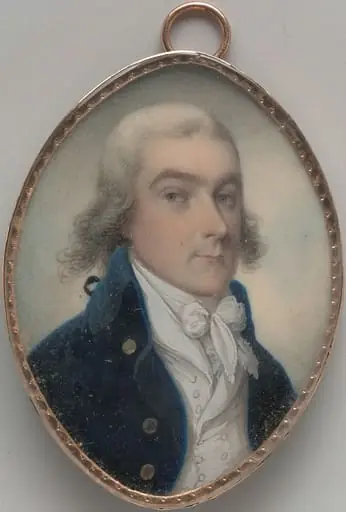
This small portrait depicts General Henry Knox in a formal military uniform. Rendered with watercolor on ivory, the artist meticulously captured details such as the buttons and the folds of his attire, contributing to the work's realistic quality. This intimate scale and medium were characteristic of portraiture during its period of creation, offering a detailed likeness of the sitter.
Subject & Meaning
General Henry Knox is presented in a dignified, formal pose, wearing his military uniform. The artist's careful rendering of his attire, from the precise buttons to the fabric's texture, emphasizes his distinguished rank and public persona. This portrayal serves as a testament to his status, capturing the bearing expected of a prominent military figure of the era.
Context
The use of watercolor on ivory for portraiture was a common practice during the period this work was created. This approach was favored for its ability to produce intimate, highly detailed images, often serving as personal mementos. Artists like Charles Willson Peale also employed similar techniques, reflecting a broader stylistic trend in American portraiture that emphasized precision and a lifelike quality.
Artist & collection
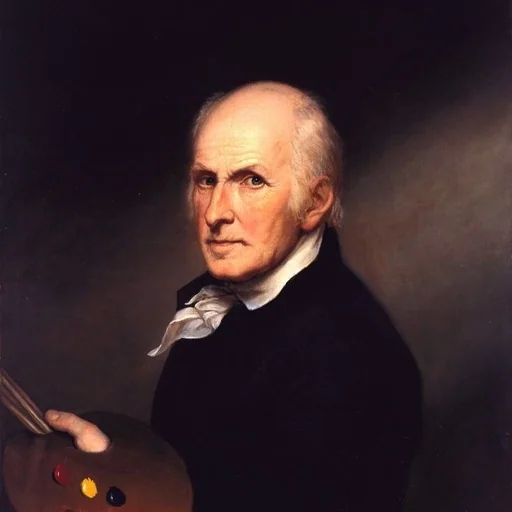
Artist
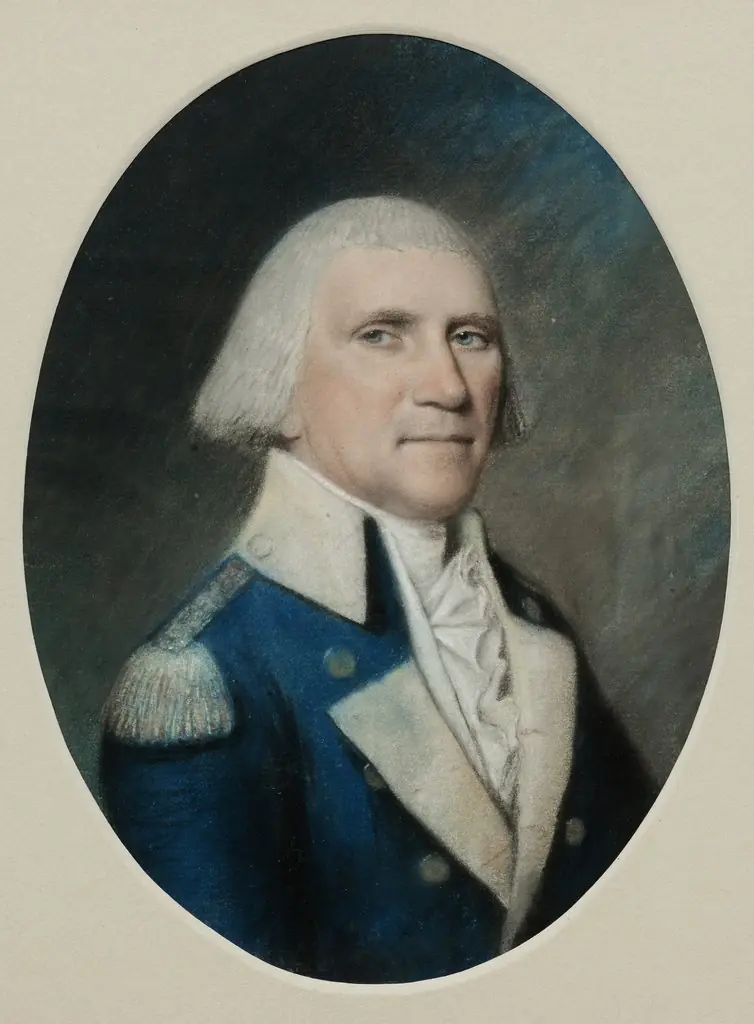
Charles Willson Peale (April 15, 1741 – February 22, 1827) was an American painter, military officer, scientist, and naturalist.