Artwork
Persée et Andromede (Perseus and Andromeda)
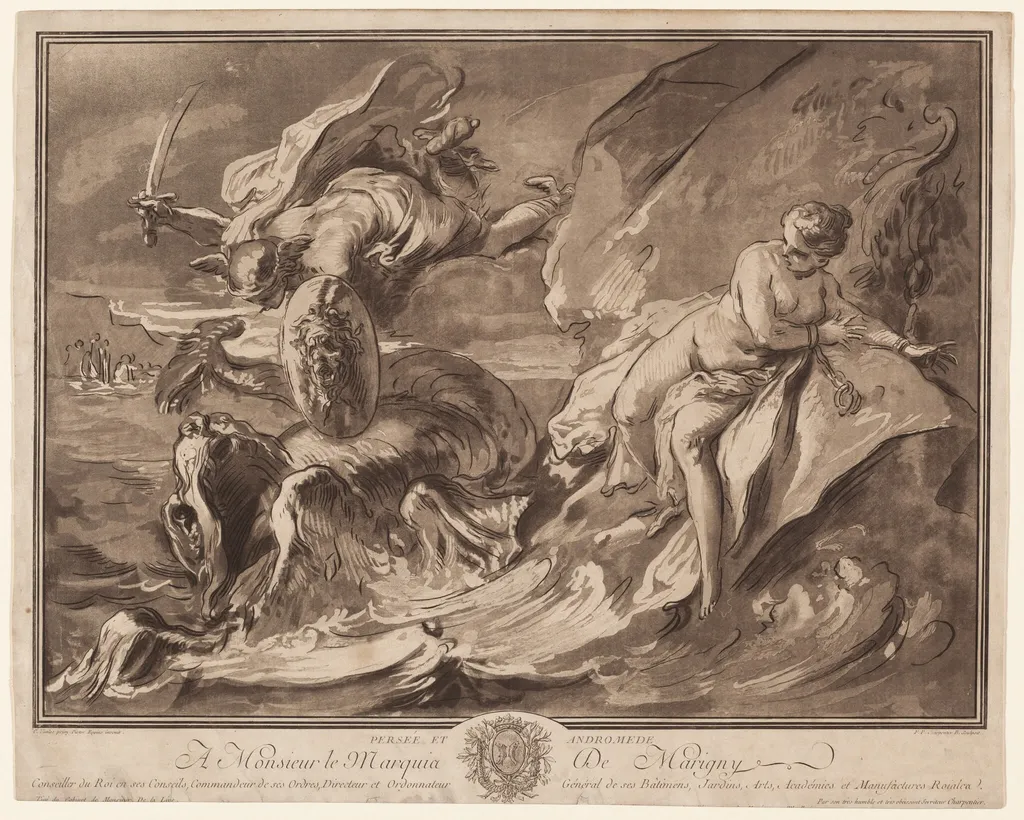
Persée et Andromede (Perseus and Andromeda) is an ink print by the Romanticist artist François-Philippe Charpentier. It dates from 1762 and is held in the collection of the National Gallery of Art.
- Inscription
- Inscribed:Below image, at left: C. Vanloo prim. Pictor Regius invenit.; below image, at right: F. P. Charpentier B. Sculpsit.; below image, at center: PERSEE ET ANDROMEDE / A Monsieur le Marquis De Marigny / Conseiller du Roi en ses Conseils, Commandeur de ses Ordres, Directeur et Ordonnateur Général de ses Bâtimens, Jardin, Arts, Académies et Manufactures Roiales; at bottom left: Tiré du Cabinet de Monsieur De la Live.; at bottom right: Par son très humble et très obeissant Serviteur Charpentier
About this work
Overview
François-Philippe Charpentier, a French engraver born in 1734, produced this print in 1762 as part of a series reproducing works by Charles Le Brun.
François-Philippe Charpentier, a French engraver born in 1734, produced this print in 1762 as part of a series reproducing works by Charles Le Brun. Executed in etching, aquatint, roulette, and burnishing, the image is printed in brown-black ink on laid paper. Charpentier was known for refining printmaking techniques, particularly in aquatint, and this piece reflects his technical precision and interest in tonal depth.
Subject & Meaning
The scene illustrates the myth of Perseus rescuing Andromeda, who is chained to a coastal rock as punishment for her mother’s hubris. A sea monster emerges from the waves, while Perseus descends from above, wings spread. The narrative draws from classical antiquity, emphasizing heroism and divine intervention. Charpentier’s choice to depict the moment of rescue underscores tension and imminent action.
Technique & Style
Charpentier employed etching for fine lines and aquatint to achieve gradations of tone, enhanced by roulette for stippled texture and burnishing to lighten areas. The result is a richly layered surface with swirling clouds, rippling water, and dynamic shadows. The brown-black ink amplifies the dramatic contrast, while the paper’s laid texture subtly influences the print’s tactile quality.
History & Provenance
Created in 1762, this print was one of several reproductive engravings intended to disseminate Le Brun’s compositions to a wider audience. Charpentier, trained in Paris, gained recognition for his innovations in color engraving mechanisms. Though the original painting is lost, this print preserves its composition and remains a documented example of 18th-century print circulation in Europe.
Context
In mid-18th-century France, reproductive prints were vital for spreading academic art beyond royal and aristocratic circles. Charpentier’s work aligned with the revival of classical themes favored by the Académie. His technical experiments in aquatint responded to growing demand for tonal prints that mimicked the effects of wash drawings and oil paintings, bridging fine art and mechanical reproduction.
Legacy
Charpentier’s innovations in aquatint and mechanical color printing influenced later generations of engravers. While not widely exhibited today, this print exemplifies the transition from painterly models to printed reproductions in Enlightenment Europe. It stands as a testament to the period’s technical ambition and the role of print in shaping artistic taste.
Own this work as a print
Artist & collection

Artist
François-Philippe Charpentier (b. Blois, 1734; d. there 22 July 1817) was a French engraver and inventor. His father was a bookbinder, a poor man who reportedly made many sacrifices so that his son might attend the…

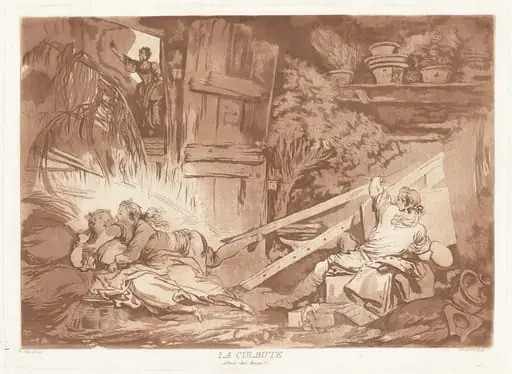 La Culbute (The Tumble)
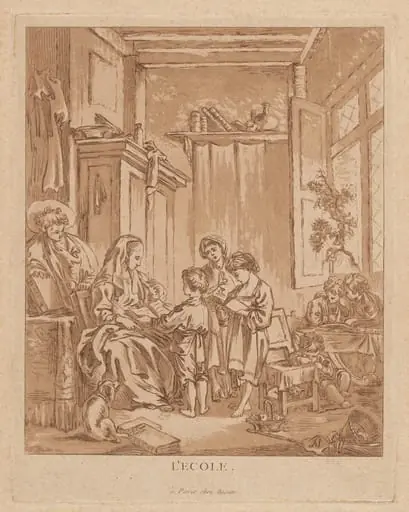 L’École (The School)
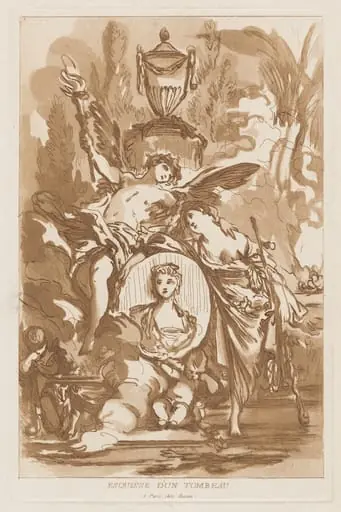 Esquisse d’un tombeau (Sketch for a Tomb)
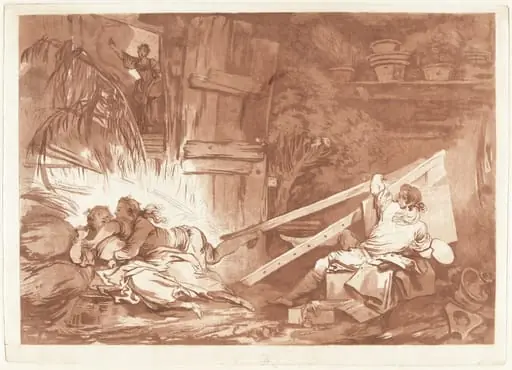 The Tumble
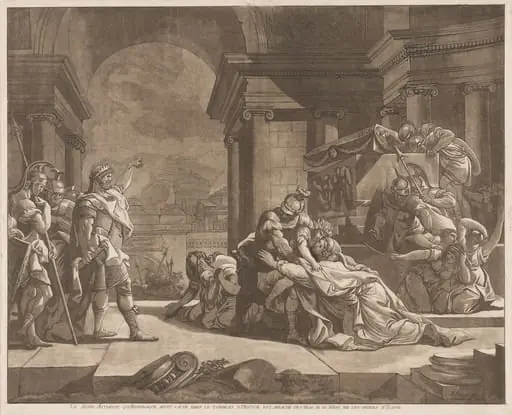 Le Jeune Astianax qu’Andromaque avoit caché dans le tombeau d’Hector est arraché des bras de sa Mere par les ordres d'Ulisse (Young Astianax, who Andromache Hid in Hector's Tomb, is Seized from his Mother's Arms by Ulysses' Orders)
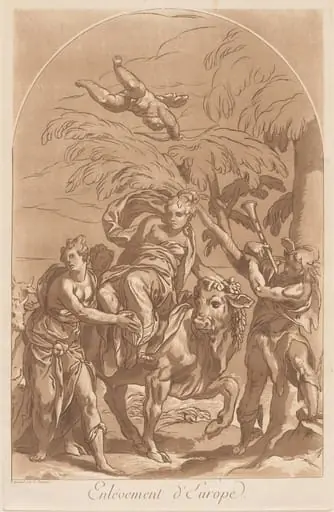 Rape of Europa
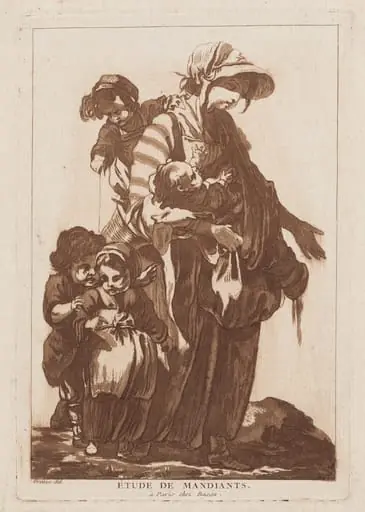 Étude de Mandiants (Study of Beggars)
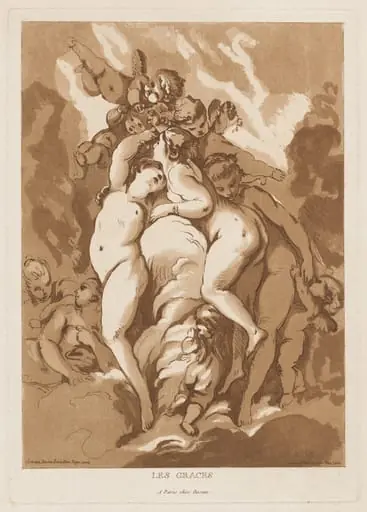 Les Graces (The Graces)