Artwork
清 陳書 白鸚鵡圖 軸|Cockatoo
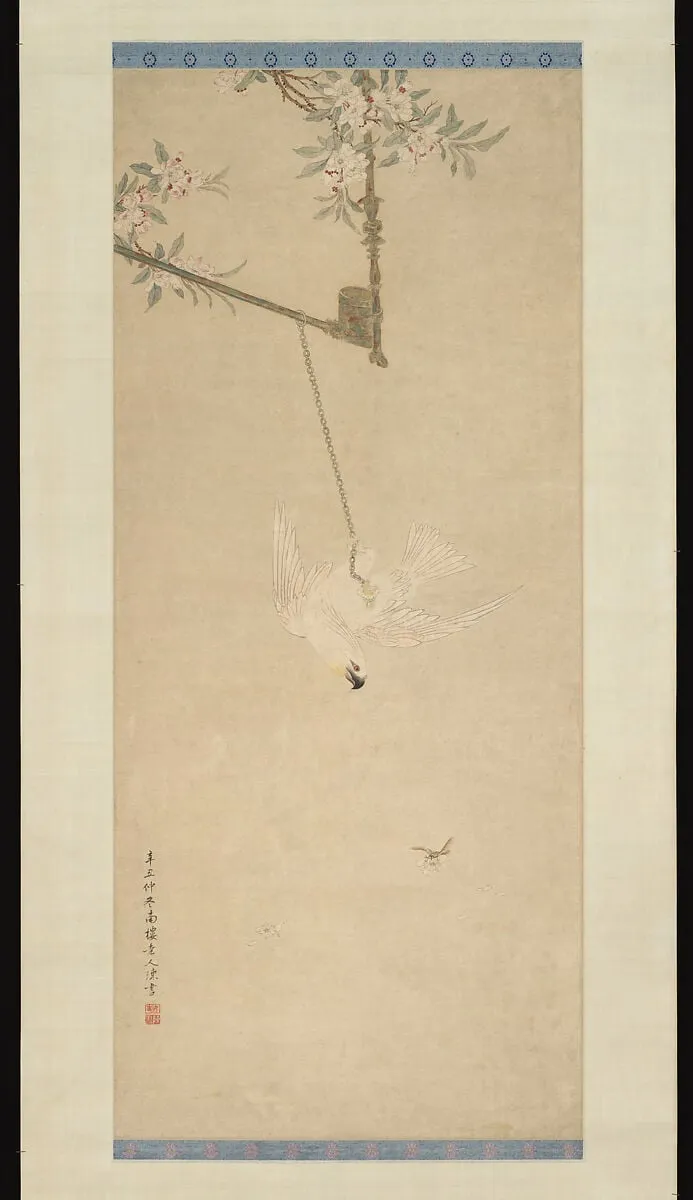
清 陳書 白鸚鵡圖 軸|Cockatoo is an ink painting by the Baroque artist Chen Shu. It dates from 1721 and is held in the collection of the Metropolitan Museum of Art.
About this work
The artist used fine ink lines to show every feather, but left the bird’s feet soft and smudged, almost like they’re still settling onto the branch.
A white cockatoo perches on a gnarled branch, its feathers fluffed like a winter coat. The bird tilts its head, eyeing you with quiet curiosity.
Chen Shu painted this in 1721, when live cockatoos were rare gifts to Chinese courts from Southeast Asia. The artist used fine ink lines to show every feather, but left the bird’s feet soft and smudged, almost like they’re still settling onto the branch.
If you like how ink can feel alive, look up cross-hatching next.
Subject & Meaning
The painting depicts a white cockatoo perched on a rock, rendered in ink and color on a hanging scroll. The bird's bright white plumage and distinctive crest are carefully detailed against a muted background, emphasizing its exotic character.
In Chinese art, cockatoos were rare subjects and carried associations with distant lands and the exotic, reflecting cultural curiosity about foreign species during the Qing dynasty. The composition's restraint and naturalism align with literati traditions, in which flora and fauna could carry layered meanings of refinement and scholarly contemplation.
Technique & Style
Executed in 1721, this hanging scroll by Chen Shu uses ink and color applied to a paper support. The work measures 94.1 cm in height and 43.7 cm in width. Stylistically, the painting is classified as a still life, focusing its composition on the depiction of a bird.
The application of color alongside ink suggests a polychrome approach typical of the period's bird-and-flower genre, rendered in a format designed for vertical display.
History & Provenance
Chen Shu created the hanging scroll Cockatoo in 1721 in China, using ink and color on paper; the work measures 94.1 cm by 43.7 cm and depicts a white cockatoo in the bird-and-flower tradition. It exemplifies early 18th-century Chinese brush technique and is presently held by the Metropolitan Museum of Art in New York, within the museum's Chinese painting galleries. No specific accession number, prior owner, or commission is recorded in the available documentation.
Overview
Chen Shu’s hanging scroll, executed in 1721, presents a solitary white cockatoo perched upon a twisted branch. Rendered with ink and color on paper, the work belongs to the Chinese still‑life tradition of the early Qing period. The composition focuses on the bird’s poised form, inviting close observation of its plumage and stance.
Context
In the early eighteenth century, live cockatoos were rare and prized possessions among the Qing imperial court, often presented as diplomatic gifts. Their novelty made them popular subjects for artists seeking to demonstrate both technical skill and awareness of contemporary courtly interests. Chen Shu’s depiction aligns with this trend, documenting an exotic creature within a traditional Chinese artistic framework.
Artist & collection


 Puppies, Sparrows, and Chrysanthemums
 Puppies, Sparrows, and Chrysanthemums
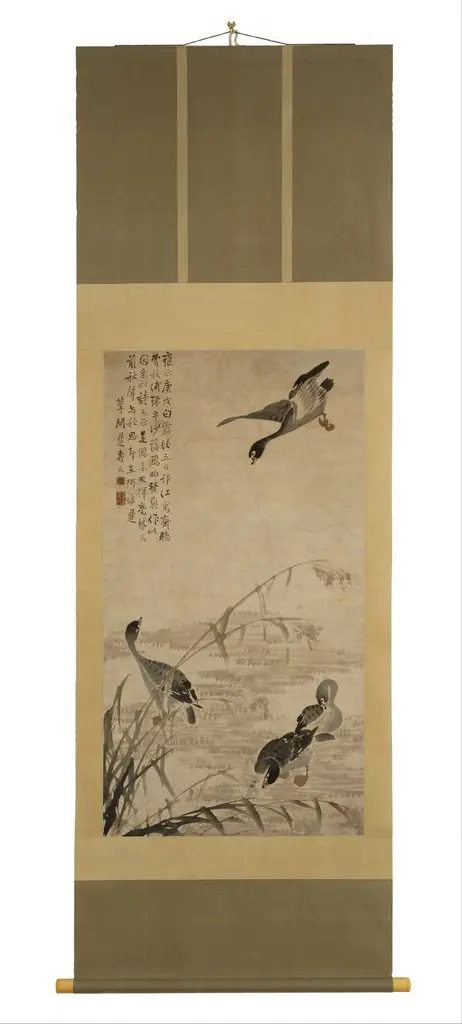 Wild Geese Descending on a Sandbank
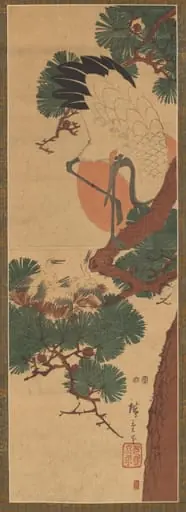 Stork, Sun, and Pine
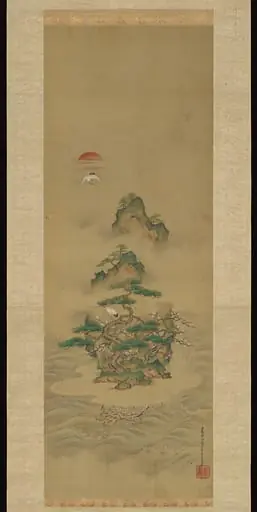 狩野探水守常筆 蓬莱山・瀟湘八景図|Mount Penglai with Eight Views of Xiao and Xiang
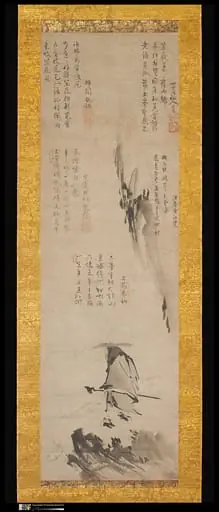 瑞巖龍惺・竹香全悟・九淵龍賝・南江宗沅・ 翺之慧鳳賛 東坡笠屐図|Su Shi (Dongpo) in a Bamboo Hat and Clogs
 Untitled
 Heron
Heron Sparrows on Blossoming Plum
 Sparrows on Blossoming Plum; A Sage with Tiger; Chinese Bird on Snow-Laden Branch
 清 居廉 花卉蟲草 冊頁 八開|Insects and Flowers
- Untitled