Artwork
Sampling Tea beneath the Wu Trees
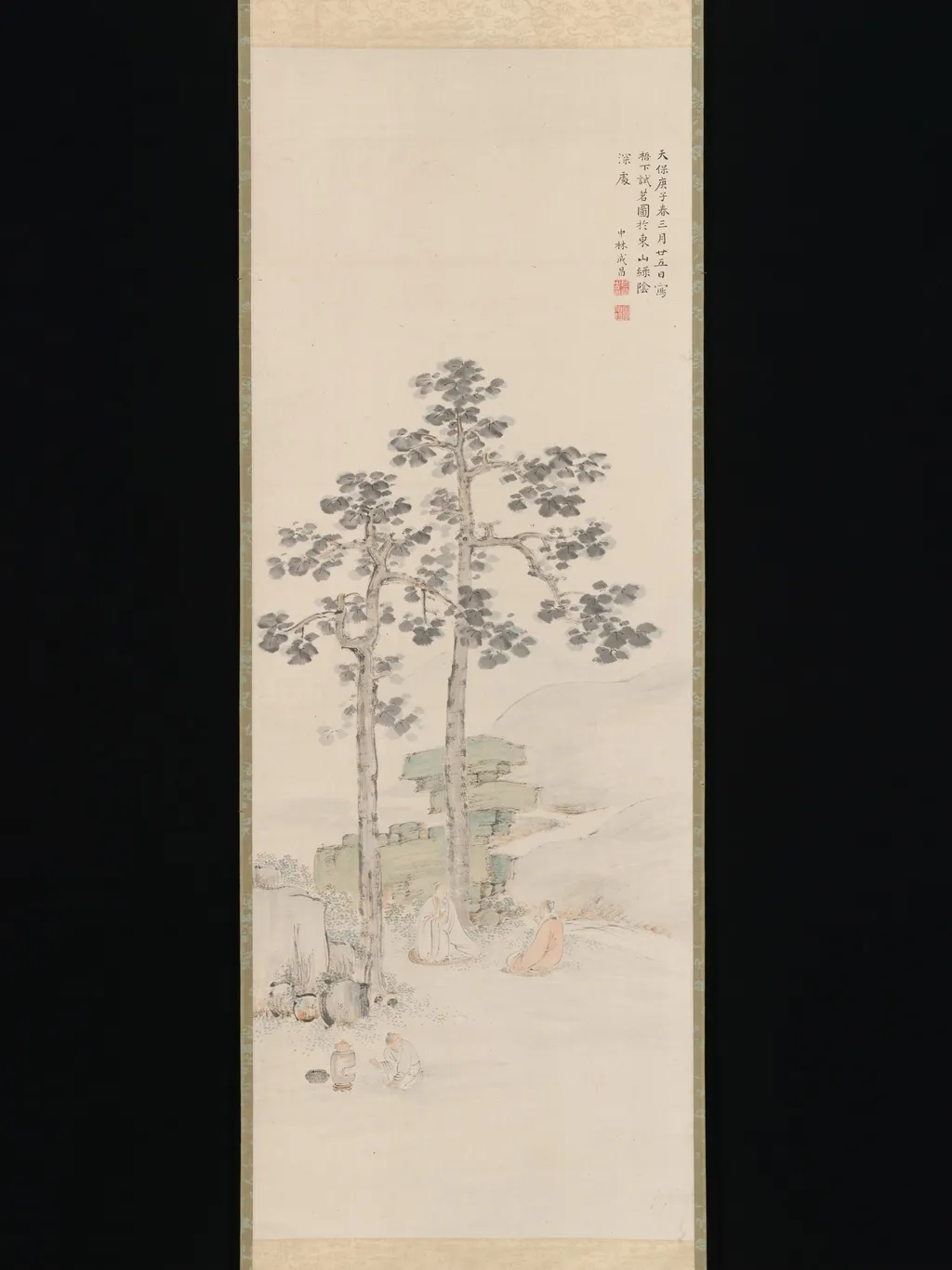
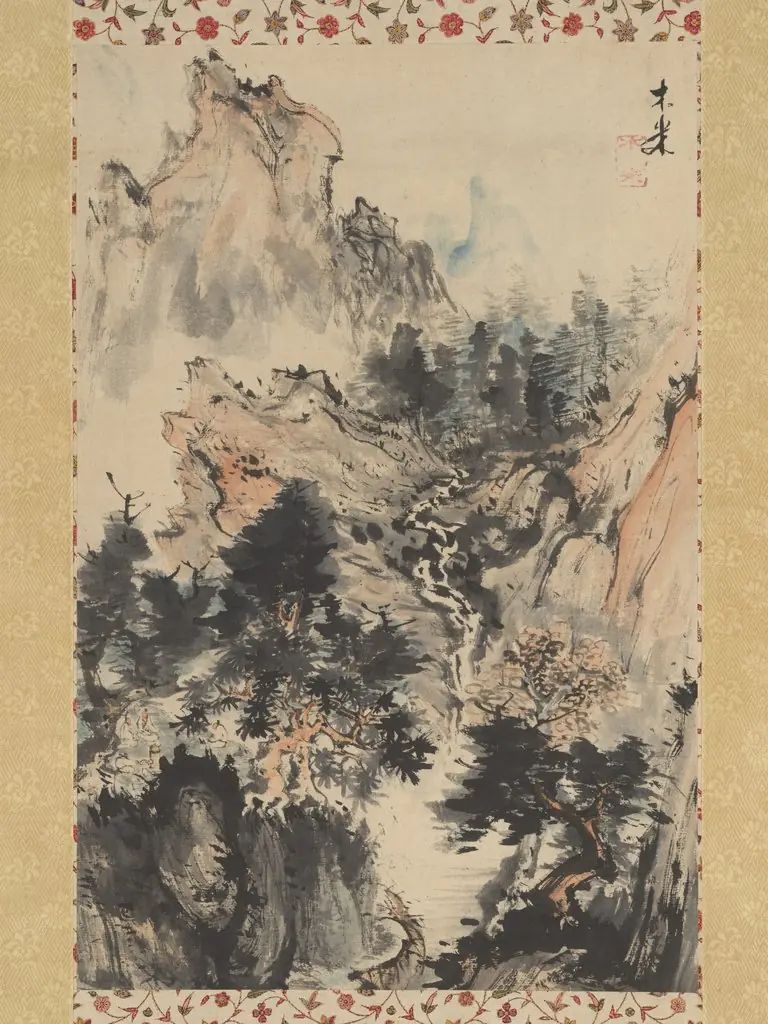
Sampling Tea beneath the Wu Trees is an unspecified painting by the Nanga artist Chikutō Nakabayashi. It dates from 1840 and is held in the collection of the Metropolitan Museum of Art.
About this work
Subject & Meaning
The scene emphasizes the ritual of tea sampling, framed by the trees’ sprawling branches and lush foliage, which evoke themes of longevity and natural harmony.
Sampling Tea beneath the Wu Trees depicts a gathering of figures under two towering wu trees, a motif associated with scholarly retreat and the pursuit of refined leisure in East Asian culture. The scene emphasizes the ritual of tea sampling, framed by the trees’ sprawling branches and lush foliage, which evoke themes of longevity and natural harmony. The composition reflects the literati ideal of withdrawing from worldly concerns to cultivate personal refinement and artistic appreciation.
The work’s iconography aligns with the bunjin (literati) tradition, in which natural settings serve as metaphors for the cultivated mind. By situating the tea ceremony within this arboreal sanctuary, the painting symbolizes the integration of art, nature, and moral cultivation, a central tenet of Edo-period intellectual culture.
History & Provenance
Sampling Tea beneath the Wu Trees is a painting created by the artist Nakabayashi Chikutō in 1840. The work was produced in Japan and is currently held in the collection of the Metropolitan Museum of Art. While the specific commission details and the full chain of ownership prior to its arrival at the museum are not recorded in the available sources, the work is attributed to Nakabayashi and dated to 1840.
Overview
Created in 1840, Sampling Tea beneath the Wu Trees is a nanga‑style painting by Japanese artist Chikutō Nakabayashi. Executed in ink and subtle color, the work portrays a solitary, slender tree set in a tranquil landscape, with two figures engaged in a tea‑sharing ritual near its base. The piece belongs to the collection of The Metropolitan Museum of Art.
Technique & Style
Nakabayashi employs the nanga aesthetic of loose, expressive brushwork, allowing leaves to appear in motion and the misty background to dissolve into soft greens, blues, and earth tones. The delicate handling of light and shadow creates a sense of atmospheric depth while maintaining a restrained palette.
Context
The work reflects the nanga or bunjinga movement, which drew inspiration from Chinese literati painting and emphasized personal expression over formal realism. By depicting a quiet tea ceremony beneath a solitary tree, Nakabayashi aligns with the movement’s ideal of scholarly retreat into nature as a source of artistic and philosophical insight.
Own this work as a print
Artist & collection
Artist
Nakabayashi Chikutō, originally Nariaki (Japanese:中林 竹洞; (1776, Nagoya - 27 April 1853, Kyoto) was a Japanese painter in the nanga style. His other art names include Chūtan (沖澹), Taigen’an (太原庵) and Tōzan Inshi (東山隠士).

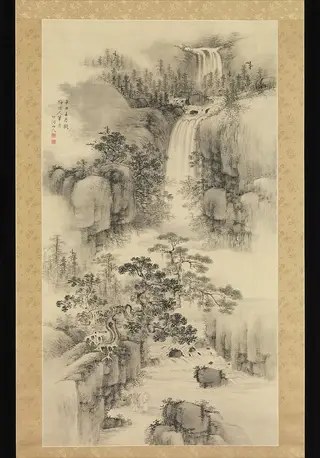
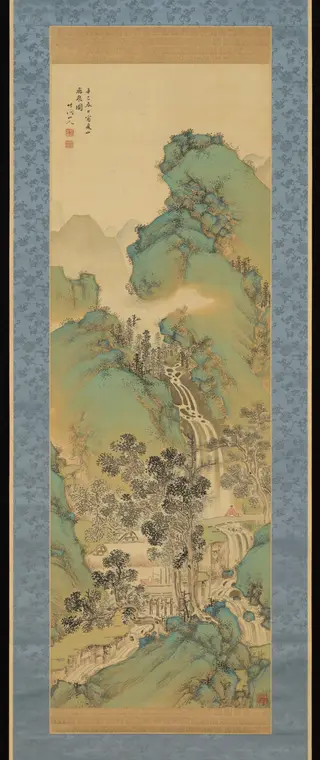
- Landscape
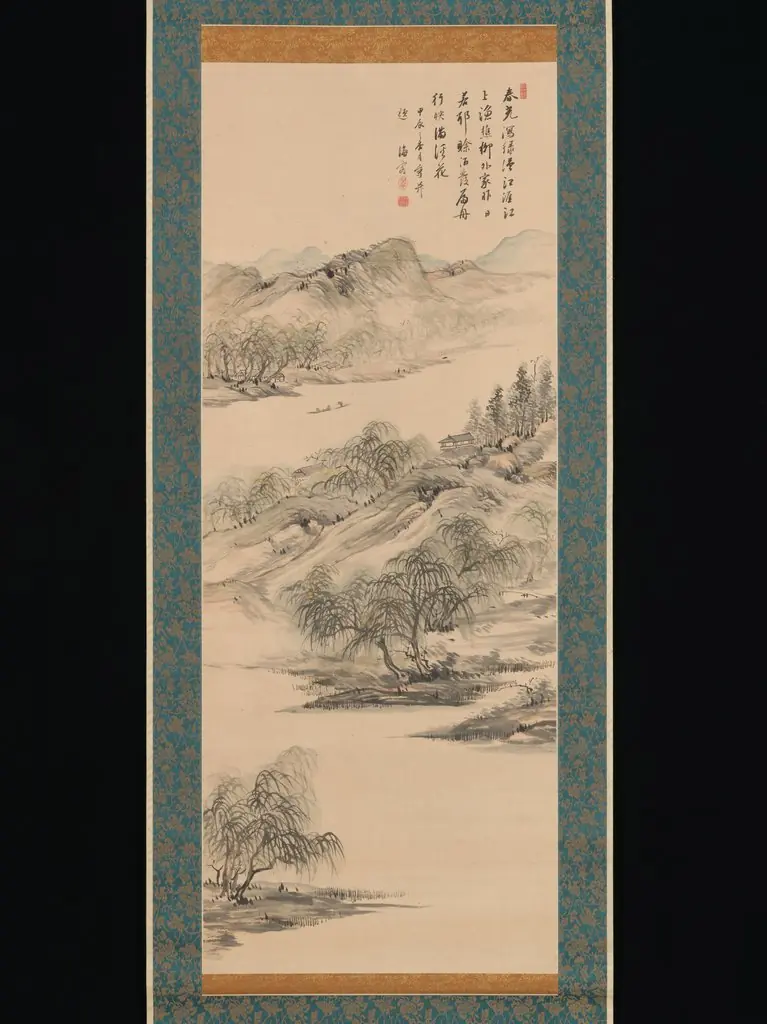 Spring Landscape
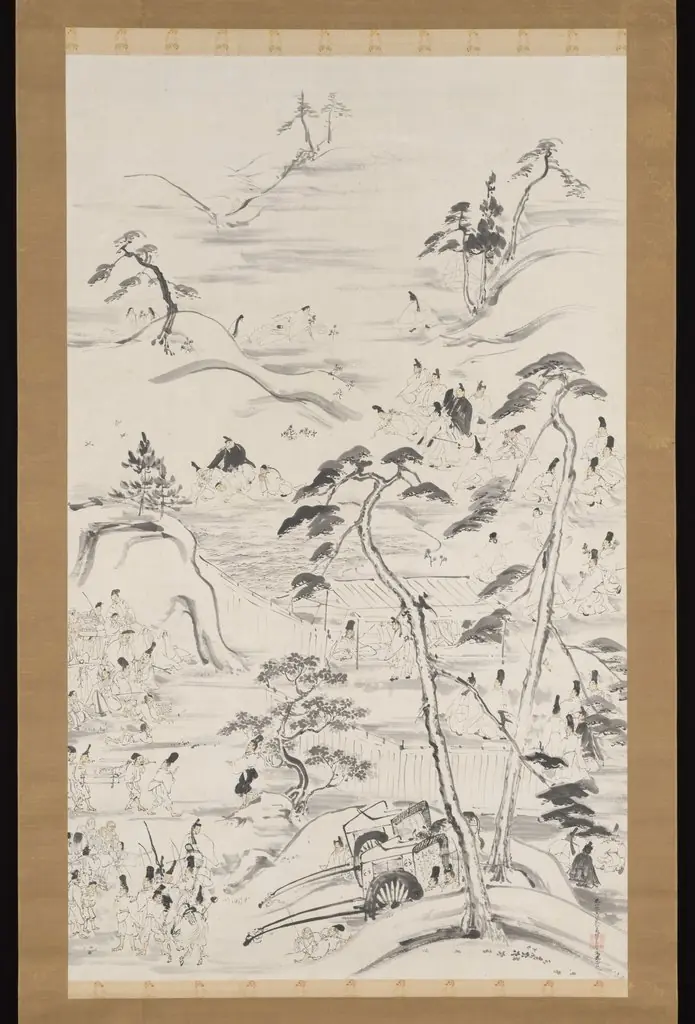 Emperor Enyū’s Outing to Funaokayama on the First Day of the Rat in the New Year
 牧松周省筆 破墨山水図|Splashed-Ink Landscape
 明 沈周 秋林閒釣圖 軸|Silent fisherman in an autumn wood
 Birds on a Tree above a Cataract
 Untitled
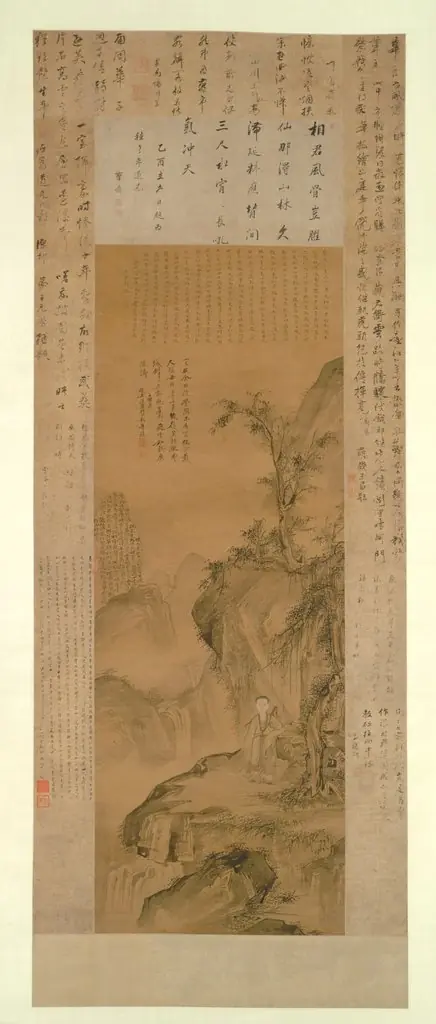 Layered Peaks and Splashing Waterfall: Portrait of Hua Yan as a Young Man
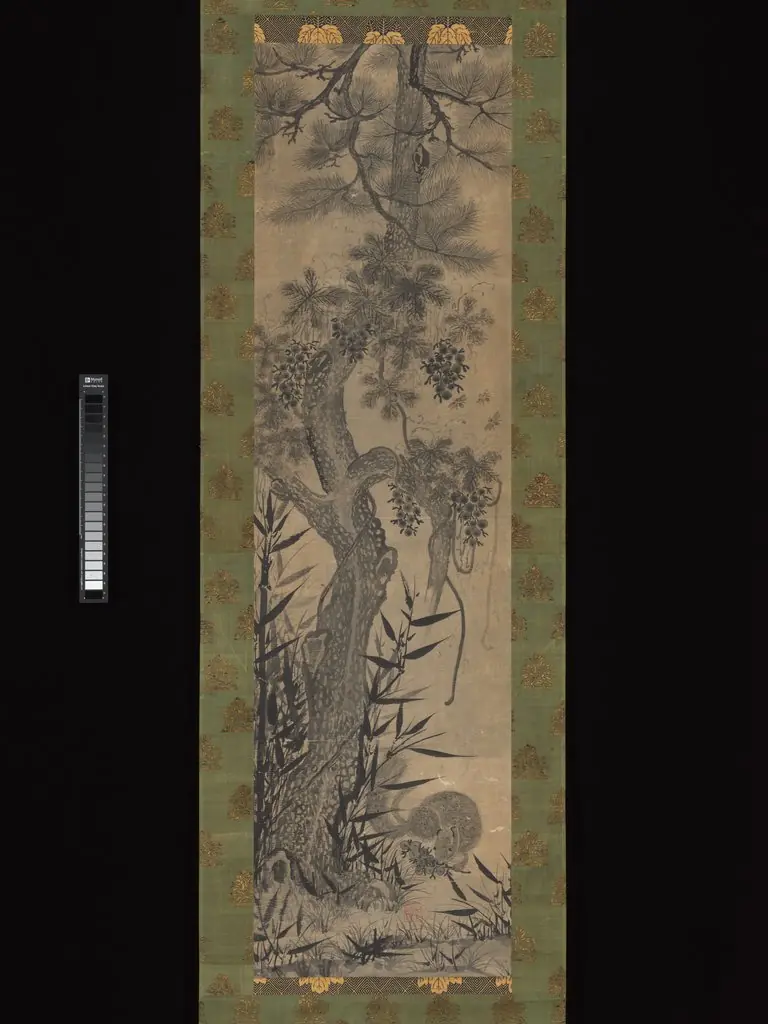 Pine, Bamboo, Grape, and Squirrel
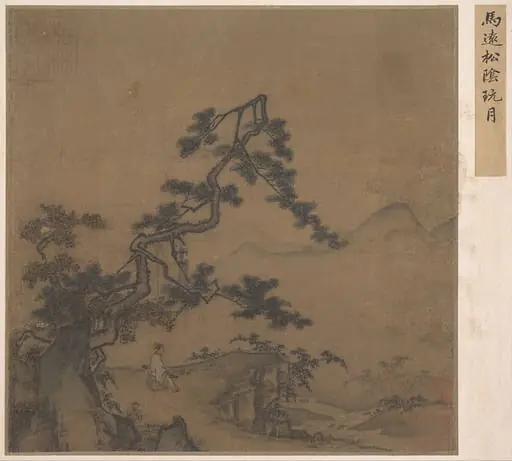 南宋 佚名 倣馬遠 松陰玩月圖 冊頁|Viewing the Moon under a Pine Tree
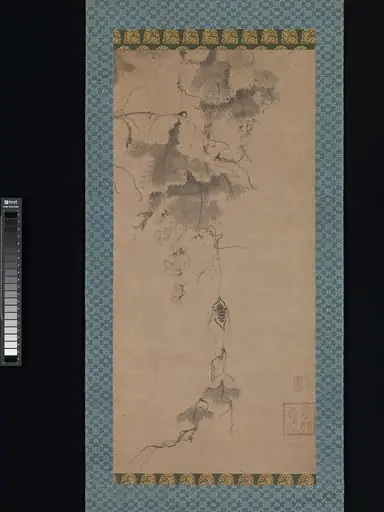 墨林愚庵筆 葡萄蝉図|Cicada on a Grapevine
 Brewing Tea in the Shade of Trees