Artwork
中林竹洞筆 夏日山泉図|Mountain Stream on a Summer Day
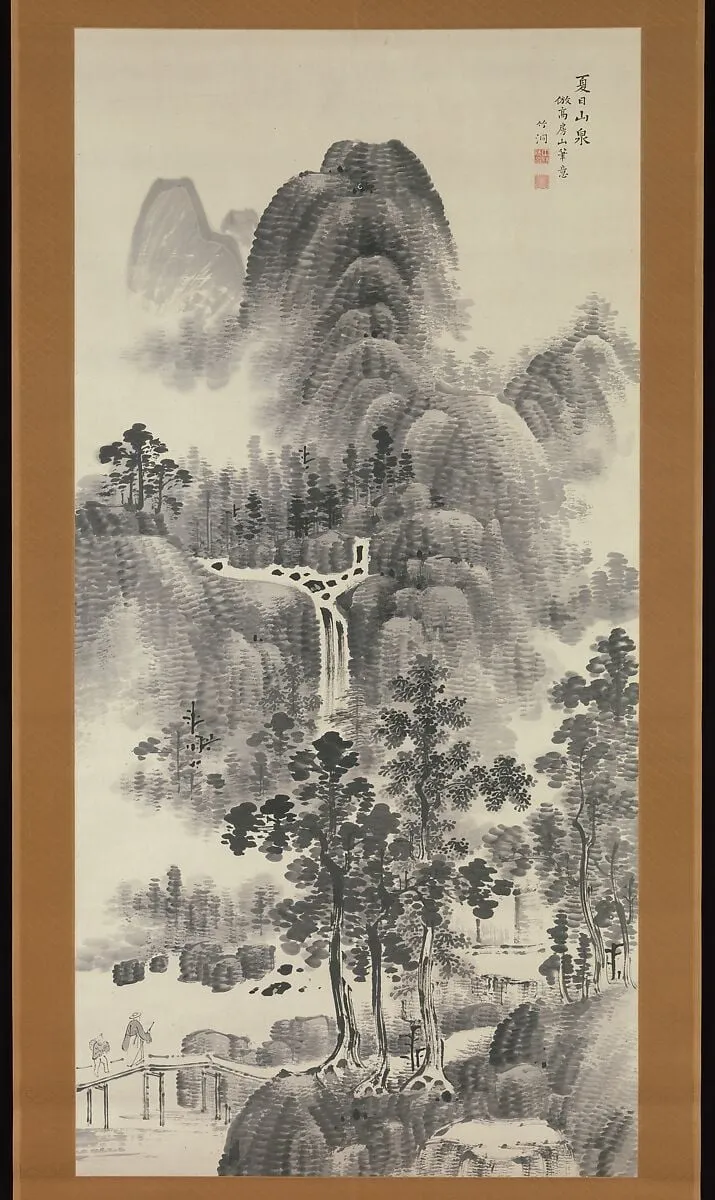
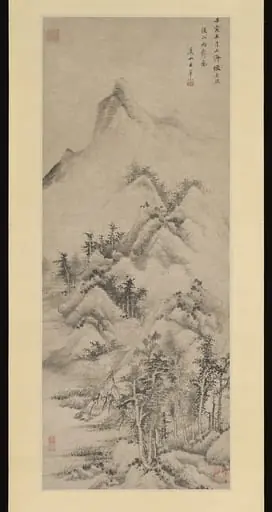
中林竹洞筆 夏日山泉図|Mountain Stream on a Summer Day is an ink painting by the Nihonga artist Chikutō Nakabayashi. It dates from 1826 and is held in the collection of the Metropolitan Museum of Art.
About this work
Subject & Meaning
The hanging scroll titled 中林竹洞筆 夏日山泉図 (Mountain Stream on a Summer Day) was created in 1826 by Nakabayashi Chikutō with ink on paper.
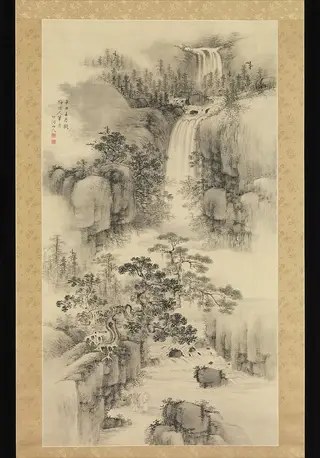
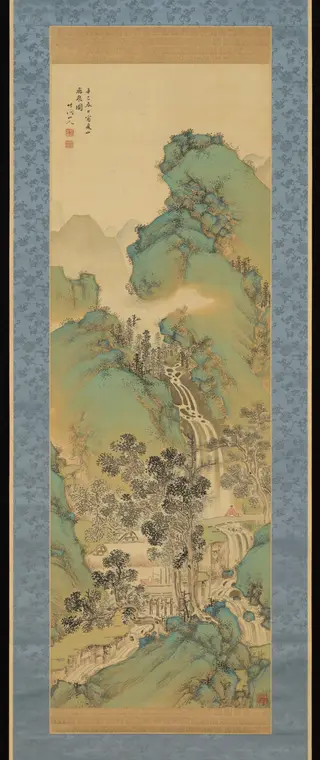
The hanging scroll titled 中林竹洞筆 夏日山泉図 (Mountain Stream on a Summer Day) was created in 1826 by Nakabayashi Chikutō with ink on paper. It is categorized as a landscape painting within the broader classification of Paintings. The composition depicts a bridge, a mountain, and a waterfall, together forming a summer mountain stream scene.
The work is held in the collection of the Metropolitan Museum of Art in New York. Its imagery draws on traditional East Asian motifs that convey seasonal change, natural balance, and the passage of time.
Technique & Style
Executed in 1826, Mountain Stream on a Summer Day is a hanging scroll combining ink on paper, typical of literati painting traditions. Chikutō renders the scene with modulated ink tones, employing both dry brush and wet washes to articulate foliage, rocks, and cascading water. The composition balances detailed passages around the bridge and waterfall with more abbreviated strokes for distant mountains, creating atmospheric recession.
Handling favors spontaneous, calligraphic line for defining rock contours and tree forms, while layered washes suggest mist and volume.
History & Provenance
Created in 1826, the hanging scroll Mountain Stream on a Summer Day is an ink-on-paper landscape by the Japanese artist Nakabayashi Chikutō. The work was executed in Japan and depicts a scene featuring mountains, a waterfall, and a bridge. It is currently held in the collection of the Metropolitan Museum of Art.
The specific commission details or the original chain of ownership prior to its current location are not detailed in the available records. The piece is classified within the genre of landscape painting and remains a documented example of Chikutō's output from that period.
Overview
Nakabayashi Chikutō's 'Mountain Stream on a Summer Day' (1826) is a hanging scroll executed in ink on paper, exemplifying the artist's mastery of the literati painting tradition within the Edo period. The composition depicts a vertical landscape where a slender waterfall cascades over moss-covered boulders, intersected by a modest wooden bridge that guides the viewer's eye into the depth of the scene. Distant peaks dissolve into atmospheric mist, creating a sense of vast spatial recession.
Chikutō employs a sophisticated contrast in brushwork to define the terrain: dry, scratchy strokes articulate the rugged texture of the rocks, while soft, wet washes render the ethereal quality of the mist and water. This monochromatic approach relies entirely on the modulation of ink density and line quality to convey form and mood, eschewing color for expressive tonal variation. Created in 1826, the work reflects Chikutō's mature style, synthesizing Chinese literati models with a distinct Japanese sensibility.
It stands as a significant example of his landscape output, demonstrating his ability to evoke the serene, contemplative atmosphere characteristic of summer mountain retreats through disciplined ink technique.
Context
This depiction of a mountain stream aligns with a long-standing tradition in Japanese art of rendering peaceful mountain and waterfall scenes. Such landscapes often served as subjects for contemplation, reflecting philosophical ideals of harmony with nature. Chikutō's work contributes to this rich lineage, demonstrating how artists utilized the expressive potential of ink on paper to evoke the sublime beauty and spiritual resonance of the natural world.
Artist & collection
Artist
Nakabayashi Chikutō, originally Nariaki (Japanese:中林 竹洞; (1776, Nagoya - 27 April 1853, Kyoto) was a Japanese painter in the nanga style. His other art names include Chūtan (沖澹), Taigen’an (太原庵) and Tōzan Inshi (東山隠士).