Artwork
観瀑山水図|Landscape with Waterfall
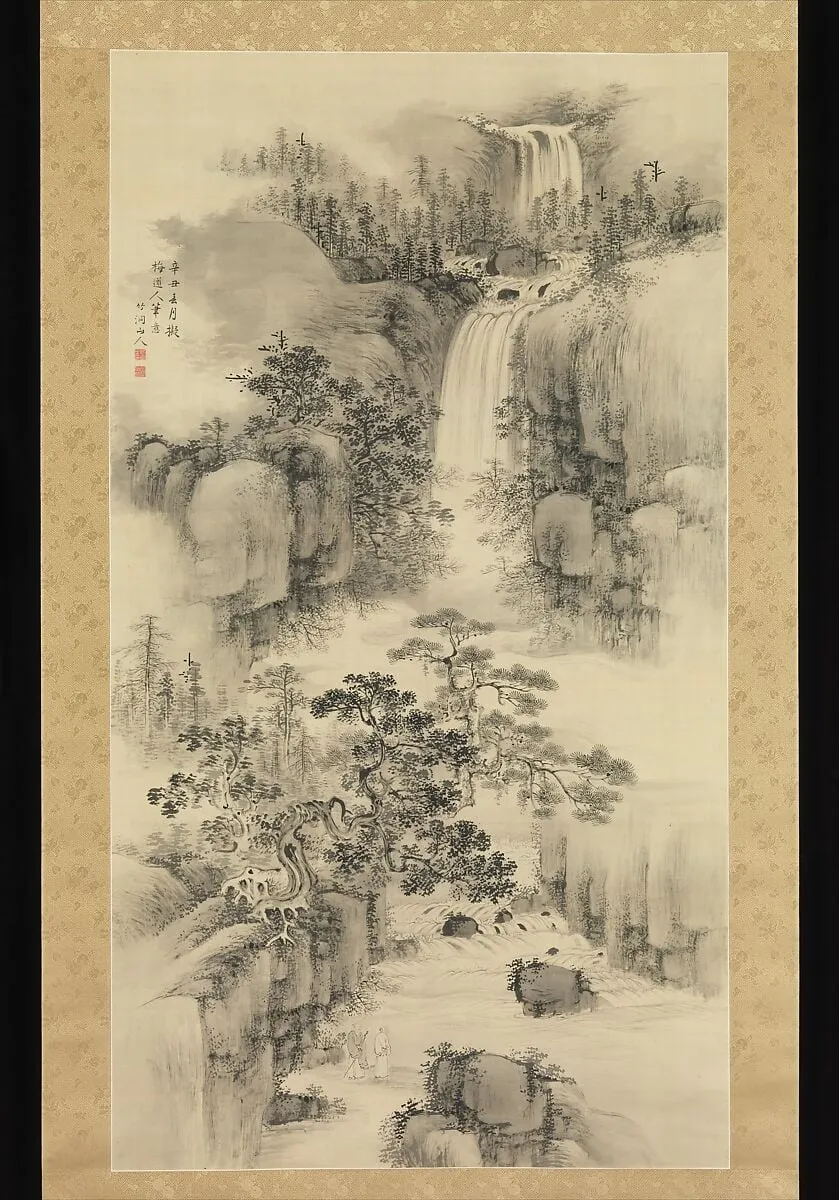
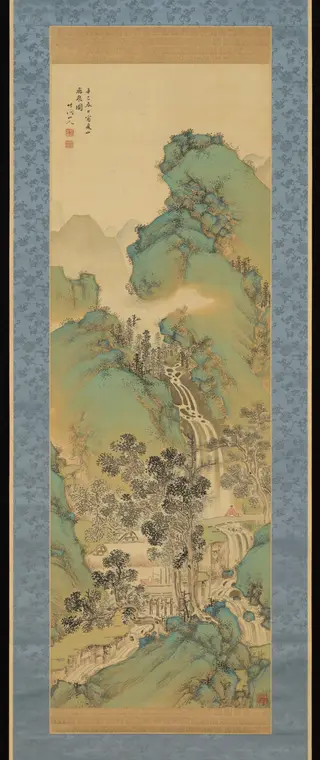
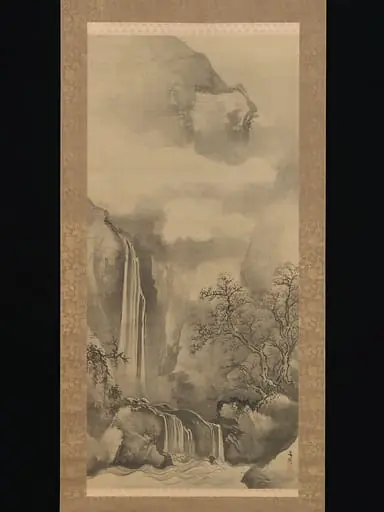
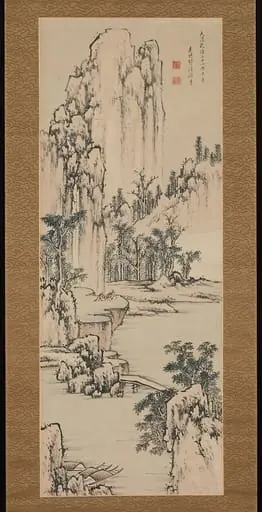
観瀑山水図|Landscape with Waterfall is an ink painting by the Nihonga artist Chikutō Nakabayashi. It dates from 1841 and is held in the collection of the Metropolitan Museum of Art. Nakabayashi Chikutō's Landscape with Waterfall (観瀑山水図), created in 1841, is an ink-on-paper hanging scroll.
About this work
Chikutō painted this in 1841, when most Japanese artists were filling scrolls with tiny, busy scenes.
You see a tall waterfall tumbling down a rocky cliff, ink on paper so light it feels like mist.
Chikutō painted this in 1841, when most Japanese artists were filling scrolls with tiny, busy scenes. Here, the empty space around the waterfall makes the rush of water feel even louder. The brushstrokes are simple, just a few quick lines for the rocks, but they let your eye rest.
If you like how quiet this feels, look up landscapes in Japanese art.
Subject & Meaning
The hanging scroll 観瀑山水図 (Landscape with Waterfall) portrays a cascading waterfall within a traditional Japanese landscape, identified in the catalog as a waterfall and classified under the landscape genre. Executed in ink on paper in 1841 by Nakabayashi Chikuto, the work exemplifies the artist's focus on natural scenery. Within the broader context of Japanese ink painting, such depictions of waterfalls serve as emblematic motifs of dynamic natural forces and contemplation, reflecting a cultural appreciation for untamed nature.
The composition and subject underscore the work's role as a visual meditation on the enduring yet transient qualities of the natural world.
Technique & Style
The work is executed in ink on paper and presented as a hanging scroll, a format typical of Edo-period Japanese landscape painting. The artist applies fluid brushstrokes to render a cascading waterfall amid rugged rocks, using layered washes to suggest mist and depth. The narrow, vertical support emphasizes the vertical drop of the water.
While the sources do not provide a detailed condition report, the stability of the medium suggests the ink remains well integrated with the paper. Stylistically, the composition combines Chinese-inspired spatial recession with a Japanese emphasis on naturalistic detail, creating a balanced interplay of empty space and dynamic movement.
History & Provenance
The hanging scroll 観瀑山水図 | Landscape with Waterfall was created in 1841 in Japan by Nakabayashi Chikuto. Painted in ink on paper, it depicts a waterfall and belongs to the landscape genre. It entered the collection of the Metropolitan Museum of Art, New York, where it remains; no ownership changes prior to the museum or exhibition history are recorded in the available sources.
Legacy
Nakabayashi Chikuto's 1841 hanging scroll Landscape with Waterfall is a notable example of late Edo-period Japanese landscape painting. Its inclusion in the collection of the Metropolitan Museum of Art underscores its curatorial significance. Depicting a waterfall, it reflects the period's interest in natural motifs, and its place within the landscape genre highlights its role in the literati (nanga) ink-painting tradition.
As a work of the mid-nineteenth century, it continues to inform studies of the evolution of landscape imagery in Japanese art.
Overview
Nakabayashi Chikutō's Landscape with Waterfall (観瀑山水図), created in 1841, is an ink-on-paper hanging scroll. This painting presents a singular, towering waterfall cascading down a rocky precipice. The artist's approach emphasizes the natural force and visual impact of the water, rendered with a sense of lightness and movement.
Context
Created in 1841, Landscape with Waterfall stands apart from many contemporary Japanese scroll paintings, which often featured intricate and densely populated scenes. Chikutō's decision to focus on a singular, grand natural element with significant open space reflects a distinct aesthetic. This approach offers a contemplative alternative to the more common, detailed narratives prevalent in much of the art produced during this period.
Artist & collection
Artist
Nakabayashi Chikutō, originally Nariaki (Japanese:中林 竹洞; (1776, Nagoya - 27 April 1853, Kyoto) was a Japanese painter in the nanga style. His other art names include Chūtan (沖澹), Taigen’an (太原庵) and Tōzan Inshi (東山隠士).